
Pierce Mountain (Washington) facts for kids
Quick facts for kids Pierce Mountain |
|
|---|---|

Pierce Mountain, southeast side
|
|
| Highest point | |
| Elevation | 4,973 ft (1,516 m) |
| Prominence | 133 ft (41 m) |
| Geography | |

 Pierce Mountain
Location in Washington (state)

Pierce Mountain
Location in the United States
|
|
| Parent range | North Cascades |
| Topo map | USGS Ross Dam |
| Type of rock | gneiss |
| Climbing | |
| Easiest route | Hiking trail |
Pierce Mountain is a tall mountain peak in the North Cascades mountain range. It stands over 4,973 feet (about 1,516 meters) high in Washington, United States. This mountain is part of the beautiful North Cascades National Park and the Stephen Mather Wilderness.
Pierce Mountain is located above Ross Dam and is connected to Sourdough Mountain on its eastern side. What makes it special is how much it rises steeply from the land around it, even more than its total height. Water from the mountain flows into Pierce Creek and Ross Lake, eventually reaching the Skagit River.
Contents
What is the Climate Like on Pierce Mountain?
Pierce Mountain is in a special weather area called the "marine west coast climate zone." This means it gets a lot of influence from the nearby Pacific Ocean. Most of the weather systems, like big air masses, start over the Pacific. They then move east towards the Cascade Mountains.
How Does Weather Affect the Mountain?
When these weather systems hit the tall peaks of the North Cascades, they are forced to rise. As the air goes up, it cools down and drops its moisture. This creates a lot of rain or snowfall on the western side of the North Cascades. This process is called Orographic lift.
During winter, it's usually cloudy and snowy. But in summer, high-pressure systems over the Pacific often bring clear skies. Because the ocean affects the weather so much, the snow here can be very wet and heavy. This can lead to a high risk of avalanches.
What is the Geology of Pierce Mountain?
The North Cascades mountains have a very rugged and dramatic landscape. You can see sharp peaks, long ridges, and deep valleys carved by glaciers. The way the land looks today was shaped by huge geological events that happened millions of years ago. These events created big changes in height and led to different climates and types of plants in the area.
How Were the Cascade Mountains Formed?
The Cascade Range began forming millions of years ago, during a time called the late Eocene Epoch. This happened because the North American Plate (a huge piece of Earth's crust) was slowly moving over the Pacific Plate. This movement caused many volcanic eruptions over a long period.
Also, small pieces of the Earth's crust, called terranes, crashed into North America. These pieces, which were once part of the ocean floor or other continents, helped build the North Cascades about 50 million years ago.
How Did Glaciers Shape the Landscape?
During the Pleistocene period, which started over two million years ago, huge sheets of ice called glaciers repeatedly moved across the land. As they moved, they scraped and carved the landscape, leaving behind piles of rock. This is why many river valleys in the area have a "U" shape.
The combination of the land being pushed up (called uplift) and cracks forming in the Earth's crust (called faulting), along with the powerful work of glaciers, created the tall peaks and deep valleys we see in the North Cascades today.
Images for kids
-
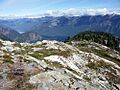
The Pierce Mountain Trail offers beautiful views of the North Cascades

