
Ulmus minor 'Sarniensis' facts for kids
Quick facts for kids Ulmus minor 'Sarniensis' |
|
|---|---|
.JPG)
Guernsey Elms, Amsterdam
|
|
| Species | Ulmus minor |
| Cultivar | 'Sarniensis' |
| Origin | Guernsey, or Brittany |
The Guernsey Elm is a special type of Field Elm tree. Its scientific name is Ulmus minor 'Sarniensis. People also call it the Jersey Elm, Wheatley Elm, or Southampton Elm.
This tree was first described in 1815 by John MacCulloch. He found it growing on the island of Guernsey. Later, in the 1820s, it was planted in the Royal Horticultural Society's gardens.
Scientists are not entirely sure where the Guernsey Elm first came from. Some think it might be a natural change (a mutant) from French Field Elms. Trees that look similar grow in parts of France, like Cotentin and northern Brittany.
In 2013, DNA tests on some Guernsey Elms in Britain showed they were all exactly the same. This means they likely came from one original tree. This type of tree is often grown from cuttings, not seeds.
Sometimes, the Guernsey Elm was wrongly called 'Cornish Elm' in the UK. In Europe, it was sometimes confused with a similar tree called 'Monumentalis'. In the Netherlands, it's known as monumentaaliep, which means 'monumental elm'.
Contents
What Does the Guernsey Elm Look Like?
The Guernsey Elm grows in a tall, narrow shape, much like the Lombardy Poplar. It usually doesn't grow taller than 27 meters (about 88 feet). Its branches grow upwards, forming a narrow, pyramid-like top.
Older trees might get wider in the middle, making them look a bit like a bottle. The Guernsey Elm is one of the last trees in Britain to grow its leaves in spring. It keeps its dark, shiny leaves until early winter. In good conditions, its leaves turn a beautiful golden-yellow in late November or early December.
Its small leaves and seeds (called samarae) are similar to other Field Elm trees. This tree often grows new shoots from its base, called suckers. Sometimes, it grows unusual, lumpy growths called burls on its branches or trunk.
Diseases and Pests Affecting Elms
The Guernsey Elm is very easily affected by Dutch elm disease. This disease is caused by a fungus and is spread by elm bark beetles. It has unfortunately killed many elm trees around the world.
Where the Guernsey Elm Grows and How It's Used
The Guernsey Elm has light, upward-growing branches. This means it was not as likely to drop heavy branches as some other elm types. Its compact shape made it great for planting along streets.
This tree was very popular in Britain and was planted widely. However, Dutch elm disease has destroyed almost all the old, large trees in England. A few still survive in places like Brighton, Bridlington, and Scarborough. About a hundred mature trees were still alive in Edinburgh, Scotland, in 2013.
The tree was also brought to Osborne House on the Isle of Wight by Prince Albert. It still grows there today from suckers. Many Guernsey Elms were planted in Amsterdam. But they were later replaced by a similar tree called 'Columella', which is much more resistant to disease.
In 1897, a Guernsey Elm was planted in Ottawa, Canada. It was also brought to the United States and listed in catalogs in the early 1900s. The tree still grows at the Morton Arboretum today.

Famous Guernsey Elm Trees
One of the largest surviving Guernsey Elms in the UK is in Warriston Cemetery, Edinburgh. It had a trunk about 3 meters (10 feet) around in 2017. Another large one is in Preston Park, Brighton. This tree was 34 meters (112 feet) tall in 2006.
As of 2020, a tree in Blakers Park, Brighton, became known as the 'national champion' Guernsey Elm. The tallest one ever recorded in the UK was in Eastbourne, standing 36 meters (118 feet) tall in 2007.
In North America, Guernsey Elms line West 10th Avenue in Vancouver, British Columbia, Canada.
Why the Name 'Guernsey Elm'?
The tree is named after the Channel Island of Guernsey. Sarnia was the Roman name for Guernsey. This is where the tree might have first appeared.
A similar tree is found along the coast of Brittany, France. It was sometimes called l'Orme male, meaning 'Male Elm'. People in Guernsey still sometimes use this name, even though no old trees survive there now.
The name Wheatley Elm comes from a tree planted at Wheatley Park, Doncaster. This tree was introduced and grown by Sir William Cooke in the early 1800s. The name Southampton Elm likely came from a nursery in Southampton that grew many of these trees.
Different Types of Guernsey Elm
Some experts believe that 'Dickson's Golden Elm' is a type of Guernsey Elm. There was also a tree called Ulmus Wheatleyi aurea pyramidalis sold in 1882, which had yellow-marbled leaves.
Where to Find Guernsey Elms Today
You can find Guernsey Elms in various plant collections and arboretums around the world. These places help to preserve different types of trees.
- North America
- Holden Arboretum, US.
- Morton Arboretum, US.
- Smith College, US.
- United States National Arboretum, Washington, D.C., US.
- Europe
- Brighton & Hove City Council, UK. (They have a special collection of elms.)
- Grange Farm Arboretum, Sutton St James, Spalding, UK.
- National Botanic Gardens, Glasnevin, Dublin, Ireland.
- Wakehurst Place Garden, UK.
- Wijdemeren City Council, Netherlands.
- Australasia
- Eastwoodhill Arboretum, Gisborne, New Zealand.
Nurseries That Sell Guernsey Elms
- Europe
- Noordplant, Glimmen, Netherlands.
Images for kids
-
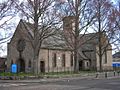
Purplish haze of flowering Guernsey Elm, Granton, Edinburgh
-
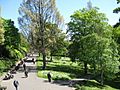
Guernsey Elm (left centre) leafing early summer (Princes Street Gardens, Edinburgh)
-
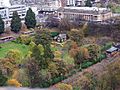
Guernsey Elms (top left), foliage still dark green in early winter (Princes Street Gardens)
-
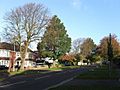
Guernsey Elm in late October, Shirley Drive, Hove
-
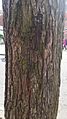
Bark of 'Sarniensis'
-
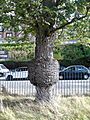
Burl on 'Sarniensis' trunk
-
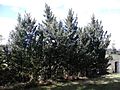
Young 'Sarniensis' spreading from suckers
-
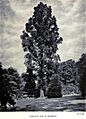
'Sarniensis' at Richmond, London, circa 1913
-
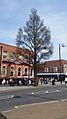
Surviving 'Sarniensis', Skegness, Lincolnshire (2017)
-
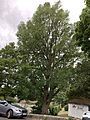
The 'national champion' Wheatley elm, as at 13 June 2020, in Blakers Park, Brighton
-
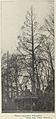
A comparatively level-branched tree labelled 'Wheatleyi', Holland, 1912
-
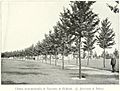
'Sarniensis' in Naarden, the U. monumentalis or monumentaaliep [:monumental elm] of The Netherlands


_%3D_Ulmus_minor_%27Sarniensis%27.jpg)
