
United States–Mexico–Canada Agreement facts for kids
|
|
|---|---|
.svg) |
|
| Type | Free trade agreement |
| Drafted | September 30, 2018 |
| Signed | September 30, 2018 December 10, 2019 (revised version) |
| Location | Mexico City, Mexico |
| Effective | July 1, 2020 |
| Condition | 3 months after notification of each state that all internal procedures have been completed |
| Expiration | Upon the end of a 16-year term (renewable indefinitely) |
| Parties |
|
| Ratifiers |
|
| Languages |
|
The Agreement between the United States of America, the United Mexican States, and Canada (often called USMCA) is a special agreement that helps the United States, Mexico, and Canada trade goods and services more easily. It started on July 1, 2020, replacing an older agreement called the North American Free Trade Agreement (NAFTA) from 1994.
This agreement is sometimes called "NAFTA 2.0" because it updates many of the old rules. The area covered by these three countries is one of the biggest free trade zones in the world. More than 510 million people live there, and their combined economies are huge, making up almost 30% of the global economy.
Leaders from all three countries officially agreed to the deal on October 1, 2018. U.S. President Donald Trump, Mexican President Enrique Peña Nieto, and Canadian Prime Minister Justin Trudeau signed it in November 2018. A newer, updated version was signed on December 10, 2019. All three countries approved it, with Canada being the last on March 13, 2020. The agreement officially began on July 1, 2020.
USMCA brought in new rules, especially for things like protecting inventions and ideas (intellectual property) and online shopping (digital trade). It also added stronger rules for protecting the environment and workers. For example, it encourages more cars to be made in the U.S. and gives U.S. dairy farmers more access to sell their products in Canada. It also made it easier for Canadians to buy U.S. goods online without extra taxes. The agreement is set to be reviewed and possibly updated in 2026.
In 2025, there were some disagreements about trade between the U.S., Canada, and Mexico. On February 1, 2025, the U.S. imposed extra taxes (tariffs) on imports from Canada and Mexico, citing concerns about border security and other issues. These tariffs were paused for a month for talks, but then went into effect on March 4, 2025. The U.S. later announced that products following USMCA rules would be exempt from these tariffs until April 2, 2025.
Contents
Understanding USMCA: A New Trade Deal
What is the USMCA?
The USMCA is like a rulebook for how the United States, Mexico, and Canada do business with each other. It helps make trade smoother and fairer. This agreement replaced an older one called NAFTA, which had been in place since 1994.
Why a New Agreement?
The world of trade changes quickly, especially with new technology. The old NAFTA agreement needed updates to cover things like digital trade and stronger protections for the environment and workers. The new USMCA helps keep trade modern and fair for everyone involved.
Each country calls the agreement by a slightly different name:
- In the United States, it's the United States–Mexico–Canada Agreement (USMCA).
- In Canada, it's the Canada–United States–Mexico Agreement (CUSMA) in English and Accord Canada–États-Unis–Mexique (ACEUM) in French.
- In Mexico, it's called Tratado entre México, Estados Unidos y Canadá (T-MEC).
Comparing the Three Countries
To understand the USMCA better, it helps to see how the three countries compare:
| United States of America | United Mexican States | Canada | |
|---|---|---|---|
| Flag | 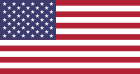 |
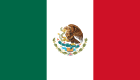 |
 |
| Population | 345,257,335 (as of 2024[ref]) † | 129,388,467 (as of 2024[ref]) | 41,465,298 (as of 2024[ref]) |
| Land area (km2) | 9,156,552 km2 ‡ | 1,964,375 km2 | 9,984,670 km2 |
| Land area (Sq. Mi) | 3,535,363 mi2 ‡ | 750,561 mi2 | 3,855,102 mi2 |
| Population density | 37.5/km2 | 66.1/km2 | 3.99/km2 |
| Exclusive economic zone | 11,351,000 km2 | 3,269,386 km2 | 5,559,077 km2 |
| Capital city | Washington | Mexico City | Ottawa |
| Currency | United States dollar | Mexican peso | Canadian dollar |
| GDP Nominal ($, in millions) 2023 | $27,067,158 ‡ | $1,811,468 | $2,117,805 |
| GDP Nominal ($) 2023 Per Capita | $80,412 | $13,804 | $53,247 |
† Including Guam, Puerto Rico, and the U.S. Virgin Islands.
‡ Including Puerto Rico.
How the Agreement Was Made

Starting the Talks
The idea to update NAFTA began in May 2017. U.S. officials told Congress they wanted to start new trade talks. These talks officially began in August 2017 and continued for many months.
Signing the Deal
After a lot of discussion, the U.S. and Mexico reached a deal in August 2018. Canada joined in later, and a full draft was ready by September 30, 2018. The leaders of all three countries signed the agreement on November 30, 2018, at a big meeting in Argentina.
However, there were still some disagreements, especially about workers' rights and certain products. So, a revised version of the agreement was signed on December 10, 2019. This updated version helped all three countries agree to the final terms.
Key Rules and Changes in USMCA
The USMCA includes many rules that affect how goods are made and traded. These rules cover everything from farm products to cars and even online shopping.
Helping Farmers and Car Makers
Dairy Products
The agreement made it easier for U.S. dairy farmers to sell their products in Canada. This means more choices for consumers and more trade between the countries.
Car Manufacturing Rules
The USMCA changed rules for making cars. Now, a larger portion of a car's value must come from parts made in North America (U.S., Mexico, or Canada). This helps create jobs in these countries and supports local industries.
Easier Online Shopping Across Borders
The USMCA makes it simpler to buy things online from another country without paying extra taxes or fees.
- For items sent to Canada from the U.S. or Mexico, the amount you can buy without paying sales tax increased from about C$20 to C$40. For customs duties, it increased to C$150.
- Mexico kept its limit for tax-free shipments at US$50 but allowed duty-free shipments up to US$117. This helps people buy more goods from their neighbors.
Protecting Workers' Rights
.jpg)
The agreement includes important rules to protect workers. Mexico agreed to pass laws that improve how labor unions work, giving workers a stronger voice. Also, a certain percentage of cars made in North America must come from factories that pay workers at least US$16 per hour. This helps ensure fair wages.
Protecting Ideas and Inventions
The USMCA has strong rules to protect "intellectual property." This means protecting creative works like books and music (copyright) and new inventions (patents).
- Copyright protection in Canada was extended to life plus 70 years.
- New medicines and agricultural chemicals get longer protection periods, encouraging companies to develop new products.
- The agreement also helps stop the illegal copying of movies and other copyrighted materials.
Solving Trade Problems
The USMCA includes ways for the countries to solve disagreements about trade rules. If one country thinks another isn't following the agreement, they have a system to discuss and resolve the issue peacefully. This helps keep trade fair and stable.
Reviewing the Agreement
The USMCA has a "sunset clause," which means the agreement is reviewed by the three nations every six years. It lasts for 16 years, but the countries can decide to extend it during these reviews. This helps keep the agreement up-to-date and relevant for future trade.
Fair Trade Practices
The USMCA includes rules to ensure fair trade practices among the countries.
- Countries agree not to unfairly change the value of their money to gain a trade advantage.
- There are rules about how member countries can negotiate trade deals with countries outside the agreement, especially those with different economic systems.
- Government-owned businesses are prevented from receiving unfair help compared to private companies.
- Generally, countries cannot stop imports or exports, except for specific reasons like shortages or safety concerns. Each country has a few special exceptions, such as Canada's rules on logs or Mexico's on used vehicles.
Making it Official: Ratification
.jpg)
The USMCA was signed by the leaders on November 30, 2018. However, it took more time for each country to officially approve it and make it law.
United States Approval
.svg) |
|
| Long title | To implement the Agreement between the United States of America, the United Mexican States, and Canada. |
|---|---|
| Acronyms (colloquial) | USMCA |
| Enacted by | the 116th United States Congress |
| Citations | |
| Public law | Pub.L. 116-113 |
| Legislative history | |
|
|
In the United States, the process to approve the agreement involved many discussions in Congress. Some lawmakers wanted changes to ensure the deal benefited American workers and farmers. There were also talks about including language to protect workers from discrimination. The final agreement committed each nation to policies it considers appropriate to protect workers against employment discrimination.
The U.S. House of Representatives passed the USMCA on December 19, 2019, and the Senate passed it on January 16, 2020. President Donald Trump signed it into law on January 29, 2020. The U.S. officially announced its readiness for the agreement to start on July 1, 2020.
Mexico's Approval
| Treaty between Mexico, the United States, and Canada | |
|---|---|
 |
|
| Congress of the Union | |
| Modifying Protocol to the Agreement between the United Mexican States, the United States of America, and Canada. | |
| Enacted by | Senate of the Republic |
| Date passed | 12 December 2019 (107-1) |
| Legislative history | |
| Bill published on | 10 December 2019 |
| Introduced by | Federal Executive Power |
| Status: In force | |
Mexico's government was also very involved in the negotiations. The Mexican Senate approved the treaty on June 19, 2019, and then again on December 12, 2019, after the revised version was signed. Mexico's president believed this trade deal would help its economy by bringing in more foreign investments and creating jobs. Mexico announced its readiness to implement the agreement on April 3, 2020.
Canada's Approval
| Canada–United States–Mexico Agreement Implementation Act | |
|---|---|
 |
|
| Parliament of Canada | |
| An Act to implement the Agreement between Canada, the United States of America, and the United Mexican States | |
| Enacted by | House of Commons |
| Date passed | 13 March 2020 |
| Enacted by | Senate |
| Date passed | 13 March 2020 |
| Date of Royal Assent | 13 March 2020 |
| Legislative history | |
| Bill introduced in the House of Commons | C-4 |
| Introduced by | Chrystia Freeland, Minister of Intergovernmental Affairs |
| Status: In force | |
In Canada, Prime Minister Justin Trudeau introduced the bill to implement the CUSMA in Parliament. After some delays, including a federal election, the revised bill was introduced in January 2020. Both the House of Commons and the Senate quickly passed the bill on March 13, 2020. The Governor General of Canada officially approved it on the same day, making it law. Canada notified the U.S. and Mexico that it had completed its approval process on April 3, 2020.
With all three countries having completed their approval processes, the USMCA officially came into effect on July 1, 2020.
See also
 In Spanish: Tratado entre México, Estados Unidos y Canadá para niños
- North American integration
- Comprehensive and Progressive Agreement for Trans-Pacific Partnership (CPTPP)
- North American Free Trade Agreement (NAFTA)
- North American Leaders' Summit (NALS)
- Trans-Pacific Partnership (TPP)
- U.S. public opinion on the North American Free Trade Agreement
- China–United States trade war
