
Formica polyctena facts for kids
Quick facts for kids Formica polyctena |
|
|---|---|
 |
|
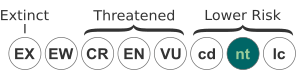
| Conservation status | |
Scientific classification  |
|
| Kingdom: | Animalia |
| Phylum: | Arthropoda |
| Class: | Insecta |
| Order: | Hymenoptera |
| Family: | Formicidae |
| Genus: | Formica |
| Species: |
F. polyctena
|
| Binomial name | |
| Formica polyctena Förster, 1850
|
|
| Script error: The function "autoWithCaption" does not exist. | |
Script error: No such module "Check for conflicting parameters".
Formica polyctena is a type of red wood ant. It belongs to the Formica genus and the large ant family called Formicidae. A scientist named Arnold Förster first described this species in 1850. The name polyctena comes from Greek words meaning 'many cattle'. This name refers to how these ants 'farm' tiny insects called aphids for a sweet liquid they produce, called honeydew.
You can find Formica polyctena in many countries across Europe. These ants are eusocial, which means they live in highly organized groups. They have different jobs, like sterile workers and a small group that reproduces. These ants can tell which other ants are from their own nest and which are strangers. If they find an intruder, they have a way to sound an alarm. They can release special chemicals called pheromones that warn other ants nearby.
These ants live in Austria, Belgium, Bulgaria, Czech Republic, Estonia, Finland, France, Germany, Hungary, Italy, Latvia, Lithuania, Luxembourg, the Netherlands, Norway, Poland, Romania, Russia, Serbia and Montenegro, Slovakia, Spain, Sweden, Switzerland, and Ukraine.
Contents
Ant Behavior and Social Life
Living in a Colony: Eusociality
Just like many ants, wasps, and bees, Formica polyctena ants live in a special social system called eusociality. In a eusocial colony, everyone works together to care for the young. There are different groups, or 'castes', where some ants lay eggs (the queens and males) and most are sterile helpers (the workers). Also, different generations live together at the same time. This means mothers, adult offspring, and young offspring all share the same home.
In these colonies, an ant is given a special job before it can reproduce. This makes them act differently from other ants. Red wood ants show all these features. The queens and males are the ones who reproduce. The sterile female workers help take care of the young and keep the colony running.
Worker Ants and Their Jobs
Worker ants in a colony are usually female and cannot reproduce. Formica polyctena workers fit this pattern; they almost never lay eggs. This is different from some other Formica species where workers can actually lay eggs. The fact that F. polyctena workers are mostly sterile helps keep the colony stable. It allows many queens and many nests to work together. Workers don't try to reproduce themselves, so they support the cooperation of the whole multi-queen, multi-nest system.
Ant Foragers
In F. polyctena colonies, some workers are specially chosen to be foragers. These are the ants that go out and find food. The number of foragers depends on how big the colony is. Foragers are usually older workers. However, if some foragers are lost or die, other workers from the nest can take their place. This shows that the ants can be flexible with their roles. These new foragers might not live as long in that role. This suggests that older ants might develop certain physical abilities that make them better at foraging.
How Ants Recognize Each Other
It's important for ants to know who is part of their family and who isn't. This helps them avoid fighting with their own nestmates. It also stops them from accidentally helping ants from another nest. Scientists have found that Formica polyctena ants use signals based on their genes to recognize their nestmates. Since ants in a colony are usually closely related, this genetic signal works well to tell different colonies apart.
One study looked at how ants from different nests reacted to each other. They found that ants were more likely to fight if they were genetically very different. This means F. polyctena ants likely recognize their friends through a signal that comes from their genes. Ants from nests that were physically close didn't necessarily act more or less aggressive towards each other. This shows that how close nests are doesn't affect recognition.
So, F. polyctena ants have a special way to tell their nestmates from strangers. This genetic signal helps keep different ant colonies separate, especially in places where there aren't many other ways to tell them apart.
Ant Alarm Signals
Formica polyctena ants can trigger an alarm by releasing special chemicals called pheromones. When other ants smell these pheromones, they rush towards the source with their jaws open. This is like they are ready to face a threat. These chemical alarm signals work not only inside the nest but also along the paths where ants go to find food.
For example, when an ant is attacked, it can spray formic acid. This acid acts as a chemical weapon against predators. But it also works as an alarm signal for nearby ants. It calls for more ants to come and help attack the predator. So, formic acid is both a weapon and an alarm signal for F. polyctena.
Fighting Diseases
Ants in a F. polyctena colony live very close together. This means diseases can spread quickly and harm many ants. Because of this, F. polyctena has developed ways to stop diseases from spreading. When an ant gets sick and its body starts fighting a disease, other workers can sense this.
Healthy workers will then reduce how much liquid they exchange mouth-to-mouth with the sick ant. They also try to stop the infected ant from moving around too much. At the same time, healthy workers will touch the sick ant more with their antennae and groom it more often. Scientists think this might either remove the germs from the sick ant or act like a "social vaccination."
In this "social vaccination" idea, if healthy ants groom a sick ant, they might be exposed to tiny amounts of the germs. This exposure could help the healthy ants build up their own defenses against the disease. It's like they get a small dose of the sickness, which helps them become resistant before the disease can fully spread and infect them.
Ants Hunting Caterpillars
Scientists have studied how F. polyctena ants hunt the caterpillars of the cinnabar moth (Tyria jacobaeae). They found that ants hunted more caterpillars when they were on the ground rather than on plants. The ants also preferred to hunt caterpillars that were grouped together in clusters, rather than those spread out. This is probably because ants communicate with each other. When one worker finds a good food source, like a group of caterpillars, she tells her fellow workers, and they all come to help.
Nest Temperature Control
.jpg)
Formica polyctena ants, like other social insects, have clever ways to keep their nests at a steady temperature. This is important even when the temperature outside changes a lot. Many things help control the nest's temperature. These include how much moisture is in the nest, sunlight, heat made by the ants' bodies, and even tiny living things (microbes) in the nest material. Keeping a stable temperature is super important for the young ants (larvae and pupae) to grow properly.
Scientists also think that the way F. polyctena nests are built helps them hold heat very well. Even though the nest materials are light and don't hold much heat on their own, the design is smart. The outside layer of the nest is made of things like pine needles and sap. These materials soak up a lot of heat from the sun. The inside of the nest is mostly twigs. These twigs act like a "thermal sponge," soaking up the heat and keeping the nest warm.
Dry Nests and Heat
Dry nests that are exposed to the sun have higher temperatures in the evening. They also lose heat slowly during the night. This happens because the nest and the ants absorb a lot of sunlight during the day. When the worker ants return to the nest in the evening, their bodies are warm from being in the sun. This warmth helps heat up the inside of the nest.
Dry nests have cool outer surfaces at night. This shows that the nest material is good at keeping the heat gained during the day inside. Also, as the worker ants go about their daily activities, their bodies produce heat. This heat helps to balance out any heat loss from the nest during the night.
Moist Nests and Heat
Moist nests that are in the shade have a different daily temperature pattern than dry nests. In the evenings, the nest temperature drops, but then it goes up as the night continues. Sunlight doesn't add much heat to these nests. Also, the moist nest material isn't as good at keeping heat in as the dry material. Moist nests have warm outer surfaces at night.
Instead, moist nests use a different way to stay warm: tiny living things (microbes) in the moist nest material. As the ants inside the nest warm up their surroundings in the evening, the microbes become more active. This activity creates heat, which warms the nest. There are many more microbes in the nest material than in the surrounding forest floor. Microbes can't live in dry nests because they need water. However, even with this adaptation, moist nests are generally cooler inside than dry nests.
Seasonal Temperature Changes
The temperature inside Formica polyctena nests also changes with the seasons. In the spring, the nest material produces a lot more heat. Then, in the fall, the heat production slowly decreases. This matches how active the ants are throughout the year. It's possible that when the ants build and move around, they help air out the nest and create perfect conditions for the microbes. This could make the nest produce much more heat than the ants themselves could create.
