
List of New York State Historic Markers in Onondaga County, New York facts for kids
This is a list of New York State Historic Markers in Onondaga County, New York. These markers are like special signs that tell us about important places and events in the past. They help us remember the history of this area, from early settlers to famous people and big projects like the Erie Canal. Let's explore some of the fascinating stories these markers share!
Contents
Discovering History in Onondaga County
Onondaga County in New York is full of history, and many special markers help us learn about it. These markers are placed in different towns and cities to show where important things happened. They tell us about the first people who lived here, how towns grew, and the famous individuals who made a difference.
Early Settlers and Growing Towns
Many markers celebrate the brave pioneers who first settled in Onondaga County. Imagine building a home in a new, wild place!
First Homes and Businesses
- In Camillus, a marker shows the site of James Geddes's home. He was a key surveyor for the Erie Canal starting in 1798 and later became its chief engineer.
- The town of Cicero remembers John Leach, who made the first settlement there in 1802. He even ran a tavern in a log cabin!
- In Clay, Patrick McGee was the first settler in 1793, and he also ran an inn.
- Dewitt was first settled by John Young in 1791, a soldier from the American Revolution. The village was even called Youngsville for a time. Another early settler, Benj. Morehouse, opened a log tavern in 1790.
- In Fabius, you can find markers for the Andrews Cabin (built around 1821) and the Keeney Cabin, where the first white child in that valley was born in 1797.
- Marcellus had its first sawmill built in 1796 by Deacon Samuel Rice and Judge Dan Bradley. The first frame house there belonged to Dr. Elnathan Beach, a Revolutionary War soldier.
- In Pompey, the Log House built by Ebenezer Butler, Jr. in 1791 was the first home for white settlers on Pompey Hill. The oldest frame house in Pompey was built by Ebenezer Handy in 1806.
- The town of Oran was settled in 1793 by the Barnes Brothers, Asa Rosewll, and Phineas, who came with their families from Massachusetts.
Early Education and Faith
As towns grew, so did the need for schools and churches.
- The "EARLY SCHOOL" marker in Cicero shows where the first district schoolhouse was built in 1824.
- In Fabius, the Baptist Church, organized in 1803, has been serving the community ever since. Its building was put up in 1818.
- Manlius had its first log schoolhouse around 1798. Christ Church in Manlius is the oldest church building and Episcopal parish in Onondaga County, incorporated in 1804 and built in 1813.
- In Pompey, the first school was built in 1797 and used until 1810. The Congregational Church there, organized in 1796, had its church building completed in 1818.
Important People and Their Stories
Onondaga County has been home to many important figures.
- Grover Cleveland: The 22nd and 24th President of the United States, Grover Cleveland, spent his childhood in Fayetteville. A marker points out his boyhood home.
- Matilda Joslyn Gage: A nationally known advocate for ending slavery (abolition) and for women's rights, Matilda Joslyn Gage lived in Fayetteville from 1854 until her death in 1898.
- Horatio Seymour: Born in Pompey in 1811, Horatio Seymour became the Governor of New York State twice and even ran for President against Ulysses S. Grant.
- Charles Mason: Also born in Pompey in 1804, Charles Mason graduated from West Point, became Chief Justice of Iowa, and served as the U.S. Commissioner of Patents.
- General John J. Peck: Born in Manlius in 1821, he was a hero in the Mexican War and became a Major General in the Civil War.
- Francis Asbury: The first Bishop of the Methodist Episcopal Church, Francis Asbury, preached in the Onondaga Court House in 1807.


Native American History
The land of Onondaga County has a deep history with Native American people, especially the Onondaga Nation.
- The Onondaga Nation marker explains that the Onondaga Indians settled in this area centuries before Columbus arrived. They were also the founders of the powerful Iroquois League.
- Indian Hill in Pompey was a major home for the Onondaga Indians, with a large population living there in 1655.
- A marker near Jamesville points to the site of an Onondaga Indian town from 1684–1696, which was destroyed during a conflict.
- The Indian War Stone in Pompey is a grindstone used by the Onondaga Indians to sharpen arrows and spears until 1666. It was later moved to Lemoyne Park.
- The Deep Spring marker in Manlius notes a significant spot on the Iroquois Trail.


The Erie Canal and Local Innovations
The Erie Canal was a huge project that changed New York State, and Onondaga County played a part.
- The First Lift Lock in Baldwinsville was built in 1809 by Jonas C. Baldwin, a very early part of the canal system.
- A marker at Manlius Center highlights Canvass White's development of hydraulic cement, which was crucial for building the Erie Canal.
- The First Steamboat marker in Pompey tells about a steamboat built by Wm. Avery in 1823, which later became the first steamboat used on the Erie Canal.
- Salt Making in Liverpool began in 1794, showing how important local resources were.


Unique Discoveries and Tales
Some markers tell truly unique stories!
- The Cardiff Giant marker in Cardiff tells the tale of a "petrified prehistoric man" found in 1869. It was later proven to be a famous hoax!
- Grace Church in Baldwinsville has a tradition of being the first church in the United States to be lit by electricity.
- The Cape Cod Cottage in Pompey, built in 1794, was a "slave running station" during the Civil War, offering shelter to enslaved people seeking freedom.
- The Drovers Tavern in Pompey, built around 1820, was the last remaining tavern for "drovers" (people who moved livestock).

Images for kids
-
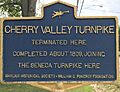
The Cherry Valley Turnpike marker.
-
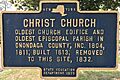
Christ Church marker.
-
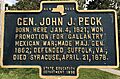
General John J. Peck marker.
-
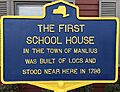
The First Schoolhouse marker.
-
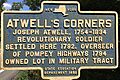
Atwell's Corners marker.
-
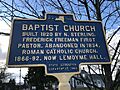
Baptist Church in Pompey marker.
-
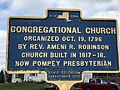
Congregational Church in Pompey marker.
-
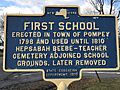
First School in Pompey marker.
-
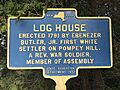
Log House in Pompey marker.
-
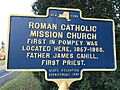
Roman Catholic Mission Church in Pompey marker.
-
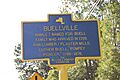
Buellville marker.
-
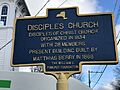
Disciples Church in Pompey marker.
-
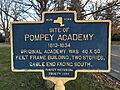
Site of Pompey Academy marker.


See also
