
Pokémon (video game series) facts for kids
Quick facts for kids Pokémon |
|
|---|---|
 |
|
| Genre | Role-playing |
| Developers | Game Freak ILCA |
| Publishers | |
| Creator | Satoshi Tajiri |
| Artist | Ken Sugimori |
| Composer | Junichi Masuda |
| Platforms | |
| First release | Pocket Monsters Red and Green (Japan) February 27, 1996 |
| Latest release | Pokémon Legends: Z-A October 16, 2025 |
| Spin-offs | See List of Pokémon spin-offs |
Pokémon is a super popular Japanese series of video games. In these games, you collect amazing creatures called Pokémon and train them for battles. The games were created by Satoshi Tajiri and developed by Game Freak. Nintendo and The Pokémon Company help publish them.
The very first Pokémon games, Pocket Monsters Red and Green, came out in Japan in 1996 for the Game Boy. Later, they were released around the world as Pokémon Red Version and Blue Version. Since then, new main Pokémon games have been released for almost every Nintendo handheld console. The newest main game, Pokémon Legends: Z-A, was released on October 16, 2025, for the Nintendo Switch and Nintendo Switch 2.
The Pokémon world also includes many other types of games, like action games, puzzle games, and even digital pet games. Beyond video games, Pokémon is a huge franchise with popular TV shows, movies, and lots of toys and merchandise. It's one of the most successful media franchises ever! For example, the mobile game Pokémon Go has been downloaded over a billion times. By March 2025, over 489 million Pokémon games had been sold worldwide. This makes Pokémon the fourth best-selling video game series in history.
Contents
Exploring the Pokémon World
Every Pokémon game takes you to a new, exciting region. These regions are often inspired by real places around the world. Your adventure begins when you receive your first Pokémon from the region's Pokémon Professor. You usually get to pick one of three different types of starter Pokémon.
As you play, you'll often meet a rival. This character challenges you and helps you get stronger. A big part of most games is stopping a bad group. These groups usually want to use powerful Legendary Pokémon for their own plans.
How Pokémon Battles Work

Battles are a core part of Pokémon games. They help your Pokémon gain experience points and grow stronger. You also battle to move forward in the story. You can even battle your friends by connecting your game systems!
Most Pokémon games use a turn-based battle system. This means you and your opponent take turns choosing actions. You can carry up to six Pokémon in your team. When a battle starts, your first Pokémon enters the fight. During your turn, you can choose to:
- Use a move (attack)
- Use an item
- Switch your Pokémon
- Try to run away (if it's a wild Pokémon)
Each Pokémon has Hit Points (HP). When a Pokémon's HP drops to zero, it faints and can't battle anymore. Your Pokémon also have special "abilities" that help them in battle. When an opponent's Pokémon faints, your Pokémon earn experience. Get enough experience, and your Pokémon will level up!
If all your Pokémon faint, you lose the battle. You'll lose some money and return to the last Pokémon Center you visited. However, in games like Pokémon Legends: Z-A, battles are more real-time. You and your Pokémon move around the field, using moves strategically. If your character takes too much damage, you return to a Pokémon Center.
Pokémon Types and Strengths
Every Pokémon and its moves have a "type." This is like an elemental power. Types work like a rock–paper–scissors game. For example, a Water-type move is strong against a Fire-type Pokémon. This means it does double damage! But a Fire-type move would be weak against a Water-type Pokémon, doing half damage. Some types even make a Pokémon immune to certain attacks.
Catching and Evolving Pokémon

You can find and catch wild Pokémon in many areas. First, you battle them to make them weaker. Then, you throw a Poké Ball to try and capture them! Once caught, the Pokémon joins your team or goes into storage.
Pokémon can also "evolve." This happens when they reach a certain level, use a special item, or become very friendly with you. Evolution changes their look and makes them much stronger. Trading Pokémon with other players is also a big part of the games. It helps you collect all the different species. Some Pokémon even need to be traded to evolve! You might also find rare "Shiny Pokémon," which have different colors than normal Pokémon.
Important Places in the Pokémon World
As you travel, you'll find helpful places:
- Pokémon Centers: Here, your Pokémon can be healed for free. You can also use a computer to manage your Pokémon collection and items. In newer games, you can access your stored Pokémon almost anywhere!
- Poké Marts: These are shops where you can buy useful items with the money you earn from battles.
- Pokémon Gyms: Many towns have a Gym. Inside, you'll find a powerful Trainer called a Gym Leader. Defeating them earns you a Gym Badge. Collect eight badges, and you can challenge the region's Elite Four and Champion! Some games, like Pokémon Sun and Moon, have "trials" instead of Gyms. Games like Pokémon Legends: Arceus and Pokémon Legends: Z-A have different ways to test your skills.
After you beat the main story, the game usually continues. Your ultimate goal is to catch at least one of every Pokémon species. This helps you complete your Pokédex, a digital encyclopedia of all Pokémon!
Meet the Recurring Characters
The Pokémon games have many characters. Some appear in different games and stories. Here are a few of the most well-known:
- Red レッド (Reddo): Red was the main character in the very first Pokémon games. He is a quiet trainer who became a strong opponent for players in later games. He has appeared in many games, including Gold, Silver, Sun, and Moon.
- Professor Samuel Oak オーキド・ユキナリ博士 (Ōkido Yukinari-hakase): Professor Oak is a famous Pokémon researcher. He is also the grandfather of Blue. In the first games, he gives players their very first Pokémon. He appears in many games and the Pokémon TV show.
- Blue グリーン (Gurīn, lit. Green) : Blue is Red's rival and Professor Oak's grandson. He is very competitive and always tries to be ahead of you. He became a Gym Leader in later games. Blue has appeared in many games, including Gold, Silver, Sun, and Moon.
- Giovanni サカキ (Sakaki): Giovanni is the leader of the bad group called Team Rocket. He also ran the Viridian City Gym in the first games. He often tries to use powerful Pokémon for his own plans. Giovanni appears in many games and the Pokémon TV show.
- Steven Stone ツワブキ・ダイゴ (Tsuwabuki Daigo): Steven is the Champion of the Hoenn region in some games. He loves rocks and minerals. He often helps the player stop bad groups like Team Magma and Team Aqua. Steven has appeared in games like Ruby, Sapphire, and Emerald.
- Cynthia シロナ (Shirona): Cynthia is the Champion of the Sinnoh region. She is very interested in myths and history. She helps the player fight against the bad group Team Galactic. Cynthia appears in games like Diamond, Pearl, and their remakes.
- Hex Maniac オカルトマニア (Okarutomania, lit. Occult Maniac) : This is not one person, but a type of Trainer who uses Ghost-type Pokémon. They are known for their unique look, especially after a redesign in Pokémon X and Y.
- "Looker" ハンサム (Hansamu, lit. Handsome) : Looker is a member of the international police. He often helps players investigate criminal groups like Team Galactic and Team Plasma. He is good at disguises and has appeared in many games, including Platinum, Black, White, X, Y, Sun, and Moon.
The Journey of Pokémon Games
The Pokémon games have grown a lot since they first started! New games are released in "generations," and each generation brings new Pokémon, new stories, and sometimes new ways to play.
Early Adventures: Generations 1-3
The first Pokémon games, Red and Green, came out in 1996 for the Game Boy. They introduced the first 151 Pokémon and the basic idea of catching, training, and battling. An updated version, Pokémon Yellow, followed, which looked more like the popular TV show.
The second generation started in 1999 with Gold and Silver for the Game Boy Color. These games added 100 new Pokémon and cool features like a day-and-night cycle. You could also visit two regions!
In 2002, Ruby and Sapphire launched the third generation on the Game Boy Advance. These games brought 135 new Pokémon, better graphics, and new battle styles like 2-on-2 fights.
Growing Stronger: Generations 4-6
The fourth generation began in 2006 with Diamond and Pearl for the Nintendo DS. These games introduced 107 new Pokémon and were the first to mix 3D backgrounds with 2D characters. They also added online multiplayer battles!
In 2010, Black and White started the fifth generation on the Nintendo DS. These games had the most new Pokémon in one generation (156!). They also introduced a seasonal cycle that changed the game world.
The sixth generation arrived in 2013 with Pokémon X and Y for the Nintendo 3DS. These were the first main games to feature full 3D graphics! They also introduced the new Fairy-type Pokémon and the powerful Mega Evolution.
Modern Eras: Generations 7-9
The seventh generation started in 2016 with Sun and Moon for the Nintendo 3DS. These games brought 88 new Pokémon, special Alolan forms, and powerful Z-moves. Later, Pokémon: Let's Go, Pikachu! and Let's Go, Eevee! were released for the Nintendo Switch in 2018.
In 2019, Sword and Shield launched the eighth generation on the Nintendo Switch. These games introduced 96 new Pokémon, new Galarian forms, and giant Dynamax and Gigantamax Pokémon. Remakes of older games, Brilliant Diamond and Shining Pearl, and a new adventure, Pokémon Legends: Arceus, also came out in this generation.
The ninth and current generation began in 2022 with Scarlet and Violet for the Nintendo Switch. These games added 120 new Pokémon and introduced the Paldea region. The newest game, Pokémon Legends: Z-A, was released on October 16, 2025, and brought back Mega Evolution. Looking ahead, Pokémon Winds and Waves has been announced for 2027 on the Nintendo Switch 2.
Main Pokémon Games
The Pokémon series has many main role-playing games. Each game lets players explore a new region, meet new characters, and discover new Pokémon. Here's a simple list of the main games by generation:
- First Generation (Game Boy): Red, Green, Blue, Yellow
- Second Generation (Game Boy Color): Gold, Silver, Crystal
- Third Generation (Game Boy Advance): Ruby, Sapphire, FireRed, LeafGreen, Emerald
- Fourth Generation (Nintendo DS): Diamond, Pearl, Platinum, HeartGold, SoulSilver
- Fifth Generation (Nintendo DS): Black, White, Black 2, White 2
- Sixth Generation (Nintendo 3DS): X, Y, Omega Ruby, Alpha Sapphire
- Seventh Generation (Nintendo 3DS, Nintendo Switch): Sun, Moon, Ultra Sun, Ultra Moon, Let's Go, Pikachu!, Let's Go, Eevee!
- Eighth Generation (Nintendo Switch): Sword, Shield, Brilliant Diamond, Shining Pearl, Legends: Arceus
- Ninth Generation (Nintendo Switch, Nintendo Switch 2): Scarlet, Violet, Legends: Z-A
- Tenth Generation (Nintendo Switch 2): Winds, Waves (announced for 2027)
Images for kids
-
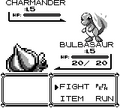
Pokémon Red, Blue, and Yellow were the first games in the series.
-
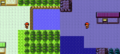
Pokémon Gold and Silver introduced a day-night cycle.
-
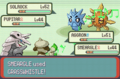
Pokémon Ruby and Sapphire introduced double battles.
-
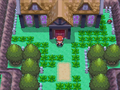
Pokémon Diamond and Pearl used 3D graphics for backgrounds.
-
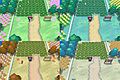
Pokémon Black and White introduced a seasonal cycle.
-
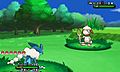
Pokémon X and Y were the first games with full 3D graphics.


See also
 In Spanish: Pokémon (serie de videojuegos) para niños
