
Nintendo facts for kids

Logo used since May 2016
|
|

Headquarters in Kyoto, Japan
|
|
|
Native name
|
任天堂株式会社
|
|---|---|
|
Romanized name
|
Nintendō kabushiki gaisha |
|
Formerly
|
|
| Public | |
| Traded as |
|
| Industry |
|
| Founded | 23 September 1889 in Shimogyō-ku, Kyoto, Japan |
| Founder | Fusajiro Yamauchi |
| Headquarters | 11–1 Kamitoba Hokodatecho,
Minami-ku, Kyoto
,
Japan
|
|
Area served
|
Worldwide |
|
Key people
|
|
| Products | List of products |
| Brands |
Video game series
Animal Crossing
Art Style Big Brain Academy bit Generations BoxBoy! Brain Age Chibi-Robo! Cruis'n Custom Robo Donkey Kong Dr. Mario Excite F-Zero Famicom Detective Club Fire Emblem Fossil Fighters Golden Sun Kid Icarus Kirby The Legend of Zelda The Legendary Starfy Mario Mario Kart Mario Party Metroid Mother Pikmin Pilotwings Pokémon Punch-Out!! Puzzle League Rhythm Heaven Splatoon Star Fox Super Mario Super Smash Bros. Touch! Generations Wario Wars Wii Xenoblade Chronicles Yoshi |
|
Production output
|
|
| Services |
|
| Revenue |  ¥1.601 trillion (US$13.923 billion) (2023) ¥1.601 trillion (US$13.923 billion) (2023) |
|
Operating income
|
¥504.3 billion (US$3.678 billion) (2023) |
| ¥432.7 billion (US$3.156 billion) (2023) |
|
| Total assets |  ¥2.662 trillion (US$21.866 billion) (2023) ¥2.662 trillion (US$21.866 billion) (2023) |
| Total equity | ¥2.069 trillion (US$16.995 billion) (2023) |
|
Number of employees
|
8,205 (2025) |
| Divisions |
|
| Subsidiaries |
List
1-Up Studio
iQue Mario Club Monolith Soft Next Level Games Nintendo Cube Nintendo European Research & Development Nintendo Pictures Nintendo Sales Nintendo Software Technology Nintendo Stars Nintendo Systems (80%) Nintendo Technology Development Retro Studios Shiver Entertainment Systems Research & Development |
Nintendo Co., Ltd. is a famous Japanese company that makes video games and consoles. It's based in Kyoto, Japan. Nintendo also creates other fun things like movies and toys.
The company started way back in 1889. A craftsman named Fusajiro Yamauchi began by making special Japanese playing cards called hanafuda. Over time, Nintendo explored different businesses. In the 1960s, they started making toys. Later, they moved into video games.
Nintendo made its first arcade games in the 1970s. Their first home game system, the Color TV-Game, came out in 1977. Nintendo became super popular worldwide in the 1980s. This was thanks to arcade games like Donkey Kong (1981). Also, the Nintendo Entertainment System (NES) launched outside Japan with Super Mario Bros. in 1985.
Since then, Nintendo has made many successful game consoles. These include the Game Boy (1989), Super Nintendo Entertainment System (1991), Nintendo DS (2004), Wii (2006), and Nintendo Switch (2017). They also created many beloved game series. Some of these are Mario, The Legend of Zelda, Pokémon, and Super Smash Bros..
Nintendo's mascot, Mario, is one of the most famous characters ever! Other Nintendo characters like Luigi, Donkey Kong, Link, and Pikachu are also known around the world. Nintendo's games have inspired movies and even theme park areas. As of May 2025, Nintendo has sold over 860 million game consoles globally. More than 5.9 billion games have been sold for these systems. Nintendo is a very important and successful company in the gaming world.
Contents
- Nintendo's History
- Nintendo's Beginnings
- The Age of Electronics
- Early Video Games (1973–1978)
- Game & Watch and NES (1979–1987)
- Game Boy and Super NES (1988–1994)
- Virtual Boy, Nintendo 64, and Game Boy Color (1995–2000)
- Game Boy Advance and GameCube (2001–2003)
- Nintendo DS and Wii (2004–2010)
- Nintendo 3DS, Wii U, and Mobile Games (2011–2016)
- Nintendo Switch and New Media (2017–2024)
- Nintendo Switch 2 (2025–Present)
- Nintendo's Products
- How Nintendo Works
- Nintendo's Marketing
- Nintendo's Policies
- Nintendo's Impact
- Images for kids
- See also
Nintendo's History
Nintendo's Beginnings
Making Playing Cards (1889–1932)
Nintendo started on September 23, 1889. A skilled craftsman named Fusajiro Yamauchi founded it in Shimogyō-ku, Kyoto, Japan. His goal was to make and sell Japanese playing cards called hanafuda. These are also known as "flower cards."
The name "Nintendo" might mean "leave luck to heaven." But no one knows for sure what it truly means. Hanafuda cards became popular after Japan made most gambling illegal in 1882. Yamauchi's company became the main maker of hanafuda cards. He hired helpers to make many cards because they were so popular.
Even with a good start, the business had challenges. Making cards was slow and costly. The cards also lasted a long time, so people didn't need to buy new ones often. To fix this, Nintendo made cheaper cards. They also sold cards in other cities such as Osaka.
Around 1902, Nintendo started selling Western-style playing cards. These cards became popular both in Japan and other countries. During this time, the business was also known as Marufuku Nintendo Card Co.
In 1907, Yamauchi's son-in-law, Sekiryo Kaneda, took over the business. By 1929, Nintendo was the largest playing card company in Japan.


Growing the Company (1933–1968)
In 1933, Sekiryo Kaneda officially made the company a partnership. It was named Yamauchi Nintendo & Co., Ltd. They built a new main office next to the old one. Sekiryo's grandson, Hiroshi Yamauchi, was chosen to be the next leader.
World War II made things hard for the company. People were less interested in games during this time. In 1947, Sekiryo started a new company, Marufuku Co., Ltd. This company handled Nintendo's sales and marketing.


In 1950, Hiroshi Yamauchi became the president. He made big changes. In 1951, he changed the company name to Nintendo Playing Card Co., Ltd. He also brought all the card-making factories together in Kyoto. In 1953, Nintendo was the first in Japan to mass-produce plastic playing cards. Some workers disagreed with these changes, but Hiroshi continued to lead the company forward.
In 1959, Nintendo teamed up with Walt Disney Productions. They put Disney characters on their playing cards. This made their cards popular with children. Nintendo also started selling its products in toy stores. By 1961, they had a branch in Chiyoda, Tokyo and sold over 1.5 million card packs.
In 1962, Nintendo became a public company. This meant people could buy shares in the company. The next year, the company changed its name to Nintendo Co., Ltd. They also started making other games, not just cards.
In 1964, Nintendo earned a lot of money. However, they relied too much on Disney cards for kids. When Disney card sales dropped, Nintendo faced challenges. Many Japanese people were finding new hobbies.
In 1965, Gunpei Yokoi joined Nintendo. He helped maintain the machines that made playing cards.

New Toys and Electronics (1969–1972)
In 1969, Nintendo invested more in research and development. Gunpei Yokoi moved to this new department. He helped create many new products. Nintendo built a new factory in Uji, near Kyoto. They also sold classic board games like chess and mahjong.
In 1970, Nintendo released Japan's first electronic toy, the Beam Gun. This was a light-sensing pistol designed by Masayuki Uemura. Over a million units were sold! Nintendo also worked with Magnavox to make a light gun for their new home video game console. Other popular toys from this time included the Ultra Hand, Ultra Machine, and Love Tester. These were all designed by Yokoi.
The Age of Electronics
Early Video Games (1973–1978)
As Nintendo's products became more popular, the company expanded its offices. Yokoi, Uemura, and new team members like Genyo Takeda kept creating new things. In 1973, they released the Laser Clay Shooting System, which was very popular.
However, the 1973 oil crisis made plastic more expensive. People also started buying essential items instead of toys. Nintendo faced financial difficulties during this time.
In 1974, Nintendo released Wild Gunman. This was an arcade game where players used a light gun to shoot at images projected from a film. Both Laser Clay Shooting System and Wild Gunman were successful in Europe and North America.

Nintendo saw the success of companies like Atari with video game consoles. So, in 1974, Nintendo got the rights to sell the Magnavox Odyssey in Japan. They also worked with Mitsubishi Electric to create their own video game products. This included the first microprocessor for video games and the Color TV-Game series.
Shigeru Miyamoto joined Nintendo in 1977. He helped design the look of the Color TV-Game consoles. In 1978, Nintendo's research department split into two teams. Yokoi led one, and Uemura led the other. Miyamoto's ideas, inspired by nature and popular culture, greatly influenced Nintendo's future games.

Game & Watch and NES (1979–1987)
By the late 1970s, Nintendo was facing financial struggles. In 1979, they opened an office in New York City. They also created a new team to develop arcade games.
In 1980, Gunpei Yokoi created the Game & Watch. This was one of the first handheld video game systems. It was very successful, selling over 43.4 million units worldwide. This success encouraged Nintendo to focus more on electronic games.

Nintendo entered the arcade game market with Sheriff (1979) and Radar Scope (1980). Radar Scope didn't do well outside Japan. This caused a financial problem for the company. To fix this, Miyamoto was asked to design a new arcade game.
This led to the release of Donkey Kong in 1981. It was one of the first platform games where the character could jump. The main character, Jumpman, later became Mario, Nintendo's famous mascot! Mario was named after Mario Segale, who owned Nintendo's office building in the US. Donkey Kong was a huge success in Japan and other countries.

In 1983, Nintendo released the Family Computer, or Famicom, in Japan. It came with games like Donkey Kong and Super Mario Bros.. The Famicom was so successful that Nintendo stopped making arcade games by late 1985. Nintendo also set rules for games made for the Famicom. This helped ensure quality and prevent too many games from flooding the market.
In the early 1980s, the video game market in the United States faced a big crash. Many low-quality games caused people to lose interest. To avoid this, Nintendo rebranded the Famicom for America. They called it the Nintendo Entertainment System, or NES. It launched in North America in 1985.
The NES came with amazing games like Super Mario Bros. and The Legend of Zelda. These games were created by Miyamoto and Takashi Tezuka. The music, composed by Koji Kondo, also became a key part of the games. The NES was produced until 1995, and the Famicom until 2003. Together, they sold about 62 million consoles worldwide. Nintendo also added an "Official Nintendo Seal of Quality" to its products. This helped customers know they were buying authentic games.

Game Boy and Super NES (1988–1994)
In 1988, Gunpei Yokoi and his team created the Game Boy. This was Nintendo's first handheld video game console. It was released in 1989. In North America, the Game Boy often came with the popular third-party game Tetris. The Game Boy was a huge hit! Its first 300,000 units in Japan sold out quickly.
Nintendo also worked with Sony to develop a CD-ROM add-on for the upcoming Super Famicom. However, this partnership didn't last. Sony later created its own PlayStation console.

In 1988, the first issue of Nintendo Power magazine was published. It was very popular in the United States. By 1989, over 25% of homes in the US had an NES.
In the late 1980s, Nintendo faced new competition. Other companies released 16-bit game consoles with better graphics and sound. In response, Uemura designed the Super Famicom. It launched in Japan in 1990. The first 300,000 consoles sold out in hours. The next year, a modified version, the Super Nintendo Entertainment System (Super NES), was released in the United States.
Launch games for the Super Famicom and Super NES included Super Mario World, F-Zero, and Pilotwings. By mid-1992, over 46 million Super Famicom and Super NES consoles had been sold. The console was produced until 1999 in the United States and until 2003 in Japan.

In 1990, the first Nintendo World Championships were held. Players from 29 American cities competed to be the "best Nintendo player in the world." Nintendo also opened new offices in Europe and Australia. In 1992, Nintendo bought a large share in the Seattle Mariners baseball team. In 1993, Star Fox was released. This game was special because it was one of the first to use a special chip for advanced graphics.
The rise of video games with intense graphics led to discussions about game content. Nintendo helped create the Entertainment Software Rating Board (ESRB) in 1994. This system helps rate games so families can choose what's right for them. Nintendo also launched new advertising campaigns like "Play It Loud!" for the Game Boy.
Virtual Boy, Nintendo 64, and Game Boy Color (1995–2000)
In 1995, Nintendo released the Virtual Boy. This console was designed by Yokoi and showed 3D graphics. However, many people were disappointed with the games and the red-colored graphics. Some even reported headaches. The system did not sell well and was soon discontinued. After this, Yokoi retired from Nintendo.

In February 1996, Pocket Monsters Red and Green were released in Japan for the Game Boy. These games, developed by Game Freak, started the incredibly popular Pokémon series. The games sold millions of copies and the series became a global phenomenon.
The Nintendo 64 was released in Japan in June 1996. It came out in the United States in September 1996 and in Europe in March 1997. This console was one of the first to use 64-bit technology. In 1997, Nintendo released the Rumble Pak. This device plugged into the controller and made it vibrate during games. By 2002, about 33 million Nintendo 64 consoles had been sold worldwide. It is remembered as one of the most famous video game systems. Games like Super Mario 64, The Legend of Zelda: Ocarina of Time, and GoldenEye 007 are considered some of the best games ever made.

In 1998, the Game Boy Color was released. It could play older Game Boy games and also had color graphics. Over 118.6 million Game Boy and Game Boy Color consoles have been sold worldwide.

In 2000, Nintendo's main offices moved to a new location in Kyoto.
Game Boy Advance and GameCube (2001–2003)
In 2001, Nintendo introduced two new consoles. The Game Boy Advance had a new design and was very popular. During its first week in North America, over 500,000 units were sold. By 2010, more than 81.5 million units had been sold worldwide.
The other console was the GameCube. It had a powerful processor from IBM and used miniDVDs for games. Even with its cool features, GameCube sales were lower than previous consoles. About 21.7 million units were sold worldwide. The GameCube faced tough competition.


In 2002, Hiroshi Yamauchi retired as president of Nintendo. Satoru Iwata was chosen as his successor. This was a big change, as Iwata was the first president not from the Yamauchi family. Yamauchi remained an advisor until 2005.
.png)
In 2003, Nintendo released the Game Boy Advance SP. This was an improved version of the Game Boy Advance. It had a foldable case, a lit-up screen, and a rechargeable battery. Over 43.5 million units were sold worldwide by 2010. Nintendo also released the Game Boy Player. This allowed Game Boy games to be played on the GameCube.
Nintendo DS and Wii (2004–2010)
In 2004, Nintendo released the Nintendo DS. This console had exciting new features like two screens, one of which was a touchscreen. It also had wireless connectivity for multiplayer games. The Nintendo DS sold over 154 million units, making it one of the most successful consoles ever!

In 2005, Nintendo released the Game Boy Micro, the last system in the Game Boy line. Later that year, the Nintendo World Store opened in New York City.
Nintendo's next home console, the Wii, was released in November 2006. Nintendo wanted the Wii to appeal to many different people, not just traditional gamers. They invested a lot in advertising to reach a wider audience.
The Wii had amazing innovations. Its Wii Remote controller used motion sensors to detect movement in 3D space. This made games very interactive and fun. By 2016, over 101 million Wii consoles had been sold worldwide. It was the most successful console of its generation.

Many accessories were released for the Wii, like the Wii Balance Board and the Wii Wheel. In 2009, Nintendo held a large share of the worldwide handheld gaming market.
.jpg)
Nintendo 3DS, Wii U, and Mobile Games (2011–2016)
In 2011, Nintendo released the Nintendo 3DS. This console could create 3D effects without needing special glasses. By early 2019, over 75 million units had been sold worldwide.

In 2012, the Wii U was introduced. It featured high-definition graphics and a special GamePad controller with a screen. The Nintendo 2DS, a version of the 3DS without the 3D effects, was released in 2013. The Wii U sold 13.5 million units worldwide. In 2014, Nintendo released Amiibos, which are figures of Nintendo characters that interact with games.

In 2015, Satoru Iwata passed away. Tatsumi Kimishima became the new president of Nintendo. Nintendo also started making agreements to bring its games to smart devices and amusement parks.
.jpg)
In March 2016, Nintendo released its first mobile app, Miitomo. Since then, they have made other popular apps like Super Mario Run, Fire Emblem Heroes, and Pokémon Go. Pokémon Go was developed by Niantic and became a huge success. In November 2016, the NES Classic Edition was released. This was a smaller version of the original NES with many classic games. Its successor, the Super NES Classic Edition, came out in September 2017.
Nintendo Switch and New Media (2017–2024)
The Nintendo Switch, the successor to the Wii U, was released in March 2017. The Switch has a unique design. It can be played as a home console connected to a TV or as a handheld device. Its Joy-Con controllers have motion sensors and can be used in many ways. Nintendo worked with many developers to create games for the Switch. By February 2019, over 1,800 Switch games were available.


The Switch has shipped over 150 million units worldwide as of December 2024. This makes it the third-best selling console of all time. It is also Nintendo's most successful home console, selling more than the Wii.
In 2018, Shuntaro Furukawa became Nintendo's president. In 2019, Doug Bowser became the president of Nintendo of America. Nintendo also partnered with Tencent to sell the Nintendo Switch in China.

In 2020, Super Nintendo World, a theme park area, opened at Universal Studios Japan. Nintendo also co-produced an animated film, The Super Mario Bros. Movie, with Universal Pictures and Illumination. Shigeru Miyamoto was one of the producers. In 2021, Nintendo shared plans to create more animated projects based on their games. They wanted to reach people who might not usually play video games. In 2022, Nintendo acquired Dynamo Pictures, a CG company, and renamed it Nintendo Pictures. This showed their commitment to animation.

In 2022, Nintendo acquired SRD Co., Ltd., a company that helped develop many of Nintendo's early games. In 2023, Super Nintendo World opened at Universal Studios Hollywood. A Donkey Kong-themed expansion opened at Universal Studios Japan in 2024. The Super Mario Bros. Movie was released on April 5, 2023. It earned over $1.3 billion worldwide, setting many box-office records.
In May 2024, Nintendo acquired Shiver Entertainment. This company specializes in bringing big games like Hogwarts Legacy to the Switch. In October 2024, the Nintendo Museum opened in Uji, Japan. This museum is on the site of a former Nintendo factory. The same month, Nintendo announced Nintendo Music, a mobile app for listening to game soundtracks. By November 2024, Nintendo gained full ownership of Monolith Soft, a developer known for Xenoblade Chronicles.
Nintendo Switch 2 (2025–Present)
The successor to the Switch, the Nintendo Switch 2, was released on June 5, 2025. It features a larger screen and more storage than the original Switch. It also has updated graphics, controllers, and social features. The Switch 2 supports 1080p resolution and a 120 Hz refresh rate in handheld mode. When docked, it supports 4K resolution with a 60 Hz refresh rate.


On June 10, 2025, Nintendo reported that the Switch 2 had sold over 3.5 million units worldwide. This made it the fastest-selling console in history. In September 2025, Nintendo announced that a sequel to The Super Mario Bros. Movie, titled The Super Mario Galaxy Movie, is planned for release on April 3, 2026. On November 27, 2025, Nintendo announced plans to acquire Bandai Namco Studios Singapore. This studio will be rebranded as Nintendo Studios Singapore.
Nintendo's Products
Nintendo mainly focuses on creating and selling fun products. These include video games, game consoles, and card games. Their biggest markets are Japan, America, and Europe. Over 70% of their sales come from America and Europe. As of May 2025, Nintendo has sold over 860 million game consoles. More than 5.9 billion video games have been sold globally.
Toys and Cards
Nintendo started by making hanafuda playing cards. Over the years, they also created many popular toys.
Video Game Consoles
Since the Color TV-Game in 1977, Nintendo has made many types of game consoles. These include home consoles, handheld consoles, and hybrid consoles.
In the 1980s, the Game & Watch and Nintendo Entertainment System were very successful. In the 1990s, Nintendo launched the Super Nintendo Entertainment System and Nintendo 64. The Game Boy handheld console also became a global hit. In the 2000s, Nintendo found great success again with the Nintendo DS and Wii. Each console has different accessories and controllers. Examples include the NES Zapper, Game Boy Camera, Wii MotionPlus, and Switch Pro Controller.
Video Games
Nintendo's first electronic games were arcade games. EVR Race (1975) was an early electronic game. Donkey Kong (1981) was one of the first platform games ever.
Since then, Nintendo and other companies have made many video games for Nintendo consoles. Nintendo's games are sold as physical cartridges or discs. They are also available digitally through services like the Nintendo eShop and Nintendo Network.
How Nintendo Works
Nintendo's teams work on different parts of game creation. They have three main divisions:
- Nintendo Entertainment Planning & Development (EPD): This team creates and supervises video games and software.
- Nintendo Platform Technology Development (PTD): This team designs the hardware for consoles and develops their operating systems.
- Nintendo Business Development (NBD): This team works on business plans and oversees mobile game development.
Entertainment Planning and Development (EPD)
The EPD division is Nintendo's main team for making games. It was formed in 2015. Led by Shinya Takahashi, this team has over 800 people. They include engineers, producers, designers, and more.
Platform Technology Development (PTD)
The PTD division combines Nintendo's former hardware development teams. Led by Ko Shiota, this team designs consoles and develops the software that makes them run. They also maintain the Nintendo Network.
Business Development (NBD)
The NBD division was created when Nintendo started making games for smart devices like phones and tablets. This team helps improve Nintendo's business model for games and oversees mobile game development.
Nintendo Offices Around the World
Nintendo has offices in many countries. These offices help manage operations in different regions.
Nintendo Co., Ltd.
Nintendo's main office is in Kyoto, Japan. It oversees all of Nintendo's global operations. It also manages operations specifically in Japan. Nintendo's two biggest offices outside Japan are Nintendo of America and Nintendo of Europe.
- Nintendo's corporate headquarters throughout history
-
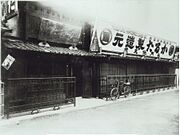
1889–1933, in Shimogyō-ku, Kyoto
-
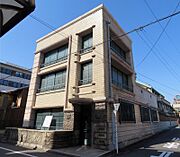
1933–1959, in Shimogyō-ku, Kyoto
-
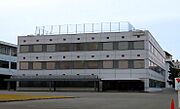
1959–2000, in Higashiyama-ku, Kyoto
-
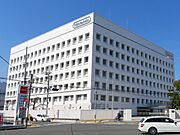
2000–present, in Minami-ku, Kyoto
_-_panoramio.jpg)
Nintendo of America Inc. (NOA)
Nintendo opened its North American office, Nintendo of America (NoA), in 1980. Hiroshi Yamauchi appointed his son-in-law Minoru Arakawa as president. They started in New York City.
NoA faced challenges with early arcade games. To save the company, Shigeru Miyamoto was asked to design a new game. This led to the creation of Donkey Kong in 1981. This game was a huge success and saved NoA. The character Mario was named after Mario Segale, who owned Nintendo's warehouse in Tukwila, Washington.

NoA used the profits from Donkey Kong to launch the Nintendo Entertainment System in 1985. This helped bring the video game industry back to life after a big crash.
Today, Nintendo of America's main office is in Redmond, Washington. They also have a distribution center in North Bend, Washington. Nintendo of America's Canadian branch is in Vancouver, British Columbia. Nintendo Treehouse is NoA's team that translates games from Japanese to English and helps with marketing.
In October 2021, Nintendo of America closed its offices in Redwood City, California, and Toronto. Their operations moved to the Redmond and Vancouver offices.
Nintendo of Europe SE (NOE)
Nintendo's European office was set up in June 1990 in Frankfurt, Germany. This office handles Nintendo's business across Europe and South Africa. Nintendo of Europe's UK branch manages operations in the UK and Ireland.
In 2014, NOE made some changes and moved all its operations to its Frankfurt location. As of July 2018, the company employed 850 people. In 2020, Nintendo of Europe moved to a new headquarters in Frankfurt.
- Nintendo of Europe headquarters
-

Former Nintendo of Europe headquarters in Großostheim, Germany, until 2014
-
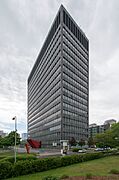
Former Nintendo of Europe headquarters in Frankfurt, Germany, until 2020
-

Former Nintendo of Europe (formerly Nintendo Iberica) office in Lisbon, Portugal, until 2025
-
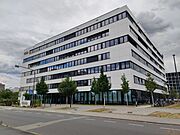
Current Nintendo of Europe headquarters in Frankfurt, Germany, after 2020


Nintendo Australia Pty. Ltd. (NAL)
Nintendo Australia was established in June 1993. It is based in Scoresby, Victoria, Australia. This office handles publishing, distribution, sales, and marketing for Nintendo products in Australia and New Zealand.
Nintendo of Korea
Nintendo's South Korean office was set up on July 7, 2006, in Seoul. In March 2016, the office became smaller due to company changes. However, Nintendo continued to release games in South Korea. Takahiro Miura became the CEO in 2018. In April 2025, their website accidentally showed a young Pauline in Donkey Kong Bananza.
Nintendo Singapore
Nintendo's Singaporean office was established on September 26, 2025. Takahiro Miura is the manager. In November 2025, Nintendo announced plans to acquire Bandai Namco Studios Singapore and rename it Nintendo Studios Singapore.
Greater China
Nintendo Phuten was in Taipei, Taiwan, from 1991 to 2014. It distributed Nintendo products in Taiwan. After it closed, Nintendo (Hong Kong) Limited took over. In 2025, Nintendo Taiwan Co., Ltd. was formed in Taipei to handle sales in that region.
Nintendo (Hong Kong) Limited was created on April 7, 2005. It marketed the Wii in Hong Kong. It now handles Nintendo console distribution in Hong Kong.
Other Companies Nintendo Works With
Nintendo works with many other companies to create games and hardware.
- 1-Up Studio and Nintendo Cube are in Tokyo, Japan.
- Monolith Soft has studios in Tokyo and Kyoto.
- Retro Studios and Shiver Entertainment are in the United States.
- Next Level Games is in Canada.
- The Pokémon Company was created by Nintendo, Creatures, and Game Freak to manage the Pokémon brand.
- Nintendo Stars (formerly Warpstar, Inc.) focuses on multimedia projects involving Nintendo characters.
Other Distributors
Nintendo also works with other companies to distribute its products around the world.
Active Boeki
Active Boeki distributes Nintendo products in Southeast Asia and the Middle East. They work with local sellers like Maxsoft in Singapore, Malaysia, Indonesia, Thailand, and the Philippines. Active Boeki also works with Active Gulf and Shas Samurai in the Middle East. In 2023, AIC Trading took over distribution in Saudi Arabia.
Bergsala
Bergsala, a company in Sweden, handles Nintendo's business in the Nordic countries. They started working with Nintendo in 1981, distributing Game & Watch units.
Tencent
Nintendo has partnered with Tencent to release Nintendo products in China. Tencent helps with getting government approval for video games.
Tor Gaming
In 2019, Tor Gaming Ltd. became Nintendo's official distributor in Israel. They opened an official online store and a retail store in Tel Aviv.
Nintendo's Marketing
Nintendo uses many slogans to promote its brand. One famous slogan was "Now you're playing with power!" for the Nintendo Entertainment System. They changed it to "SUPER power" for the Super Nintendo Entertainment System and "PORTABLE power" for the Game Boy.
Their 1994 "Play It Loud!" campaign was aimed at teenagers. For the Nintendo 64, the slogan was "Get N or get out." The GameCube used "Who Are You?" to connect games with players' identities. The Nintendo DS used "Touching is Good." For the Wii, they used "Wii would like to play." The Nintendo 3DS used "Take a look inside." The Wii U used "How U will play next." The Nintendo Switch uses "Switch and Play" in North America and "Play anywhere, anytime, with anyone" in other regions.
Protecting the Brand
In the 1990s, Nintendo was so popular that some people used "Nintendo" to mean any video game console. To protect its brand name, Nintendo encouraged people to use the term "game console" instead. This helped keep "Nintendo" as a unique brand name.
Nintendo Stores
Nintendo has its own stores and licenses others around the world.
Hong Kong
In Hong Kong, a company operates several Nintendo Switch stores called NSEW. The first opened in March 2020. Another store, Assemble, opened in Wan Chai in November 2024.
Israel
In June 2019, Nintendo's official Israeli distributor, TorGaming Ltd., opened the Nintendo Israel store in Tel Aviv.
Japan
Nintendo opened its first self-managed store in Japan, Nintendo Tokyo, in November 2019. It is located in Shibuya Parco. Since then, two more stores have opened: Nintendo Osaka in November 2022 and Nintendo Kyoto in October 2023.
Saudi Arabia
In May 2012, Shas Samurai, Nintendo's representative in Saudi Arabia, opened a "Nintendo World Store" in Riyadh.
United States
Nintendo opened its first retail store, Nintendo World (now Nintendo New York), in New York City in May 2005. Nintendo opened its second US store, Nintendo San Francisco, in May 2025.
Pop-Up Stores
Nintendo also launched temporary "pop-up stores" in various Japanese cities starting in 2021. Later, in 2023, pop-up stores appeared in Seoul, Singapore, and Hong Kong.
Nintendo Logos
Nintendo's most famous logo is the oval shape with the word "Nintendo" inside. A red version was used in Western markets from 1985 to 2006. In Japan, a black and white version was often used on consoles and packaging.
Since 2006, with the launch of the Wii, Nintendo started using a gray logo with a transparent background. This is still Nintendo's official company logo. For products and marketing, a white logo on a red background has been used since 2016, especially with the Nintendo Switch.
-

1889–1950
-
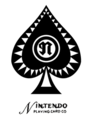
1950–1960
-

1960–1965
-
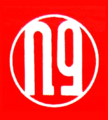
1965–1967
-

1967–1968
-
1968–1970
-

1970–1972
-

1972–1975
-
1975–present
-

1975 logo with grey coloring, 2004–2016
-
1975 logo with red background, 2016–present


Nintendo's Policies
Financial Approach
Unlike many Japanese companies, Nintendo keeps a large amount of cash saved up. This policy was set by Hiroshi Yamauchi. As of September 2025, the company had about ¥1.5 trillion in cash reserves. This money has helped Nintendo recover from slow sales of consoles like the GameCube and Wii U. It also helps them invest in long-term projects.
Content Guidelines
For many years, Nintendo had strict rules for games on its consoles. They wanted to ensure games were family-friendly. Nintendo of America had rules against certain types of content. This was to make sure games were suitable for children.
For example, in the early days, Nintendo asked game publishers to change some content. This was seen with the game Mortal Kombat. Nintendo asked for red blood to be changed to white sweat in the Super NES version. However, with the introduction of game rating systems like the Entertainment Software Rating Board (ESRB) in 1994, Nintendo changed its approach. They now let rating systems guide consumers' choices.
Today, Nintendo still ensures that games rated for adults only (AO-rated) are not licensed on its consoles in North America. This is a practice also followed by Sony and Microsoft. Nintendo now allows many games with mature content to be published on its consoles. These include games like Perfect Dark, Resident Evil series, and Bayonetta 2.
Sometimes, small changes are still made to games. For example, references to cigarettes were removed from the Game Boy Color game Metal Gear Solid.
License Guidelines
Before 1993, Nintendo of America also had rules for companies making games for the Nintendo Entertainment System. These rules helped prevent too many games from flooding the market. For example, a company could only make a certain number of games per year for a Nintendo console.
These rules sometimes led to companies finding creative ways to make more games. For instance, Konami created other companies like Ultra Games to publish more titles.
In 1993, a lawsuit was filed against Nintendo. It claimed their system for controlling games was unfair. The case was settled, and some consumers received discount coupons for games.
Protecting Creations
Nintendo is very active in protecting its creations, both games and hardware. This started early with the arcade game Donkey Kong, which was copied a lot. Nintendo took legal action to stop unauthorized copies.
Since then, Nintendo has worked hard to prevent others from illegally copying its games. They also protect their characters and stories.
Seal of Quality


The "Official Nintendo Seal of Quality" is a special mark. It appears on games, systems, and accessories approved by Nintendo. This seal lets you know that the product is authentic and meets Nintendo's standards. It also appears on Nintendo-licensed merchandise like trading cards.
Game designer Sid Meier said the Seal of Quality was very important. It helped set a high standard for game quality. This protected players from buying low-quality games.
The seal's wording has changed over time. In North America, it now says: "The official seal is your assurance that this product is licensed or manufactured by Nintendo. Always look for this seal when buying video game systems, accessories, games, and related products."
Helping Others
In 1992, Nintendo teamed up with the Starlight Children's Foundation. They created Starlight Fun Center units for hospitals. These units provide games and entertainment to children during their hospital stays. By the end of 1995, 1,000 of these units were installed. They help cheer up children and provide a fun distraction.
Environmental Efforts
Nintendo offers a recycling program for customers to send back unused products. In 2011, Nintendo of America reported that 98% of returned products were reused or recycled.
Nintendo's Impact
Nintendo's choices, especially moving into electronic games, helped the entire gaming industry. It brought back trust in electronic games after a difficult time in the early 1980s. By 1991, Nintendo was a very successful company in Japan. Its products changed how people played games.
Nintendo is known for focusing on quality and new ideas. This has made it stand out from competitors like Sony and Microsoft. Forbes magazine has included Nintendo in its "World's Best Employers" list. Time magazine named Nintendo one of the "50 Genius Companies" in 2018. They highlighted the success of the Nintendo Switch.
Nintendo's characters have had a huge impact on popular culture. Mario is not just a company mascot; he is a "cultural icon." He is one of the most famous characters in gaming. Other well-known Nintendo characters include Princess Peach, Pikachu, Link, Donkey Kong, Kirby, and Samus Aran.
Images for kids
-
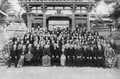
1949 New Year Nintendo staff commemoration
See also
 In Spanish: Nintendo para niños
- Lewis Galoob Toys, Inc. v. Nintendo of America, Inc.
- Universal City Studios, Inc. v. Nintendo Co., Ltd.
