
Ray Charles facts for kids
Quick facts for kids
Ray Charles
|
|
|---|---|

Charles in 1969
|
|
| Born |
Ray Charles Robinson
September 23, 1930 Albany, Georgia, U.S.
|
| Died | June 10, 2004 (aged 73) |
| Resting place | Inglewood Park Cemetery |
| Occupation |
|
| Years active | 1945–2004 |
| Spouse(s) |
|
| Children | 12 |
| Musical career | |
| Origin | Greenville, Florida, U.S. |
| Genres | |
| Instruments |
|
| Labels |
|
| Signature | |
 |
|
Ray Charles Robinson (born September 23, 1930 – died June 10, 2004) was an amazing American singer, songwriter, and pianist. Many people called him "The Genius" because he was so talented and had a huge impact on music in the 20th century. His friends often called him "Brother Ray." Ray Charles lost his eyesight when he was a child, probably because of a condition called glaucoma, and he always wore his famous dark glasses.
Ray Charles helped create soul music in the 1950s. He mixed different styles like blues, jazz, rhythm and blues, and gospel into his songs. Later, in the 1960s, he helped bring country music, R&B, and pop music together, especially with his popular Modern Sounds albums. He was one of the first Black musicians to have a lot of creative control over his music with a major record company.
Some of his biggest hits include "Georgia on My Mind" and "I Can't Stop Loving You." His album Modern Sounds in Country and Western Music was a huge success. Ray Charles won many awards for his music, including 17 Grammy Awards and the Grammy Lifetime Achievement Award. He was also one of the first musicians to be inducted into the Rock and Roll Hall of Fame in 1986. Music magazines like Rolling Stone have recognized him as one of the greatest artists and singers of all time. In 2022, he was also inducted into the Country Music Hall of Fame.
Contents
- Ray Charles: The Genius of Music
- Early Life and Musical Beginnings
- Starting His Music Career
- Rising to Stardom with Atlantic Records
- Crossover Success and New Sounds
- Later Career and Lasting Impact
- His Final Years and Lasting Music
- Ray Charles's Amazing Legacy
- Awards and Special Honors
- Standing Up for Civil Rights
- The Ray Charles Foundation: Helping Others
- Personal Life and Hobbies
- Discography
- Film and TV Appearances
- Ray Charles Quotes
- See also
Ray Charles: The Genius of Music
Early Life and Musical Beginnings

Ray Charles was born on September 23, 1930, in Albany, Georgia. His parents were Bailey Robinson and Aretha Robinson. When he was very young, Ray showed a keen interest in how things worked, often watching his neighbors fix cars and farm machines.
His love for music began at age three at Wylie Pitman's Red Wing Cafe. There, Pitman played boogie woogie on an old upright piano and taught young Ray how to play. Ray and his mother were always welcome at the cafe, even living there when they faced tough times. Ray also had a younger brother named George, who sadly passed away at age four.
Ray Charles started losing his sight when he was four or five years old. By the time he was seven, he was completely blind, likely due to glaucoma. This is why he wore his famous dark sunglasses. His mother, Aretha, worked hard to find a school that would accept a blind African-American student.
From 1937 to 1945, Ray attended the Florida School for the Deaf and the Blind in St. Augustine. There, he learned to play many instruments, including the piano, alto saxophone, clarinet, trumpet, and organ. He especially focused on the piano. His teachers helped him learn classical piano and how to read and write music using Braille.
When Ray was 14, his mother passed away in 1945. This was a very difficult time for him. After the funeral, he decided not to return to school.
Starting His Music Career
After leaving school, Ray Charles moved to Jacksonville to live with a friend of his late mother. He played piano for bands at the Ritz Theatre for over a year, earning $4 a night. He joined a musicians' union, which helped him find places to practice.
Ray started to become known as a talented musician in Jacksonville. However, jobs were not always easy to find. At age 16, he moved to Orlando, where he sometimes struggled to find food. He began writing music arrangements for a pop band.
In 1947, Ray moved to Tampa, working two jobs, including playing piano for Charles Brantley's Honey Dippers. Early in his career, he looked up to Nat King Cole as a role model. He made his first recordings around this time.
Ray always played piano for others, but he dreamed of having his own band. In March 1948, he moved to Seattle, Washington, with his friend Gossie McKee. There, he met and became friends with a 15-year-old Quincy Jones.
Ray, McKee, and Milton Garred formed The McSon Trio. They played late-night shows at the Rocking Chair club. In April 1949, their song "Confession Blues" became a national hit, reaching number two on the R&B chart. After this success, Ray moved to Los Angeles in 1950. He spent several years touring as the musical director for blues musician Lowell Fulson.
In 1951 and 1952, Ray Charles had more R&B hits like "Baby, Let Me Hold Your Hand" and "Kissa Me Baby." Soon after, he signed with Atlantic. He also worked as a record producer, helping Guitar Slim create the number one hit, "The Things That I Used to Do."
Rising to Stardom with Atlantic Records
_op_Schiphol,_Bestanddeelnr_921-7410.jpg)
In 1952, Ray Charles officially joined Atlantic Records. His first recordings for the label included "The Midnight Hour" and "Roll with My Baby." In 1953, "Mess Around" became his first small hit with Atlantic.
A major turning point came in late 1954 when he recorded "I've Got a Woman." This song became one of his most famous hits, reaching number two on the R&B chart. "I've Got a Woman" was special because it blended gospel, jazz, and blues styles. Over the next few years, he had more hits like "This Little Girl of Mine" and "Hallelujah I Love Her So."
Ray Charles also explored jazz music, releasing albums like The Great Ray Charles in 1957. He collaborated with other musicians, including vibraphonist Milt Jackson. By 1958, he was performing at famous venues like the Apollo Theater and Carnegie Hall. He also formed a female singing group called the Raelettes.
His biggest success at Atlantic was the song "What'd I Say." Ray said he created it spontaneously during a live performance. Even though some radio stations found the lyrics a bit too bold, the song became a huge hit. It reached number six on the Billboard Pop chart and number one on the R&B chart in 1959. Later that year, he released his first country song, "I'm Movin' On."
Crossover Success and New Sounds
In 1959, Ray Charles signed a new contract with ABC-Paramount. This was a very important deal because it gave him more creative freedom and ownership of his music. He started to focus on creating his own unique versions of existing songs.
His first hit single with ABC-Paramount was "Georgia on My Mind" in 1960. This song brought him national fame and won him four Grammy Awards. Ray Charles's version of "Georgia on My Mind" became an American classic and was even named the state song of Georgia in 1979. He won another Grammy for his next hit, "Hit the Road Jack."

By 1961, Ray Charles expanded his band into a big band. This allowed him to perform with a richer sound and reach an even wider audience. He became one of the few Black artists to achieve such mainstream pop success with so much artistic control. He faced some personal challenges during this time, but he always returned to his music.
In the early 1960s, Ray Charles had a scary experience when the pilot of his plane lost visibility during a snowstorm. The pilot managed to land the plane safely after a small opening appeared in the ice on the windshield. Ray believed this was a spiritual sign.
His 1962 album, Modern Sounds in Country and Western Music, and its sequel, were groundbreaking. They helped bring country music to a wider audience. His version of "I Can't Stop Loving You" was a massive hit, topping both the Pop and R&B charts. In 1962, he also started his own record label, Tangerine. He continued to have major pop hits with songs like "Busted" and "Take These Chains from My Heart" in 1963.
In 1964, Ray Charles's career had a pause due to personal issues. He took time to focus on his well-being and returned to music in 1966. His cover of "Crying Time" also won him a Grammy Award. In 1967, he had another top-twenty hit with "Here We Go Again."
Later Career and Lasting Impact
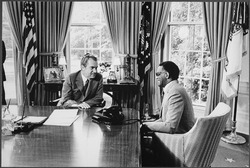
As music styles changed in the 1970s, Ray Charles's songs were played less often on the radio. However, he continued to record music actively. His album A Message from the People (1972) featured his unique gospel-influenced version of "America the Beautiful" and songs about important social issues like poverty and civil rights.
In 1974, Charles left ABC Records and started recording on his own label, Crossover Records. A few years later, in 1977, he reunited with Atlantic Records. He also appeared as the host of the TV show Saturday Night Live.
In April 1979, his version of "Georgia on My Mind" was officially declared the state song of Georgia. Ray Charles performed the song for the state legislature, which was a very emotional moment. In 1980, he appeared in the musical film The Blues Brothers. He also performed in South Africa in 1981 during a time of political tension, believing his music could bring people together.
His Final Years and Lasting Music
In 1983, Ray Charles signed with Columbia. He recorded several country albums and had hit duets with famous singers like Willie Nelson, George Jones, and Hank Williams Jr.. His duet with Willie Nelson, "Seven Spanish Angels," was very popular.
In 1985, Charles joined many other artists to record "We Are the World," a charity single to help people in Africa. He also collaborated with Quincy Jones and Chaka Khan on a cover of "I'll Be Good to You," which topped the R&B chart in 1990 and won a Grammy. He also had a duet with Billy Joel called "Baby Grand."

In 2001 and 2002, Ray Charles appeared in commercials for the New Jersey Lottery. In 2003, he performed at the White House Correspondents' Association Dinner in Washington, D.C. He also presented an award to Van Morrison at the Songwriters Hall of Fame and sang with him.
Ray Charles's final public appearance was on April 30, 2004, at the dedication of his music studio as a historic landmark in Los Angeles.
In 2003, Charles had hip replacement surgery and planned to tour again, but he began to have other health problems. He passed away on June 10, 2004, at the age of 73, from complications related to liver failure at his home in Beverly Hills, California. His funeral was attended by many famous musicians, including B. B. King, Stevie Wonder, and Wynton Marsalis, who performed tributes. He was buried in the Inglewood Park Cemetery.
His last album, Genius Loves Company, was released two months after his death. It featured duets with many admirers and friends, such as Norah Jones, Elton John, and Johnny Mathis. The album won eight Grammy Awards, including Album of the Year.
Ray Charles's Amazing Legacy

Ray Charles had one of the most recognizable voices in American music. Music experts described his voice as incredibly expressive, full of unique sounds like "slurs, glides, turns, shrieks, wails, breaks, shouts, screams and hollers." He could convey deep feelings without needing many words.
His musical style and success in R&B and jazz influenced many famous artists, including Elvis Presley, Aretha Franklin, Stevie Wonder, and Billy Joel. Music editor Joe Levy said that Ray Charles's hit records from the mid-1950s "mapped out everything that would happen to rock 'n' roll and soul music in the years that followed."
The movie Ray, which tells the story of his life and career, was released in October 2004. Jamie Foxx played Ray Charles in the film and won an Academy Award for Best Actor for his performance.
Awards and Special Honors

Ray Charles received many awards and honors throughout his life and after his passing.
- In 1979, he was one of the first musicians born in Georgia to be inducted into the Georgia Music Hall of Fame. His version of "Georgia on My Mind" became the official state song of Georgia.
- He received a star on the Hollywood Walk of Fame in 1981.
- In 1986, he was among the very first musicians inducted into the Rock & Roll Hall of Fame. He also received the prestigious Kennedy Center Honors that year.
- Ray Charles won 17 Grammy Awards and was given the Grammy Lifetime Achievement Award in 1987.
- In 1993, he was awarded the National Medal of Arts, the highest U.S. award for artistic achievement.
- He received the Polar Music Prize in 1998, one of Sweden's most important music awards.
- In 2001, Morehouse College honored him with the Candle Award and an honorary doctorate. Ray Charles donated $2 million to Morehouse to support music education.
- In 2003, Dillard University also gave him an honorary degree. After his death, he helped fund a professorship in African-American culinary history at the school.
- On September 22, 2004, Google honored Ray Charles with a Google Doodle on what would have been his 74th birthday.
- In 2010, the Ray Charles Performing Arts Center and Music Academic Building opened at Morehouse College.
- The United States Postal Service issued a forever stamp honoring Charles in 2013 as part of its Musical Icons series.
- In 2015, he was inducted into the Rhythm and Blues Music Hall of Fame.
- In 2016, U.S. President Barack Obama praised Ray Charles's version of "America the Beautiful" as "the most patriotic piece of music ever performed."
- In 2022, Ray Charles was inducted into the Country Music Hall of Fame, becoming the third African-American artist to receive this honor.
Standing Up for Civil Rights
On March 15, 1961, Ray Charles was scheduled to perform at a dance in Augusta, Georgia. However, he canceled the show when he learned that the dance floor was only for white people, and Black attendees had to sit in the balcony. Charles immediately left town and explained why he would not perform. He was later fined for breaking his contract.
The following year, on October 23, 1963, Ray Charles returned to perform at a concert in the same venue, but this time it was desegregated, meaning everyone could attend together. This event was shown in the 2004 film, Ray. In 2007, Ray Charles Plaza was opened in Albany, Georgia, featuring a statue of him seated at a piano.
The Ray Charles Foundation: Helping Others

The Ray Charles Foundation was started in 1986. Its main goal is to financially support organizations that research hearing disorders. It also helps institutions with educational programs for young people. The foundation has given money to many universities, including Benedict College and Morehouse College.
The foundation's offices are in the historic RPM International Building, which was once home to Ray Charles's own company. The building also houses the Ray Charles Memorial Library, which opened on his 80th birthday in 2010. The library aims to inspire creativity and imagination in young children through music and art, especially those who might not otherwise have access to such resources.
Personal Life and Hobbies
Ray Charles was married twice. His first marriage was brief, and his second marriage to Della Beatrice Howard Robinson lasted 22 years. They had three sons: Ray Charles Robinson Jr., David, and Robert. Ray Charles also had nine other children with different women, totaling 12 children.
In 2002, Ray Charles gathered his 12 children for a special lunch. He shared with them that he was very ill and had set up trusts of $500,000 for each of them.
Ray Charles loved playing chess. He learned to play as part of his therapy when he was younger. He used a special chess board with raised squares and holes for the pieces. He even played against a chess grandmaster, Larry Evans. When asked if people tried to cheat against a blind man, he would joke, "You can't cheat in Chess... I'm gonna see that!"
Discography
Ray Charles's music collection is very large and includes many original albums and compilation albums. He recorded for various labels throughout his career.
Film and TV Appearances
Ray Charles also appeared in several films and television shows.
Film
| Year | Title | Role | Notes |
|---|---|---|---|
| 1961 | Swingin' Along | Himself | |
| 1965 | Ballad in Blue | Himself | |
| 1966 | The Big T.N.T. Show | Himself | Documentary film |
| 1980 | The Blues Brothers | Ray | Cameo appearance |
| 1989 | Limit Up | Julius | |
| 1990 | Listen Up: The Lives of Quincy Jones | Himself | Documentary |
| 1994 | Love Affair | Himself | Cameo appearance |
| 1996 | Spy Hard | Bus Driver | Cameo appearance |
| 1998 | New Yorkers 2 | Himself | Cameo appearance |
| 2000 | The Extreme Adventures of Super Dave | Himself | |
| 2000 | Blue's Big Musical Movie | G-Clef (voice) | First voice and final film role before his death in 2004 |
| 2004 | Ray | Himself | Uncredited Archival footage |
| 2014 | Face of Unity | Himself | IMDB plot summary includes tributes to Nelson Mandela from President Barack Obama, Samuel L. Jackson, Ray Charles, Morgan Freeman. |
Television
| Year | Title | Role | Notes |
|---|---|---|---|
| 1977 | Saturday Night Live | Himself (host) | Season 3, Episode 5 |
| 1977 | Sesame Street | Himself | 3 episodes |
| 1987 | Who's the Boss | Himself | Episode: "Hit the Road, Chad" |
| 1987 | St. Elsewhere | Arthur Tibbits | Episode: "Jose, Can You See?" |
| 1987 | Moonlighting | Himself | Episode: "A Trip to the Moon" |
| 1987–1990 | Super Dave | Himself | 4 episodes |
| 1994 | Ray Alexander: A Taste for Justice | Television movie | |
| 1994 | Wings | Himself | Episode: "A Decent Proposal" |
| 1997–1998 | The Nanny | Sammy | 4 episodes |
Ray Charles Quotes
- "I was born with music inside me."
- "When I was going blind, I didn't turn to God. It didn't seem to me then — and it doesn't seem to me now — that those items were His concern. Early on, I figured I better begin to learn how to count on myself, instead of counting on supernatural forces."
- "Do it right or don't do it at all."
- "You better live every day like your last because one day you're going to be right."
- "Soul is when you take a song and make it a part of you — a part that's so true, so real, people think it must have happened to you. … It's like electricity — we don't really know what it is, do we? But it's a force that can light a room. Soul is like electricity, like a spirit, a drive, a power."
- " I just want to make my mark, leave something musically good behind. If it's a big record, that's the frosting on the cake, but music's the main meal."
- "Music is nothing separate from me. It is me."
See also
 In Spanish: Ray Charles para niños
- Album era
- Progressive soul
