
2026 Iran war facts for kids

The 2026 Iran war is a major conflict that began on February 28, 2026, involving Iran, the United States, and Israel, along with other countries and groups in the Middle East. It started with surprise airstrikes on Iran by the United States and Israel, which led to Iran responding with its own missile and drone attacks.
Iran, the US, and Israel agreed to a two-week ceasefire, arranged by Pakistan, starting on April 8. The ceasefire faced problems when Iran refused to reopen the Hormuz Strait, blaming Israeli attacks in Lebanon. After talks failed, Trump said he no longer wanted negotiations and announced a naval blockade of Iran starting April 13. On April 16, President Trump announced that Israel and Lebanon agreed to a 10-day truce. On April 17, Iran said commercial ships could pass through the Hormuz Strait during the truce in Lebanon. However, on April 18, Iran closed the Strait of Hormuz again because the US refused to lift its naval blockade.
On June 14, a plan to end the war was announced and signed on June 17 by President Trump and Iranian President Masoud Pezeshkian. The blockades were lifted the next day, but tensions remained high. Despite more clashes, the US and Iran agreed to stop their attacks on June 28. However, on July 8, the temporary ceasefire deal between the US and Iran ended, with Trump declaring it "over" after new US strikes on Iranian targets. He later suggested that talks could still happen, but he doubted they would succeed.
On July 13, President Trump announced that the naval blockade would be put back in place, starting July 14, and that the US had renewed its military actions against Iran.
The war has had a big impact on the world's economy. It caused the largest disruption in oil supply since the 1970s, making oil and gas prices jump. Travel and tourism were also affected, and financial markets became unstable. Oil and gas shipments faced problems because Iran closed the Strait of Hormuz and both sides attacked energy facilities.
Contents
Why Did This Happen?

_transits_the_Suez_Canal_during_Operation_Epic_Fury_(9552415).jpg)

To understand the 2026 Iran War, it's helpful to know about the history between these countries.
For many years, there have been complicated relationships between Iran, the United States, and Israel.
Back in 1953, the United States and the United Kingdom helped change the government in Iran, which led to a leader called the Shah gaining more power. Israel had friendly ties with Iran during this time. However, many people in Iran were unhappy with the Shah's rule and how much influence Western countries had. This led to a big change in 1979, known as the Iranian Revolution, where the Shah was overthrown, and Iran became an Islamic Republic. The new government then ended its friendly ties with the United States and Israel, seeing them as interfering in the region.
Throughout the 1980s and beyond, tensions continued. The US supported Iraq during a war with Iran, and there were other incidents, like a US warship being hit by an Iranian mine. Iran also started supporting groups in other countries, which some called an "Axis of Resistance" against the influence of the US and Israel. In 2020, during his first term, US President Donald Trump ordered an attack that killed a top Iranian military leader, Qasem Soleimani, which further increased tensions.
Things became even more tense after a conflict started in the Middle East in 2023. Iran and Israel exchanged missile strikes in 2024, and Israel and the US launched airstrikes against Iran in a conflict called the "Twelve-Day War" in June 2025.
Iran's Nuclear Program
One of the biggest concerns for many countries, especially the United States and Israel, has been Iran's nuclear program.
Iran has always said that its nuclear program is for peaceful purposes, like generating electricity. However, some countries worried that Iran might be trying to develop nuclear weapons.
In 2015, a big agreement called the Joint Comprehensive Plan of Action (JCPOA) was made to limit Iran's nuclear activities in exchange for lifting economic sanctions (special rules that limit trade).
In 2018, the US, under President Trump, left this agreement and put more sanctions on Iran. This made the situation more difficult, as Iran then started to increase its nuclear activities again. By January 2026, the International Atomic Energy Agency (IAEA), which checks nuclear programs, said it couldn't be sure Iran's program was "exclusively peaceful" because they weren't given full access to all sites.
Protests in Iran and US Concerns

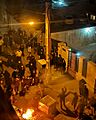
In late 2025 and early 2026, there were very large protests across Iran. People were unhappy about the economy and wanted changes in their government. The Iranian government responded to these protests, and sadly, many people were hurt or died.
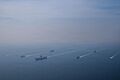
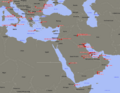
US President Donald Trump spoke out in support of the protesters and warned Iran against harming them. He also started sending more US military forces to the Middle East, which was the largest military build-up in the region since 2003.
Even with all these tensions and military preparations, there were still attempts to find a peaceful solution. In February 2026, Iran and the US held indirect talks about Iran's nuclear program in Oman. Some officials even said a "breakthrough" was reached, and peace seemed "within reach." However, these talks were happening just before the conflict began.
The Conflict Begins
.jpg)
.jpg)

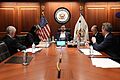
On February 28, 2026, the United States and Israel launched surprise airstrikes on many places and cities across Iran. During these attacks, Iran's Supreme Leader, Ali Khamenei, and several other Iranian officials were killed. These strikes happened while nuclear negotiations were still active.
Israel called its part of the operation "Operation Roaring Lion" and used many fighter jets to strike military targets in Iran.
Along with the airstrikes, there were also cyberattacks that disrupted Iran's internet and communication systems.
Iran quickly responded with its own missile and drone attacks, which it called "Operation True Promise IV." These attacks targeted places in Israel, as well as US military bases and other countries in the Middle East that are allies of the US.
Countries like Bahrain, Kuwait, Qatar, Saudi Arabia, and the United Arab Emirates were hit by Iranian missiles and drones. There were also reports of strikes on Azerbaijan, Kurdistan, and Oman, and even a British military base on Cyprus.
The Lebanon War
The conflict also spread to Lebanon, where a group called Hezbollah, which is supported by Iran, started firing rockets and missiles at Israel. This led to Israel striking targets in Lebanon, and the conflict there became known as the 2026 Lebanon War. Many people in Lebanon were displaced from their homes.
Reasons for the War
Officials from the US government gave different reasons for starting the war, such as:
- Stopping an immediate threat from Iran.
- Preventing Iran from getting nuclear weapons.
- Destroying Iran's military power.
- Even helping to change Iran's government.
However, Iranian and some US officials disagreed, saying Iran was not preparing an attack. The IAEA also said there was no evidence of Iran having an organized nuclear weapons program at the time of the strikes.
What Happened to People and Places?

The death of Iran's Supreme Leader, Ali Khamenei, was a very significant event. He was a very important religious and political figure. After his death, an Interim Leadership Council was formed, and then on March 8, Mojtaba Khamenei was elected as the new Supreme Leader of Iran. Many other Iranian military and government officials were also killed in the strikes.
Impact on Civilians
Sadly, many civilians have been hurt or killed in the conflict. Thousands of people have had to leave their homes, especially in Lebanon, where over a million people were displaced.
Reports show that many schools and hospitals in Iran have been damaged, making it difficult for children to learn and for people to get medical help.
In Iran, cities sometimes became "ghost towns" as people were afraid to go outside. There were also long internet blackouts, making it hard for people to communicate and get information. People in Tehran even put tape on their windows, like during past conflicts, to prevent glass from shattering during airstrikes.
UNICEF highlighted the tragic impact on children, with many injured, and millions unable to attend school.
Damage to Important Buildings and History
Several historic and cultural sites in Iran, including some recognized by UNESCO (an organization that protects important world heritage), have been damaged. These include places like Golestan Palace and Naqsh-e Jahan Square. Damaging such sites is considered against international rules.
How the World is Affected


The 2026 Iran War isn't just affecting the countries directly involved; it's having a ripple effect across the globe.
- Oil and Gas Prices: One of the biggest impacts has been on the world's economy, especially oil and gas prices. Because Iran is a major oil producer and the conflict has disrupted shipping routes like the Strait of Hormuz, oil prices have gone up significantly. This means it costs more to fill up cars and heat homes around the world.
- Global Economy: Experts are worried that if the conflict continues, it could lead to higher prices for many goods (inflation) and even slow down the global economy.
- Food Security: The war has also affected the supply of important things like fertilizers, which are needed to grow food. This could lead to higher food prices globally, similar to past food crises.
- Air Travel: Many countries in the region closed their airspace, meaning planes had to change their routes or cancel flights, affecting travel and tourism.
International Reactions
Countries around the world have reacted in different ways. Some countries, like Canada, Germany (initially), and the UK, expressed support for the US and Israeli actions, or allowed the US to use their military bases for defensive purposes.
Many other countries, including China, Russia, and many in the Middle East, condemned the US-Israeli strikes. Later, many countries also condemned Iran's retaliatory strikes, especially those on civilian areas or countries not directly involved.
The UN Secretary-General condemned the initial strikes and later the UN Security Council passed a resolution condemning Iran's retaliatory attacks on Gulf states. The UN has consistently called for peace and restraint.
Many international law experts have said that the initial US-Israeli attacks were against international law because they didn't have approval from the UN Security Council and didn't meet the rules for self-defense. They called it a "war of aggression," which is a serious violation of international agreements.
Military Costs
A report estimated the US spent nearly $72 billion on the war. US military costs were estimated at $25–35 billion by early April, and Israeli costs at $11 billion. Costs to the Iranian economy were estimated at $40–50 billion. The cost of neutralizing Iranian attacks was much higher than the cost of the attacks themselves.
The war also quickly used up US military supplies, increasing replacement expenses. The US defense industry saw record stock surges during the war.
Ceasefire and Blockade
On April 7, President Trump announced that the US and Iran had agreed to a two-week ceasefire, mediated by Pakistan, starting on April 8. Iran also agreed to reopen the Strait of Hormuz. However, after the ceasefire announcement, Iran's Lavan Island oil refinery and Sirri Island crude export facilities were attacked. Iran continued missile and drone strikes on Gulf Arab states.
.jpg)
Israel and the US stated that the ceasefire did not include Lebanon, which Iran and Pakistan disagreed with. Despite the ceasefire, Israel launched "Operation Eternal Darkness" on April 8, targeting Hezbollah command centers in Lebanon. These were the largest attacks since the war began, causing many deaths and injuries. Iran threatened Israel if attacks on Lebanon did not stop.
On April 12, talks between the US and Iran failed. President Trump then announced that the US Navy would impose a naval blockade against Iran, stopping all ships from entering or leaving Iranian ports. The IRGC Navy warned that any military vessel approaching the strait would be seen as a violation.
By April 16, 13 oil tankers had been stopped by US forces as part of the blockade. On the same day, President Trump announced that Israel and Lebanon agreed to a 10-day truce. On April 17, Iran said commercial ships could pass through the Strait of Hormuz during the truce in Lebanon. However, the US blockade continued. On April 18, Iran closed the Strait of Hormuz again because the US refused to lift its naval blockade. The US announced that its blockade had intercepted 23 vessels trying to reach or leave Iranian ports.
Renewed Hostilities
On June 20, Iran again declared the Strait of Hormuz closed due to Israeli attacks in Lebanon, though the US military denied this. The US and Iran tried to set up a "hotline" to manage traffic in the Strait. However, on June 25, a cargo ship was damaged by a projectile in the Strait, and the US blamed Iran.
On July 7, Iran reportedly launched missiles at commercial ships in the Strait, causing damage. The US responded by moving up the date for new sanctions on Iranian oil sales. On July 8, the US launched over 80 strikes on Iranian military targets, saying Iran had violated the truce. Iran claimed to have shot down a US drone and attacked US bases in Bahrain and Kuwait.
On July 13, President Trump announced that the US would reinstate the naval blockade on Iran, starting July 14. He also said the US would charge a 20% toll for ships passing through the Strait of Hormuz, calling the US "THE GUARDIAN OF THE HORMUZ STRAIT." Trump formally told the US Congress that military actions against Iran had resumed.
Images for kids
-
Anti-government protests in Tehran on January 8, 2026.
-
Carrier Strike Group 3 in the Arabian Sea on February 6, 2026.
-
Major US military bases in the Middle East.
-
Vice President JD Vance with cabinet members in the Situation Room on February 28, 2026.
-
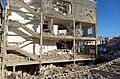
Damage to residential buildings in Sanandaj, Iranian Kurdistan, on March 2, 2026.
-
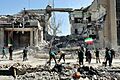
Buildings in Tehran damaged by US-Israeli strikes on March 4, 2026.
-
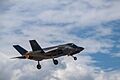
An Israeli Air Force F-35I "Adir" shot down an Iranian Yak-130 on March 4, 2026.
-
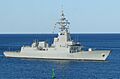
The frigate Cristóbal Colón, sent by Spain to protect Cyprus.
-
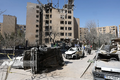
The aftermath of US-Israeli airstrikes in Tehran on March 6, 2026.


.jpg)


