
Açaí palm facts for kids
Quick facts for kids Açaí palm |
|
|---|---|
 |
|
| Açaí palms on the Rio Negro in Brazil | |
Scientific classification  |
|
| Kingdom: | Plantae |
| Clade: | Tracheophytes |
| Clade: | Angiosperms |
| Clade: | Monocots |
| Clade: | Commelinids |
| Order: | Arecales |
| Family: | Arecaceae |
| Genus: | Euterpe |
| Species: |
E. oleracea
|
| Binomial name | |
| Euterpe oleracea |
|
| Script error: The function "autoWithCaption" does not exist. | |
| Synonyms | |
|
|
Script error: No such module "Check for conflicting parameters".
The açaí palm (pronounced ah-SY-ee) is a slender tropical palm tree from the Amazon rainforest. Its scientific name is Euterpe oleracea. It belongs to the palm tree family, Arecaceae. People grow this tall palm mainly for its small, dark purple berries.
These berries, called açaí, have become famous around the world as a delicious breakfast food. People also harvest the palm for its edible inner core, known as heart of palm. Its leaves and sturdy trunk wood are used in local building.
The açaí palm is native to eastern Amazonia, especially in the northern parts of Brazil. It grows naturally in wet swamps and river floodplains. Local communities have relied on the fruit as a primary food source for hundreds of years.
Contents
- What Is in the Name of the Açaí Palm?
- How Does the Açaí Palm Look and Grow?
- Where Does the Açaí Palm Live in Nature?
- How Do Farmers Cultivate and Harvest Açaí?
- What Is the Life Cycle of the Açaí Palm?
- What Are the Nutritional Facts of Açaí?
- How Do People Eat and Use Açaí?
- What Are the Other Uses of the Açaí Palm?
- How Did Açaí Become a Global Sensation?
- Why Is the Açaí Palm Ecologically Important?
- Images for kids
- See Also
What Is in the Name of the Açaí Palm?
The word "açaí" comes from the Indigenous Tupian word ïwasa'i. This term translates to "fruit that cries" or "fruit that expels water." This name describes how the fruit releases juice when people squeeze or process it.
In scientific naming, the genus name Euterpe comes from Greek mythology, representing the muse of music and charm. The species name oleracea comes from the Latin word for "vegetable" or "herb." Botanists used this name because parts of the plant are edible.
How Does the Açaí Palm Look and Grow?
Açaí palms are graceful trees that grow up to 25 metres (82 ft) tall. They have long, feather-shaped leaves called pinnate fronds. These leaves can reach lengths of over 3 metres (9.8 ft). The palms often grow in clumps, sharing a root system with multiple slender trunks.
The palm trees thrive in full sunlight and warm, humid tropical climates. They produce large hanging clusters of flowers that later develop into berries. Each cluster can hold between 500 and 900 individual fruits.
The Structure of the Açaí Berry
The fruit is not a true berry in botanical terms; it is actually a drupe (a stone fruit like a peach). Each fruit is round and measures about 25 mm (0.98 in) around, looking similar to a small purple grape.
The berry has several distinct layers:
- Exocarp: The thin outer skin, which turns deep dark purple or green when fully ripe.
- Mesocarp: The thin, pulpy middle flesh, which is usually only about 1 mm (0.039 in) thick.
- Endocarp: The hard inner shell protecting the seed.
- Seed: A large core that makes up 60% to 80% of the entire fruit's volume.
Where Does the Açaí Palm Live in Nature?
Açaí palms grow naturally in northern South America. The vast majority grow in the tropical floodplains of the Amazon Basin in Brazil, Colombia, and Bolivia. They are also found in parts of Ecuador, Guyana, Suriname, French Guiana, and Venezuela.
These palms love water and grow best in areas flooded by tides or seasonal river rises. These wetland zones are called várzea forests. The roots of the palm help hold riverbanks together, preventing soil erosion along the massive Amazon River system.
How Do Farmers Cultivate and Harvest Açaí?

Açaí trees produce fruit all year long, but the biggest harvests happen during the dry season. Brazil produces over 99% of the world's commercial açaí supply. The northern Brazilian state of Pará is the center of this industry, growing about 95% of the country's crop.
Farmers generally see two main harvest seasons each year. The first harvest occurs from January to June, while the second, larger harvest runs from August to December. In 2022, Pará produced over 8,000 metric tons of berries. Modern production has grown hundreds of times larger than it was in the early 2000s.
Traditional Harvesting Techniques
Harvesters, known locally as peconheiros, climb high into the forest canopy to cut down the heavy fruit bunches. They use a traditional woven foot harness made from palm fibers called a peçonha. This loop fits around their feet to help them grip the smooth tree trunk.
Climbing these tall palms requires great balance, strength, and agility. Harvesters carefully lower the heavy bunches using ropes or carry them down while descending. After picking, workers remove the berries from the branches by hand and pack them into woven baskets.
Modern Plant Cultivars
Agricultural scientists have bred special varieties, or cultivars, of the palm to improve fruit production:
- Branco: A rare, naturally occurring green variety found near the mouth of the Amazon River. The berries stay green even when fully ripe due to a recessive gene.
- BRS-Pará: A cultivar developed in 2004 by the Brazilian Agricultural Research Agency that produces a higher percentage of edible fruit pulp.
- BRS Pai d'Égua: A newer cultivar selected for high yield and well-balanced fruit production throughout the entire year.
What Is the Life Cycle of the Açaí Palm?
The life cycle of the açaí palm begins with seed germination. When ripe seeds fall onto moist, rich rainforest soil, they take several months to sprout. In warm and shady nursery conditions, seedlings grow their first true leaves within three to six months.
Once established, young palms grow quickly in tropical heat. They produce side shoots from their base, forming dense clusters of trunks. A young tree usually begins flowering and producing fruit when it is between three and five years old.
The small flowers are pollinated by native rainforest insects, including small stingless bees, beetles, and flies. After successful pollination, the green berries develop over several months, gradually darkening into a deep, glossy purple as they ripen.
What Are the Nutritional Facts of Açaí?
Açaí fruit has a unique nutritional profile compared to most sweet fruits. It is naturally low in sugar and contains healthy fats, dietary fiber, and essential minerals. When freeze-dried into a dry powder, 100 grams of pulp contains:
- Energy: 534 calories
- Dietary fiber: 44 grams
- Fats: 33 grams (mostly healthy unsaturated fats like oleic acid)
- Protein: 8 grams
- Carbohydrates: 52 grams (mainly complex carbohydrates and fiber)
- Minerals and Vitamins: Rich in calcium, iron, and vitamin A
The deep purple color comes from plant pigments called anthocyanins. Anthocyanins serve as natural plant defenses and act as antioxidants in laboratory settings.
How Do People Eat and Use Açaí?

In the Amazon region, açaí is a core food rather than a luxury dessert. Traditional river-dwelling communities, known as Caboclo populations, often get a significant part of their daily calories from fresh açaí pulp. They eat it alongside savory foods like fried fish, shrimp, and toasted manioc flour (tapioca).
To prepare the fruit, workers soak the berries in warm water to soften the thin skin. They then rub the berries against a metal drum or screen inside a mechanical pulper. This machine strips away the purple flesh, separating it from the hard seeds to make a thick, creamy purée.
Popular Modern Foods
- Açaí na tigela (Açaí Bowls): A famous Brazilian dish made by blending frozen açaí pulp into a thick, sorbet-like texture. It is served in a bowl and topped with sliced bananas, strawberries, and crunchy granola.
- Smoothies and Juices: Blended drinks made with açaí pulp, apple juice, guarana syrup, or plant milk.
- Snacks and Sweets: Açaí flavor is used in energy bars, ice creams, fruit leather, and candies worldwide.
Food Safety and Processing
Fresh açaí must be handled cleanly and pasteurized before it is exported or sold in supermarkets. Modern processing plants use brief heat treatment (pasteurization) to clean the raw fruit pulp. This step keeps the product safe from harmful microscopic organisms while preserving its fresh flavor, deep color, and nutrients.
What Are the Other Uses of the Açaí Palm?

People in the Amazon use nearly every single part of the açaí palm tree:
- Heart of palm: The soft, tender inner core of the growing stem is harvested as a gourmet vegetable. It is popular in salads and cooked dishes across South America and Europe.
- Açaí oil: Cold-pressed oil extracted from the fruit pulp contains fatty acids. Cosmetic makers use this deep green oil in moisturizing lotions, skin creams, hair conditioners, and soaps.
- Palm fronds: The long, tough leaves are woven into baskets, sun hats, floor mats, brooms, and water-resistant roof thatch for traditional homes.
- Trunk timber: The hard outer wood of the palm trunk resists tropical pests and rot. Builders use it for house posts, garden fencing, and bridges.
- Seeds and compost: Because seeds make up most of the fruit mass, processing plants collect tons of them. Farmers grind seeds into animal feed, burn them as clean fuel for brick kilns, or use them as rich organic compost for gardens.
- Scientific research: Scientists have tested natural açaí extracts as safe, non-toxic contrast agents for medical magnetic resonance imaging (MRI) scans of the digestive system.
How Did Açaí Become a Global Sensation?
For centuries, açaí remained a regional Amazonian secret. In the 1980s, martial artists from the famous Brazilian Gracie family popularized açaí across Rio de Janeiro as an energizing snack for athletes. Surfers and fitness enthusiasts quickly adopted the tasty fruit bowl.
By the early 2000s, businesses began freezing the pulp and shipping it across North America, Europe, and Asia. Açaí was introduced to international markets as an Amazonian "superfood."
Marketing and Consumer Facts
During the height of its international boom, some online marketers made exaggerated claims about açaí curing diseases or causing instant weight loss. Government consumer agencies, including the U.S. Federal Trade Commission (FTC), took action against misleading advertisements.
Scientists emphasize that while açaí is a nutritious fruit loaded with fiber and healthy fats, it is best enjoyed as part of a balanced, varied diet alongside other fruits and vegetables.
Why Is the Açaí Palm Ecologically Important?

The açaí palm plays an essential role in the ecology of the Amazon rainforest. In the wild, hundreds of species of tropical birds, including toucans, parrots, and macaws, eat the ripe purple fruits and spread the seeds throughout the forest floor. Mammals like monkeys, agoutis, and wild pigs also rely on the fallen berries for food.
Because açaí can be harvested sustainably without cutting down the living trees, it provides local families with a steady income. Harvesting the natural berries helps encourage the protection and preservation of the standing rainforest.
Images for kids
-
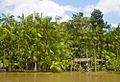
A grove of açaí palms growing in northern Brazil
-
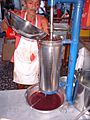
Separation of açaí pulp from seeds in a market in Belém, Brazil
-

Japanese candy flavored with açaí fruit


See Also
 In Spanish: Azaí para niños
- Euterpe edulis (Juçara palm)
- Euterpe precatoria
- Feira do Açaí
- Amazon rainforest
