
CR Flamengo facts for kids
 |
||||
| Full name | Clube de Regatas do Flamengo | |||
|---|---|---|---|---|
| Nickname(s) | Rubro-Negro (Scarlet and Black) Mengão (Big Mengo) Malvadão (The Evil One) Urubu (Vulture) O Mais Querido (The Most Beloved) |
|||
| Founded | 17 November 1895 (rowing club) 24 December 1911 (football department) |
|||
| Stadium | Maracanã | |||
| Stadium capacity |
78,838 | |||
| Stadium coordinates |
22°54′44″S 43°13′49″W / 22.91222°S 43.23028°W | |||
| President | Luiz Eduardo Baptista | |||
| Head coach | Filipe Luís | |||
| League | Campeonato Brasileiro Série A Campeonato Carioca |
|||
| 2025 2025 |
Série A, 1st of 20 Carioca, 1st of 12 |
|||
|
||||







Clube de Regatas do Flamengo, or simply Flamengo, is a famous Brazilian sports club. It is based in Rio de Janeiro and is best known for its amazing football team. Flamengo started in 1895 as a rowing club. It is one of the most popular football clubs in Brazil, with over 46.9 million fans! That's about 21.9% of all football fans in Brazil.
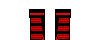
Flamengo's football team played its first official match in 1912. Their traditional uniform has red and black striped shirts, white shorts, and red and black striped socks. Since 1950, Flamengo has usually played its home matches at the huge Maracanã Stadium. The vulture (called urubu in Portuguese) has been Flamengo's mascot since 1969.
Flamengo is Brazil's richest and most valuable football club. It has many fans on social media, with 65 million followers across all platforms. The club has won many national and international titles, making it one of the most successful teams in Brazilian football history.
Flamengo's training center is called "Ninho do Urubu" (which means "Vulture's Nest"). It's where the professional teams and young players train. Flamengo's youth academy is famous for developing many talented players. Some of these players became Brazilian national team stars, like Zico, Vinícius Júnior, and Lucas Paquetá.
Contents
- Club History: From Rowing to Football Glory
- Flamengo's Look: Crests, Uniforms, and Mascot
- Flamengo's Homes: Stadiums Through the Years
- Big Rivalries: Who Flamengo Plays Against
- Flamengo's Players: The Team Today
- Flamengo's Trophies: A Hall of Fame
- Club Records
- Other Sports at Flamengo
- See also
Club History: From Rowing to Football Glory
Starting Small: Flamengo's Early Days (1895–1912)
Flamengo began on November 17, 1895, as a rowing club. A group of friends wanted to impress people with their rowing skills. They bought a used boat, but it was stolen! So, they saved money for a new one.
On that November night, they officially formed the "Flamengo Rowing Group." A few weeks later, they changed the name to "Clube de Regatas do Flamengo." They decided to celebrate the club's birthday on November 15, which is a national holiday in Brazil.
The football team started later, in 1911. Some players from another club, Fluminense, decided to leave and join Flamengo. They officially created Flamengo's football department on December 24, 1911.
Early Football Success and Growing Popularity (1912–1955)

Flamengo's first official football match was on May 3, 1912. They won by a huge score of 16–2! Their first game against their big rival, Fluminense (the start of the Fla-Flu rivalry), was on July 7, 1912. Fluminense won that game 3–2.

In 1914, Flamengo won its first state championship, the Campeonato Carioca. They won it again in 1915, and then back-to-back in 1920 and 1921. In 1927, a newspaper poll asked people to vote for "the most beloved club in Brazil." Flamengo won, earning the nickname "O mais querido do Brasil" (the most beloved of Brazil).
In the 1930s, Flamengo's football team became professional. Famous players like Leônidas da Silva joined the team. He was the top scorer in the 1938 FIFA World Cup while playing for Flamengo! The club's popularity grew even more during World War II, as radio broadcasts helped people across Brazil listen to their successful matches. Flamengo won three state titles in a row from 1942 to 1944, and again from 1953 to 1955.
The Golden Age: Zico and World Champions (1974–1983)
The years from 1978 to 1983 were Flamengo's most glorious time. With legendary player Zico leading the way, Flamengo won three state championships in a row. They also won their first Brazilian Championship in 1980.
In 1981, Flamengo made history by winning the Copa Libertadores, South America's biggest club tournament. They beat the Chilean team Cobreloa in an exciting final. This win meant they qualified for the Intercontinental Cup in Tokyo.
On December 13, 1981, Flamengo faced European Champions' Cup winner Liverpool F.C. in the Intercontinental Cup final. Flamengo won 3–0, becoming the first Brazilian World Champions since Pelé's Santos team! Zico and his teammates were incredible. Flamengo continued their success, winning two more Brazilian Championships in 1982 and 1983.
More National Trophies and Zico's Return (1984–1994)

Zico returned to Flamengo in 1986 and won his last state championship. He helped Flamengo win the first edition of the Copa União in 1987, which was a national tournament.
Even after Zico retired in 1990, Flamengo continued to win. They won the Copa do Brasil in 1990 and their fifth Brazilian Championship in 1992. Veteran player Júnior, at 38 years old, was a key player in that 1992 victory.
Challenges and Rebuilding (1995–2018)
After their 1992 league title, Flamengo faced financial difficulties. They still won some important trophies, like the 1999 Copa Mercosur and three more state championships from 1999 to 2001. However, they also had some tough years, narrowly avoiding relegation from the top league in 2002, 2004, and 2005.
Things started to look up in 2006 when Flamengo won the Copa do Brasil again, beating their rivals Vasco da Gama. From 2007 to 2009, they won the state championship three times in a row, setting a new record for most Carioca titles. In 2009, Flamengo won the Brazilian league title for the first time since 1992, in a dramatic final match.
In 2011, superstar Ronaldinho joined Flamengo, bringing a lot of excitement. The club won the state championship that year without losing a single game. Flamengo also won the Copa do Brasil in 2013. In 2018, the club finished second in the Brazilian league and saw young talents like Vinícius Júnior and Lucas Paquetá move to big European clubs.
A New Era of Glory (2019–Present)
A Difficult Start to 2019
On February 8, 2019, a sad event happened at Flamengo's training center, Ninho do Urubu. A fire broke out, and ten young academy players, aged 14 to 17, tragically passed away. The club and its fans remember these "Garotos do Ninho" (Nest Boys) with great sadness and honor their memory.
Unforgettable Victories in 2019

Despite the tragedy, 2019 became the most successful year in Flamengo's football history. The club signed new players like Giorgian de Arrascaeta, Bruno Henrique, and Gabriel Barbosa. Portuguese coach Jorge Jesus joined the team and led them to incredible success.
On November 23, 2019, Flamengo won the Copa Libertadores final against River Plate with two late goals from Gabriel. Less than 24 hours later, Flamengo also became champions of the Campeonato Brasileiro Série A! This made Flamengo only the second Brazilian club ever to win their state championship, the Brazilian league, and the Copa Libertadores all in the same season.
Flamengo also played in the 2019 FIFA Club World Cup in Qatar, reaching the final but losing to Liverpool.
Continued Success (2020–2025)
Flamengo continued its winning streak in 2020, capturing the Supercopa do Brasil, the Recopa Sudamericana, and the 2020 Campeonato Carioca. Coach Jorge Jesus left, but Rogério Ceni took over and led Flamengo to a second consecutive Campeonato Brasileiro championship in 2020.

In 2021, Flamengo won their third consecutive Campeonato Carioca. In 2022, under coach Dorival Júnior, Flamengo won the Copa do Brasil for the fourth time. Later that year, on October 29, 2022, Flamengo won their third Copa Libertadores title, beating Athletico Paranaense 1–0 in the final.


Flamengo's success continued into 2024 and 2025. They won the 2024 Copa do Brasil and the 2024 Campeonato Carioca. In 2025, Flamengo achieved another incredible feat, winning the 2025 Copa Libertadores and the 2025 Campeonato Brasileiro Série A, making it a truly golden period for the club. They also won the 2025 Supercopa do Brasil and the 2025 Campeonato Carioca.
Flamengo's Look: Crests, Uniforms, and Mascot
Club Crests: Symbols of Pride
Flamengo's crest has changed a little over the years. The main part is the "CRF" monogram, which stands for Clube de Regatas do Flamengo. This monogram is usually seen on the football team's shirts.
The club uses different crests for different purposes. The full crest is the official logo. There's also a special rowing crest for their rowing teams. Over time, stars were added above the crest to celebrate important championships. A gold star was added to honor the 1981 Copa Libertadores and Intercontinental Cup wins.
.svg)
.svg)

Team Uniforms: Colors and History
When Flamengo first started, their colors were blue and gold. But they didn't win much, and the colors were expensive. So, a year later, they changed to the famous red and black!
In 1912, the football team wore shirts with red and black quarters, nicknamed "papagaio de vintém" (kite). But this was thought to bring bad luck. In 1913, they switched to red and black horizontal stripes with thin white bands, called "cobra coral" (coral snake). The white bands were removed in 1916. That's how Flamengo's classic uniform was born: red and black striped shirts, white shorts, and red and black socks.
Flamengo also has a white away uniform. In the 1990s, the club started to try out different designs for their second and third uniforms, sometimes using all black or all red.
          Traditional primary uniform
|
 Traditional secondary uniform
|
     2015 "papagaio de vintém" kit
|
  2010 blue and gold alternative kit
|
The Scarlet-Black Nation: Flamengo's Fans

Flamengo has the most fans in Brazil, with over 40 million supporters! They are known as Nação Rubro-Negra (Scarlet-Black Nation). Flamengo fans are found in every state of Brazil.
The first organized fan group in Brazil, Charanga Rubro-Negra, started for Flamengo in 1942. Other big fan groups include Torcida Jovem-Fla and Raça Rubro-Negra. Flamengo supporters are so important that in 2007, they were declared part of Rio de Janeiro's cultural heritage.
Flamengo matches at the Maracanã Stadium have seen huge crowds. The largest attendance for a football match in the world's history was a derby between Flamengo and Fluminense in 1963, with 194,603 spectators!
The Vulture Mascot: From Insult to Icon

Flamengo's first mascot was Popeye the Sailor Man in the 1940s. But he wasn't very popular. In the 1960s, some rival fans started calling Flamengo supporters "urubus" (vultures) to make fun of them.
However, on May 31, 1969, a Flamengo fan brought a real vulture to a game against Botafogo. The vulture landed on the field with a Flamengo flag, and the crowd cheered, "It's a vulture, it's a vulture!" Flamengo won that game, and from then on, the vulture became the official mascot. It was a way for fans to bravely take a nickname meant to be mean and turn it into a symbol of pride.
In 2000, the mascot got an official design and a name, Samuca, but fans still just call him "Urubu."
Club Anthems: Songs of Glory
Flamengo has two anthems. The official one, "Hymno Rubro-Negro" (Scarlet-Black Anthem), was created in 1920. Its chorus means "Flamengo! Flamengo! Your glory is to fight, Flamengo! Flamengo! Champion of land and sea."
The more popular anthem, written by Lamartine Babo, is sung by many fans. Its famous line is "Uma vez Flamengo, sempre Flamengo" (Once you are Flamengo, always Flamengo).
Flamengo's Homes: Stadiums Through the Years
Early Grounds: Rua Paysandu and Estádio da Gávea
Flamengo's first official home ground was the Estádio da Rua Paysandu, where they played from 1915 to 1932.
The Estádio da Gávea (officially named Estádio José Bastos Padilha) opened on September 4, 1938. It has a capacity of 4,000 people. While Flamengo's main team no longer plays there, it serves as the club's administrative headquarters and is used for youth and women's team matches.
The Iconic Maracanã Stadium

Since its construction for the 1950 FIFA World Cup, the Maracanã has been the main home for Rio de Janeiro's biggest clubs, including Flamengo. It's considered by many fans to be Flamengo's true home. In 1963, over 194,000 people watched a match between Flamengo and Fluminense there!
The stadium has been renovated several times, including for the 2014 FIFA World Cup and the 2016 Olympics. Today, it's a modern stadium with a large capacity.
Future Plans: A New Stadium
In December 2024, Flamengo shared plans for a new, modern stadium with an 80,000-person capacity. This new stadium is expected to be the largest in Brazil and is planned to be finished by November 2029. It will have special features like a dedicated stand for passionate supporters and huge LED screens.
Big Rivalries: Who Flamengo Plays Against
The Rivalry Classic: Flamengo vs. Botafogo
The match between Flamengo and Botafogo is known as the Clássico da Rivaldade (Rivalry Classic). It started in 1913. The story of Flamengo's vulture mascot began during a game against Botafogo in 1969, when Flamengo fans turned an insult into a symbol of pride.
The Derby of the Crowds: Flamengo vs. Fluminense

The Fla-Flu or Clássico das Multidões (Derby of the Crowds) is a famous rivalry between Flamengo and Fluminense. It's considered one of the greatest derbies in the world. This rivalry began in 1911 when players left Fluminense to form Flamengo's football team.
Flamengo became known as the team for the working class, while Fluminense was linked to the richer parts of Rio. The Fla-Flu holds the world record for attendance in club games, with 194,603 spectators in 1963. Both clubs are very successful in the state championship, with Flamengo having 39 titles and Fluminense 34 as of 2025.
The Derby of Millions: Flamengo vs. Vasco da Gama
.jpg)
The Clássico dos Milhões (Derby of Millions) is the rivalry between Flamengo and Vasco da Gama. It's one of the biggest rivalries in Brazilian football. The name comes from the fact that both clubs have huge fan bases in Rio de Janeiro.
This rivalry became very intense from the 1970s to the early 2000s, with both teams often meeting in important finals. Legendary players like Zico for Flamengo and Roberto Dinamite for Vasco were key figures in these exciting matches.
Flamengo's Players: The Team Today
First-team squad
|
|


Other players under contract
|
Youth players with first team numbers
|
|
Out on loan
|
|
Retired numbers
- 12 – Club Supporters – This number is dedicated to the amazing rubro-negro fans, who are like the 12th player on the field!
Flamengo's Trophies: A Hall of Fame


Flamengo has won many important titles, both in Brazil and around the world!
Official Football Tournaments
| Worldwide | ||
|---|---|---|
| Competitions | Titles | Seasons |
| Intercontinental Cup | 1 | 1981 |
| FIFA Challenger Cup | 1s | 2025 |
| FIFA Derby of the Americas | 1s | 2025 |
| Continental (South America) | ||
| Competitions | Titles | Seasons |
| Copa Libertadores | 4 | 1981, 2019, 2022, 2025 |
| Recopa Sudamericana | 1 | 2020 |
| Copa Mercosur | 1s | 1999 |
| Copa de Oro | 1s | 1996 |
| National (Brazil) | ||
| Competitions | Titles | Seasons |
| Campeonato Brasileiro Série A | 8 | 1980, 1982, 1983, 1992, 2009, 2019, 2020, 2025 |
| Copa União | 1 | 1987 |
| Copa do Brasil | 5 | 1990, 2006, 2013, 2022, 2024 |
| Supercopa do Brasil | 3 | 2020, 2021, 2025 |
| Copa dos Campeões | 1s | 2001 |
| Inter-state | ||
| Competitions | Titles | Seasons |
| Torneio Rio–São Paulo | 1 | 1961(1) |
| State (Rio de Janeiro) | ||
| Competitions | Titles | Seasons |
| Campeonato Carioca | 39 | 1914, 1915, 1920, 1921, 1925, 1927, 1939, 1942, 1943, 1944, 1953, 1954, 1955, 1963, 1965, 1972, 1974, 1978, 1979 (Special), 1979, 1981, 1986, 1991, 1996, 1999, 2000, 2001, 2004, 2007, 2008, 2009, 2011, 2014, 2017, 2019, 2020, 2021, 2024, 2025 |
| Copa Rio | 1 | 1991 |
- record
- s shared record
(1) In 1940, the competition was stopped. Flamengo and Fluminense were tied for the lead. The club counts this as one of its titles.
Youth Team Honours
- U20 Intercontinental Cup (2): 2024, 2025
- U-20 Copa Libertadores (2): 2024, 2025
- Campeonato Brasileiro Sub-20 (2): 2019, 2023
- Copa São Paulo de Futebol Júnior (4): 1990, 2011, 2016, 2018
Awards
- IFFHS The World's Club Team of the Year: 2022
Club Records
CONMEBOL Club Ranking
Flamengo is one of the top clubs in South America, as shown by its high ranking in CONMEBOL's club coefficient.
| Rank | Team | Points |
|---|---|---|
| 1 | Palmeiras |
9828,6 |
| 2 | Flamengo |
9303,1 |
| 3 |  River Plate River Plate |
8762,8 |
| 4 | Boca Juniors |
7360 |
| 5 |  Peñarol Peñarol |
6029,4 |
Other Sports at Flamengo
Flamengo is a multi-sport club, meaning it has teams in many different sports!
Men's Basketball
Flamengo's basketball team is very successful. They have won seven Brazilian Championships and a record 44 Rio de Janeiro State Championships. In 2014, they won the League of the Americas and then the Intercontinental Cup, becoming world champions! They won the Intercontinental Cup again in 2022.
Women's Football
Flamengo also has a strong women's football team. They won the state championship every year from 2015 to 2019, and again in 2021, 2023, and 2024. In 2016, they won the Campeonato Brasileiro de Futebol Feminino, Brazil's national women's league.
Rowing

Rowing was the very first sport at Flamengo, starting in 1895. The club quickly became famous for its rowing success, winning many championships and medals. This success helped make the club well-known even before the football team started.
Water Polo
Water polo is the second oldest sport at Flamengo. The team won its first Rio de Janeiro championship in 1985 and then won nine in a row! They also won the South American Club Championship.
American Football
In 2013, Flamengo started an American football team, partnering with the Rio de Janeiro Emperors. They compete in the BFA (Brasil Futebol Americano) league.
Tennis
Flamengo's tennis teams started winning championships in 1916. The club has its own tennis courts, which opened in 1963.
E-sports
In 2017, Flamengo entered the world of e-sports, starting with a League of Legends team and later a PES team. They have a special "gaming office" in São Paulo for their e-sports teams.
Other Sports
Flamengo also has teams in many other sports, including:
- Artistic gymnastics
- Auto racing
- Beach soccer
- Bocce
- Futsal
- Judo
- Swimming
- Synchronized swimming
- Volleyball
See also
 In Spanish: Clube de Regatas do Flamengo para niños
- CR Flamengo (women)
- CR Flamengo (youth)
- Flamengo Basketball
- Clube de Regatas do Flamengo (beach soccer)
- CR Flamengo (Superleague Formula team)
- Flamengo Esports
- Clássico dos Milhões
- Fla-Flu
- Flamengo–Atlético Mineiro rivalry
- List of world champion football clubs
