
SE Palmeiras facts for kids
 |
||||
| Full name | Sociedade Esportiva Palmeiras | |||
|---|---|---|---|---|
| Nickname(s) | Verdão (Big Green) Alviverde (Green and White) Periquito (Plain parakeet) Porco (Pig, adopted in 1987) Palestra Itália |
|||
| Founded | 26 August 1914, as Palestra Itália 14 September 1942, as Sociedade Esportiva Palmeiras | |||
| Stadium | Allianz Parque | |||
| Capacity | 43,713 | |||
| Owner | Leila Pereira | |||
| Head coach | Abel Ferreira | |||
| League | Campeonato Brasileiro Série A Campeonato Paulista |
|||
| 2022 2023 |
2022 2023 |
|||
|
||||






The Sociedade Esportiva Palmeiras, often called Palmeiras, is a famous Brazilian football club. It is based in the city of São Paulo. Palmeiras is one of the most popular clubs in South America, with many dedicated fans. The team plays in the Campeonato Paulista, which is the top league in the state of São Paulo. They also compete in the Brasileirão Série A, the highest national league in Brazil.
Palmeiras was started by Italian immigrants on August 26, 1914. Its first name was "Palestra Itália". However, the club changed its name on September 14, 1942. This happened because Brazil joined the Allies in World War II against countries like Italy. Since then, Palmeiras has won many major titles. They have won a record 12 Campeonato Brasileiro Série A national championships. They also won 4 Copas do Brasil, 1 Copa dos Campeões, and 1 Supercopa do Brasil. This makes them the most successful club in Brazil for top national competitions. Internationally, Palmeiras, known as Verdão (Big Green One), won the first-ever international tournament, the Copa Rio, in 1951. They also won the Copa Libertadores three times (1999, 2020, and 2021). Other international titles include the 2022 Recopa Sudamericana and the 1998 Copa Mercosul. At a regional level, they have won 5 Interstate titles (Torneio Rio – São Paulo) and 26 State Championship titles (Campeonato Paulista).
Palmeiras is currently ranked high in both CBF and CONMEBOL football rankings. In 2021, it became the first Brazilian club to win the IFFHS Men's Club World Ranking. Many Brazil teams that won World Cups and Olympic gold medals have included at least one Palmeiras player. This is an honor shared with their city rivals, São Paulo. While Palmeiras is famous for its football team, its sports department also competes in many other activities. These include basketball, roller hockey, American football, archery, and karate.
Contents
- The Story of Palmeiras
- How Palmeiras Began
- Early Wins and a New Home (1920-1945)
- A Name Change and a Big Win (1942)
- The First Big International Tournament: Copa Rio (1951)
- The "Academy" Era: A Golden Age (1960s-1970s)
- The 1980s: A Challenging Time
- Back to Winning Ways: The 1990s
- Winning the Copa Libertadores for the First Time (1999)
- A Busy Year of Finals (2000)
- Challenges and Comebacks (2000s)
- A New Home: Allianz Parque
- A Mix of Joy and Sadness (2012)
- Building a Stronger Team (2013-2015)
- Back on Top of Brazilian Football (2016-2018)
- A Historic Treble (2020)
- Defending the Libertadores Title (2021)
- Setting New Records (2022)
- Another Victorious Season (2023)
- Recent Seasons (2024)
- Palmeiras' Stadiums
- Team Colors and Jerseys
- The Amazing Fans of Palmeiras
- Big Rivalries
- Club Culture
- Players
- Management
- Records
- Honours
- Palmeiras B Team
- Other Sports
- See also
The Story of Palmeiras


How Palmeiras Began
At the start of the 1900s, some young Italian people wanted to create a football club. Their goal was to have a team that represented the Italian community in São Paulo. There were many Italian clubs already, but most focused on other activities or specific Italian regions. Football was becoming very popular, attracting many players and fans.
The founders asked a newspaper called Fanfulla, which supported Italians in Brazil, for help. They asked Vincenzo Ragognetti to write an invitation for people interested in forming a sports club. After several meetings, 46 people, led by Luigi Marzo and Luigi Cervo, gathered. They founded "Palestra Italia" on August 26, 1914. Ezequiel Simone became the first president. The Italian Consulate in São Paulo was interested because the club would help unite Italians under one flag.
After some initial challenges, Palestra Italia played its first game in Votorantim. They beat Savoia 2–0, winning the Taça Savoia, their very first trophy.

Early Wins and a New Home (1920-1945)

In 1916, the team joined São Paulo's main sports league. They played their first official championship match. The next year, they were runners-up in the São Paulo State Championship. They also played against Corinthians for the first time, winning 3–0. This started what would become their biggest rivalry. In 1920, Palestra Italia won the São Paulo State Championship. They beat the strong Paulistano team in the final game.
Palestra continued to grow as a sports club. They bought the Estádio Palestra Itália in 1920. This stadium was updated and made bigger in 1933. It became the first Brazilian stadium with concrete stands. In the 1930s, the club became a three-time state champion in both football and basketball. This led fans to chant: "With the feet or with the hands, Palestra is the best in the land."
A Name Change and a Big Win (1942)


In 1942, during World War II, the Brazilian government made a rule. It banned organizations from using names linked to countries like Germany, Italy, and Japan. Palestra Italia had to change its name. They first became Palestra São Paulo, as "palestra" is a Greek word for "gymnasium." However, pressure continued for a complete name change. If they didn't change, they risked losing all their assets and being removed from the championship they were leading.
The night before the final state championship game on September 20, 1942, the club's leaders met. Dr. Mario Minervino famously said: "They don't want us to be Palestra, so then we shall be Palmeiras – born to be champions."
The final game was against São Paulo Futebol Clube. Palmeiras took the field proudly carrying the Brazilian flag. Palmeiras was winning 3–1 when a penalty was called in their favor. São Paulo FC's team then left the field, claiming Palmeiras was an "enemy of the homeland." This led to huge celebrations for Palmeiras. The next day, newspapers showed a photo of Palmeiras entering the field with the headline: "A Leader Dies, A Champion is Born."
The First Big International Tournament: Copa Rio (1951)

In January 1951, a Brazilian newspaper reported that FIFA President Jules Rimet supported a world club championship. This first Copa Rio was held in 1951. Eight teams from different countries participated. Palmeiras, from Brazil, played against teams like Juventus from Italy and Red Star from Yugoslavia.
The Copa Rio was very important because it was the first interclub competition with worldwide attention. It happened even before the Intercontinental Cup. The Brazilian Sports Confederation organized it with FIFA's help. FIFA has stated that Palmeiras is the winner of the first worldwide club competition in history. However, FIFA's official website for international clubs only listed winners from 2000 onwards for a time. Palmeiras has asked FIFA many times to officially recognize this tournament as a Club World Cup.
In 2007, Palmeiras received a letter from FIFA, recognizing them as 1951 club world champions. But then FIFA President Sepp Blatter said the matter was still being reviewed. In 2013, FIFA General-Secretary Jérôme Valcke again recognized Palmeiras as champions of the "first Club World Cup ever held." In 2014, the FIFA Executive Committee agreed to recognize the 1951 tournament as the "first worldwide club competition," with Palmeiras as its winner.
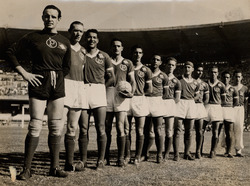
However, in 2017, FIFA clarified its position. They said that while the Copa Rio was the "first worldwide club competition," only winners of the Intercontinental Cup and the FIFA Club World Cup (starting in 2000) are officially considered "club world champions." Despite this, FIFA has celebrated Palmeiras' 1951 victory on social media.
The Copa Rio was a groundbreaking tournament. It brought together top clubs from different continents. It also inspired discussions about international club football. These discussions eventually led to the creation of championships like the European Cup (now UEFA Champions League) and the Copa Libertadores. The Copa Rio was a key moment in making football a global sport.
The "Academy" Era: A Golden Age (1960s-1970s)
.jpg)
In the 1960s, Palmeiras played with such high quality that they were called the "Academy" of Brazilian football. This period was led by the legendary player Ademir da Guia.
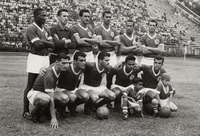
The first Academy team included famous players like Djalma Santos, Dudu, and Julinho Botelho. In 1965, under coach Filpo Núñez, Palmeiras won the important Rio – São Paulo championship. They had big wins against rivals like Santos and Botafogo.
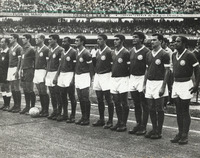
That same year, the Brazilian Sports Federation used the entire Palmeiras team to represent Brazil. They played against Uruguay in an official national team match, winning 3–0.

By the end of the 1960s, Palmeiras won the Copa do Brasil and the Roberto Gomes Pedrosa tournament, which was like the Brazilian Championship back then. These successes led to the second Palmeiras Academy, with players like Luís Pereira, Leivinha, and Emerson Leão. This team, led by Osvaldo Brandão, won many titles in the 1970s. They were three-time São Paulo state champions and two-time Brazilian champions.
The 1980s: A Challenging Time
_@_Allianz_Parque,_SP,_Brasil._(21314835289).jpg)
After many victories in the 1960s and 1970s, the 1980s were tough for Palmeiras fans. The team did not win any major championships. In 1986, Palmeiras had a good team and reached the state championship final, but lost.
On October 29, 1986, Palmeiras fans adopted the pig as their mascot. During a game against Santos, rival fans chanted "pig." Palmeiras fans responded with "Come On Pig!!" and "Go Piiiig...." A sports magazine later made the nickname popular.
Two unusual events happened in this decade. In a 1983 game, the referee accidentally scored a goal for Palmeiras, leading to a 2–2 tie. In 1988, striker Gaúcho had to play as a goalkeeper after an injury. He saved two penalties and even scored one himself!

The 1980s ended without big wins, but the 1990s would bring much more success.
Back to Winning Ways: The 1990s
Palmeiras went sixteen years without winning a major trophy. This changed in 1992 when they signed a sponsorship deal with Parmalat, an Italian company. This deal made Palmeiras the richest club in Brazil for eight years.
The 1990s were full of achievements for Palmeiras. In 1993, they won the Campeonato Paulista, beating their biggest rival Corinthians in the final. This team was led by coach Vanderlei Luxemburgo and had stars like Evair, Zinho, Edmundo, and Roberto Carlos.
_-_Vanderlei_Luxemburgo.jpg)
That same year, Palmeiras also won the Rio-São Paulo Championship and the 1993 Campeonato Brasileiro Série A. In 1994, they won both the state and Brazilian championships again, another victory against Corinthians.
In 1996, Palmeiras won the 1996 Campeonato Paulista in style. They scored over 100 goals and had huge wins, like beating Santos 6–0. Players like Rivaldo, Muller, and Djalminha were key to this historic team. Palmeiras also reached the semifinals of the 1996 Copa do Brasil but lost to Cruzeiro.
In 1998, Palmeiras won the 1998 Copa do Brasil and the 1998 Copa Mercosur. The Copa Mercosur was their first official international cup since 1951.

Winning the Copa Libertadores for the First Time (1999)

In 1997, Luiz Felipe Scolari became the manager. He led the team to many important trophies, including their first Copa Libertadores.
Palmeiras had a tough journey to the finals. They beat defending champions Vasco da Gama, then their rivals Corinthians in a penalty shootout, and River Plate in the semifinals.
The final matches were against Deportivo Cali from Colombia. Deportivo won the first game 1–0. In the second game at Estádio Palestra Itália, Palmeiras won 2–1. They then won the competition in a thrilling penalty shootout. Key players from this team included future World Cup winners Marcos, Zinho, and Roque Júnior, along with Alex and Evair.
Later that year, Palmeiras played in the 1999 Intercontinental Cup in Tokyo but lost to Manchester United of England.

A Busy Year of Finals (2000)
In 2000, Palmeiras played in four finals. First, they won the Rio-São Paulo Tournament by beating Vasco da Gama 6–1 over two games.
The club also reached the 2000 Copa Libertadores finals again, this time against Boca Juniors from Argentina. Both games ended in a tie, and Boca Juniors won the competition in a penalty shootout. This prevented Palmeiras from winning two Libertadores titles in a row.
After this, Luiz Felipe Scolari and several players left. Palmeiras then focused on younger players. They won the first-ever Brazilian Champions' Cup. This win qualified them for their third consecutive Copa Libertadores in 2001.
At the end of 2000, the club also reached the quarterfinals of the Brazilian Championship playoffs. They played in their third consecutive 2000 Copa Mercosur final, which was their fifth CONMEBOL final since 1998. This young Palmeiras team lost the Copa Mercosur final to a strong Vasco da Gama team.
Because of their wins in national and international competitions, Palmeiras was named Brazil's Best Team of the 20th Century by several important sports organizations.
Challenges and Comebacks (2000s)

Parmalat's sponsorship ended in 2000, which created financial difficulties for Palmeiras. After reaching the 2001 Copa Libertadores semi-finals, the club had a very bad 2002 season. This resulted in them being relegated to the Série B, Brazil's second division. However, they quickly returned to the top division in 2004.
The 2004 and 2005 seasons were quite good. The team finished 4th in both years, qualifying for the Copa Libertadores in 2005 and 2006. In both years, they were eliminated by rivals São Paulo.
In 2008, Palmeiras signed a new sponsorship deal with Traffic, a sports marketing agency. The club invested in new players and brought back coach Vanderlei Luxemburgo. This strategy paid off, as Palmeiras won their 22nd Paulista Championship. They finished 4th in the Brazilian Championship, which qualified them for the 2009 Copa Libertadores.
A New Home: Allianz Parque
.jpg)
The year 2008 also marked the start of plans for a new stadium. This new arena, now known as Allianz Parque, was built to prepare Palmeiras for its 100th anniversary in 2014.
In 2009, the club reached the quarterfinals of the Copa Libertadores. They were eliminated by Uruguayan team Nacional. That same season, Palmeiras almost won the Brazilian League. However, internal club issues affected their performance, and they finished in fifth place.
From 2010 to 2014, Palmeiras played its home matches at the municipal Pacaembu stadium. This was because the old Estádio Palestra Itália was demolished to build the new Allianz Parque.
A Mix of Joy and Sadness (2012)

In 2012, Palmeiras won the Copa do Brasil for the second time. They beat Coritiba in the final. The team, led by manager Luiz Felipe Scolari and captain Marcos Assunção, went undefeated throughout the entire tournament.
However, less than three months after this victory, Scolari left the club. This was due to poor performances in the league. The team continued to struggle and was relegated to the Campeonato Brasileiro Série B for the second time in its history. This happened after a draw against Flamengo on November 18, 2012.
Building a Stronger Team (2013-2015)

In 2013, under new President Paulo Nobre, Palmeiras quickly returned to the first division. They secured their spot in the 2014 Série A with six games left, just in time for the club's 100th anniversary.
The 2014 season had some challenges. The coach was replaced, and key players left. After the 2014 FIFA World Cup, Argentinian Ricardo Gareca coached the team but was soon replaced by Dorival Júnior. With goalkeeper Fernando Prass and midfielder Jorge Valdivia returning from injuries, Palmeiras managed to avoid relegation, finishing 16th.
Winning Another Copa do Brasil (2015)

In 2015, Palmeiras started a big rebuilding project. They hired a new coach and football director. The club signed 25 new players and brought up young talents from their youth teams. Almost all players from the 2014 squad moved on. Palmeiras also greatly improved its official fan program, Avanti, reaching 114,000 paid supporters.
This was also the first full season playing in their new stadium, the Allianz Parque. It opened on November 19, 2014, with 43,713 covered seats.
Palmeiras reached the 2015 Campeonato Paulista finals but lost to rivals Santos FC in a penalty shootout.
On June 9, 2015, manager Oswaldo de Oliveira was replaced by Marcelo Oliveira.
Palmeiras won the 2015 Copa do Brasil on December 2, 2015. After losing the first game 1–0 to Santos, over 40,000 fans cheered them on at Allianz Parque for the second game. Palmeiras won the second leg 2–1, with both goals scored by Dudu. They then won the trophy in a penalty shootout, with Fernando Prass saving and scoring the winning penalty. Gabriel Jesus was a rising star, and the experience of midfielder Zé Roberto was also very important.
With this title, Palmeiras strengthened its position as Brazil's greatest champion, with 12 national titles. As Copa do Brasil champions, Palmeiras also secured a spot in the 2016 Copa Libertadores group stage.
Back on Top of Brazilian Football (2016-2018)
.jpg)
On March 12, 2016, Cuca became Palmeiras' new manager. Palmeiras brought back Zé Roberto and signed other key players like Dudu, Moisés, and Yerry Mina.
Ninth National Title (2016)
.jpg)
After a fantastic year, leading the league for 29 weeks, Cuca guided Palmeiras to their ninth league title. This was their first league title in 22 years, making them the club with the most league titles in Brazil. Gabriel Jesus was the team's top scorer with 12 goals. On November 27, 2016, Palmeiras secured the title by beating Chapecoense 1–0 at home. The game had a record attendance of 40,986 supporters.
Tenth National Title (2018)

On November 25, 2018, Palmeiras won its 10th Campeonato Brasileiro title. They defeated Vasco 1–0 in Rio de Janeiro. On December 2, 2018, Palmeiras played their last game of the season in front of a record crowd of 41,216. With a 3–2 win over Vitória, Palmeiras set a new Campeonato Brasileiro record for the longest undefeated streak (23 matches).
A Historic Treble (2020)
.jpg)
In 2020, during the COVID-19 pandemic, Palmeiras beat their big rival Corinthians in a historic Campeonato Paulista final. This was the first final in the competition's history without any fans in the stadium. Palmeiras won after beating Corinthians in a penalty shootout.
On January 30, 2021, Palmeiras, led by Portuguese coach Abel Ferreira, won the 2020 Copa Libertadores. They beat Santos 1–0 in the final at the Maracanã in Rio de Janeiro. This was Palmeiras' second title in this competition. Breno Lopes scored the only goal of the match in the final minutes.
As champions, Palmeiras qualified for the 2020 FIFA Club World Cup in Qatar. They also earned the right to play in the 2021 Recopa Sudamericana.
In March 2021, Palmeiras won the 2020 Copa do Brasil, defeating Grêmio with a total score of 3–0. This was Palmeiras' fourth Copa do Brasil title.
.jpg)
Defending the Libertadores Title (2021)

On November 27, 2021, Palmeiras won the 2021 Copa Libertadores against Flamengo. They won 2–1 in a single match held in Montevideo, Uruguay. Again led by coach Abel Ferreira, Palmeiras achieved a historic feat by winning their second consecutive Libertadores title in less than a year.
Raphael Veiga and Deyverson scored for the Verdão. Gabriel Barbosa scored Flamengo's only goal.
As champions, Palmeiras qualified for the 2021 FIFA Club World Cup in the United Arab Emirates. They also earned the right to play in the 2022 Recopa Sudamericana.
On January 20, 2022, the International Federation of Football History & Statistics announced Palmeiras as the winner of the Men's World Best Club Ranking of 2021. This was the first time a Brazilian club finished a year at the top of this ranking.
Setting New Records (2022)

In January 2022, Palmeiras' under-20s team won the Copa São Paulo de Futebol Júnior for the first time. They defeated rival Santos FC 4–0 in the final. This victory meant Palmeiras had won every major youth trophy, showing the success of their investment in youth teams since 2013.
In February 2022, Palmeiras played in the 2021 FIFA Club World Cup. They finished in second place after beating Al-Ahly in the semifinals. They lost the final match 2–1 in extra time against Chelsea.
In March 2022, Palmeiras defeated Athletico Paranaense 4–2 over two games to win the 2022 Recopa Sudamericana.

In April 2022, Palmeiras won their 24th Campeonato Paulista. They beat Sao Paulo FC in the Finals 5–3 over two games, making a great comeback after losing the first game 3–1.
In November 2022, Palmeiras won their 11th Campeonato Brasileiro after a very strong season, losing only three games. This trophy completed coach Abel Ferreira's collection of all possible major South American titles.
Another Victorious Season (2023)
In January 2023, Palmeiras won the Copa São Paulo de Futebol Júnior for the second time in a row. They defeated América Mineiro 2–1 in the final. The Verdão then added the 2023 Supercopa do Brasil to their trophy cabinet on January 28, 2023. They scored 4–3 against Clube de Regatas Flamengo in a match played in Brasília.
Just like the year before, they reached the Campeonato Paulista finals without a single loss. However, Palmeiras lost the first game of the final 2–1 against Esporte Clube Água Santa. But they made another comeback, winning the second game 4–0 to secure their 25th, and second consecutive, Campeonato Paulista title.
In the Copa Libertadores, Palmeiras had the best performance in the group stage. They eliminated Atlético-MG in the round of 16 and Deportivo Pereira from Colombia in the quarterfinals. However, they were defeated by Argentine side Boca Juniors in the semifinals after losing a penalty shootout.
In the Copa do Brasil, Palmeiras won against Tombense and Fortaleza. But they were eliminated in the quarterfinals by their rival São Paulo.
In the Campeonato Brasileiro, with young player Endrick as a key highlight, Palmeiras started strong. They reached the top of the table in the 34th round and stayed there until the end. They won their 12th Brazilian title by drawing with Cruzeiro in the final round. This made them the most successful national champion and repeated their achievement from 1994 of winning consecutive championships.
Recent Seasons (2024)
Palmeiras' 2024 season started on February 4, 2024, with the Supercopa do Brasil. They faced their local rivals São Paulo. The match ended in a 0–0 draw, and São Paulo won 4–2 on penalties to claim their first title in the tournament.
In the Campeonato Paulista, Palmeiras was in Group B. They remained unbeaten until the first game of the finals, where they lost 1–0 to Santos. In the second game at their home stadium, Allianz Parque, Palmeiras defeated Santos 2–0, securing their 26th title.
Palmeiras was knocked out of the Copa Libertadores in the Round Of 16. They faced Botafogo and lost 2–1 in the first game. In the second game, they conceded two more goals but scored three. A last-minute goal was disallowed by the video assistant referee. The final score was 4–3 on aggregate.
Palmeiras' Stadiums

The Old Home: Estádio Palestra Itália (1917-2010)
The Estádio Palestra Itália was Palmeiras' home from 1917 to 2010. It was also known as Parque Antártica. This was because the area was originally a park built by a brewing company. Palmeiras bought it in 1920. In the past, it could hold 35,000 fans. Later, due to safety rules, it held 27,640 seats.

It was one of Brazil's most important stadiums. Many big matches were played there, including the 1999 Copa Libertadores final and several Copa Mercosur and Campeonato Paulista finals.
The last official match played in the stadium was against Grêmio on May 22, 2010. The very last game was a friendly match against Boca Juniors on July 9, 2010.
The New Home: Allianz Parque (2014-Present)


_@_Allianz_Parque,_SP,_Brasil._(21222435432).jpg)
Opened in November 2014, the Allianz Parque has 43,713 covered seats. It was built for many different types of events. It has a large parking area, VIP sections, a media center, restaurants, and even a heliport. The first official game at Allianz Parque was on November 19, 2014. Palmeiras played against Sport in the Brazilian Série A, losing 0–2. Ananias scored the stadium's first official goal.
On June 14, 2015, Palmeiras won their first Brazilian League match at Allianz Parque. They beat Fluminense 2–1.
Team Colors and Jerseys
Palmeiras' first kit had green jerseys, white shorts, and green socks. They also used a blue jersey as a tribute to the Italian National team. Later, they had a green jersey with a white stripe and a white jersey with a red cross. Fans are famous for creating a "green stain" of fog and smoke when the team enters the field.
From 2007 to 2009, Palmeiras used a popular light yellow third jersey. In 2010, this yellow jersey became the second kit, and a blue and white shirt became their third jersey.
In 2016, Palmeiras extended its sponsorship deal with Crefisa and FAM. These companies pay Palmeiras a large amount of money each year. This makes Palmeiras' uniform one of the most valuable in South America.
Jersey Sponsors
| Period | Kit manufacturer | Shirt partner |
|---|---|---|
| 1977–1986 | Adidas | None |
| 1987–1988 | Agip | |
| 1989–1992 | Coca-Cola | |
| 1993–1995 | Rhumell | Parmalat |
| 1996–1999 | Reebok | |
| 1999–2000 | Rhumell | |
| 2001–2002 | Pirelli | |
| 2002–2005 | Diadora | |
| 2006–2007 | Adidas | |
| 2008 | FIAT | |
| 2009–2010 | Samsung | |
| 2010–2012 | FIAT | |
| 2012–2013 | KIA | |
| 2013–2014 | None | |
| 2015–2018 | Crefisa | |
| 2019–2024 | Puma | |
| 2025–present | Sportingbet |
Kit Deals
| Kit Supplier | Period | Contract announcement | Contract duration | Value |
|---|---|---|---|---|
| Adidas | January 2006–December 2018 | 2005-09-13 | 2006–2008 (first period)
2009–2011 (second period) 2012–2014 (third period) 2015–2016 (fourth period) 2017–2018 (fifth period) |
$1.5 million per year (2006–2008)
$4.0 million per year (2009–2011) $5.6 million per year (2012–2014) $5.7 million per year (2015–2016) $6.2 million per year (2017–2018) |
| Puma | 2019–present | 2018-03-23 | 1 January 2019 – 31 December 2021 (3 years)
1 January 2022 – 31 December 2024 (3 years) |
$7.5 million per year |
The Amazing Fans of Palmeiras

Palmeiras was first supported mainly by Brazilians of Italian heritage. Over time, its fan base has become very diverse.
Palmeiras has several large supporters groups. The biggest are Mancha Alvi-Verde, TUP (the oldest group), and Acadêmicos da Savóia. There are also many Palmeiras fan groups, called "consulates," across Brazil and around the world.
Famous Brazilian journalist and Palmeiras fan Joelmir Beting once said, "it is unnecessary to explain the emotion of supporting Palmeiras to its fans, and impossible to do it to the non-fans." This quote became one of the club's mottos. You can even see it on the walls of the home dressing room at Allianz Parque.
Big Rivalries

Corinthians: The Paulista Derby
Palmeiras' biggest rival is Corinthians. Their rivalry is considered the greatest and most intense in Brazil. It is also one of the oldest. Matches between them are known as the Paulista Derby.
Some of the most important matches between the two clubs were in the 1999 Copa Libertadores quarterfinals and 2000 Copa Libertadores semifinals. Palmeiras won both of these in penalty shootouts.
Palmeiras and Corinthians also played in the 1994 Campeonato Brasileiro Série A final, which Palmeiras won 4–2 over two games.
Other memorable matches include:
- Palmeiras 4-0 Corinthians, 1993 Campeonato Paulista Final Match – Palmeiras ended a 16-year wait for a championship.
- Palmeiras 1-0 Corinthians, 1974 Campeonato Paulista Final Match – Palmeiras won the Campeonato Paulista, extending Corinthians' championship drought to 21 years.
- Palmeiras 1-1 Corinthians, 1954 Campeonato Paulista Final Match – Corinthians won the Campeonato Paulista, celebrating São Paulo City's 400th anniversary.
- Palmeiras 8-0 Corinthians, 1933 Campeonato Paulista Season Match – This was the largest score ever in the Derby.

This rivalry is often shown in Brazilian popular culture. For example, the film O Corintiano (1967) is about a barber who is a big Corinthians fan and dislikes Palmeiras fans. The movie O Casamento de Romeu e Julieta also features the rivalry.
Santos: The Classic of Nostalgia
Santos FC is another major rival for Palmeiras. Games between these two clubs are called the Clássico da Saudade (The Good Times Classic). Santos is located near São Paulo and is one of the four big clubs in the state.
The most important matches between them were the 2020 Copa Libertadores Final and the 2015 Copa do Brasil Final, both won by Palmeiras.
São Paulo FC: The Clash of Kings
São Paulo FC is another local rival. Their matches are known as the Choque-Rei (Clash of Kings).
Important matches between these two clubs have happened in the Copa Libertadores. Palmeiras won the Copa Libertadores 2021 quarterfinals 4–1 over two games. São Paulo FC won in the second round of the Copa Libertadores 1994, Copa Libertadores 2005, and Copa Libertadores 2006.
The most recent final match between them was the 2022 Campeonato Paulista. Palmeiras won this title. São Paulo FC won the first game 3–1, but Palmeiras made a comeback to win the second game 4–0.
Club Culture
Official Mascots
Palmeiras has two official mascots: a green parakeet named Periquito, and a pig named Gobatto.
In 1986, during the Campeonato Paulista playoffs, fans started to adopt the pig as their mascot. Even though the parakeet is the official one, fans often enthusiastically chant "PORCO!" (Pig) during matches.
On November 6, 2016, Palmeiras officially recognized the pig as one of the club's mascots.
Media
Palmeiras has an official YouTube channel, TV Palmeiras, with over 1.8 million subscribers. The channel shares highlights from training, pre-game preparations, post-game interviews, and historical facts.
Palmeiras' official Instagram account, Palmeiras, has over 4.4 million followers.
Other channels are also dedicated to Palmeiras, such as PodPorco. This is a podcast run by fans that interviews people connected to the club, like players, former managers, and journalists.
Anthem
Palmeiras' anthem was created in 1949 by conductor Antonio Sergi. He also wrote the lyrics for the anthem under the name Gennaro Rodrigues.
Players
First-team squad
|
|


Reserve team
|
|
Out on loan
|
|
Notable players
Management
Current Staff

| Position | Staff |
|---|---|
| Head coach | Abel Ferreira |
| Assistant manager | João Martins Vítor Castanheira Carlos Martinho Andrey Lopes |
| Goalkeeping coach | Rogério Godoy Thales Damasceno |
| Performance analysts | Rafael Costa Roberto Torrecilhas Rogério Abreu Guilherme Camargo |
| Health and performance center | Dr. Gustavo Magliocca |
| Medical coordinator | Dr. Pedro Pontin |
| Scientific coordinator | Dr. Daniel Gonçalves |
| Physiotherapy coordinator | Fred Manhães |
| Physiology coordinator | Thiago Santi |
| Doctors | Dr. Gilberto Cunha Dr. Victor Soraggi |
| Medical radiologist | Dr. André Yamada |
| Physiotherapists | Marcelo Gondo Rodrigo Alencar Gustavo Kaschel Bruno Presotto |
| Psychologist | Gisele Silva |
| Fitness coaches | Marco Aurélio Schiavo Thiago Maldonado |
| Physiologists | Vinicius Ponzio |
| Neuroscientist | Luciane Moscaleski |
| Nutritionists | Mirtes Stancanelli |
| Nutrition technician | Elaine Francelino de Souza |
| Dentist | Vitor Ugo Salvoni |
| Osteopath | José Eduardo |
| Masseur | Sérgio Luís De Oliveira Paulo Oliveira Santos Alan Wagner Gabriel Filho |
| Nurse | Weber Guimarães |
| Nursing technician | Daniel Lima |
| Podiatrist | Rosãngela Rêgo |
| Market analyst | Guilherme Dias Guilherme Ximenez Tássio Dias |
| Data analyst | Emerson Oki Matheus Amorim Tiago Piva |
| Football director | Anderson Barros |
| Legal and business manager | Leonardo Holanda |
| Operational manager | Leonardo Piffer |
| Process manager | Luís Gustavo Andrade |
| Supervisor | Artur Albuquerque |
| Attorney | Ulisses Bresciani Marcus Salinas |
| Legal assistance | Bruna Herculano |
| Logistics | Marcelo Alejandro |
| Operational | Gabriel Rodrigues Adilson Andrade Leandro Silveira |
| Kit man | Benildo Medrado Geovan Lima Flavio da Silva |
| Security | Edvaldo 'TKS' Querino Oliver Leonis Paulo Dorfman Cachoeira |
Last updated: 7 May 2025
Source: Palmeiras
Presidents
Club members meet every four years to elect 76 members to the Deliberating Council. These members then choose a president for a two-year term. Since 2006, a president can only be re-elected once.
Here are all the presidents of Palmeiras since the club started:
|
|
|
Records
Top Scorers
.jpg)
These are Palmeiras's top goal scorers since the club was founded (data as of December 10, 2023):
| # | Name | Goals | Games | Years |
|---|---|---|---|---|
| 1 |  Heitor Heitor |
323 | 357 | 1916–31 |
| 2 | César Maluco |
182 | 327 | 1967–74 |
| 3 | Ademir da Guia |
155 | 902 | 1961–77 |
| 4 | Lima |
149 | 467 | 1938–54 |
| 5 | Servílio |
139 | 292 | 1963–68 |
| 6 | Rodrigues |
131 | 240 | 1950–55,1957 |
| 7 | Humberto |
127 | 138 | 1953–58, 1960–61 |
| 8 | Evair |
126 | 245 | 1991–94, 1999 |
| 9 | Luizinho |
122 | 164 | 1935–41 |
| 10 | Tupãzinho |
122 | 234 | 1963–68 |
Most Appearances
These are the players with the most appearances for Palmeiras since its foundation (data as of December 10, 2023):
| # | Name | Games | Goals | Years |
|---|---|---|---|---|
| 1 | Ademir da Guia |
902 | 155 | 1961–77 |
| 2 | Émerson Leão |
621 | 0 | 1969–1978, 1984–1986 |
| 3 | Waldemar Fiúme |
620 | 27 | 1941–1958 |
| 4 | Dudu |
615 | 29 | 1964–1976 |
| 5 | Valdemar Carabina |
595 | 9 | 1954–1966 |
| 6 | Luís Pereira |
576 | 36 | 1968–1975, 1981–1984 |
| 7 | Marcos |
533 | 0 | 1992–2011 |
| 8 | Djalma Santos |
502 | 10 | 1959–1968 |
| 9 | Nei |
490 | 70 | 1972–1980 |
| 10 | Edu Bala |
482 | 75 | 1969–1977 |
Honours
Here is a list of all the trophies and honors Palmeiras has won since the club was founded.


Official Tournaments
| Worldwide | ||
|---|---|---|
| Competitions | Titles | Seasons |
| Copa Rio | 1s | 1951 |
| Continental | ||
| Competitions | Titles | Seasons |
| Copa Libertadores | 3 | 1999, 2020, 2021 |
| Recopa Sudamericana | 1 | 2022 |
| Copa Mercosur | 1s | 1998 |
| National | ||
| Competitions | Titles | Seasons |
| Campeonato Brasileiro Série A | 12 | 1960, 1967 (RGP), 1967 (TB), 1969, 1972, 1973, 1993, 1994, 2016, 2018, 2022, 2023 |
| Copa do Brasil | 4 | 1998, 2012, 2015, 2020 |
| Supercopa do Brasil | 1 | 2023 |
| Copa dos Campeões | 1s | 2000 |
| Campeonato Brasileiro Série B | 2 | 2003, 2013 |
| Inter-state | ||
| Competitions | Titles | Seasons |
| Torneio Rio-São Paulo | 5s | 1933, 1951, 1965, 1993, 2000 |
| State | ||
| Competitions | Titles | Seasons |
| Campeonato Paulista | 26 | 1920, 1926, 1927, 1932, 1933, 1934, 1936, 1940, 1942, 1944, 1947, 1950, 1959, 1963, 1966, 1972, 1974, 1976, 1993, 1994, 1996, 2008, 2020, 2022, 2023, 2024 |
| Campeonato Paulista Extra | 2 | 1926 (APEA), 1938 (LFESP) |
- record
- s shared record
Other Tournaments
International
- Estevão Ronai Trophy (1): 1929
- Fanfulla Cup (1): 1929
- C. Giusti Cup (1): 1931
- Missions Tournament (1): 1947
- Peñarol Cup (1): 1951
- Mexico City Trophy (1): 1952
- Mexico Tournament (2): 1959, 1963
- Manizales City Tournament (1): 1962
- Lima Quadrangular Tournament (1): 1962
- Florence Tournament (1): 1963
- Torneio Internacional do Rio de Janeiro (1): 1965
- Brazil-Uruguay Independence Cup (1): 1965
- João Havelange International Tournament (1): 1966
- Brazil-Japan Cup (1): 1967
- Ramón de Carranza Trophy (3): 1969, 1974, 1975
- Barcelona City Trophy (1): 1969
- Greece Cup (1): 1970
- Mar Del Plata Tournament (1): 1972
- Italian Immigration Centennial Cup (1): 1975
- Kirin Cup (1): 1978*
- Ademir da Guia Trophy (1): 1982
- Trofeo Ciudad de Oviedo (1): 1989
- Copa Euro-América (2): 1991, 1996
- Brazil-Italy Cup (1): 1994
- Lev Yashin Tournament (1): 1994
- China Cup (1): 1996
- Orange Trophy (1): 1997
- Copa EuroAmericana (1): 2014
- Florida Cup (1): 2020
* 1978 Kirin Cup Shared with Borussia Mönchengladbach.
National and Inter-state
- Troféu Falchi (1): 1918
- Troféu Rio de Janeiro (1): 1920
- Taça Dr. Machado Lima (1): 1921
- Taça Colônia Gaúcha (1): 1926
- Taça ANEA (1): 1926
- Taça dos Campeões Estaduais Rio–São Paulo (4): 1926, 1934, 1942, 1947
- Taça A.A. das Palmeiras (1): 1930
- Taça Porto Alegre (1): 1936
- Torneio do Paraná (1): 1938
- Torneio de Fortaleza (1): 1938
- Torneio dos Campeões (1): 1940
- Troféu Rio Grande do Sul (1): 1946
- Torneio Quadrangular São Paulo-Rio (1): 1952
- Torneio Quadrangular do Recife (1): 1955
- Torneio do Café (1): 1984
- Torneio Maria Quitéria (1): 1997
- Taça Governador de Goiás (1): 1997
- Troféu João Saldanha (2): 2016, 2018
- Troféu Osmar Santos (2): 2016, 2022
State
- Taça Competência (4): 1920, 1926, 1927, 1932
- Taça Cidade de São Paulo (4): 1945, 1946, 1950, 1951
- Troféu Roberto Ugolini (2): 1959, 1960
- Taça Piratininga (3): 1963, 1965, 1966
- Torneio Laudo Natel (1): 1972
- Torneio Início (7): 1927 (APEA), 1930, 1935 (LPF), 1939, 1942, 1946, 1969
Runners-up
- FIFA Club World Cup (1): 2021
- Intercontinental Cup (1): 1999
- Copa Libertadores (4): 1961, 1968, 2000, 2025
- Recopa Sudamericana (1): 2021
- Copa Mercosur (2): 1999, 2000
- Campeonato Brasileiro Série A (5): 1970, 1978, 1997, 2017, 2024
- Copa do Brasil (1): 1996
- Supercopa do Brasil (2): 2021, 2024
- Torneio Rio–São Paulo (1): 1955
- Campeonato Paulista (28): 1917, 1919, 1921, 1922, 1923, 1931, 1935, 1937, 1939, 1949, 1951, 1953, 1954, 1961, 1964, 1965, 1969, 1970, 1971, 1973, 1986, 1992, 1995, 1999, 2015, 2018, 2021, 2025
- Parmalat Cup (2): 1993, 1994
Youth Team
- Campeonato Brasileiro Sub-20 (3): 2018, 2022, 2024
- Copa do Brasil Sub-20 (2): 2019, 2022
- Campeonato Brasileiro Sub-17 (2): 2022, 2023
- Copa do Brasil Sub-17 (4): 2017, 2019, 2022, 2023
- Supercopa do Brasil Sub-17 (1): 2019
- Copa São Paulo de Futebol Júnior (2): 2022, 2023
- Supercopa São Paulo de Futebol Júnior (1): 1995
- Taça Belo Horizonte de Juniores (2): 1998, 2002
- Copa Rio Grande do Sul de Futebol Sub-20 (1): 2018
- Copa Santiago de Futebol Juvenil (3): 2018, 2020, 2025
- Copa Votorantim Sub-15 (1): 2018
Awards
- IFFHS The World's Club Team of the Year: 2021
Palmeiras B Team
For many years, Palmeiras had a "second" team that played in lower divisions. This team was closed at the end of the Paulista 2013 season.
Other Sports

Palmeiras has sports departments for many different activities. These include aikido, athletics, archery, boxing, american football, futsal, judo, karate, taekwondo, tennis, volleyball, and weightlifting. The club also has a successful history in rink hockey and basketball. Palmeiras has won 2 Brazilian Roller Hockey National Championships.
Basketball Team
Leandro Barbosa and Oscar Schmidt, two of Brazil's best basketball players ever, started their careers at Palmeiras.
See also
 In Spanish: Sociedade Esportiva Palmeiras para niños
