
Dravidian architecture facts for kids


Dravidian architecture is a special style of Hindu temple architecture that developed in South India. It became fully formed by the 16th century.
This style is different from temples in North India. Dravidian temples usually have shorter, pyramid-shaped towers called vimanas over the main shrine (the garbhagriha). North Indian temples have taller, curving towers called shikharas.
Many large, modern Dravidian temples also feature huge gatehouses called gopuras. These gopuras are often much taller than the central temple towers. Other unique features include dvarapalakas, who are guardian figures at entrances, and goshtams, which are carved deities on the outer walls of the main shrine.
You can find most of these amazing structures in the southern Indian states like Andhra Pradesh, Karnataka, Kerala, Tamil Nadu, and Telangana. Many powerful kingdoms and empires, such as the Cholas, Pallavas, and Vijayanagara Empire, helped shape this beautiful architectural style over centuries.
Contents
- Exploring the Roots of Dravidian Architecture
- How Different Empires Shaped Temple Design
- Early Beginnings: The Sangam Period (300 BCE - 300 CE)
- The Pallavas: Masters of Rock-Cut Temples (275 CE - 900 CE)
- The Rashtrakutas: The Kailash Temple (753 CE - 973 CE)
- The Chalukyas: Temples of Badami and Pattadakal (543 CE - 1180 CE)
- The Kakatiyas: Ramappa Temple (1163 CE - 1323 CE)
- The Pandyas: Iconic Towers (Early Kingdom - 16th Century)
- The Cholas: Grand Temples and Bronzes (848 CE - 1280 CE)
- The Hoysalas: Unique Star-Shaped Temples (1100 CE - 1343 CE)
- The Vijayanagara Empire: A Blend of Styles (1343 CE - 1565 CE)
- Kerala: Adapting to Rain (12th Century Onwards)
- Sri Lanka: Southern Influence
- See also
Exploring the Roots of Dravidian Architecture
Ancient texts helped guide the building of Dravidian temples. Books like Mayamata and Manasara shilpa, written between the 5th and 7th centuries CE, were like instruction manuals. They explained how to design, build, and decorate these temples. Another important text from the 9th century, Isanasivagurudeva paddhati, also described building methods in South and Central India.
The ideas behind traditional Dravidian architecture also come from special scriptures called the Agamas. These texts, written in Tamil and Sanskrit, explain how to construct temples, create statues of gods, and perform worship.
Key Parts of a Dravidian Temple
Dravidian temples often have several important parts:
- Mandapas: These are pavilions or porches that cover the entrance to the main shrine.
- Gopuras: These are tall, pyramid-shaped gate-towers. They are often the most striking feature of larger temples, marking the entrances to the temple complex.
- Pillared Halls: Also called Chaultris or Mandapas, these halls have many pillars and are used for various activities within the temple.
Many South Indian temples also have a sacred tank of water, called a Kalyani or Pushkarni. This water is used for religious ceremonies.
How Different Empires Shaped Temple Design
Over many centuries, several powerful kingdoms and empires in South India added their own unique touches to Dravidian architecture.
Early Beginnings: The Sangam Period (300 BCE - 300 CE)
The earliest forms of Dravidian architecture can be traced back to the Sangam period. During this time, kingdoms like the early Chola, Chera, and Pandyan built brick shrines. These were dedicated to gods like Vishnu, Kartikeya, Shiva, and Amman. Some of these ancient brick temples, like the Subrahmanya Temple, Saluvankuppam, are among the oldest found in South India. The Srirangam Ranganathaswamy Temple also has very old inscriptions.
The Pallavas: Masters of Rock-Cut Temples (275 CE - 900 CE)


The Pallavas were known for their amazing rock-cut temples. They ruled from 275 CE to 900 CE. Their most famous works are in Mahabalipuram and their capital, Kanchipuram, both in Tamil Nadu.
The Pallavas started by carving temples directly out of rock, without using mortar or bricks. These rock-cut temples, like the ones at Mahabalipuram (a World Heritage Site), are incredible. Later, they began building structural temples. The Kailasanatha temple in Kanchipuram, built by King Narasimhavarman II, is a beautiful example of their style. The Pallavas were pioneers in building large temple complexes and huge statues of deities.
The Rashtrakutas: The Kailash Temple (753 CE - 973 CE)

The Rashtrakutas ruled the Deccan Plateau from 753 CE to 973 CE. They created some of the most stunning Dravidian monuments. Their most famous achievement is the rock-cut Kailash Temple at Ellora in Maharashtra. This temple is carved entirely out of a single huge rock!
The Kailash Temple is a magnificent example of Dravidian art. Its walls feature amazing sculptures from Hindu mythology, including Ravana, Shiva, and Parvathi. The ceilings were once covered with paintings. King Krishna I commissioned this massive project.
The Chalukyas: Temples of Badami and Pattadakal (543 CE - 1180 CE)

The Chalukyas dynasty had two main periods. The Early Chalukyas, from 543 CE to 753 CE, built over 150 temples in northern Karnataka. Their best works are found in Pattadakal, Aihole, and Badami. The rock-cut temples of Pattadakal are a World Heritage Site.
Later, the Western Chalukyas (973 CE to 1180 CE) further developed this style. They built over 50 temples in central Karnataka. Their architecture helped connect the earlier Chalukya style with the later Hoysala architecture. They were also known for their beautiful stepped wells, called Pushkarni, used for ritual bathing.
The Kakatiyas: Ramappa Temple (1163 CE - 1323 CE)
.jpg)
The Kakatiya dynasty ruled from 1163 CE to 1323 CE in what is now Telangana and Andhra Pradesh. Their architecture blended Dravidian and other styles. A special technique called "sandbox technology" was used to build their vimanas.
The Ramappa Temple, also known as the Rudreswara temple, is a UNESCO World Heritage Site in Mulugu. It is a prime example of Kakatiya architecture. Other important sites include the Thousand Pillar Temple and Warangal Fort.
The Pandyas: Iconic Towers (Early Kingdom - 16th Century)

The Pandyas were known for their impressive temple towers, especially the gopuras. The Srivilliputhur Andal temple has a 12-tiered tower that stands 192 feet (58 meters) high.
Another very famous Pandya temple is the Meenakshi Temple in Madurai. This temple is so important that it is the official symbol of the Government of Tamil Nadu.
The Cholas: Grand Temples and Bronzes (848 CE - 1280 CE)

The Imperial Chola kings, especially Rajaraja Chola I and his son Rajendra Chola, were incredible temple builders. They ruled from 848 CE to 1280 CE. Their most famous creations are the three Great Living Chola Temples, which are UNESCO World Heritage Sites.
The Siva temple of Thanjavur, built by Raja Raja I in 1009, is a masterpiece. It was the largest and tallest Indian temple of its time. His son, Rajendra Chola I, built the Brihadisvara Temple of Gangaikonda Cholapuram around 1030. These temples show the amazing skill and wealth of the Chola Empire. Later Chola kings also built the Airavatesvara Temple at Darasuram and the Kampahareswarar Temple at Thirubuvanam.
The Cholas also created stunning sculptures and bronze statues. Their bronze figures of Nataraja, the Divine Dancer, are famous worldwide for their grace and beauty.


The Hoysalas: Unique Star-Shaped Temples (1100 CE - 1343 CE)

The Hoysala kings ruled southern India from 1100 CE to 1343 CE. They developed a very unique style of architecture in Karnataka. Their most beautiful temples are the Chennakesava Temple in Belur, the Hoysaleswara temple in Halebidu, and the Kesava Temple in Somanathapura.
Hoysala temples are known for their intricate carvings and star-shaped platforms. This style is sometimes called Karnata Dravida because it's distinct from other Dravidian styles.
The Vijayanagara Empire: A Blend of Styles (1343 CE - 1565 CE)

The Vijayanagara Empire ruled all of South India from 1343 CE to 1565 CE. They built many temples and monuments in their capital, Vijayanagara (now Hampi, a UNESCO World Heritage Site). Their style combined elements from the Chalukya, Hoysala, Rashtrakuta, Pallava, Pandya, and Chola styles.
A special feature of Vijayanagara architecture is the Yali columns, which are pillars carved with charging horses. They also created ornate pillared halls called Kalyanamantapas (marriage halls). The Vitthala temple at Hampi is a fantastic example of their work.
Kerala: Adapting to Rain (12th Century Onwards)
The Dravidian architecture in Kerala is quite different. Because of heavy monsoon rains, temples here often have sloping roofs with wide eaves, arranged in several layers. Large temples are less common. The core of these temples is usually stone, with a timber structure above. This style dates back to the Chera dynasty in the 12th century.
-
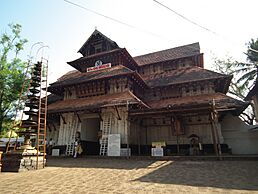
Vadakkunnathan Temple
-
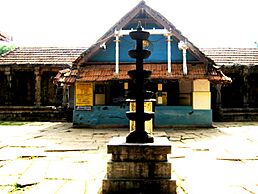
Thirunelli Temple front view
-
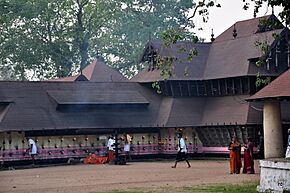
Kodungallur Bhagavathy Temple
-
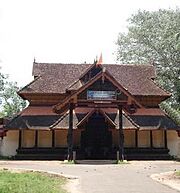
Kandiyoor Sree Mahadeva Temple


Sri Lanka: Southern Influence
The architecture in Sri Lanka also shows strong influences from Dravidian styles, especially in areas with Tamil-speaking populations like Jaffna. Many Hindu temples built from the 18th century onwards in Sri Lanka adopted Dravidian architectural features. Ancient sites like the Nalanda Gedige and the Shiva Devale in Polonnaruwa show early connections to this style.
-
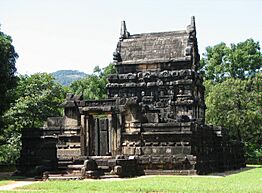
The Nalanda Gedige, a Buddhist temple built between the 8th and 10th centuries, in a predominant Pallava style Dravidian architecture.
-
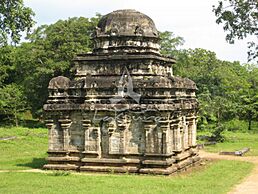
The second Shiva Devale (Shiva temple) of Polonnaruwa, built under the Chola occupation period in 10th century.
-
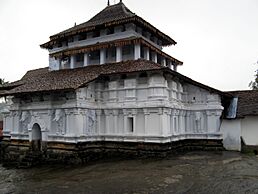
The Lankatilaka Vihara, a 14th-century building influenced by Dravidian architecture, designed and involving an architect and craftsmen from South India.
-
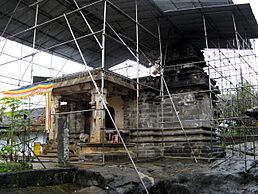
The Devale aside Gadaladeniya Vihara main shrine, built under the Gampola period, with South Indian architect and craftsmen.
-
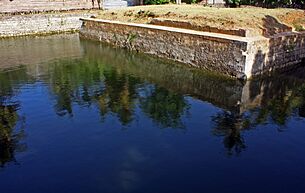
Yamuna Eri, a 15th-century pond in Nallur.
-
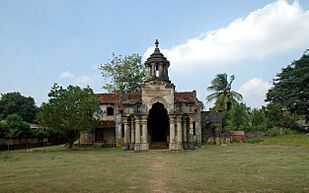
Mantri Manai, the remains of the minister's quarters of Jaffna Kingdom. It is built in a Euro-Dravidian style.
-
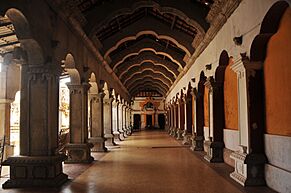
Corridor of Naguleswaram Temple
-
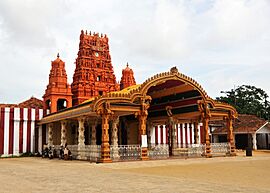
Nallur Kandaswamy temple front entrance
-
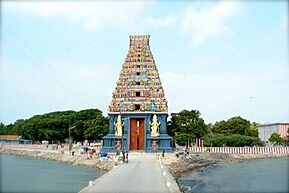
Raja Gopuram of Nainativu Nagapooshani Amman Temple.


.jpg)


See also
- Hindu temples – South India and Tamil Nadu
- Hindu temple architecture – Dravidian style
- Koyil – Hindu temples in Dravidian architectural style.
