
Abalone facts for kids
Quick facts for kids Abalone |
|
|---|---|
 |
|
| Living abalone in tank showing epipodium and tentacles, anterior end to the right | |
Scientific classification  |
|
| Kingdom: | Animalia |
| Phylum: | Mollusca |
| Class: | Gastropoda |
| Subclass: | Vetigastropoda |
| Clade: | Lepetellida |
| Superfamily: | Haliotoidea |
| Family: | Haliotidae Rafinesque, 1815 |
| Genus: | Haliotis Linnaeus, 1758 |
| Type species | |
| Haliotis asinina Linnaeus, 1758
|
|
| Synonyms | |
|
|
Abalone are colorful marine creatures known as sea snails. They belong to the animal group Haliotis, which is the only genus in the snail family Haliotidae. The word abalone comes from Rumsen, a Native American tongue, through the Spanish language. People recognize them right away by their flat shells that look like human ears. Because of this shape, many people call them ear shells. Inside, the shell glows with bright, rainbow shades made of a smooth substance called nacre. Along the edge, the shell features tiny holes that the snail uses to breathe underwater. People consider its meat an expensive delicacy across the globe. Today, scientists recognize about 70 living species thriving along rocky ocean shorelines.

Contents
- What Is an Abalone?
- Amazing Anatomy and Features of Abalone
- Where Do Abalone Live and How Did They Evolve?
- Life Cycle, Diet, and Ocean Threats
- How Humans Use Abalone
- Ocean Farming: Saving Wild Populations
- Rules and Laws Protecting Wild Shellfish
- Why Are Abalone in Trouble Today?
- Images for kids
- Related Pages
- See also
What Is an Abalone?
An abalone is a soft-bodied ocean animal that carries an arched shield on its back. People throughout history have given these unusual animals many colorful common names.
What People Call Them Around the World
In Australia, early settlers called them muttonfish or muttonshells. People living in the United Kingdom call them ormers. In South Africa, coastal communities call them perlemoen. Across the islands of New Zealand, native Māori communities call them pāua.
Sizes and Shapes of Sea Snails
Abalone come in an amazing variety of sizes. The tiny species Haliotis pulcherrima measures only about 20 millimeters long. The giant red abalone can grow to 300 millimeters across. Most species have an oval shell with a shallow spire and two or three curling turns. The final curl, called the body whorl, spreads out wide and flat. This ear-like shape gives the family its fame. However, the ass's ear abalone (Haliotis asinina) is much longer, while the black abalone has smooth edges and deep ridges.
Amazing Anatomy and Features of Abalone
These snails have evolved clever body designs to survive crashing waves along rocky coasts.
Breathing Holes Along the Shell Edge
One curious feature of the abalone shell is a curved line of open holes. These openings form a special band called the selenizone. As the snail grows, it creates new holes near the front and seals up the older openings behind it. Most kinds maintain four to ten open holes at any time. The snail shoots ocean water out of these holes after passing it over its breathing gills. It also sends tiny reproductive cells through these same open holes into the sea. Unlike many land snails, an abalone lacks an operculum, which is a trapdoor used to close up the entrance. Instead, it has a very wide shell mouth.

The Strong Foot and Soft Body Parts
An abalone has a huge, muscular foot that grips slippery rocks tightly. This grip allows it to withstand pounding surf without getting swept into deep water. Around the foot, the snail extends sensitive frilly tentacles called cirri to feel its dark surroundings. The animal attaches inside its home using a powerful columellar muscle. When hungry, it scrapes food using a ribbon-like tongue called a radula. This tongue contains sharp little hooks called uncini made for shredding rough sea plants.
Why the Inside Shines Like a Rainbow
The outer shell often appears dull, brown, or red, matching the rocks where it hides. Inside, it shines with brilliant, glowing colors. This magical shine is called iridescence. The snail coats the interior with glowing mother-of-pearl made of mineral crystals. Depending on what the snail eats, these layers reflect pink, blue, green, and deep purple highlights.
Nature's Bulletproof Armor
The shell is remarkably strong because of tiny layers of calcium carbonate. These mineral bricks are glued together with natural elastic proteins. When something hits the shell, the microscopic layers slide and absorb the blow instead of cracking. Materials scientists study these shells to design lightweight body armor and tough protective panels for vehicles. Grinding these shells produces fine mineral dust that human lungs cannot handle safely.
Where Do Abalone Live and How Did They Evolve?
Abalone live in chilly coastal oceans all around the world.
Ocean Homes Across the Planet
These animals thrive along rocky shorelines in cold and temperate waters. You can find large wild groups off California, Japan, South Africa, Australia, and New Zealand. They stay away from icy polar waters near the Arctic and Antarctica. Some species live right along the wave-washed intertidal zone, while others prefer deeper underwater reefs.

Prehistoric Ancestors from the Dinosaur Age
Abalone are ancient sea animals that belong to a primitive marine group named Vetigastropoda. Scientists have found fossil shells dating back to the Campanian age during the Late Cretaceous period. These fossils show that abalones crawled under the seas while dinosaurs still walked on dry land. The earliest fossils come from North America, though related groups like Temnotropidae and Trochotomidae lived worldwide.
Life Cycle, Diet, and Ocean Threats
Like many sea creatures, abalone start their lives as tiny floating organisms.
How Abalone Grow and Reproduce
Adult females release millions of microscopic eggs directly into the rolling waves. The resulting larvae are lecithotrophic, which means they survive by feeding on their own egg yolk. They drift as tiny swimmers before growing a heavy shell. Once heavy enough, they settle down on hard rocks. These snails feed as pure plant eaters. They crawl at night to graze on macroalgae like red algae and towering giant kelp.

Ocean Predators and Sneaky Pests
Abalone face dangers from sea otters, starfish, crabs, and large fish. Tiny marine bristle worms called Spionidae, from the Polychaeta family, drill tunnels into their shells. A serious threat is a viral nerve sickness called abalone viral ganglioneuritis. This sickness can wipe out whole wild reefs. Abalone lack blood-clotting chemicals, so any deep scratch on their soft flesh can cause them to bleed fatally.
How Humans Use Abalone
Humans have gathered these molluscs for thousands of years for food, tools, and glittering decorations.
Prehistoric Uses and Shell Heaps
Ancient peoples caught abalone for rich meals and strong tools. Scientists discovered shells used as paint pots in Blombos Cave in South Africa dating back 100,000 years. Along the Channel Islands of California, Native American groups left massive shell mounds called middens. These piles show thousands of years of steady harvesting. Indigenous cultures traded the shiny shells as money and carved them into fishhooks.
A Luxury Seafood Around the World
Many cultures consider abalone meat an expensive treat served at feasts.
- In Chinese cuisine, the meat is called bao yu and ranks among the prestigious four sea delicacies.
- In Japan, chefs slice raw abalone into fresh sushi known as awabi or steam it gently.
- In South Korea, it is called jeonbok and cooked in warm breakfast porridge or buttered steaks.
- In California, cooks pounded the meat into steaks or tossed it with pasta and vegetables.
Shiny Crafts and Sparkling Jewelry
Artists cut the gleaming shell into smooth shapes for shiny jewelry and polished buttons. The colorful nacre is inlaid into wooden furniture and guitar fingerboards. Some rare snails produce natural claw-shaped pearls that show off striking rainbow hues.

Ocean Farming: Saving Wild Populations
Because wild abalone became scarce, farmers learned how to raise them in clean coastal tanks.
Modern Abalone Hatcheries
Commercial aquafarming began during the late 1950s in Japan and China. Today, giant farms operate in Australia, Chile, South Korea, and the United States. Farmers keep baby abalone in land tanks and feed them fresh seaweed until they mature. Farmed abalone provide seafood markets with meat while taking pressure off wild ocean reefs.

Underwater Sea Ranches
In places like Flinders Bay in Western Australia, scientists build artificial concrete reefs. Workers place young hatchery snails on these structures in the open ocean. The animals graze on wild seaweeds while creating new homes for pink snapper and colorful reef fish.
Rules and Laws Protecting Wild Shellfish
Governments set strict rules to keep wild abalone from vanishing completely.
Protecting Shorelines in California
California once hosted huge commercial fisheries. Heavy fishing caused populations to crash. Today, taking white abalone and black abalone is completely forbidden because both face extinction. To help numbers recover, the California Fish and Game Commission closed recreational diving along the coast. Diver rules ban scuba diving equipment during sport hunts, forcing divers to use breath-holding freediving skills.
Traditional Catching in New Zealand and Europe
In New Zealand, catching wild pāua follows strict daily limits set by fishery wardens. People harvest them by breath-holding, and taking undersized shells brings heavy legal fines. Along the British Channel Islands, searching for the green ormer happens only on specific low-tide days. In Guernsey, officials enforce these gathering rules to protect fragile stocks.
Why Are Abalone in Trouble Today?
Wild abalone populations face major challenges in modern oceans. Ocean acidification makes it harder for young snails to build strong mineral shells. Rising ocean temperatures cause giant kelp forests to shrink, leaving hungry snails without food. Overfishing has made it hard for surviving adults to find mates and lay eggs. Marine biologists are raising healthy young snails in laboratories and releasing them onto protected reefs to save these colorful sea snails.
Images for kids
-

Abalone hatchery tanks
-
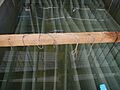
Aquaculture breeding facility
-
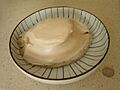
The raw meat of abalone
-

Abalone sashimi
-

Braised abalone
-

Abalone cooked with vegetables
-

Traditional Chinese abalone banquet dish
-

Grilled abalone dish
-

Korean hot pot with abalone
-

Freshly sliced raw abalone
-

Steamed abalone with fruit peels
-

Cooked abalone served in Macau
-

Abalone meal served with rice
-

Steamed abalone with vermicelli noodles
-
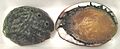
Rare living white abalone
-
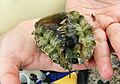
Ass's ear abalone showing soft body
-

A pink abalone shell
-
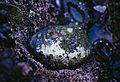
A black abalone shell
-
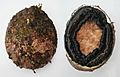
Shell views of the blacklip abalone
-

Shell of the white abalone
-

Shell pattern of a variable abalone


Related Pages
See also
 In Spanish: Bào yú para niños
