
Astatotilapia stappersii facts for kids
Quick facts for kids Astatotilapia stappersii |
|
|---|---|
 |
|
| A. stappersii male caught at Gatumba, Burundi | |
| Conservation status | |
Scientific classification  |
|
| Kingdom: | Animalia |
| Phylum: | Chordata |
| Class: | Actinopterygii |
| Order: | Perciformes |
| Family: | Cichlidae |
| Genus: | Astatotilapia |
| Species: |
A. stappersii
|
| Binomial name | |
| Astatotilapia stappersii (Poll, 1943)
|
|
| Script error: The function "autoWithCaption" does not exist. | |
| Synonyms | |
|
Haplochromis stappersii Poll, 1943 |
|
Script error: No such module "Check for conflicting parameters".
Astatotilapia stappersii is a type of fish that lives in fresh water. It's part of the Cichlidae family, which includes many popular aquarium fish. This fish can grow to be about 15 centimeters (or 6 inches) long. It was first described in 1943.
Contents
About the Stappers' Haplochromis
This fish is sometimes called the Stappers' Haplochromis. It's important to know that it was once mistakenly listed twice on the IUCN Red List. The IUCN Red List tracks how endangered different species are. One listing used its original name, Haplochromis stappersii. The other listing mixed it up with a different fish called the Striped Nothobranch. However, these two fish are not alike or closely related.
Where It Lives
A. stappersii can be found in several countries in Africa. These include Burundi, the Democratic Republic of the Congo, Tanzania, and Zambia.
Its Home in Lake Tanganyika
This fish lives in the area around Lake Tanganyika. This is one of the largest and deepest lakes in the world. It prefers places like slow-moving rivers, swamps, small freshwater lakes, and marshes. It also lives in areas where rivers spread out into deltas.
What It Eats
The Stappers' Haplochromis mainly eats aquatic insect larvae. These are the young forms of insects that live in water.
Its Conservation Status
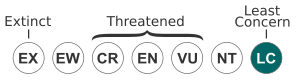
Even though this fish is important for local food, it is not considered an threatened species by the IUCN. This means it is common and found in many places.
Threats to Its Home
However, its numbers could be affected by things like habitat destruction and water pollution. If its numbers drop too much, it could lead to overfishing. This happens when too many fish are caught, and the population can't recover.
How It Got Its Name
The name stappersii honors a Belgian scientist named Louis Stappers. He was a physiologist and biologist who lived from 1883 to 1916. Louis Stappers led an expedition to Lake Tanganyika. During this trip, he collected the first example of this fish, which is called the "type" specimen.
