
Brazilian Air Force facts for kids
Quick facts for kids Brazilian Air Force |
|
|---|---|
| Força Aérea Brasileira | |
 |
|
| Founded | 20 January 1941 |
| Country |  Brazil Brazil |
| Type | Air force |
| Role | Aerial warfare |
| Size | 80,937 personnel 578 aircraft |
| Part of | Brazilian Armed Forces |
| Headquarters | Brasília |
| Patron | Alberto Santos-Dumont Eduardo Gomes |
| Motto(s) | Portuguese: Asas que protegem o País "Wings that protect the country" |
| March | Hino dos Aviadores |
| Anniversaries | 22 May (anniversary) 22 April (fighter aviation day) |
| Engagements | Contestado War Lieutenants Revolts Bombing of São Paulo Constitutionalist War World War II Lobster War Cold War Operation Traira |
| Commanders | |
| Commander-in-Chief |  President Luiz Inácio Lula da Silva President Luiz Inácio Lula da Silva |
| Minister of Defence |  José Múcio José Múcio |
| Commander of the Air Force |  Marcelo Kanitz Damasceno Marcelo Kanitz Damasceno |
| Insignia | |
| Flag |  |
| Roundel |   |
| Fin flash |  |
| Aircraft flown | |
| Attack | AMX A-1, A-29 Super Tucano |
| Electronic warfare |
EMB 145 AEW&C, EMB-145 RS |
| Fighter | F-5EM Tiger II, F-39 Gripen |
| Helicopter | AS332 Super Puma, EC 135, UH-60 Black Hawk, EC725 Super Cougar |
| Patrol | P-3 Orion, EMB 111, IAI Heron |
| Reconnaissance | EMB 110, AMX RA-1, Learjet 35, Hermes 450, Hermes 900, IAI Heron |
| Trainer | F-5FM Tiger II, AMX A-1B, AT-27 Tucano, AT-29 Super Tucano, T-25 Universal, HB350B Esquilo |
| Transport | C-390 Millennium, Caravan II, EADS CASA C-295, Airbus A319, EMB 190, EMB 500, ERJ 135, EMB 110, EMB 120, EMB 145 |
| Tanker | KC-390 Millennium, Airbus A330 MRTT |
The Brazilian Air Force (Portuguese: Força Aérea Brasileira, commonly abbreviated as FAB) is the official aviation branch of the Brazilian Armed Forces. It is responsible for protecting the skies of Brazil, patrolling its vast borders, and supporting humanitarian missions. Brazil is the largest country in South America, and the FAB is the largest air force in the entire Southern Hemisphere.
The air force operates hundreds of modern airplanes and helicopters. It includes fast supersonic fighter jets, huge cargo transports, patrol airplanes, and high-tech rescue helicopters. Over 80,000 men and women serve in the FAB as pilots, engineers, radar specialists, mechanics, and ground security officers.
Contents
What Is the Brazilian Air Force?
The Brazilian Air Force was created to unite all military aviation in Brazil under one command. Before it was established, both the Brazilian Army and the Brazilian Navy had their own separate flying units.
In 1941, the Brazilian government combined these separate branches into a single national air force. Today, the FAB is managed by the Aeronautics Command (Comando da Aeronáutica), which is part of the Ministry of Defence.
Main Missions of the Air Force
The Brazilian Air Force has several key responsibilities:
- Protecting Brazilian airspace from unauthorized aircraft and potential aerial threats.
- Guarding the country's huge borders, including the vast Amazon rainforest.
- Conducting search and rescue missions to locate lost hikers, missing ships, or downed airplanes.
- Providing emergency medical transport and carrying disaster relief supplies to remote towns.
- Managing all military and civilian air traffic control across the whole country.
- Supporting scientific research in aviation, rocketry, and space technology.
History and Major Milestones
The story of Brazilian military aviation began in the early 20th century with daring early aviators flying fragile wood-and-fabric airplanes.
Early Military Aviation and Ricardo Kirk
Brazil was one of the first countries in the Americas to use airplanes during military conflicts. In 1914, during the Contestado War, early biplanes were brought by train to southern Brazil to help scout rugged terrain.
Lieutenant Ricardo Kirk became the first Brazilian military aviator. He flew daring observation flights over dense forests before navigation instruments existed. Today, he is remembered as a pioneer of Brazilian flight history.
Creation of the Modern Air Force in 1941
During the 1920s and 1930s, military thinkers realized that airplanes were changing how nations defended themselves. Countries like the United Kingdom had formed the Royal Air Force, showing the benefits of an independent air branch.

Brazilian leaders, led by President Getúlio Vargas, decided to create a single air service. On January 20, 1941, the Ministry of Aeronautics was established. A few months later, on May 22, 1941, the branch was officially named the Brazilian Air Force (FAB). All airplanes, airfields, and flight personnel from the Army and Navy joined the new service.
Heroic Action in World War II
The Brazilian Air Force played an important role during World War II. Brazil joined the Allied nations to fight against the Axis powers.
Coastal Patrols and the Battle of the Atlantic
German submarines threatened trade ships along the coast of South America. FAB patrol planes, including PBY Catalina flying boats and Lockheed Hudson bombers, flew long missions over the Atlantic Ocean.
On July 31, 1943, a Brazilian Catalina crew spotted a submarine surfaced off the coast of Rio de Janeiro. The crew attacked with depth charges and disabled the vessel. The Brazilian airmen then dropped a life raft to help survivors, showing bravery and honor.
The 1st Fighter Group in Italy

In late 1943, Brazil created the 1st Fighter Aviation Group (1º Grupo de Aviação de Caça). The group traveled to the United States for advanced training and then deployed to Italy in 1944.
The Brazilian pilots flew the powerful Republic P-47 Thunderbolt, a heavily armored fighter-bomber. They flew missions to destroy supply lines, bridges, trains, and vehicle columns in northern Italy.
- The group flew under the radio callsign Jambock.
- Their famous war cry and motto was "Senta a Púa!", meaning to strike with determination.
- On April 22, 1945, the group flew 44 combat missions in a single day, destroying hundreds of vehicles and supply depots.
- Because of this heroic effort, April 22 is celebrated every year as Brazilian Fighter Aviation Day.
Entering the Jet Age
After World War II, aviation changed rapidly as jet engines replaced propellers. Brazil entered the jet age in the early 1950s by acquiring British Gloster Meteor jet fighters.
To purchase these advanced jets, Brazil traded 15,000 tons of raw cotton because foreign cash was limited after the war. Later, the FAB flew American-built F-80 Shooting Stars and supersonic French Dassault Mirage III interceptors.
Cold War to the Modern Era
During the Cold War, the FAB acquired the American Northrop F-5 Tiger II fighter jet. Brazilian engineers upgraded these jets with modern computer systems, radar screens, and aerial refueling equipment.
.jpg)
In 1982, during the Falklands War, Brazilian radar controllers detected an unauthorized foreign jet approaching the capital of Brasília. Mirage III interceptors scrambled quickly, intercepted the airplane, and ordered it to land safely.
Brazil also developed its own aerospace industry. In 1969, the Brazilian government founded Embraer (Empresa Brasileira de Aeronáutica). Working closely with the FAB, Embraer designed world-class training airplanes and attack jets that are used around the globe.
Modern Missions and Operations
Today, the Brazilian Air Force is active in peaceful missions, humanitarian relief, scientific research, and environmental protection.
Border Security and the SIVAM Radar Network
Brazil shares borders with ten different countries and contains the giant Amazon rainforest. Guarding these remote regions requires high-tech tools.
Brazil built the Amazon Surveillance System, known as SIVAM. This network uses ground radar stations, weather sensors, satellites, and radar airplanes to monitor the airspace.
- Radar planes like the E-99 detect low-flying airplanes hidden behind mountains or tree canopies.
- Turboprop attack planes like the A-29 Super Tucano intercept unidentified flights.
- Unmanned aerial vehicles (drones) fly over dense jungles to track illegal deforestation and unauthorized airstrips.
Search and Rescue (SAR) and Humanitarian Help
Saving human lives is one of the most important duties of the FAB. Search and rescue crews are on alert 24 hours a day to respond to emergencies.
- International Ship and Plane Searches: In 2009, the FAB led the deep-sea search operations for Air France Flight 447 across thousands of square miles of ocean. In 2017, FAB patrol planes helped search for the missing Argentine submarine ARA San Juan.
- Medical Airlifts: Transport airplanes bring doctors, vaccines, and medical equipment to isolated indigenous villages in the Amazon.
- Emergency Evacuations: During public health emergencies and natural disasters, FAB cargo planes transport oxygen tanks, field hospitals, and patients.
- Global Repatriation: In times of international crisis, the FAB flies transport planes across the world to bring Brazilian citizens safely home.
The CRUZEX International Exercises
Every two years, Brazil hosts the CRUZEX military exercise. It is the largest joint air combat training exercise in South America.
Dozens of air forces from countries like the United States, France, Canada, Chile, Uruguay, and Argentina gather in northeastern Brazil. Pilots practice joint peacekeeping operations, flight communications, mid-air refueling, and search maneuvers.
Aircraft and Modern Technology
The Brazilian Air Force operates a balanced fleet of modern airplanes and helicopters for different tasks.
.jpg)
Fighter and Attack Jets
Fighter aircraft protect the skies and ensure air defense.
- F-39 Gripen: Brazil's most modern multirole fighter jet, developed with Sweden's Saab. It features touch-screen cockpit displays, advanced radar, and supersonic speed. Many are assembled inside Brazil.
- F-5EM Tiger II: A classic twin-engine supersonic fighter updated with modern digital instruments and helmet-mounted targeting sights.
- AMX A-1: A dedicated ground-attack and reconnaissance jet developed jointly by Brazil and Italy.
- A-29 Super Tucano: A single-engine turboprop airplane designed for light attack, reconnaissance, and pilot flight training.
Transport and Cargo Airplanes
Transport planes carry soldiers, vehicles, food, and rescue supplies across huge distances.
.jpg)
- Embraer KC-390 Millennium: A high-tech twin-jet cargo plane built in Brazil. It can carry up to 26 metric tons of cargo, land on unpaved dirt runways, and refuel other airplanes in mid-air.
- Airbus A330 MRTT: A large wide-body jet used for long-range transport and oceanic aerial refueling.
- C-295: A twin-turboprop cargo plane used for transport and search and rescue missions.
- Cessna 208 Caravan: A small, reliable utility plane that lands on short jungle runways.
Helicopters and Special Aircraft
Helicopters and specialized planes perform rescue, transport, and radar surveillance.
.jpg)
- H-36 Caracal: A large multi-mission helicopter used for troop transport and long-distance rescue.
- H-60L Black Hawk: A twin-engine utility helicopter built for rugged conditions.
- E-99: An airborne early warning plane carrying a giant radar antenna on top of its fuselage.
- P-3AM Orion: A long-range four-engine patrol airplane used to track ships and protect marine waters.
In-Flight Helicopter Refueling
Brazil made aviation history by becoming the first country in South America capable of refueling helicopters while flying in mid-air.
During this difficult maneuver, a C-130 or KC-390 tanker plane extends a flexible hose with a basket. The helicopter pilot carefully flies forward and connects a refueling probe into the basket while traveling at high speed. This allows rescue helicopters to fly thousands of miles without landing.

Organization and Bases
The FAB operates from numerous modern air bases situated across Brazil's five geographic regions.
Organization of Flying Squadrons
The Air Force organizes its aircraft into distinct units:
- Flights (Esquadrilhas): Small formations of 3 to 4 airplanes.
- Squadrons (Esquadrões): Units typically containing 6 to 18 aircraft led by a commander.
- Groups (Grupos): Larger units combining several squadrons for air defense, transport, or training.
Special Units and Teams
The FAB includes famous specialized units known for rescue skills and precision flying:
The Smoke Squadron (Esquadrilha da Fumaça)
The Air Demonstration Squadron, known as the Esquadrilha da Fumaça, is the official aerobatic demonstration team of Brazil.
Flying specially-painted A-29 Super Tucanos, the pilots perform formation loops, rolls, and inverted flights at air shows around the world. They write messages in the sky using harmless white smoke to inspire future aviators.
PARA-SAR (Airborne Rescue Squadron)

The Esquadrão Aeroterrestre de Salvamento, commonly called Para-SAR, is an elite search and rescue team.
Its members are trained military parachutists, divers, and wilderness survival experts. They drop into remote jungles, choppy oceans, or rugged mountains to rescue stranded survivors and treat injured people. Members are known for their distinctive maroon berets and bright orange caps.
Key Air Force Bases in Brazil
The FAB maintains major bases across the country:
| Location | State | Base Name | Primary Mission |
| Anápolis | Goiás | Anápolis Air Force Base | Gripen fighters, radar planes, and KC-390 transports |
| Brasília | Federal District | Brasília Air Force Base | National headquarters and government transport |
| Santa Cruz | Rio de Janeiro | Santa Cruz Air Force Base | Air defense fighters and patrol aircraft |
| Manaus | Amazonas | Manaus Air Force Base | Amazon surveillance, jungle transport, and rescue |
| Natal | Rio Grande do Norte | Natal Air Force Base | Advanced flight training for new pilots |
| Canoas | Rio Grande do Sul | Canoas Air Force Base | Southern regional air defense and emergency transport |
| Santa Maria | Rio Grande do Sul | Santa Maria Air Force Base | Attack aircraft, drones, and helicopters |
See Also
- Alberto Santos-Dumont
- Brazilian Army
- Brazilian Navy
- Smoke Squadron
- Saab JAS 39 Gripen
- Embraer C-390 Millennium
Images for kids
-
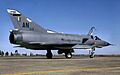
A Brazilian Mirage III supersonic interceptor jet
-
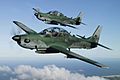
Two A-29 Super Tucano turboprop airplanes flying in formation
-
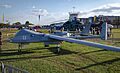
An unmanned aerial patrol vehicle used by the Brazilian Air Force
-
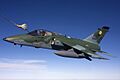
An AMX attack jet performing in-flight refueling
.jpg)

.jpg)

