
Bremen-Verden campaign facts for kids
Quick facts for kids Bremen-Verden Campaign |
|||||||
|---|---|---|---|---|---|---|---|
| Part of the Scanian War and Franco-Dutch War | |||||||
 Duchies of Bremen and Verden in 1655 (1655 copperplate by Frederick de Wit) |
|||||||
|
|||||||
| Belligerents | |||||||
 Swedish Empire Swedish Empire |
 Denmark-Norway Denmark-Norway |
||||||
| Commanders and leaders | |||||||
| Field Marshal Henrik Horn | Prince-Bishop von Galen (to end October) Duke George William (from end October) |
||||||
| Strength | |||||||
| November 1675 5,600 Swedes in Stade 800 Swedes in Carlsburg |
1675 4,000 Münster troops 2,800–3,100 Brandenburg troops 2,500 Danes 3,000 Lüneburg troops 1676 12,000 men |
||||||

The Bremen-Verden Campaign (German: Bremen-Verdener Feldzug) was a military conflict that took place in Europe. It was part of bigger wars called the Scanian War and the Franco-Dutch War. From September 15, 1675, to August 13, 1676, a group of countries allied against Sweden. This group included Brandenburg-Prussia, the nearby German states of Lüneburg and Münster, and Denmark-Norway. They worked together to conquer the Duchies of Bremen and Verden.
Bremen-Verden was a Swedish territory in northern Germany. Sweden had gained it in 1648 after the Peace of Westphalia. After the campaign, the allied forces held onto Bremen-Verden until the war ended in 1679. However, it was later given back to Sweden as part of the Treaties of Nijmegen. For the main countries fighting, like Sweden, Brandenburg, and Denmark, this area in northwest Germany was not the most important part of the war.
Contents
Why the War Started: Background
In 1672, France attacked the Dutch Republic. This was because of an earlier conflict called the War of Devolution. Soon, other countries formed an alliance against France. This conflict grew into the Dutch War. France asked its ally, Sweden, for help. Sweden was asked to fight against France's enemies, which included the House of Habsburg and Electorate of Brandenburg.
In late 1674, a Swedish army marched into Margraviate of Brandenburg. Brandenburg's army was away fighting France. But in a quick summer campaign in 1675, the Brandenburg army, led by Elector Frederick William I, defeated the Swedes. They pushed them back to Swedish Pomerania.
After Brandenburg's victory, the Holy Roman Empire took action against the Swedish king. On July 17, 1675, they declared an "imperial ban" on him. This meant he was considered an outlaw in his German territories, including Pomerania, Mecklenburg, and Bremen-Verden. The Empire ordered its regions to enforce this ban. Soon after, Denmark also declared war on Sweden.
The allies, Denmark-Norway and Brandenburg, first wanted to take over Sweden's lands in northern Germany. Then, they planned to focus their full strength on other war areas, like Scania. Taking Bremen-Verden was important because it was close to Denmark's southern border. If Sweden kept it, they could use it as a base to attack Denmark. It also allowed Sweden to find and hire mercenaries, who were soldiers for hire.
Sweden's plan was to use its navy to defeat the Danish-Norwegian fleet. This would help their lands in northern Germany. Then, they hoped to land troops on Zealand, which is the main island of Denmark. So, Sweden's success in Bremen-Verden depended on its strong navy sending more troops. But the Swedish navy was delayed and could not sail. This meant Bremen-Verden did not get more soldiers and had to rely on the troops already there.
Sweden's army in Bremen-Verden was small. It was spread out in several forts. The main Swedish forces were in Stade, Carlsburg, and seven other small forts. They could only try to slow down large attacks. Sweden's defense plan was to make their enemies fight many difficult sieges. But this also meant their own troops were split up and could not form a strong mobile army.
Planning the Attack: Diplomatic Steps

Christoph Bernhard von Galen was the Prince-Bishop of Münster. He wanted to increase his power. He had previously been on France's side against the Netherlands. On June 7, 1675, he signed an agreement with the Emperor in Vienna. He promised to provide 9,000 soldiers for the Emperor's service. Because of this, the bishop had to join the war against Sweden.
Later, on September 11, 1675, a neutrality treaty was signed. This was between the allies (Münster, Denmark, Brandenburg) and John Frederick of Brunswick-Lüneburg. Brunswick-Lüneburg had been on Sweden's side. But now, they agreed to stay neutral in the fight against Sweden.
This treaty among the four allies was mostly for their own political goals. It was not just about their duty to defend the Empire. So, the imperial ban was enforced by the armies of the different states. The main imperial army did not play a big part in the fighting.
Autumn 1675: The Campaign Begins
Münster Army Invades Bremen-Verden
| Key Events: Autumn 1675
Spring 1676
|
The campaign started on September 15, 1675. About 4,000 to 10,000 soldiers from Münster marched into the Swedish area of Wildeshausen. They continued their advance without problems to the River Weser. On September 25, Münster's artillery fired across the Weser at Bremen.
A Brandenburg force of 1,600 foot soldiers and 700 horsemen also arrived in Bremen. They were led by Major General Freiherr von Spaen. The Danes joined with 2,500 men under Count Gustavus Adolphus of Baudissin.
The Münster troops, led by Prince-Bishop von Galen, marched from neutral Bremen to the fortress of Langwedel. They captured it on September 27 and 28. This opened the way into the former Prince-Bishopric of Verden. Verden upon Aller itself fell to the allies on September 27. Münster forces suddenly entered the town and took control of one of its gates.
After Verden, the town of Rotenburg was conquered after some fighting. From there, the army moved quickly towards Ottersberg. This town was taken on October 3, 1675, by the experienced Münster troops. The Swedish soldiers there, about 140 men, were taken prisoner. The allied army then marched northeast towards Buxtehude, reaching it on October 12.
Buxtehude was well-fortified and had plenty of supplies. It had a garrison of almost 400 men. A siege seemed necessary. On October 12, the allies took an important hill outside the town. They set up all their cannons and mortars. Shelling began on the morning of October 13. Over 60 houses caught fire. On October 14, many bombs and shells were fired into the town. This caused much damage but no deaths. On October 15, the firing stopped so that trenches could be dug for an all-out attack.

The shelling had already caused a lot of damage. The Buxtehude commander, Hamelton, was forced to surrender the town. The citizens and his German mercenary soldiers had asked him to. They had heard about the Imperial Ban against Sweden. The garrison was allowed to leave for Stade with their belongings and weapons. On October 16, the allies entered the town. They captured 24 cannons and their ammunition.
After Buxtehude fell, several allied regiments moved towards Bremervörde. On October 25, the siege of Bremervörde Fortress began. After three days of heavy shelling, the mercenaries, mostly German, refused to fight. The allies sent a messenger to the town. He threatened to punish all German soldiers if the fortress was captured. This was because they were fighting for an outlaw against the Holy Roman Empire. The Swedish commander had no choice but to surrender. The Swedish officers and men were allowed to leave freely. Most of the German soldiers joined the allied side. Bremervörde was given to the Lüneburg troops, who entered with 500 men. At this time, only Carlsburg and Stade remained in Swedish hands.
Brandenburg and Danish Landing Attempts

While the Münster, Brandenburg, and Danish troops advanced, there were two failed attempts by Danish and Brandenburg forces to land troops. The Swedes pushed them back with heavy losses. The first landing was in late September near Carlshagen. A Brandenburg force, led by Admiral Simon de Bolfey, tried to capture the important Carlsburg Fortress on the Weser River. This Swedish fort was built in 1672 to control the mouth of the Weser. A Brandenburg fleet of seven ships, with about 800-900 soldiers, arrived from the Elbe River.
On September 28, the troops landed near Lehe, north of Carlsburg. The Swedish commander of Carlsburg, who had about 800 soldiers, refused to surrender. So, Admiral de Bolfey had his troops build earthworks outside the town. On September 30, he started firing from his ships. However, on the same day, the landing force pulled back. During this, 30 Brandenburg soldiers switched sides and joined the Swedes. Encouraged by these deserters, the Swedes attacked with 200 men on October 1. But they had to retreat after a short fight.
To help Carlsburg Fortress, 13 groups of horsemen were sent from Stade. They were led by Lieutenant Colonel Sidon. The Brandenburgers, who were now outnumbered, learned about the approaching Swedish forces from their scouts. They stopped the siege and got back on their ships on October 2. Bad winds kept the ships, now loaded with soldiers, close to the shore. When the Swedish reinforcements arrived, they attacked the ships. After a short fight, the Brandenburgers had to surrender. They lost 314 men, mostly taken prisoner.
Around the same time, a Danish fleet landed six companies of foot soldiers in Land Wursten. They were led by Lieutenant Colonel Harwich. But after their successful defense of Carlsburg, the Swedish units under Sidon attacked these Danish mercenaries. After several battles on October 4, the Swedes defeated the Danes. They took 400 prisoners. Of these, 200 were made to join the Swedish army and sent to Carlsburg. The other prisoners were held in Stade. The main Swedish army returned to Stade on October 7. The naval blockade of Carlsburg was lifted. The seven Brandenburg ships went to the River Elbe to block supplies to Stade from the sea. However, Carlsburg was besieged again in late October, despite the Swedes' earlier success.
Allied Leadership Changes
In October, about 3,000 men from the Principality of Lüneburg arrived. They came from the Rhineland and were led by Duke George William of Brunswick-Lüneburg. As the appointed leader of the Lower Saxon Circle, the duke took overall command of the allied army, which now had 12,000 soldiers.
In the military headquarters of Prince-Bishop von Galen in Rotenburg, a secret agreement was signed on October 14. The Prince-Bishop, Duke George William, and Duke Rudolph Augustus of Brunswick-Wolfenbüttel agreed to help each other in the campaign. They also planned how to divide the conquered lands. This plan did not include Denmark and Brandenburg.
After this campaign, there was much disagreement among the allies. The Protestant princes did not want the Roman Catholic Prince-Bishop von Galen to have too much power in a Protestant area.
Attacks on Stade, Carlsburg Siege, Swedish Raids

On November 4, the allies advanced on Stade. This was the main base of the Swedish government in Bremen-Verden. The Stade garrison was led by Field Marshal Henrik Horn, the Swedish governor general. He had 5,624 soldiers and 600 local militia.
Horn prepared the town well for defense. To stop German mercenaries from leaving, he used rewards and propaganda. Many German mercenaries were leaving because Sweden was declared an enemy of the Empire. Emperor Leopold I had ordered all subjects of the Holy Roman Empire to leave Swedish service. So, in early November, Horn had the former Buxtehude commander, Hamelton, publicly executed for surrendering too early. All German mercenaries in Stade had to publicly promise loyalty to Sweden again. By doing this, Field Marshal Horn was able to make his soldiers disciplined and ensure a strong defense.
Repeated attacks on Stade on November 6 and 7, 1675, failed. The allies could not agree on continuing the siege because of the strong resistance and the start of winter. Finally, on November 9, the allies pulled their troops back to winter camps. The forts they had captured remained under allied control to keep Stade blockaded. The Brandenburg troops left the area and went to the Duchy of Cleves and Principality of Minden.
The Swedes used this quiet time to regain some control. They often launched raids and sent out groups to find food. Some groups went upriver to Buxtehude, Cranz, and Altona. Others went downriver to Bielenberg and Kollmar, burning and looting. They also destroyed or captured several Danish and Dutch ships on the Elbe River.
In early January, Colonel Sydau led another Swedish attack. He had about 400 horsemen and 400 foot soldiers. They went to Freiburg/Elbe in Kehdingen to fight about 500 Münster soldiers. The Swedes' direct attack failed. So, Sydau ordered his horsemen to go around and attack the Münster soldiers from behind. Once the horsemen were in position, the Swedes attacked the earthworks from all sides. The Münster troops suffered heavy losses, gave up their position, and fled. Swedish horsemen chased them, and 260 were captured. The Swedes lost only 50 men in the Battle of Freiburg on the Elbe. Among the prisoners were 15 mercenaries who had joined the Swedes but then switched sides after Bremervörde fell. They were severely punished as a warning to others.
This successful period for the Swedes ended when Carlsburg surrendered. It had been under siege since late October. A lack of ammunition, food, and soldiers led to the fort's surrender on January 22. The commander, Jean Mell, gave up to the combined Münster, Danish, and Lüneburg forces. The Swedish soldiers, about 380 strong (200 of whom were too sick to fight), were allowed to leave freely. When the fort surrendered, 80 cannons fell into allied hands. As agreed, a mixed Münster and Lüneburg group of soldiers took over the fort.
Allied Disagreements
The Prince-Bishopric of Münster and the Duchy of Lüneburg had agreed to exclude Denmark and Brandenburg from dividing Bremen-Verden. This caused serious arguments among the allies. It threatened to stop the war against Sweden. For example, Münster wanted the former Prince-Bishopric of Verden and several districts like Wildeshausen and Bremervörde. The rest was to go to Lüneburg-Celle. Denmark and Brandenburg, however, wanted an equal share of the conquered lands. Denmark wanted Carlsburg and Stade to control the Weser and Elbe river mouths. They hoped to trade these later for help from Münster and Lüneburg in the Pomeranian War (Swedish-Brandenburg War).
This dispute over land claims grew so much that it almost led to open war between the allies. The Dutch Republic tried to help settle the dispute. They sent ambassadors to Bremen for talks. The Dutch governor, William III of Orange, suggested that all forts in Bremen-Verden should be destroyed. He also proposed that the final division of land be decided at the peace meeting in Nijmegen. For now, Lüneburg-Celle and Münster would temporarily manage the two duchies. Brandenburg and Denmark were allowed to keep their claims if they did not get "compensation" in Swedish Pomerania and Scania. Brandenburg's envoy agreed to the treaty on March 28. He saw no other way to end the dispute, which was vital for continuing the campaign.
The Elector of Brandenburg did not officially approve his envoy's decision. However, he stopped his objections to Lüneburg helping in Bremen-Verden. This was because the war against Sweden in Swedish Pomerania was going well.
Still, the Elector made a secret agreement with Denmark in early 1677. It stated that Brandenburg should get "at least one-fifth of the territory to be divided in Bremen-Verden."
Siege of Stade, 1676

The ongoing arguments among the allies delayed the siege of Stade until spring 1676. The allies agreed on the terms on April 28 and May 8 in Bremervörde. They planned to attack the last Swedish territory with 16,000 foot soldiers and 4,000 horsemen. The captured fortress would be equally occupied by troops from Denmark, Brandenburg, Lüneburg-Celle, and Münster. In early April, the Lüneburg commander, Lieutenant General Chauvet, began to blockade the town. This led to almost daily small fights and Swedish raids. At the same time, the attackers started building earthworks.
Stade had access to the sea because it was located at the mouth of the Schwinge, a river that flows into the Elbe. Part of the Swedish defenses included a fort that guarded the mouth of the Schwinge at Stadersand. Under its protection, several Swedish ships could reach the town. These ships brought much-needed supplies during the siege. To cut off Stade from the sea, the allies decided to capture the Schwinge fort. They brought cannons from Glückstadt and two Lüneburg ships with 18 guns each to the mouth of the Schwinge. All Swedish attempts to stop these preparations failed. The allies moved closer to the hill and set up cannons. They fired continuously at the Swedish position. On April 23, the Swedes launched a new raid with 300 horsemen. But they were pushed back after some initial success, losing 46 men. On July 4, the allies finished their earthworks. They shelled the Schwinge position so heavily that its 100-man unit surrendered.

With the loss of the Schwinge fort, Stade could no longer get supplies from the sea. Three Swedish warships, delayed by bad winds, and six supply ships reached the mouth of the Schwinge. But they were fired upon by allied cannons on the riverbanks. The Swedish fleet had to retreat from Stade. After a few raids in the Elbe area, they left.
Cut off from all supplies, the situation in Stade became very bad. An outbreak of illness reduced the number of soldiers to about 3,000. As supplies ran out, the morale of the besieged soldiers dropped. There were two mutinies among the Swedish soldiers, which were stopped with harsh measures. Many German mercenaries deserted, making it impossible to send out patrols or raids.
By June, the allied earthworks reached the town moats. However, the town was not shelled. The allies wanted to starve the citizens rather than storm the town. This would protect their own soldiers. The Swedish soldiers tried to flood the area by opening the locks on the river. But the attackers managed to drain the water through two channels to the Elbe.
As the supply situation in the town became critical, the citizens of Stade and Governor General Horn were forced to talk with the attackers. Negotiations began on July 13. They were delayed because the people preferred to be occupied by Protestant Lüneburg troops rather than Catholic Münster forces. As a result of the surrender talks, the town was to be occupied by nine Lüneburg companies. The German mercenaries had to leave Swedish service. In the early morning of August 13, 1676, Field Marshal Horn left with 10 cannons and 800 Swedish soldiers. The 1,400 German mercenaries were either held or released. The last Swedish stronghold in Bremen-Verden was now in allied hands.
What Happened Next: Aftermath
After Stade was conquered, 3,000 Lüneburg troops were sent to Swedish Pomerania. They went to help the Brandenburg troops there. The rest of the Lüneburg troops, along with some Münster troops, went to fight the French at Wetzlar in late September.
While occupying Stade, Prince-Bishop von Galen brought back Catholic services in many places he controlled. At the end of the war, Bremen-Verden remained in allied hands. Denmark left 3,000 soldiers as garrison troops in the Duchy of Bremen.
The plans to divide Bremen-Verden fell apart. Lüneburg-Celle signed a peace treaty in Celle on January 28, 1679. Lüneburg agreed to leave all the lands it had occupied after the general peace treaty. After French troops invaded Westphalia, the new Prince-Bishop of Münster, Ferdinand of Fürstenberg, returned all his conquests to Sweden. This happened in the Peace of Nijmegen on March 29, 1679. The Prince-Bishopric of Münster was only allowed to keep the district of Wildeshausen as a pledge. This was until Sweden paid a war payment of 100,000 Reichstalers. This payment was not made until 1699. France promised the Bishop of Münster that they would help keep the new Catholic institutions in Bremen and Verden.
Verden, Langwedel, and Rotenburg were cleared of Münster troops on January 14, 1680. Bremervörde followed on January 15, and Ottersberg and Carlsburg on January 17. The Lüneburg soldiers left Stade later, on March 10, 1680.
Images for kids
-
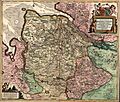
Duchies of Bremen and Verden in 1655
-
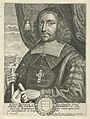
Christoph Bernhard von Galen – a leader of the allied army
-
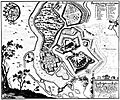
View of Bremervörde in 1653
-
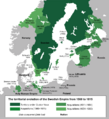
The Swedish Empire around 1660 with its 2 North German possessions
-
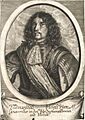
The Swedish governor of Bremen-Verden, Field Marshal Henrik Horn (1618–1693)
-
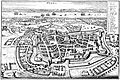
Stade around 1640
-
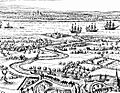
Drawing of the Schwinge fieldwork near Stade
