
Haliotis rufescens facts for kids
Quick facts for kids Haliotis rufescens |
|
|---|---|
 |
|
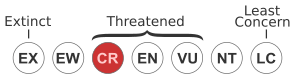
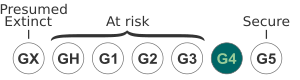
| Conservation status | |
Scientific classification  |
|
| Kingdom: | Animalia |
| Phylum: | Mollusca |
| Class: | Gastropoda |
| Subclass: | Vetigastropoda |
| Superfamily: | Haliotoidea |
| Family: | Haliotidae |
| Genus: | Haliotis |
| Species: |
H. rufescens
|
| Binomial name | |
| Haliotis rufescens Swainson, 1822
|
|
| Script error: The function "autoWithCaption" does not exist. | |
| Synonyms | |
|
|
Script error: No such module "Check for conflicting parameters".


Haliotis rufescens, commonly called the red abalone, is a giant species of edible sea snail. It belongs to the marine family Haliotidae. People often know them as abalone, British ormers, green ormers, or pāua. This colorful snail lives along the western coast of North America. Its range reaches from British Columbia in Canada down to Baja California in Mexico. It is most abundant in the southern part of this coast. It is the biggest and most famous abalone species found anywhere in California.
Contents
Where Red Abalone Live and Eat
Red abalone make their homes in chilly, rocky coastal waters with thick forests of kelp. They cling tightly to rocks from the shallow shoreline intertidal zone down past 180 m (590 ft) deep. Most red abalone prefer to live at depths between 6 and 40 m (20 and 131 ft). Rocky reefs provide safe cracks and crevices where these heavy marine snails can hide from rough ocean currents.
Ocean Forests and Abalone Diets
These sea creatures love to feast on giant marine plants called seaweed. Adult abalones feed on drifting pieces of leafy algae that float past their rocky perches. Their favorite foods include giant kelp, wide feather boa kelp, and tall bull kelp. When large pieces of kelp drift by, the abalone catches them using its muscular body.
What Baby Abalones Eat
Young abalones eat very different foods than their giant parents. Baby snails graze on pink crusty coralline algae that coats underwater rocks like paint. They also nibble on microscopic ocean life including tiny bacteria and single-celled diatoms. Eating these tiny ocean plants helps the baby snail grow strong enough to eat full kelp fronds.
Amazing Features of the Giant Shell

The shell of the red abalone can reach an incredible length of 31 cm (12 in). This amazing size makes it the single largest abalone species found on planet Earth. The shell is very thick, heavy, and shaped like a rounded dome.
Outer Shell Camouflage
On the outside, the shell usually looks like a rough, dull brick-red rock. It is often covered with barnacles, seaweeds, and tiny marine creatures that grow directly on it. This natural crust hides the true color and ridges of the shell. It helps the giant snail blend completely into its rocky surroundings.
Breathing Holes Along the Rim
A line of small, oval-shaped holes runs along one edge of the shell. These openings form a special curved pattern known as the selenizone. A red abalone typically has three or four raised holes open at one time. The snail discharges water, waste, and breathing currents outward through these tiny vents. As the shell expands over time, older holes close up and brand-new ones form near the growing edge.
Shimmering Mother-of-Pearl Inside
While the outside is rugged and camouflaged, the inside of the shell looks like a colorful treasure. It is coated with a smooth, glossy substance called nacre, or mother-of-pearl. This layer is brightly iridescent, glowing with shiny shades of silver, pink, green, and blue. In the center sits a large, rough scar where the snail's giant columellar muscle anchors its soft body.
Anatomy: Tentacles, Foot, and Body Parts
A living red abalone has fascinating soft body parts extending out from underneath its heavy armor. When the snail relaxes, a dark, ruffled sensory rim called the epipodium peeks out. Tiny, sensitive black tentacles sprout from this rim to feel the surrounding water. These tentacles help the snail detect approaching danger, search for food, and navigate dark crevices.
Underneath the snail rests an enormous, muscular suction foot that is yellowish white in color. This foot gives the abalone incredible holding power on slippery ocean boulders. It grips stone so tightly that strong waves cannot wash it away. Healthy snails use this foot to crawl steadily over rocks and capture passing seaweeds.
Population Balance and Life Cycle
In many ocean snail species, nature balances the numbers of male and female animals. Red abalones are dioecious, meaning each individual snail is either distinctly male or distinctly female. In natural conditions, healthy abalone colonies develop balanced age groups with plenty of older, fully grown adults.
Between 1972 and 1973, marine scientists studied wild red abalone groups along the coast of California. They examined sites near the historic Point Cabrillo Lighthouse Station and wild waters at Van Damme State Park. At Van Damme, heavy human fishing had removed almost all the large, older abalones. At Point Cabrillo, fishing had stopped, allowing the snails to rebuild balanced numbers of young and old adults.
Ocean Health Challenges and Diseases
Wild abalones face serious environmental challenges, especially dangerous sicknesses that spread through coastal waters. The most destructive illness known to strike them is withering syndrome, also called abalone wasting disease.
How Withering Syndrome Affects Abalone
Withering syndrome is caused by microscopic, Rickettsiales-like organisms related to the bacterial family Rickettsiaceae. This tiny parasite invades the digestive tract of the snail and blocks its ability to absorb nutrients. Even when surrounded by fresh kelp, an infected abalone slowly wastes away from hunger. Its large foot muscle shrinks, leaving it too weak to hold onto rocks or flip over if turned upside down.
The Role of Warm Ocean Temperatures
Warm ocean waters make this deadly wasting disease spread much faster among wild snails. In a scientific study, hungry abalones kept in warm water at 18.0 °C became sick far more easily. In contrast, abalones living in cooler waters around 12.3 °C resisted the sickness much better. Colder ocean conditions give the snails stronger defenses against dangerous bacterial infections.
Accidental Pests from Other Oceans
During the 1980s, imported South African abalone were brought into California without proper quarantine checks. Along with these new snails came a foreign, hitchhiking polychaete worm known as Terebrasabella heterouncinata. This non-native worm escaped into coastal waters near Cayucos, California, damaging native abalone shells. Scientists from the California Department of Fish and Wildlife and the University of California, Santa Barbara worked together to destroy the pest.
Shortly afterward, withering syndrome spread across Santa Cruz Island and throughout the rocky Channel Islands of California. Human transport near sites like Port Hueneme, California and points north of Point Conception accidentally helped spread the infection. This disease, paired with past overharvesting, caused wild relatives like the black abalone and white abalone to become critically endangered Endangered Species.
Ancient History and Human Use
People have treasured red abalone along the Pacific coast for many thousands of years. Early inhabitants gathered these huge shellfish for healthy food, tough tools, and beautiful decorations.
Prehistoric Finds on Ancient Islands
Archaeologists studying the Channel Islands of California have uncovered ancient abalone shells dating back nearly 12,000 years. Ancient trash mounds, known to scientists as shell middens, contain millions of discarded abalone shells. Huge middens found on the northern islands date between 7,500 and 3,500 years ago. These discoveries show that coastal waters once held massive numbers of giant red abalones.
Native American Crafts and Tools
The Indigenous peoples of the Americas, including the skilled Chumash, harvested red abalone across Central California. They ate the meat and used the sturdy shells to make curved fishhooks for catching ocean fish. Native craftspeople shaped the glowing, shiny mother-of-pearl into sparkling beads, fancy jewelry, and valuable ceremonial items. Abalone shells served as important trade goods among tribes living far inland.
Modern Fishing and Conservation
Commercial harvesting of California abalone began expanding rapidly after the year 1916. Fishing reached its highest peak during the 1950s and 1960s, which caused wild snail numbers to drop sharply. In Northern California, large commercial operations were permitted for only three years during World War II. To protect remaining snails from extinction, government wildlife leaders closed commercial abalone fishing in 1997.
Recreational harvesting allowed free divers without air tanks to gather snails along rocky shallows. This strict rule protected abalones living deeper than 30 ft (9 m), where divers could not safely reach them. The legal catch size was set at 7 in (18 cm) across the shell. However, due to severe kelp forest losses and population declines, harvesting has remained paused to protect surviving snails. Today, groups like the United States Fish and Wildlife Service work hard to preserve and restore fragile wild populations.
Eco-Friendly Ocean Farming
Because wild abalones are rare, coastal marine farms now raise these snails for market. Abalone aquaculture is widely recognized as a clean form of sustainable agriculture. Farmers grow snails in clean seawater tanks without using harmful chemicals or damaging wild habitats. The growing snails are fed naturally harvested seaweeds and fresh kelp that rapidly grow back in the ocean. Thanks to careful ocean farming, people can enjoy abalone while wild sea snails stay safe in their natural reef homes.
Comparing California Abalone Relatives
Red abalone shares Pacific waters with several other unique snail cousins:
- Red Abalone: The largest abalone in the world, known for its heavy brick-red shell and rippled black epipodium.
- Black Abalone: A dark, smooth-shelled snail that lives tightly packed in rocky crevices along wave-swept shores.
- White Abalone: A deep-water species with a pale, thin shell that is now extremely rare in the wild.
- Green Abalone: A warm-water dweller of southern coastlines featuring an olive-green interior and grooved shell.
