
Child facts for kids

A child is a young human being between birth and adulthood. The stages of growing up include infancy, childhood, and the teenage years. In everyday language, a child is also the son or daughter of a parent. In law, a child is often called a minor. This means someone who is younger than the official age of majority, which is usually 18 years old. Young people have special rights and need protection from caring adults.
Contents
Understanding What Makes a Child

Science and the law define childhood in different ways. In biology, childhood lasts from birth until puberty, when the body begins changing into an adult body.
Legal Definitions Around the World
Governments create rules to decide when a person is legally an adult. The United Nations created an agreement called the Convention on the Rights of the Child. It states that a child is any person under 18 years old, unless a local law sets an earlier age. In Singapore, certain child safety laws protect anyone younger than 14. In the United States, immigration laws may define a child as anyone under 21. Different cultures also celebrate becoming an adult through a special rite of passage.
Developmental Stages of Growing Up

Children grow and change rapidly through several important phases of life.
Early Childhood and First Steps
Early childhood begins after the baby stage when a toddler learns to walk and talk. Toddlers become less dependent on their parents for basic daily needs. Organizations like the National Association for the Education of Young Children study how young children learn best. Kids learn by exploring, playing, and making strong emotional bonds with family. Around age five, many children start kindergarten and expand their circle of friends.
Middle Childhood and School Life

Middle childhood lasts from about age seven to age ten. During these years, children build key social skills and learn to take on helpful chores. They also enter primary school, where they encounter new learning challenges. Teachers may discover learning differences like autism, dyslexia, dyscalculia, or ADHD. Schools use special education and an individualized education plan to help every child succeed in the classroom.
Preadolescence and Growing Independence

Preadolescence covers the years between ages 9 and 12, just before adolescence. Kids at this age develop a stronger sense of personal identity and independence. They start thinking more realistically about the world around them. Soon, changes like rapid growth spurts signal the start of puberty. Even though adolescents are older, they are still protected under the law as they finish their education.
How Childhood Changed Through History

The experience of being a child has changed dramatically across centuries and cultures. Historian Nicholas Orme showed that people in the Middle Ages recognized childhood as a unique time of life.
Thinkers and New Ideas

In the 1600s, philosopher John Locke described the mind of a newborn baby as a tabula rasa, or blank slate. He believed education shaped how a person turned out. During the Age of Enlightenment, writer Jean Jacques Rousseau argued that children need freedom to learn from nature. Artist Sir Joshua Reynolds painted famous portraits like The Age of Innocence. Poet William Wordsworth wrote about the natural wonder and joy found during early youth.
Work, Reform, and the Modern Era

During the Industrial Revolution in England, many poor children worked dangerous jobs in factories and mines or as a chimney sweep. Author Charles Dickens wrote powerful stories about these struggles. These efforts led to the Factory Acts to stop harmful child labor.
By the late 19th century, countries created free public schools. Inspiring books like Alice's Adventures in Wonderland by Lewis Carroll made children's literature famous. Outdoor programs expanded when Sir Robert Baden-Powell started the Boy Scout movement in 1908. Later, historian Philippe Ariès wrote Centuries of Childhood, encouraging scholars like Hugh Cunningham to research how family life changed over time.
Healthy and Happy Childhoods

Children need nutritious food, active play, and good rest to grow strong bodies and minds.
The Power of Play and Exploration
Outdoor games, sports, and imaginative play build healthy brains and strong muscles. Playing helps kids learn how to share, resolve arguments, and make lifelong friends. The United Nations Commission on Human Rights even declared play a basic right for all children. Author Richard Louv wrote in Last Child in the Woods that spending too much time on screens and avoiding nature can harm well-being. Visiting a local playground or national park helps children stay active and curious.
Education and Learning

Every child deserves a good education. The International Covenant on Economic, Social and Cultural Rights states that all children have a right to education. While most kids attend formal classes at school, some learn through home-schooling or modern e-learning. Agencies like UNICEF work around the globe so that boys and girls everywhere can attend school safely.
Images for kids
-
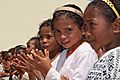
Children in Madagascar, 2011
-

Brazilian princesses Leopoldina (left) and Isabel (center) with an unidentified friend, c. 1860.
-
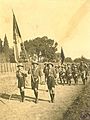
Armenian scouts in 1918
-

An old man and his granddaughter in Turkey.
-
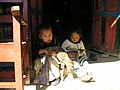
Nepalese children playing with cats.
-
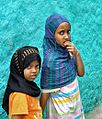
Harari girls in Ethiopia.
-
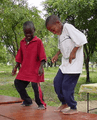
Dancing at Mother of Peace AIDs orphanage, Zimbabwe
-
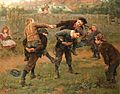
Ralph Hedley, The Tournament, 1898. It depicts boys playing outdoors in North East England.
-

Children in front of a movie theatre, Toronto, 1920s.
-
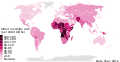
World infant mortality rates in 2012.


See also
 In Spanish: Infancia para niños
| Preceded by Toddlerhood |
Stages of human development Childhood |
Succeeded by Preadolescence |