
Land grants in New Mexico and Colorado facts for kids
Land grants in New Mexico and Colorado were large gifts of land given to pioneers and settlements. The rulers of the Spanish Empire and the Mexican Republic gave these gifts to help people move into the frontier. This northern area was called Territorio de Nuevo Mexico. It included the state of New Mexico and parts of southern Colorado.
Between 1693 and 1846, Spanish and Mexican leaders approved nearly three hundred land gifts. These territories covered tens of thousands of square miles across mountains, river valleys, and plains. Some grants went to single pioneers as private property. Many other gifts went to whole towns as communal property. The leaders also confirmed home territories for the Pueblo people who already farmed the valleys.
Settlers shared most of the open acres within these settlements as common land. Neighbors used this communal countryside to graze their animals, collect firewood, and hunt wild game. Families also received smaller private plots measured in acres to build homes and grow crops. When the United States took control in 1846, new courts reviewed the ancient papers. Many Hispano families lost their historic holdings over the following decades. Even today, people work hard to protect these historic properties.
Contents
Early Spanish Exploration and Settlements

A leader named Juan de Oñate brought the first permanent Spanish settlers north in 1598. He led over five hundred travelers into the northern province of New Mexico. His group included soldiers, ten Franciscan friars, and thousands of domestic animals. They brought sheep, goats, horses, and cattle to establish herds.
The new settlement was very isolated from other Spanish towns. It sat hundreds of miles north of Santa Bárbara, Chihuahua. Messages and wagons took many months to arrive from central Mexico. Because help was far away, the newcomers had to learn to survive on their own resources.
The First Peoples of the Rio Grande
Long before Spanish explorers arrived, about fifty thousand Puebloans lived along the waterways. They built sturdy stone and mud apartment towns along the Rio Grande River and its fresh streams. These Native American farmers used smart ditches to irrigate large fields of corn, beans, and squash.
Life changed quickly after the arrival of European explorers. Epidemics of new illnesses and unfair treatment caused the native population to drop sharply. Surrounding the valley towns were mobile bands of Native Americans. These included the Apache in the south, the Navajo in the west, and the Ute in the north. Later, the Comanche became powerful riders on the eastern plains.
The Pueblo Revolt and New Land Rules
Early Spanish governors rewarded their soldiers with special privileges known as encomiendas. Under this system, soldiers demanded farm crops and hard work from local villages. This unfair labor demand angered the native farmers. In 1680, several groups united to launch the famous Pueblo Revolt.
The revolt forced the Spanish settlers to retreat south for twelve years. When Spanish leaders returned in 1692, they chose to change their rules. They stopped the harsh labor system and began giving official titles to communities. They also respected the home spaces of the Pueblo villages. Over time, the settlers and the Pueblos built friendly alliances to protect their towns from frontier conflicts.
How Land Grants Worked

Settlers who wanted to start a town had to write a petition to the governor. If the governor approved, an official visited the valley to measure the area. The borders were usually natural landmarks like a tall hill, a dry creek, or a river bend.
The official walked the boundaries with the settlers to mark their new home. Settlers threw rocks, pulled weeds, and shouted joyful words to celebrate their legal ownership. Each family received a home lot and a farm field near an irrigation ditch. The rest of the large territory became shared ground for everyone in the village.
The wide open spaces around the village were kept as shared property. Families needed these shared pastures because individual farm plots were too small to feed big herds. Men drove sheep and cattle across these fields during the warm summer months.
The shared territory provided everything a frontier family needed to survive. Neighbors chopped pine trees in the high hills to build sturdy log roofs. They collected fallen branches for kitchen stoves and hunted wild deer or turkeys. People could also dig stone from quarries to build strong foundations for their houses.
Grants for Pueblo Villages
Spanish law created clear rules to protect farming towns inhabited by Pueblos. The government awarded land charters to twenty-three distinct native towns along the river valleys. These charters guaranteed that the village owned its ancestral home.
Officials measured these properties using a traditional distance called a league. A standard grant gave the town one league in every direction from the central church plaza. This created a square holding measuring four square leagues, or about seventeen thousand acres. A safety buffer zone surrounded the village to keep outside livestock from ruining native cornfields.
Private Grants for Bold Pioneers
Governors also gave large private estates to single pioneers or pairs of business partners. These individuals promised to bring families, build homes, and defend the border. An example was the vast Sangre de Cristo Land Grant located in modern southern Colorado.
The owner of this Colorado grant invited farming families to settle the rugged mountain valleys. He gave them garden plots and shared pasture rights just like a traditional village. In later years, Mexican governors gave out huge private grants to protect the northern border from outside travelers.
United States Rule and New Legal Battles
In 1846, fighting broke out during the Mexican–American War. When the conflict ended, the two nations signed the historic Treaty of Guadalupe Hidalgo in 1848. The treaty promised that former Mexican citizens would keep full ownership of their property and ranches.
Congress created the Office of the Surveyor General in 1854 to inspect all the old paperwork. However, the system was very confusing for the local families. Most Spanish-speaking residents could not read English legal papers or pay high court fees. Many early surveyors did not understand the traditional custom of sharing common grazing pastures.
Rings of Speculators and Unfair Courts
Ambitious newcomers soon saw chances to take control of vast ranches and forested mountains. A powerful group of lawyers and politicians formed a team known as the Santa Fe Ring. They used complicated courtroom rules to gain control of millions of acres from local families.
To fix these problems, the government set up the Court of Private Land Claims in 1891. Five judges reviewed old Spanish documents to decide who owned the soil. In 1897, the U.S. Supreme Court ruled that shared common lands belonged to the federal government instead of local villagers. When towns lost their shared pastures, many families could no longer raise enough animals to make a living.
Standing Up for Ancient Rights
Families did not give up their ancestral properties without speaking up. When surveyors built fences across shared mountain pastures, local farmers fought back to defend their historic customs. In San Miguel County, a secret group called Las Gorras Blancas rode at night to cut wire fences.
Similar disputes occurred in Rio Arriba County to protect the Tierra Amarilla Land Grant. In 1967, an activist named Reies Tijerina led the Alianza Federal de Mercedes in a dramatic protest. He attempted a citizen's arrest of local officials to show the world that families had lost their legal properties. In Colorado, descendants from the Sangre de Cristo Mountains won a big court victory in 2021 to use their historic mountain lands.
Famous Land Grants You Can Visit
Many modern cities and parks sit directly on these historic territories. Here are some of the most famous properties:
- Alameda Land Grant – Founded in 1710 on the west side of the river. It covered almost ninety thousand acres. Today, parts of the cities of Albuquerque and Rio Rancho stand here. People built houses, roads, and the popular Cottonwood Mall where cows once grazed.
- Atrisco Land Grant – Given to a brave soldier in 1692 after the reconquest of the territory. The village grew along the Rio Puerco. Today, the descendants have formed an active business corporation to manage remaining neighborhood properties.
- Baca land grants – Five giant tracts of land given to the heirs of Luis Maria Cabeza de Vaca. These massive open spaces spread across New Mexico, Colorado, and Arizona.
- Elena Gallegos Land Grant – Given in 1693 and later named for a prominent colonial woman. It stretches from the river to the high peaks of the Sandia Mountains. Albuquerque preserved a huge section of this land as a beautiful nature park for hiking.
- Las Trampas Land Grant – A mountain settlement founded in 1751 high in the forested hills. The town still features its historic adobe church and quiet village plaza.
- Maxwell Land Grant – The largest single property confirmed by American courts, covering over one million acres. It ran from the flat Great Plains near Raton, New Mexico up into the high peaks. Today, a large portion forms the famous Vermejo Park Ranch.
- Mora Land Grant – Approved in 1835 to encourage farming in a fertile mountain valley. Much of this vast territory now lies inside a protected National Forest.
- San Miguel del Vado Land Grant – A bustling border settlement on the scenic Pecos River. The growth of this frontier outpost led to new settlements, including the city of Las Vegas.
Protecting Culture and Nature Today
Even though centuries have passed, the story of these early settlements remains very important today. Many families still live in the original mountain villages founded by their ancestors. In New Mexico, dozens of historic community grants still operate with elected boards of trustees.
These community boards protect thousands of acres of shared woodlands and fresh springs for future generations. Historians, lawyers, and young students continue to study these old documents. They remind everyone how ancient Hispanic and Native American traditions helped build the American Southwest.
See also
- Malcolm Ebright
- Ranchos of California
- Spanish land grants in Florida
Images for kids
-
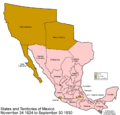
Map showing the northern territory of Nuevo México during the Mexican era.
-
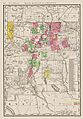
An 1897 map showing confirmed grants in red and unconfirmed areas in green.
