
Otto Mears facts for kids

Otto Mears (born May 3, 1840 – died June 24, 1931) was an important builder in Colorado. He helped develop the southwestern part of the state. He was known as the "Pathfinder of the San Juans." This was because he built many roads and railroads. These projects went through the rugged San Juan Mountains in the late 1800s. He created hundreds of miles of toll roads. A famous one is the Million Dollar Highway. It crosses Red Mountain Pass. This road connects the towns of Silverton and Ouray.
Contents
Early Adventures and New Beginnings
Otto Mears was born on May 3, 1840. He became an orphan before he was four years old. He traveled a lot as a child. He lived with different relatives in England and New York City. When he was fifteen, he went to San Francisco. He hoped to live with an uncle there. But his uncle had moved away. Otto found himself without a home. Luckily, a kind couple he met on his journey helped him.
San Francisco was a busy place during the California Gold Rush. Otto found jobs milking cows and working in stores. In 1859, he decided to look for gold himself. He worked in places like Placerville, California and Virginia City, Nevada. Later, Otto joined the military during the American Civil War. He served in the 1st California Infantry Regiment. After his military service, he moved to Santa Fe. There, he worked as a clerk and later as a manager in stores. People noticed his strong work ethic.
Building Roads and Railways
Otto Mears eventually moved to Colorado. This is where he became famous. He first lived in Conejos County. Then he moved to Saguache, Colorado. Later, he settled in the San Juan Mountains. Here, he worked with the Ute Indians. He served as an interpreter and negotiator. In 1873, he helped make an agreement with Chief Ouray. This agreement involved land use in the Colorado Territory.
The Pathfinder of the San Juans
Otto started as a wheat farmer in Saguache. He needed a better way to get his flour to market. So, he built his first road over Poncha Pass. This road led to a flour mill in Nathrop. It helped serve the town of Leadville. Otto often told a story about meeting William Gilpin. Gilpin was a former governor. This meeting on a bad road inspired Otto to become a road builder.
He asked the Colorado government for permission to build toll roads. These were roads where people paid a fee to use them. He designed his roads to be suitable for future railways. His routes over Poncha Pass and Marshall Pass were later bought by the Denver and Rio Grande Western Railroad. They used them to lay down train tracks.
Connecting Colorado by Rail
Otto Mears built many railroads during his long life. Some of these included the Rio Grande Southern Railroad. This line ran from Durango to Ridgway. He also built the Silverton Railroad and the Silverton Northern Railroad. Many of his railroads used a special narrow gauge track. This meant the tracks were closer together.
From 1888 to 1892, Otto gave out special passes. These passes allowed important people and friends to ride his trains for free. Some of these rare passes were made of silver or gold. Today, they are valuable items for collectors. You can find a list of known Otto Mears passes online. It is on the San Juan County Historical Society website.
A Leader in Colorado
Otto Mears was also involved in politics. In 1876, he was chosen as one of Colorado's three presidential electors. He supported Rutherford B. Hayes. In the 1880s, he was elected to the Colorado legislature. However, a big financial crisis in 1893 affected his businesses. He had to sell many of his properties. He also lost control of his railroad companies.
After this, Otto moved to the East Coast. He continued to work on railroads and other businesses there. One of his successful projects was the Chesapeake Beach Railway. This railway connected Washington DC to southern Maryland.
Lasting Legacy
Otto Mears left a lasting mark on Colorado. The dome of the Colorado State Capitol building was once copper. When it became dull, Otto suggested covering it with gold. He convinced the Colorado Mining Association to donate gold. By 1908, the dome was shining with its first gold covering.
Otto Mears passed away on June 24, 1931, in Pasadena, California. In 1964, he was honored in the Hall of Great Westerners. This is part of the National Cowboy & Western Heritage Museum. Two mountains are named after him: Mears Peak and Mount Otto.
Images for kids
-
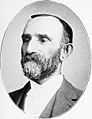
Otto Mears in 1902
-
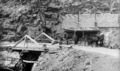
A toll road owned by Otto Mears, connecting Ouray and Silverton in the 1880s.
-
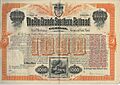
A Gold Bond from the Rio Grande Southern Railroad, signed by Otto Mears in 1890.
-
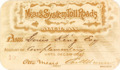
A pass from 1892 to use Otto Mears' toll roads.

