
Shibuya facts for kids
Quick facts for kids
Shibuya
渋谷区
|
|||
|---|---|---|---|
| Shibuya City | |||
|
|
|||
|
|||

Location of Shibuya in Tokyo
|
|||

 Shibuya
Location in Special wards of Tokyo

Shibuya
Location in Tokyo

Shibuya
Location in Kanto Area

Shibuya
Location in Japan
|
|||
| Country | Japan | ||
| Region | Kantō | ||
| Prefecture | Tokyo | ||
| Area | |||
| • Total | 15.11 km2 (5.83 sq mi) | ||
| Population
(October 1, 2020)
|
|||
| • Total | 243,883 | ||
| • Estimate
(2024)
|
230,609 | ||
| • Density | 16,140/km2 (41,800/sq mi) | ||
| Time zone | UTC+9 (Japan Standard Time) | ||
| Symbols | |||
| • Tree | Zelkova serrata | ||
| • Flower | Iris ensata | ||
| City office | Shibuya 1-18-21, Shibuya-ku, Tokyo 150-8010 | ||


Shibuya (pronounced Shee-boo-yah) is a vibrant and famous area in Tokyo, Japan. It's known for its busy streets, fashion, and as a popular spot for young people. Shibuya is a huge center for shopping and business. It's also home to Shibuya Station, one of the busiest train stations on Earth!
As of early 2024, about 230,609 people live in Shibuya. It's a very crowded place, with over 15,000 people living in each square kilometer! The total area of Shibuya is about 15 square kilometers. Some famous neighborhoods here are Harajuku, Ebisu, Omotesandō, and Yoyogi.
Shibuya got its name from the Shibuya clan, who owned the area in the 1160s. Later, during a time of wars in Japan called the Sengoku period, another powerful family took control. During the Edo period, Shibuya grew into a busy town, especially along the Oyama Road. In the 19th century, with the growth of railways, Shibuya became an important train hub. It officially became a ward of Tokyo City in 1932.
Shibuya wasn't always as famous as it is today. In the 1970s, it became a hotspot for youth culture, even more so than Shinjuku. Big companies like Seibu (with stores like Shibuya Parco) and Tokyu (with Tokyu Hands and Shibuya 109) helped make it a popular shopping and entertainment area. This made Shibuya, and nearby places like Harajuku, very attractive to young people.
Today, Shibuya is famous worldwide for several landmarks. The Shibuya Crossing is known as the busiest pedestrian crossing in the world. You can also get amazing views of the city from the top of Shibuya Scramble Square. Don't forget the famous statue of Hachikō, a loyal dog, which is a popular meeting spot.
Since 2010, the area around Shibuya Station has been getting a huge makeover. This big project is expected to finish by early 2035.
Contents
Shibuya's Past: A Journey Through Time

Shibuya's story began in the 1160s. A powerful family called the Shibuya clan owned this land, and that's how the area got its name. They even built a fortress near where the Konnō Hachimangu Shrine stands today. Later, during Japan's Sengoku period (a time of many wars), another strong family, the Later Hōjō clan, took over Shibuya in 1524.
During the peaceful Edo period, Shibuya became a thriving town. A specific area called Maruyamachō was especially busy. It was a key stop along the Oyama Road, which is now Japan National Route 246. In the Meiji era, it was known for traditional entertainment.
How Shibuya Became a City
In 1889, several small villages like Kami-Shibuya, Naka-Shibuya, and Shimo-Shibuya joined together to form the village of Shibuya. This new village included areas we know today, like Hiroo, Daikanyama, Aoyama, and Ebisu. Shibuya grew and became a town in 1909. Then, in 1932, it merged with nearby towns like Sendagaya (which includes Harajuku) and Yoyohata (which includes Yoyogi). This merger created the Shibuya-ku, a special ward of Tokyo City. In 1947, it officially became an urban special ward.
Shibuya's Railway Growth and Hachikō

The Tokyu Toyoko Line opened in 1932, making Shibuya an important connection between Tokyo and Yokohama. More train lines, like the Keio Inokashira Line and the Tokyo Metro Ginza Line, soon followed.
Shibuya Station is also famous for the heartwarming story of Hachikō. Hachikō was a loyal dog who waited for his owner at the station every day, even after his owner passed away. He continued to wait for many years, from 1923 to 1935. His incredible loyalty touched people's hearts across Japan. Today, a statue of Hachikō stands next to Shibuya Station. The area around it, called Hachikō Square, is a very popular meeting spot.
From Military Base to Olympic Venue
After World War II, during the occupation of Japan, Yoyogi Park was a housing area for U.S. military families, known as "Washington Heights." The U.S. military left in 1964. A large part of the park was then used for the 1964 Summer Olympics. Shibuya also hosted parts of the athletics events, like the 50 km walk and marathon, during those Olympic Games.
Shibuya's Music Scene
In the mid-1990s, a unique style of pop music called Shibuya-kei became very popular in Japan. This music often mixed different sounds and styles together. It was at its peak in the late 1990s, but then artists started exploring new types of music.
Modern Makeover of Shibuya
Since the early 2000s, the area around Shibuya Station has been getting a massive upgrade. This huge project is sometimes called a "once-in-a-century" change! In 2005, the Japanese government decided to renew the area. After a lot of planning by experts and city officials, construction officially started in 2010.
As part of this big project, old station buildings were taken down. Some train lines, like the Tōyoko Line, were moved underground. New, tall buildings like Shibuya Hikarie, Shibuya Stream, and Shibuya Scramble Square were built. Because trains needed to keep running during construction, and plans were updated, the entire redevelopment is expected to be finished by early 2035.
Miyashita Park also got a new look. It closed in 2017 and reopened in July 2020 as a modern shopping complex with a cool park on its rooftop.
Exploring Shibuya's Neighborhoods

Shibuya is made up of many famous areas. Some are busy shopping districts, while others are quieter places to live. Well-known neighborhoods include Daikanyama, Ebisu, Harajuku, Hiroo, Omotesandō, Sendagaya, and Yoyogi.
Main Areas of Shibuya
Shibuya is divided into several main areas, each with its own unique feel:
- Hatagaya Area: Includes Sasazuka, Hatagaya, and Honmachi.
- Yoyogi Area: Home to Yoyogi and Harajuku.
- Sendagaya Area: Features Sendagaya and Jingūmae.
- Ebisu-Ōmukai Area: Contains places like Daikanyama, Ebisu, and Shibuya itself.
- Hikawa-Shimbashi Area: Includes Shibuya, Ebisu, and Hiroo.

Population of Shibuya
Shibuya's population has changed over time. After a decrease between 1960 and 2000, the number of residents is now growing again. In 2020, the population was 243,883.
How Shibuya is Governed
Shibuya is managed by a city assembly with 34 elected members. The current mayor is Ken Hasebe, who is an independent politician.
Fun Places to See in Shibuya
.jpg)
Shibuya is full of exciting places to visit!
Famous Landmarks
- Shibuya Crossing: This is Shibuya's most famous spot, known as the busiest pedestrian crossing in the world. When the lights change, thousands of people cross from all directions at once! It's located right in front of the Shibuya Station Hachikō exit.
- Statue of Hachikō: Next to Shibuya Station, you'll find the statue of Hachikō, the loyal dog. This is a very popular meeting point for friends.
- Moyai Statue: On the southwest side of Shibuya Station, there's a unique Moyai statue. It was a gift from the people of Niijima Island in 1980.
Green Spaces and Parks

- Shinjuku Gyo-en: These used to be Imperial gardens and are now a beautiful public park.
- Yoyogi Park: This large park has a fascinating history. It was once a military training base, then housing for U.S. personnel, and later hosted athletes for the 1964 Summer Olympics.
Shopping and Entertainment Centers

- Cerulean Tower: This was once the tallest building in the Shibuya Station area.
- Omotesandō Hills: A stylish shopping mall that opened in 2006.
- Shibuya 109: A very popular and trendy department store, especially for young women.
- Shibuya Hikarie: A modern skyscraper with shops, restaurants, and a theater.
- Shibuya Scramble Square: A tall building with shops, restaurants, and the amazing Shibuya Sky observation deck.
- Yebisu Garden Place: Built on the site of a former brewery, it now has restaurants, shops, and a hotel.
Cultural Spots
- Bunkamura: A large cultural center with concert halls and art galleries.
- National Noh Theatre: A place to experience traditional Japanese Noh theater.
- Shoto Museum of Art: A public art museum in Shibuya.
- Ukiyo-e Ōta Memorial Museum of Art: Features beautiful Japanese woodblock prints.
- Watari Museum of Contemporary Art: A museum showcasing modern art.
Important Religious Sites

- Meiji Shrine: A peaceful Shintō shrine dedicated to Emperor Meiji and Empress Shōken. It's surrounded by a huge, beautiful forest.
- Tokyo Mosque: Also known as Tokyo Camii, it is the largest mosque in Japan.
Famous Streets
.jpg)
- Cat Street: A trendy promenade in the Ura-Harajuku area, known for its unique clothing stores.
- Center Gai: A lively street in central Shibuya, always full of energy.
- Omotesandō: A beautiful avenue lined with famous brand boutiques, leading up to the Meiji Shrine.
- Takeshita Street: A super popular shopping street in Harajuku, famous for its quirky fashion and sweets.
Other Notable Places

- NHK Broadcasting Center: This is the main headquarters for NHK, Japan's public broadcasting system.
- NTT Docomo Yoyogi Building: The fourth-tallest building in Tokyo, it looks a bit like the Empire State Building.
- Shibuya Sky: An amazing open-air observation deck on top of Shibuya Scramble Square, offering 360-degree views of Tokyo.
- Yoyogi National Gymnasium: A famous arena designed for the 1964 Tokyo Olympics.
Getting Around Shibuya

Shibuya is a major transportation hub, making it easy to get around Tokyo and beyond.
Train and Subway Lines

The main station is Shibuya Station. Part of Shinjuku Station is also located in Shibuya. Many different train and subway lines run through Shibuya, connecting it to all parts of Tokyo and other cities.
- JR East Lines: Yamanote Line, Chūō Line (Rapid), Chūō-Sōbu Line, Saikyō Line, Shōnan-Shinjuku Line.
- Tokyo Metro Subway Lines: Ginza Line, Marunouchi Line, Hibiya Line, Chiyoda Line, Hanzōmon Line, Fukutoshin Line.
- Other Lines: Toei Shinjuku Line, Toei Ōedo Line, Tōyoko Line, Den-en-toshi Line, Inokashira Line, Keiō Line, Keiō New Line, Odawara Line.
Major Roads

Shibuya is also served by major highways, including the Shuto Expressway and national routes like Route 20 and Route 246.
Businesses in Shibuya

Many important companies have their main offices in Shibuya.
- Calpis: A popular Japanese beverage company.
- Casio: Famous for electronics like watches and calculators.
- East Japan Railway Company (JR East): One of Japan's largest railway companies.
- Gap Inc: A well-known clothing retailer.
- Ito En: A company that bottles tea, coffee, and other drinks.
- NHK (Nippon Hoso Kyokai): Japan's national public broadcasting organization.
- Sapporo Breweries Limited: A famous Japanese beer company.
- Trend Micro Japan: A company that makes security software.
Learning in Shibuya
Shibuya has many excellent schools and universities.
Colleges and Universities
- Aoyama Gakuin University
- Bunka Gakuen University
- Kokugakuin University
- United Nations University
- University of the Sacred Heart
Schools for Kids
The Shibuya City Board of Education runs public elementary and junior high schools. The Tokyo Metropolitan Government Board of Education operates public senior high schools.
There are many public schools, including combined elementary and junior high schools like Shibuya Honmachi Gakuen. Some of the junior high schools are Hachiyama, Harajuku Gaien, and Hiroo. There are also many elementary schools, such as Hatashiro, Hatomori, and Jingumae.
Shibuya also has several private schools, including:
- Aoyama Gakuin Elementary, Junior, and Senior High School
- Hiroo Gakuen Junior and Senior High School
- International School of Sacred Heart
- Kokugakuin Senior High School
Public Libraries
Shibuya has several public libraries where you can find books and study. These include the Central Library, Nishihara Library, and Tomigaya Library.
Shibuya's Global Connections
Shibuya connects with cities around the world!
Friendship City

Sister Cities
 Miraflores District, Lima, Peru (since 2024)
 Honolulu, State of Hawaii, the United States of America (since 2024)
International Organizations in Shibuya

The United Nations University Headquarters Building in Jingūmae hosts several international organizations, such as:
- ILO (International Labour Organization) Office for Japan
- UNDP (United Nations Development Programme) Representation Office in Tokyo
- UNICEF Tokyo Office
Embassies in Shibuya

Many countries have their embassies located in Shibuya, including:


Images for kids
-
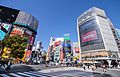
Shibuya crossing at ground level
-
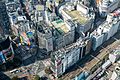
View from the Sky View observation deck
-
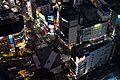
Shibuya crossing at night
-
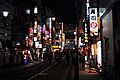
Streets of Shibuya at night
-
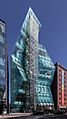
"The Iceberg", a unique building in Shibuya

.jpg)
.jpg)
.jpg)

See also
 In Spanish: Shibuya (Tokio) para niños
