
Chester A. Arthur facts for kids
Quick facts for kids
Chester A. Arthur
|
|||||||||||||||||||||||||||||||
|---|---|---|---|---|---|---|---|---|---|---|---|---|---|---|---|---|---|---|---|---|---|---|---|---|---|---|---|---|---|---|---|
_(2).jpg)
Arthur, c. 1880
|
|||||||||||||||||||||||||||||||
| 21st President of the United States | |||||||||||||||||||||||||||||||
| In office September 19, 1881 – March 4, 1885 |
|||||||||||||||||||||||||||||||
| Vice President | Vacant | ||||||||||||||||||||||||||||||
| Preceded by | James A. Garfield | ||||||||||||||||||||||||||||||
| Succeeded by | Grover Cleveland | ||||||||||||||||||||||||||||||
| 20th Vice President of the United States | |||||||||||||||||||||||||||||||
| In office March 4, 1881 – September 19, 1881 |
|||||||||||||||||||||||||||||||
| President | James A. Garfield | ||||||||||||||||||||||||||||||
| Preceded by | William A. Wheeler | ||||||||||||||||||||||||||||||
| Succeeded by | Thomas A. Hendricks | ||||||||||||||||||||||||||||||
| Chair of the New York Republican Party | |||||||||||||||||||||||||||||||
| In office September 11, 1879 – October 11, 1881 |
|||||||||||||||||||||||||||||||
| Preceded by | John F. Smyth | ||||||||||||||||||||||||||||||
| Succeeded by | B. Platt Carpenter | ||||||||||||||||||||||||||||||
| 21st Collector of the Port of New York | |||||||||||||||||||||||||||||||
| In office December 1, 1871 – July 11, 1878 |
|||||||||||||||||||||||||||||||
| Appointed by | Ulysses S. Grant | ||||||||||||||||||||||||||||||
| Preceded by | Thomas Murphy | ||||||||||||||||||||||||||||||
| Succeeded by | Edwin Atkins Merritt | ||||||||||||||||||||||||||||||
|
|||||||||||||||||||||||||||||||
| Personal details | |||||||||||||||||||||||||||||||
| Born |
Chester Alan Arthur
October 5, 1829 Fairfield, Vermont, U.S. |
||||||||||||||||||||||||||||||
| Died | November 18, 1886 (aged 57) New York City, U.S. |
||||||||||||||||||||||||||||||
| Resting place | Albany Rural Cemetery, Menands, New York | ||||||||||||||||||||||||||||||
| Political party | Republican (1854–1886) | ||||||||||||||||||||||||||||||
| Other political affiliations |
Whig (before 1854) | ||||||||||||||||||||||||||||||
| Spouse | |||||||||||||||||||||||||||||||
| Children |
|
||||||||||||||||||||||||||||||
| Parents |
|
||||||||||||||||||||||||||||||
| Relatives | Gavin Arthur (grandson) | ||||||||||||||||||||||||||||||
| Education |
|
||||||||||||||||||||||||||||||
| Profession |
|
||||||||||||||||||||||||||||||
| Signature |  |
||||||||||||||||||||||||||||||
| Military service | |||||||||||||||||||||||||||||||
| Branch/service | New York Militia | ||||||||||||||||||||||||||||||
| Years of service | 1857–1863 | ||||||||||||||||||||||||||||||
| Rank | Brigadier general | ||||||||||||||||||||||||||||||
| Unit |
|
||||||||||||||||||||||||||||||
| Battles/wars | |||||||||||||||||||||||||||||||
Chester Alan Arthur (October 5, 1829 – November 18, 1886) was the 21st president of the United States, serving from 1881 to 1885. He was a Republican from New York who had been the 20th Vice President under President James A. Garfield. After President Garfield was assassinated and later passed away, Arthur became president. During his time in office, the U.S. Navy grew significantly, and he helped end the "spoils system" in government jobs. He also put in place stricter rules for immigrants coming into the country.
Arthur was born in Fairfield, Vermont, and later became a lawyer in New York City. He served in the New York Militia during the American Civil War. After the war, he became very involved in New York politics. President Ulysses S. Grant appointed him as the Collector of the Port of New York in 1871. This was a powerful job where he managed many government positions. However, President Rutherford B. Hayes later fired Arthur as part of a plan to reform how federal jobs were given out.
In the 1880 Republican National Convention, after a long debate, James A. Garfield was chosen as the presidential candidate. Republicans then picked Arthur to be his Vice President. This was done to balance the ticket and please different groups within the party. Garfield and Arthur won the election and took office in March 1881. Just four months later, Garfield was assassinated by someone who was upset about not getting a job. Garfield passed away 11 weeks later, and Arthur became president.
As president, Arthur oversaw the rebuilding of the U.S. Navy. He also signed the Pendleton Civil Service Reform Act in 1883. This law changed how government jobs were given, making them based on merit (skills and qualifications) instead of political favors. This was a big surprise to many, as Arthur himself had been part of the old "spoils system." He also signed the Chinese Exclusion Act of 1882, which limited Chinese immigrants coming to the U.S. He appointed Horace Gray and Samuel Blatchford to the Supreme Court.
Arthur faced health challenges and did not try very hard to be nominated for president again in 1884. He retired at the end of his term. Even though his health made his presidency less active, people at the time praised him for doing a good job.
Contents
Chester A. Arthur: Early Life and Family
Growing Up in Vermont and New York

Chester Alan Arthur was born in Fairfield, Vermont, on October 5, 1829. His mother, Malvina Stone, came from a family with English and Welsh roots. His father, William Arthur, was born in Ireland and moved to Canada before settling in Vermont. William Arthur was a minister and a strong supporter of ending slavery, which sometimes caused his family to move often.
Chester was the fifth of nine children. He was named "Chester" after a family friend and "Alan" after his grandfather. The family moved several times across Vermont and upstate New York, finally settling in Schenectady, New York, in 1844.
Family Life
Arthur had several siblings who lived to adulthood. His sister, Mary, later served as his official White House hostess when he became president.
Because his family moved often, some people later questioned where Arthur was born. When he was nominated for Vice President in 1880, rumors spread that he might have been born outside the United States. However, these claims were never proven true.
Education and Early Career
Arthur was described as a "frank and open" boy who was good-natured. He showed an early interest in politics, supporting the Whig Party and even getting into arguments with students who supported different candidates. He attended Union College in Schenectady, New York, starting in 1845. There, he studied classic subjects and was part of a debate society. To earn money during winter breaks, he worked as a teacher.
After graduating in 1848, Arthur became a full-time teacher while also studying law. He moved to New York City in 1853 to continue his law studies. In 1854, he became a lawyer and joined a law firm.
Becoming a Lawyer and Helping Others
Fighting for Civil Rights
.jpg)
As a young lawyer, Arthur was involved in important civil rights cases. In one case, Lemmon v. New York, he helped argue that enslaved people brought into New York were automatically freed because slavery was not allowed in the state. This argument was successful.
In another important case in 1854, Arthur was the main lawyer for Elizabeth Jennings Graham. She had been physically removed from a streetcar because she was Black. Arthur won her case, and this decision helped lead to the desegregation (ending of separation based on race) of New York City's streetcar lines.
In 1856, Arthur became engaged to Ellen Herndon. They married in 1859 and had three children: William, Chester Jr., and Ellen. Sadly, their first son, William, died suddenly at a very young age.
Service During the Civil War
When the American Civil War began in 1861, Arthur was appointed to the military staff of Governor Edwin D. Morgan. He was made a brigadier general and worked in the state militia's supply department. He was very good at organizing housing and supplies for the many troops joining the army in New York City. He was promoted several times for his efficient work.
Arthur had chances to serve on the front lines but chose to stay in New York at the governor's request, helping to equip and enlist soldiers. He received praise for his efforts. However, when a new governor from a different political party took office in 1863, Arthur was relieved of his military duties.
After his military service, Arthur returned to practicing law, and his firm became very successful. He also became more involved in Republican Party politics.
A Career in New York Politics
The "Spoils System" and the Custom House

After the Civil War, Arthur became a key figure in the Republican Party in New York. He was part of a powerful political group led by Senator Roscoe Conkling. This group was known for using the "spoils system" or "patronage." This was a system where government jobs were given to friends and supporters of politicians, rather than to people based on their skills. These jobs were seen as rewards for political loyalty.
In 1871, President Ulysses S. Grant appointed Arthur as the Collector of the Port of New York. This was a very important and powerful job. The Collector managed hundreds of workers who collected taxes on goods coming into the busiest port in the United States. Arthur was good at this job and popular with his staff. He also helped raise money for the Republican Party.
Disagreements with President Hayes
Arthur's four-year term as Collector ended in 1875, and he was reappointed by President Grant. However, the next president, Rutherford B. Hayes, wanted to reform the "spoils system." In 1877, Hayes and his Treasury Secretary began to target the New York Custom House and Arthur's political group.
Hayes ordered an investigation and asked Arthur to reduce the number of employees. Arthur cooperated, but the investigation still criticized him. Hayes then tried to remove Arthur and other officials from their jobs. The Senate, influenced by Arthur's political allies, initially rejected Hayes's choices for replacements. However, in 1878, Hayes used a special power to fire Arthur and his colleagues, replacing them with people who supported reform.
Arthur was offered other government jobs, but he refused them. He continued to work in New York politics, becoming chairman of the New York State Republican Executive Committee in 1879. He and his allies worked hard to elect their chosen candidates. Sadly, in January 1880, Arthur's wife, Ellen, passed away suddenly. Arthur was heartbroken and never remarried.
The Election of 1880

In 1880, Arthur's political group wanted former President Grant to run again for president. However, after many votes at the 1880 Republican National Convention, James A. Garfield, a Congressman from Ohio, was chosen as the Republican presidential candidate.
To bring different parts of the Republican Party together, Arthur was nominated as Vice President. His political mentor advised him to decline, believing the Republicans would lose. But Arthur accepted, seeing it as a great honor.
The election was very close. Republicans focused on protecting American industries with tariffs (taxes on imported goods). This argument was popular in states like New York, where many people worked in manufacturing. Arthur played a big role in campaigning and raising money in New York.

The Republicans won New York by a small margin. In an election with a very high voter turnout, Garfield and Arthur won the nationwide popular vote by just over 7,000 votes. They won the Electoral College more clearly, and so Garfield and Arthur were elected.
From Vice President to President
A Sudden Change in Leadership
.jpg)
After the election, Arthur tried to convince President-elect Garfield to give important jobs to his political allies, but Garfield mostly chose others. This caused tension between the two men.
On July 2, 1881, just four months after taking office, President Garfield was assassinated. For the next 11 weeks, President Garfield was very ill. During this time, there was confusion about who should lead the country. Arthur was careful not to act like president while Garfield was still alive. On September 19, Arthur learned that President Garfield had passed away.
Arthur took the oath of office in his New York City home early on September 20, becoming the 21st President of the United States. He later took the oath again in Washington, D.C., to make sure everything was done correctly.
Settling into the White House

Arthur moved into the White House after it was redecorated, including a beautiful glass screen designed by Louis Comfort Tiffany. Since his wife had passed away, his sister, Mary Arthur McElroy, served as the White House hostess. Arthur became known for his elegant style and social life.
Arthur quickly faced challenges with President Garfield's cabinet members, as most of them were from a different political group. He gradually replaced them with his own choices, though he kept Secretary of War Robert Todd Lincoln for his entire term.
President Arthur's Key Actions
Reforming Government Jobs (Civil Service)
.jpg)
President Garfield's assassination made the public demand for civil service reform even stronger. People wanted government jobs to be given based on merit, not political connections. In 1880, a bill was introduced to create a system where civil servants would be chosen based on examinations.
In his first address to Congress, Arthur asked for civil service reform. After Republicans lost seats in the 1882 elections, Congress finally passed the bill. Arthur signed the Pendleton Civil Service Reform Act into law on January 16, 1883. This was a big surprise because Arthur had been a product of the old "spoils system."
To everyone's surprise, Arthur quickly appointed reformers to the new United States Civil Service Commission. The new rules meant that many government jobs would now be awarded based on skills and qualifications. Arthur later praised the new system for finding "competent and faithful public servants."
Managing Money and Taxes
.jpg)
Since the Civil War, the U.S. government had collected more money than it spent, leading to a large surplus. Democrats wanted to lower tariffs (taxes on imported goods) to reduce this extra money and make imported goods cheaper. Republicans, including Arthur, believed high tariffs protected American jobs.
Arthur called for simplifying the tariff system and reducing some taxes. A commission recommended significant tariff cuts, but Congress only made small changes. Arthur signed the Tariff of 1883 into law, but it did not significantly reduce the surplus.
Congress also tried to spend more money on projects like improving rivers and harbors. Arthur vetoed a large bill for these projects in 1882, arguing that it focused too much on local areas instead of benefiting the whole nation. Congress overrode his veto, meaning they passed the bill anyway.
Dealing with Other Countries and Immigration

Arthur's administration worked to improve trade with countries in the Western Hemisphere. A trade treaty with Mexico was signed but did not become law. Similar efforts with other countries also failed.
Congress also focused on immigration. In 1882, Arthur signed the Immigration Act of 1882, which placed a 50-cent tax on immigrants and prevented people with mental illnesses, criminals, or those who might need public assistance from entering the country.
A big debate happened over Chinese immigrants. Many people blamed Chinese immigrants for taking jobs and lowering wages. Congress passed the Chinese Exclusion Act, which aimed to stop Chinese laborers from entering the U.S. for twenty years. Arthur vetoed this first version, saying it went against a treaty with China. Congress then passed a new bill with a ten-year ban, which Arthur signed into law on May 6, 1882. The Chinese Exclusion Act was a significant law that limited Chinese immigration for many years.

After the Civil War, the U.S. Navy had become very small and outdated. Arthur believed America needed a stronger navy to protect its interests around the world. He gave his Secretary of the Navy, William E. Chandler, full authority to modernize it.
Chandler created an advisory board to plan for a new, modern navy. Based on their ideas, Congress approved funds for building three steel ships (the Atlanta, Boston, and Chicago) and an armed steamer (the Dolphin). These were known as the ABCD Ships and marked the beginning of the "New Navy." Even though some in Congress tried to stop further funding, the Navy greatly improved during Arthur's term.
Arthur's administration also supported a scientific expedition to the Arctic, known as the Lady Franklin Bay Expedition.
Protecting Civil Rights and Native Americans

Arthur, like other Republican presidents, faced challenges in protecting the civil rights of Black Americans in the South. After the Reconstruction Era, many Black citizens were prevented from voting. Arthur tried to support new political parties in the South, like the Readjusters in Virginia, who had more liberal policies on race and education. This strategy was only successful in Virginia.
When the Supreme Court ruled against the Civil Rights Act of 1875 in 1883, Arthur disagreed with the decision but could not convince Congress to pass new laws. However, he did help overturn a military court ruling against a Black West Point cadet, Johnson Chesnut Whittaker, which was found to be based on racial bias.
In the West, Arthur's administration also dealt with the practice of polygamy (having more than one spouse) by the LDS Church in Utah Territory. Arthur believed polygamy was wrong and signed the Edmunds Act in 1882. This law made polygamy a federal crime and prevented polygamists from holding public office or voting.
Arthur also worked to change how Native American lands were managed. He encouraged Congress to increase funding for Native American education. He also supported the idea of giving land directly to individual Native Americans, rather than to tribes. This "allotment system" was later put into law with the Dawes Act in 1887. While reformers thought this was a good idea at the time, it eventually led to Native Americans losing much of their land.
Health and Later Life
A Quiet Retirement and Passing

Soon after becoming president, Arthur was diagnosed with nephritis, a serious kidney illness. He tried to keep his condition a secret, but by 1883, rumors spread as he looked thinner and older. To improve his health, he traveled to Florida and later visited Yellowstone National Park. The Yellowstone trip helped him feel better.
As the 1884 election approached, Arthur considered running for a full term. However, he realized he didn't have strong support from either side of his party. He made a small effort to run but decided against a serious campaign, partly due to his declining health. He accepted his defeat gracefully when James G. Blaine won the Republican nomination.
Arthur made two appointments to the United States Supreme Court: Horace Gray and Samuel Blatchford.
Arthur left office in 1885 and returned to his law practice in New York City. His health continued to decline, limiting his activities.

In November 1886, Arthur became seriously ill. On November 16, he ordered most of his personal and official papers to be burned. He passed away the next day, November 18, at the age of 57. He was buried next to his wife in the Albany Rural Cemetery in Menands, New York.
Arthur's Legacy

After his presidency, Arthur's reputation faded for a while. However, historians later began to appreciate his work. He was praised for making good appointments and for keeping his administration free from corruption.
Journalist Alexander McClure wrote that "No man ever entered the Presidency so profoundly and widely distrusted as Chester Alan Arthur, and no one ever retired... more generally respected." Mark Twain also said, "It would be hard indeed to better President Arthur's administration."
Modern historians generally consider Arthur an average president. He is also remembered as one of the least memorable presidents.
Several places and honors were named for Arthur, including a statue in Madison Square in New York City and a U.S. dollar coin minted in 2012.
Images for kids
-
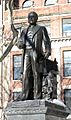
Statue of Arthur at Madison Square Park in New York City, cast in 1898
-
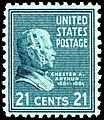
Stamp of Arthur, issued in 1938
-

Presidential dollar coin of Arthur, minted in 2012
-
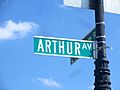
Arthur Avenue in the Bronx was named for President Arthur


.jpg)
See also
 In Spanish: Chester A. Arthur para niños
- Arthur Cottage, ancestral home, Cullybackey, County Antrim, Northern Ireland
- Julia Sand, correspondence with Arthur
- List of presidents of the United States
- List of presidents of the United States by previous experience
