
International Union for Conservation of Nature facts for kids
 |
|
| Script error: The function "autoWithCaption" does not exist. | |
| Type | International organization |
|---|---|
| Focus | Nature conservation, biodiversity |
| Headquarters | Gland, Switzerland |
| Members | 1,400 |
|
Key people
|
|
| Revenue | CHF 140.7 million / US$148 million (2019) |
| Employees | Over 900 (worldwide) |
Script error: No such module "Check for conflicting parameters".
The International Union for Conservation of Nature (IUCN) is a global group that works to protect nature and use natural resources wisely. It started in 1948 and has become a leading expert on the health of our planet. IUCN gathers information, does research, runs projects, and teaches people about conservation. Its main goal is to help people and countries around the world protect nature. It also helps make sure that natural resources are used fairly and in a way that doesn't harm the environment.
Over the years, IUCN has grown to include ideas about sustainable development. This means finding ways to meet our needs today without harming the ability of future generations to meet their own needs. IUCN works with governments, businesses, and other groups. It gives them information and advice to help them make good choices for nature. Many people know IUCN best for its Red List of Threatened Species. This list tells us which plants and animals are in danger of disappearing forever.
IUCN has over 1,400 member organizations from more than 170 countries. These members include governments and non-governmental groups. About 16,000 scientists and experts volunteer their time to help IUCN. The organization also has over 900 full-time staff in more than 50 countries. Its main office is in Gland, Switzerland. Every four years, IUCN holds a big meeting called the World Conservation Congress. Here, members decide on important goals for protecting nature around the world.
IUCN works closely with the United Nations and helps with many international agreements about nature and biodiversity. It helped create other important groups like the World Wide Fund for Nature (WWF). IUCN has learned a lot over time about working with different communities, including indigenous peoples. It now focuses on making sure conservation efforts benefit everyone.
The IUCN was first called the International Union for the Protection of Nature when it started in 1948. Later, it was also known as the World Conservation Union from 1990 to 2008.
Contents
- Protecting Our Planet: The IUCN Story
- How IUCN Began
- Early Years: 1948–1956
- Growing Stronger: 1956–1965
- Becoming a Key Environmental Player: 1966–1975
- The World Conservation Strategy: 1975–1985
- Sustainable Development and Global Reach: 1985 to Today
- Working with Businesses: 2000 to Today
- Leading Nature-based Solutions: 2009 to Today
- Important Moments in IUCN History
- What IUCN Does Today
- How IUCN is Organized
- Leadership and Funding
- Publications and Research
- See also
Protecting Our Planet: The IUCN Story
How IUCN Began
The IUCN started on October 5, 1948, in Fontainebleau, France. Representatives from different governments and conservation groups came together. They were encouraged by UNESCO, a part of the United Nations. They signed an agreement to create the International Union for the Protection of Nature (IUPN). The idea for this new group came from UNESCO's first leader, a British biologist named Julian Huxley.

When it began, IUCN was the only international group focused on all areas of nature protection. There was another group for birds, BirdLife International, but IUCN covered everything.
Early Years: 1948–1956
IUCN began with 65 members and worked closely with UNESCO. They organized a conference in 1949 and created the first list of species in serious danger. In its early days, IUCN relied mostly on money from UNESCO. When this funding stopped in 1954, IUCN had to slow down its work for a while.
IUCN successfully brought together important scientists. They identified big problems like how pesticides harm wildlife. However, many of their ideas didn't turn into action. This was often because governments were slow to respond or IUCN didn't have enough resources. In 1956, the group changed its name to the International Union for Conservation of Nature and Natural Resources.
Growing Stronger: 1956–1965
During this time, IUCN built stronger relationships with UN agencies and the Council of Europe. Its most famous publication, the Red Data Book, first came out in 1964. This book lists the conservation status of different species.
IUCN also started helping to create international agreements. One of the first was the African Convention on the Conservation of Nature and Natural Resources.

Many early IUCN projects focused on Africa. IUCN supported a way of managing protected areas that limited human activity. This was done to better protect nature.
In its early years, IUCN struggled with money. One of its leaders, Tracy Philipps, even worked without a salary from 1955 to 1958. To get more stable funding, IUCN helped create the World Wildlife Fund (WWF) in 1961. WWF helped raise money for IUCN's work. Also in 1961, IUCN moved its main office from Belgium to Morges, Switzerland.
Becoming a Key Environmental Player: 1966–1975
In the 1960s, IUCN worked to get a special status for non-governmental organizations (NGOs) at the UN. In 1968, the UN agreed to give NGOs "consultative" status. IUCN itself gained this status with six UN organizations.
IUCN was one of the few environmental groups involved in planning the United Nations Conference on the Human Environment in Stockholm in 1972. This conference led to three new international agreements that IUCN helped create and put into action:
- Convention Concerning the Protection of World Cultural and Natural Heritage (1972). IUCN helped write this agreement with UNESCO. It has been an official advisor on natural heritage ever since.
- CITES – the Convention on International Trade in Endangered Species of Wild Fauna and Flora (1974). IUCN was a key part of this agreement. The CITES office was first located at IUCN.
- Ramsar Convention – Convention on Wetlands of International Importance (1975). The office for this agreement is still at IUCN's headquarters.
IUCN also made an agreement with the United Nations Environment Programme (UNEP). This agreement meant IUCN would regularly check on conservation efforts worldwide. This income, along with money from WWF, finally gave IUCN a stable financial base. During this time, IUCN also began to change its approach to conservation. It started to work more with developing countries.
The World Conservation Strategy: 1975–1985
In 1975, IUCN began working on the World Conservation Strategy, which was published in 1980. This project helped IUCN realize that simply banning people from natural areas wasn't always the best way to protect nature. They understood that working with people was important. In 1982, the World Charter for Nature followed the Strategy. The United Nations General Assembly adopted this Charter after IUCN helped prepare it.
In 1980, IUCN and WWF moved into shared offices in Gland, Switzerland. This led to closer teamwork. However, in 1985, WWF decided to manage its own projects, which IUCN had been running. This ended their very close partnership.
Sustainable Development and Global Reach: 1985 to Today
In 1982, IUCN created a special center to link conservation with development. This center worked on projects to make sure nature protection was part of aid and economic plans in developing countries. Over the years, it helped 30 countries create their own conservation plans.
Many European countries started sending aid money through IUCN's projects. IUCN staff managed these projects, often from new offices around the world. This changed how IUCN worked. Before, volunteer experts had a lot of influence. Now, the staff and their offices played a bigger role. In 1989, IUCN moved into its own building in Gland, near the offices it had shared with WWF. At first, the main office in Gland held most of the power. But over time, regional offices and members gained more say.
In 1991, IUCN, along with UNEP and WWF, published Caring for the Earth. This book was a follow-up to the World Conservation Strategy.
IUCN also started including social issues in its conservation work. In 1994, its mission statement was updated. It now includes the fair and environmentally sound use of natural resources.
Working with Businesses: 2000 to Today
Since IUCN started in 1948, its members have passed over 300 resolutions about business activities. The growing focus on sustainable development brought IUCN closer to working with companies. In 2003, the IUCN Global Business and Biodiversity Program (BBP) was created. Its goal is to guide and support businesses in dealing with environmental and social issues.
One important part of the BBP was a five-year partnership IUCN started with the energy company Shell International in 2007. IUCN has also been involved in projects for low energy use and zero-carbon building since 2005. This involves using special energy-saving materials. Today, the BBP continues to guide IUCN's work with businesses. It makes sure that these partnerships help achieve IUCN's conservation goals.
Leading Nature-based Solutions: 2009 to Today
Nature-based solutions (NbS) are ways to use natural systems to solve big problems. These problems include climate change, getting enough food, or dealing with natural disasters. Instead of just building things like seawalls, NbS uses ecosystems to help. This approach also improves people's lives and protects nature.
The idea of NbS grew as groups like IUCN and the World Bank looked for new ways to work with nature. They wanted to adapt to climate change and reduce its effects. At the IUCN World Conservation Congress in 2016, members agreed on a definition for nature-based solutions. They also asked governments to include these solutions in their plans to fight climate change.
Important Moments in IUCN History
|
|
What IUCN Does Today
IUCN's Main Goals (2017–2020)
IUCN works on many important topics. These include climate change, ecosystems, environmental law, forests, oceans, and species protection. It also focuses on protected areas, science, and global policies.
IUCN plans its work in four-year programs. The program from 2017 to 2020 connected nature and biodiversity conservation with sustainable development and reducing poverty. IUCN makes sure its work is based on facts. It also values the knowledge of indigenous peoples and other traditional users of natural resources.
The IUCN Programme 2017–2020 had three main goals:
- Valuing and protecting nature.
- Helping to manage natural resources fairly and effectively.
- Using Nature Based Solutions to solve big problems. These problems include climate change, food security, and economic and social development.
IUCN does not try to directly involve the general public in large campaigns. Education has always been part of its work. However, the focus is on working with key groups and using smart communication.
Protecting Habitats and Species

IUCN runs projects worldwide to protect habitats and species. It creates the famous IUCN Red List of Threatened Species. It also publishes the IUCN Red List of Ecosystems. This list helps track the health of ecosystems at local, national, and global levels.
A key goal for IUCN is to expand the global network of national parks and other protected areas. It also works to ensure these areas are well managed. IUCN especially focuses on better protection for the oceans and marine habitats.
Working with Businesses
IUCN has a growing number of partnerships with companies. These partnerships happen at local, national, and international levels. They aim to encourage the sustainable use of natural resources.
Shaping National and International Policy
At the national level, IUCN helps governments create plans to protect biodiversity. Internationally, IUCN gives advice to important environmental agreements. These include the Convention on Biological Diversity, CITES, and the Framework Convention on Climate Change. It also advises UNESCO on natural world heritage sites.
IUCN has a special team that works with the United Nations. It also has official connections with many other international groups.
How IUCN is Organized
IUCN has three main parts: its member organizations, its seven scientific commissions, and its main office (the secretariat).
Members
IUCN members include countries, government agencies, and non-governmental organizations. It also includes indigenous peoples' organizations. As of 2017, IUCN has 1,400 members. Members can form national or regional committees to work together. In 2016, there were 62 national and 7 regional committees. In January 2026, United States President Donald Trump announced that the United States withdrew from the organization.

Commissions
The seven IUCN Commissions are made up of volunteer experts. These experts come from many different fields. They study the state of the world's natural resources. They also give IUCN good advice on conservation issues and policies.
- Commission on Education and Communication (CEC): Focuses on sharing information and knowledge within IUCN and the wider conservation community.
- Commission on Environmental, Economic and Social Policy (CEESP): Looks at how economic and social factors affect the protection and wise use of nature.
- World Commission on Environmental Law (WCEL): Helps create new environmental laws and teaches societies how to use them for conservation.
- Commission on Ecosystem Management (CEM): Works on ways to manage natural and changed ecosystems.
- Species Survival Commission (SSC): Focuses on the technical side of species conservation. It takes action for species that are in danger of extinction. Its expert groups create plans to help endangered species recover.
- World Commission on Protected Areas (WCPA): Works to create and manage a strong network of protected areas on land and in the sea.
- Climate Crisis Commission: This commission was started in 2021.
The main IUCN office is in Gland, Switzerland. Eight regional offices, each led by a director, carry out IUCN's programs in their areas. Since 1980, IUCN has opened offices in more than 50 countries.
Leadership and Funding
Leadership
The World Conservation Congress is IUCN's highest decision-making body. This big meeting happens every four years. Members elect the council, including the president. They also approve IUCN's work plan and budget for the next four years.
The IUCN council is the main governing body. It guides IUCN's activities, discusses important policy issues, and advises on money and membership. The council includes the president, four vice presidents, the treasurer, and the chairs of IUCN's seven commissions. It also has three regional councillors from each of IUCN's eight regions. A councillor from Switzerland, where IUCN is based, is also on the council. IUCN's current president is Razan Al Mubarak.
The council chooses a director general. This person is in charge of managing IUCN and running its main office. The current IUCN director general is Grethel Aguilar.
-
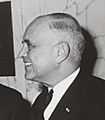
Jean-Paul Harroy
-
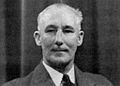
Tracy Philipps
-
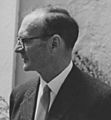
Hugh Elliott
-
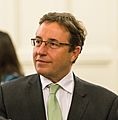
Achim Steiner
-

Inger Andersen
-
Bruno Oberle


.jpg)

|
|


Funding
In 2012, IUCN's total income was 114 million CHF (about €95 million or US$116 million).
Most of IUCN's money comes from official development aid from different countries and international groups. This made up 61% of its income in 2012. Other money comes from membership fees, as well as grants and project funding from foundations, institutions, and companies.
Publications and Research
IUCN creates many publications, reports, guides, and databases. These cover topics like conservation and sustainable development. Every year, it publishes or helps write over 100 books and major assessments. It also produces hundreds of reports and documents. In 2015, 76 articles by IUCN were published in scientific journals.
A report released in 2014 showed that there were 209,000 conservation areas worldwide. These areas covered 15.4 percent of the total land area. This was a step towards protecting 17 percent of land and 10 percent of ocean environments by 2020. This goal was agreed upon by countries at the Convention on Biological Diversity in Japan in 2010.
See also
 In Spanish: Unión Internacional para la Conservación de la Naturaleza para niños
- List of environmental organizations
- List of conservation organisations
