
Volcano2 facts for kids
A volcano is an opening in the crust of a planet or moon that allows hot lava, volcanic ash, and gases to escape from underground. Molten rock beneath the surface is called magma, but once it breaks through to the surface, it is called lava.
Most volcanoes on Earth are found along the edges of tectonic plates. Because many plate boundaries are deep in the oceans, most of Earth's volcanoes are actually underwater. Volcanoes also appear on other planets and moons across the solar system, such as Mars, Venus, and Jupiter's moon Io.
Contents
How Volcanoes Form Through Plate Tectonics
Earth's outer crust is broken into massive pieces called tectonic plates. These plates move slowly over millions of years. Most volcanoes form where these plates interact.
Volcanoes at Divergent Boundaries
At divergent boundaries, tectonic plates pull apart from each other. Hot rock rises from Earth's mantle to fill the gap. This creates new crust, usually on the ocean floor along a mid-ocean ridge. Where these underwater ridges rise above the ocean surface, volcanic islands like Iceland are formed.
Volcanoes at Convergent Boundaries
At convergent boundaries, two plates crash into one another. Often, a heavy oceanic plate slides beneath a lighter continental plate in a process called subduction. As the sinking plate melts deep underground, sticky magma rises to the surface. This creates powerful, explosive volcanoes, such as those in the Pacific Ring of Fire.
Hotspots and Continental Rifts
Some volcanoes form far away from plate edges over unusually hot areas in the mantle called hotspots. As a tectonic plate slowly drifts over a stationary plume of hot mantle material, a chain of volcanic islands can form. The Hawaiian Islands and the Yellowstone Caldera were created by hotspots. Volcanoes can also form along continental rifts where land is slowly stretching apart, such as the East African Rift.
Major Types of Volcanoes and Volcanic Features
Volcanoes come in many shapes and sizes depending on how their lava erupts and flows.

Shield Volcanoes

Shield volcanoes have broad, gently sloping sides that look like a warrior's shield lying on the ground. They form from runny basalt lava that flows long distances before cooling. These volcanoes typically have gentle, non-explosive eruptions. The Hawaiian volcanoes, including Mauna Loa, are shield volcanoes. Olympus Mons on Mars is the largest known shield volcano in the solar system.
Stratovolcanoes (Composite Volcanoes)
Stratovolcanoes are tall, steep mountains made of alternating layers of hardened lava, ash, and rock fragments. Because their magma is thick and traps lots of gas, they can erupt violently. Well-known stratovolcanoes include Mount Fuji in Japan, Mayon Volcano in the Philippines, and Mount Vesuvius in Italy.
Cinder Cones and Lava Domes

- Cinder Cones: These are steep, cone-shaped hills built from blobs of congealed lava and cinders ejected from a single vent. Parícutin in Mexico is a famous cinder cone.
- Lava Domes: These steep mounds form when very thick, pasty lava slowly piles up around a vent because it cannot flow far. Lassen Peak in California is a large lava dome.
- Cryptodomes: These occur when rising magma creates a massive bulge beneath the ground without immediately breaking through the surface.
Giant Supervolcanoes and Calderas

A supervolcano is capable of producing an enormous eruption that can blast out over 1,000 cubic kilometres of volcanic material. When such a massive magma chamber empties quickly, the ground above collapses into a giant basin called a caldera. Supervolcano eruptions are very rare, but they can alter global weather for years. Famous calderas include Yellowstone in North America and Lake Taupō in New Zealand.
Underwater and Under-Ice Volcanoes
- Submarine Volcanoes: Thousands of volcanoes erupt beneath the oceans. They produce rounded formations called pillow lava. In shallow water, they can shoot steam into the sky and eventually create new islands.
- Subglacial Volcanoes: These volcanoes erupt underneath thick sheets of ice or glaciers, producing flat-topped mountains known as tuyas.
Hydrothermal Features: Geysers and Mud Volcanoes
Volcanic heat underground powers several unusual surface features:
- Geysers: Underground water is heated past its boiling point until steam pressure shoots hot water and steam into the air.
- Fumaroles: Open vents in the ground that release steam and volcanic gases like sulfur dioxide.
- Mud Volcanoes: Conical mounds built by bubbly underground mixtures of hot water, mud, and gases.

What Comes Out of a Volcano?
Volcanic eruptions release three main kinds of materials: gases, liquids, and solid fragments.
Volcanic Gases
The most common gas released during an eruption is water vapour, followed by carbon dioxide and sulfur dioxide. These gases drive explosive eruptions when they expand rapidly near the surface.
Types of Lava Flows
The way lava flows depends on the amount of silica it contains:
- Felsic Lava: Very high in silica, extremely thick, and prone to explosive eruptions with violent ash clouds.
- Intermediate Lava: Moderate silica levels, typical of stratovolcanoes.
- Mafic Lava: Low in silica, very hot, and runny. It forms smooth ropey flows called pāhoehoe or rough, jagged flows called ʻaʻā.
- Ultramafic Lava: Extremely hot and rare lava types that were common billions of years ago.
Tephra and Volcanic Ash

When expanding gases shatter molten rock inside a volcano, solid fragments called tephra are blasted into the air. Fine particles smaller than 2 millimetres across are called volcanic ash. Large flying chunks of hot rock are known as volcanic bombs, which can weigh several tons.
Volcanic Activity: Active, Dormant, and Extinct

Scientists generally sort volcanoes into three main stages of activity:
- Active: Volcanoes that are currently erupting or showing clear signs of unrest, such as earthquake swarms and gas releases.
- Dormant: Inactive volcanoes that have not erupted in a long time but still have a magma supply and could erupt again.
- Extinct: Volcanoes that scientists consider dead because their magma supply is completely gone.
How Volcanoes Affect Human Life
Volcanoes can be dangerous, but they also provide great benefits to our planet and human society.

Volcanic Hazards
- Pyroclastic Flows: Super-heated clouds of gas, ash, and rock that race down volcanic slopes at hundreds of kilometres per hour.
- Lahars: Dangerous, fast-moving mudflows caused by melting snow and ice mixing with volcanic ash during an eruption.
- Climate Changes: Giant eruptions release sulfur particles into the upper atmosphere, blocking sunlight and causing temporary global cooling called a volcanic winter.
- Aviation Hazards: Flying volcanic ash can melt inside jet engines and cause them to fail, which is why flights are redirected around ash clouds.
Positive Benefits of Volcanoes
- Fertile Soil: Weathered volcanic rocks break down into rich soils packed with minerals like iron, potassium, and phosphorus, perfect for farming.
- Geothermal Energy: Underground volcanic heat is captured in places like Iceland to generate clean electricity and heating.
- Building Materials: Ancient Romans used soft volcanic rock called tuff to build famous monuments, and volcanic pumice is still used today.
Volcanoes Across the Solar System

Volcanoes are not unique to Earth:
- The Moon: Covered in ancient, dark basalt plains called maria, though it is no longer volcanically active.
- Venus: Thousands of volcanoes and vast lava plains cover almost its entire surface.
- Mars: Home to enormous extinct shield volcanoes, including Olympus Mons, which stands nearly three times taller than Mount Everest.
- Io: A moon of Jupiter covered in active volcanoes that erupt hot sulfur and silicate lava, making it the most volcanically active world in the solar system.
- Icy Moons: Moons like Saturn's Enceladus and Neptune's Triton have cryovolcanoes that erupt plumes of liquid water, ammonia, and methane ice instead of molten rock.
Images for kids
-
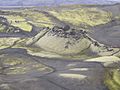
Laki fissure vent in Iceland with a chain of volcanic cones.
-
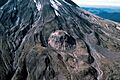
A lava dome located on the east flank of Mount St. Helens.
-
Lake Taupo (31071970884).jpg
Lake Taupō, a large caldera lake in New Zealand.
-
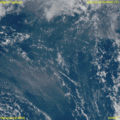
Satellite view of the underwater eruption of Hunga Tonga in 2022.
-
Gobustan mud volcano.jpg
Mud volcano bubbling at Gobustan in Azerbaijan.
-
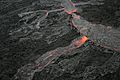
A pāhoehoe lava flow channel in Hawaii.
-
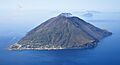
Aerial view of Stromboli volcano in Italy.
-
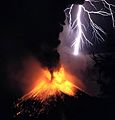
Mount Rinjani erupting in Indonesia in 1994.
-
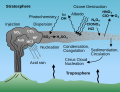
Diagram of volcanic gases and ash entering the atmosphere.
-
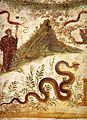
Ancient Roman fresco from Pompeii showing Mount Vesuvius.
-
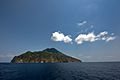
Narcondam Island, a dormant volcano in India.
-
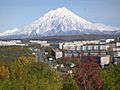
Koryaksky volcano rising behind Petropavlovsk-Kamchatsky, Russia.
-
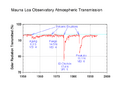
Graph showing reduced sunlight after major eruptions.
-
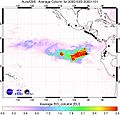
Satellite view of sulfur dioxide emissions over Galapagos Islands.
-
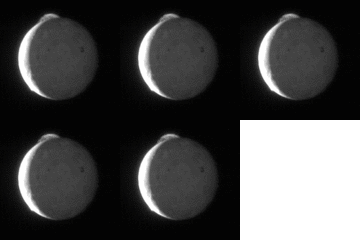
Eruption plume captured rising above Jupiter's moon Io.


.jpg)


See Also
- List of volcanoes
- List of volcanic eruptions by death toll
- List of extraterrestrial volcanoes
- Plate tectonics
- Geothermal power
