
History of the Jews in Canada facts for kids
| Juifs canadiens (French) יהודים קנדים (Hebrew) |
|
|---|---|

Population distribution of Jewish Canadians by census division, 2021 census
|
|
| Total population | |
| Canada 404,015 (as of 2021) 1.4% of the Canadian population |
|
| Regions with significant populations | |
 Ontario Ontario |
272,400 |
 Quebec Quebec |
125,300 |
 British Columbia British Columbia |
62,120 |
 Alberta Alberta |
20,000 |
 Manitoba Manitoba |
18,000 |
| Languages | |
| English · French (among Québécois) · Hebrew (as liturgical language, some as mother tongue) · Yiddish (by some as mother tongue and as part of a language revival) · and other languages like Russian, Ukrainian, Lithuanian, Polish, German, Moroccan Arabic | |
| Religion | |
| Judaism | |
| Related ethnic groups | |
| Anglo-Israelis and Israeli Canadians | |
The story of Jewish people in Canada began in the 1700s. Jewish Canadians are a large community, ranking fourth globally. They are found in Canada, Israel, the United States, and France. In 2021, about 335,000 people identified as Jewish in Canada. This was about 0.9% of Canada's population. If you include those who are culturally Jewish, the number is over 400,000 people.
Most Jewish Canadians are Ashkenazi Jews, whose families came from Eastern Europe. There are also Sephardi Jews and Mizrahi Jews, whose families came from other parts of the world. People who convert to Judaism also join this community. They all share many different Jewish traditions and ways of practicing their faith.
Even though they are a small group, Jewish people have been openly present in Canada since 1749. The first Jewish immigrants arrived with Governor Edward Cornwallis to help establish Halifax, Nova Scotia. In the 1760s, more Jewish settlers came to Montreal after the British took control. One important person was Aaron Hart, often called the 'father of Canadian Jewry'. His son, Ezekiel Hart, faced early challenges because of his Jewish faith. He was stopped from taking his seat in the Quebec legislature. This was because the oath included a Christian phrase. By the 1970s and 1980s, many of these old rules were gone.
Contents
Early Jewish Settlements in Canada (1783–1897)
Before the British took over New France, some Jewish people lived in Nova Scotia. In Quebec, King Louis XIV of France had said that only Roman Catholics could live there. But one Jewish girl, Esther Brandeau, came in 1738 disguised as a boy. She stayed for a year before being sent back because she would not change her religion.
The first records of Jewish people in Canada after this come from the British Army. This was during the French and Indian War in the 1760s. In 1760, General Jeffrey Amherst captured Montreal for the British. Several Jewish soldiers and officers were part of his army. These included Samuel Jacobs and Aaron Hart.
Samuel Jacobs and Aaron Hart were two important figures. Samuel Jacobs is noted as the first Jewish resident of Quebec in 1759. He supplied the British army and became a successful merchant. However, some consider Aaron Hart the first permanent Jewish settler. This is because Hart married a Jewish woman and raised his children in the Jewish faith.
Aaron Hart came to Canada in 1760 with the army. He later settled in Trois-Rivières and became a wealthy landowner. His four sons, including Ezekiel, became important in Montreal's Jewish community. Ezekiel Hart was elected to the Lower Canada legislature in 1807. He was the first Jewish person to hold such a position in the British Empire. However, he was removed from office because of his religion. This led to a law that stopped Jewish people from holding elected office until 1832. That year, the Emancipation Act finally gave Jewish people more political rights.
Early Jewish Canadians often worked as fur traders or served in the British Army. Some were merchants or landowners. Montreal's Jewish community was small, with about 200 people. They built Canada's oldest synagogue, the Spanish and Portuguese Synagogue of Montreal, Shearith Israel, in 1768. It was the only synagogue in Montreal until 1846.
Calls for more fair government grew in Canada. In 1829, the oath that required a Christian phrase was changed for Jewish people. In 1831, politician Louis-Joseph Papineau helped pass a law giving Jewish people full political rights. This was very early, even before other parts of the British Empire. In 1832, thanks to people like Ezekiel Hart, Jewish people gained the same political rights and freedoms as Christians. By 1850, only about 450 Jewish people lived in Canada, mostly in Montreal.
Toronto's first Jewish prayer services happened in 1856. They borrowed a Sefer Torah (a holy scroll) from Montreal's synagogue. In 1857, Toronto received its own Torah. In 1871, their synagogue officially became the Holy Blossom Temple.
Abraham Jacob Franks settled in Quebec City in 1767. For many years, Quebec City had a very small Jewish population. They opened a place of worship in 1853. By 1892, the community grew enough to establish the Beth Israel synagogue. By 1905, about 350 Jewish people lived there.
By 1871, Canada had 1,115 Jewish residents. Most lived in Montreal, Toronto, and Hamilton.
Growing Jewish Communities (1862–1939)

Starting in the 1880s, many Jewish people faced difficult times in Eastern Europe. Millions left their homes to find safety in the West. While most went to the United States, Canada also became a popular choice. This was partly because the Canadian government wanted to grow the country. Between 1880 and 1930, Canada's Jewish population grew to over 155,000 people.
Jewish immigrants often created community groups called kehillas. These groups helped those who were less fortunate. Many of these new arrivals were very poor. Wealthy Jewish people who had come earlier felt it was their duty to help. They formed organizations like the Hebrew Philanthropic Society. New immigrants also formed groups with people from their home villages.
Most immigrants settled in big cities. In 1871, Canada had 1,115 Jewish residents, mainly in Montreal, Toronto, and Hamilton. George Simon became the second Jewish mayor in Canada in 1914. He was mayor of Alexandria, Ontario, and the youngest mayor in the country then.
About 100 Jewish people settled in Victoria, British Columbia. They opened shops to serve gold prospectors. This led to a synagogue opening there in 1862. In 1875, B'nai B'rith Canada, a Jewish community group, was formed. Henry Nathan, Jr. became the first Canadian Jewish Member of Parliament. In 1899, the Federation of Canadian Zionist Societies was created. Most Canadian Jews at this time were Ashkenazim from Eastern Europe.
By 1911, Jewish communities existed in all of Canada's major cities. By 1914, about 100,000 Jewish people lived in Canada. Three-quarters of them lived in Montreal or Toronto. Most Canadian Jews were Ashkenazim from the Austrian or Russian Empires. Some Jewish groups focused on promoting Yiddish culture, like the Montreal Jewish Library.
The Canadian Jewish Congress (CJC) was founded in 1919. It became the main group representing Jewish Canadians for 90 years. The CJC worked to help with immigration, human rights, and fighting antisemitism. They also encouraged Canada to ensure that Eastern European countries protected minority rights.
On August 16, 1933, a major anti-Jewish incident happened in Toronto. It was called the Christie Pits riot. After a baseball game, a large fight broke out between hundreds of men. It was fueled by hatred and Nazi symbols.
In 1934, another anti-Jewish incident occurred in Montreal. Doctors at Notre-Dame Hospital went on strike because a Jewish doctor, Dr. Sam Rabinovitch, was appointed. He would have been the first Jewish doctor at a French-Canadian hospital. The strike ended when Dr. Rabinovitch resigned to ensure patients received care.
Jewish Settlements in Western Canada

In the late 1800s and early 1900s, 15 Jewish farm colonies were started on the Canadian prairies. Many Jewish people from Eastern Europe had little farming experience. One successful settlement was Yid'n Bridge, Saskatchewan. It was started by farmers from South Africa. This community later grew and changed its name to Edenbridge. The Beth Israel Synagogue there is now a heritage site.
Most Jewish Canadians in the west at this time were storekeepers or tradesmen. Many opened shops along new railway lines. They sold goods to construction workers, some of whom were also Jewish. Some of these settlements grew into thriving towns. Jewish Canadians also helped develop the west coast fishing industry and built telegraph lines.
The first major Jewish organization in the west was B'nai B'rith. Today, B'nai B'rith Canada is an important advocacy and social service group. The Montreal branch of the Workmen's Circle was also founded in 1907. This group was for working-class Jewish people who were not religious or communist.
Community Organization and Challenges

By the start of World War I, about 100,000 Jewish Canadians lived in the country. Three-quarters of them were in Montreal or Toronto. Many children of European refugees started as peddlers. They eventually built successful businesses, becoming retailers and wholesalers. Jewish Canadians played a key role in Canada's clothing and textile industry. Many worked as laborers in factories, while some owned the factories.
As the population grew, Jewish Canadians began to organize their community. The Canadian Jewish Congress (CJC) was formed in 1919. Its goal was to represent Jewish Canadians and help immigrants. Montreal had the largest Jewish community. Most Jewish people there spoke Yiddish, but their children often learned English. Until 1964, Quebec had separate school systems for Protestants and Catholics. Jewish parents usually sent their children to English-speaking Protestant schools.
In the 1930s, during the Great Depression, Canada limited immigration from Eastern Europe. This made it harder for Ashkenazi Jews to come to Canada. Antisemitism was common, and Jewish immigrants were sometimes seen as competition. Samuel Bronfman, a whisky businessman, led the CJC. He hoped to convince the government to allow more Jewish immigrants. However, Prime Minister William Lyon Mackenzie King was not helpful. Canada accepted very few Jewish refugees from Nazi Germany.
World War II (1939–1945)

About 17,000 Jewish Canadians served in the Canadian Armed Forces during World War II. Major Ben Dunkelman was a brave soldier in Europe. In 1943, Saidye Rosner Bronfman of Montreal was honored for her work on the home front. She organized 7,000 women to make packages for Canadian soldiers overseas. Most Jewish Canadians who joined the military at this time became members of the Royal Canadian Air Force.
In 1939, Canada turned away the MS St. Louis, a ship carrying 908 Jewish refugees. The ship had to return to Europe, where many of the refugees later died in concentration camps. Overall, Canada accepted only 5,000 Jewish refugees during the 1930s and 1940s. This happened during a time of widespread antisemitism.
A striking example of antisemitism occurred during the 1944 Quebec general election. The leader of the Union Nationale, Maurice Duplessis, made false claims. He said the government had a secret deal with a "Zionist Brotherhood" to bring 100,000 Jewish refugees to Quebec. He claimed this was in exchange for money for political parties. Duplessis said he would stop this plan if elected. His false story was widely believed and helped him win the election.
In 1945, several groups merged to form the United Jewish Peoples' Order. This left-leaning organization became one of Canada's largest Jewish community groups for many years.
For decades, the Jewish community's response to the Holocaust was quiet. Many survivors found it hard to share their stories. Awareness grew in the 1960s as people realized that antisemitism still existed.
Post-War Era (1945–1997)
From the 1940s to the 1960s, Rabbi Abraham Feinberg was a leading voice for the Canadian Jewish community. He was known for his work in social justice. He campaigned for laws against discrimination and to end unfair housing rules.
In March 1945, Rabbi Feinberg wrote about widespread antisemitism in Canada. He noted that Jewish people were excluded from many clubs and jobs. He also mentioned that some universities had unfair rules for Jewish applicants. He saw signs of anti-Jewish bias in various parts of society.
In 1945, a Jewish group challenged "restrictive covenants." These were rules that stopped properties from being sold or rented to Jewish people. Justice John Keiller MacKay ruled against these covenants. However, in 1948, this ruling was overturned. The Supreme Court of Canada later ruled against these covenants in 1950, though on a technicality.
After the war, Canada changed its immigration rules. About 40,000 Holocaust Survivors came to Canada in the late 1940s. They hoped to rebuild their lives. The Workmen's Circle and Jewish Labour Committee helped bring Jewish refugees to Montreal. They found jobs for them in the clothing industry.
In the post-war years, universities became more open to Jewish students. Many Jewish Canadians moved from working-class jobs to middle-class professions. They became doctors, teachers, lawyers, and professors. Many also moved from inner cities to the suburbs. Rural Jewish communities almost disappeared as people moved to cities. Jewish Canadians also became active in arts and culture. Notable figures included Leonard Cohen and Mordecai Richler.
Since the 1960s, new waves of Jewish immigrants have arrived. Many French-speaking Jews from North Africa settled in Montreal. Some South African Jews moved to Canada after 1961. This was followed by another wave in the late 1970s due to unrest. Most settled in Ontario, especially Toronto.
In 1961, Louis Rasminsky became the first Jewish governor of the Bank of Canada. He faced discrimination when his application to a prestigious club was rejected because of his religion. In 1968, Herb Gray became the first Jewish federal cabinet minister. Bora Laskin became the first Jewish justice of the Supreme Court of Canada in 1970. In 1971, David Lewis became the first Jewish leader of a major Canadian political party.
In 1976, the separatist Parti Québécois won the Quebec provincial election. This led many English-speaking Jewish people to move from Montreal to Toronto. They worried about Quebec leaving Canada. Montreal's Jewish community has always strongly supported Canada staying united.
After 1945, Canada accepted immigrants from Eastern Europe if they were anti-communist. This included some who had fought for Nazi Germany. For example, veterans of the 14th Waffen SS Division settled in Canada. Their war crimes were overlooked because they were seen as useful during the Cold War. Starting in the 1980s, Jewish groups pushed the Canadian government to deport these individuals. However, the government was slow to act, fearing it would upset voters of Eastern European background.
Modern Jewish Life in Canada (Since 2001)
Today, Jewish culture in Canada is kept alive by both practicing and non-religious Jewish people. Nearly all Jewish people in Canada speak English or French. Most Ashkenazi Jews, even in Quebec, speak English as their main language.
Regarding Jewish religious groups, 26% of Canadian Jews are Conservative, 17% Orthodox, and 16% Reform. About 29% identify as "Just Jewish." Marriage within the Jewish community is common, with 77% of married Jewish people having a Jewish spouse.
Most of Canada's Jewish population lives in Ontario and Quebec. British Columbia, Manitoba, and Alberta also have significant communities. Toronto now has the largest Jewish community. Montreal held this position until the 1970s. Many English-speaking Jewish Canadians moved to Toronto then. They were concerned about Quebec's nationalist politics and language laws.
The Jewish population is growing slowly due to an aging population and lower birth rates. Between 1991 and 2001, the population increased by only 3.5%. This was despite immigration from the former Soviet Union, Israel, and other countries.
Politically, the main Jewish Canadian organizations are the Centre for Israel and Jewish Affairs (CIJA) and the more conservative B'nai Brith Canada. Both claim to represent the Jewish community. The United Jewish Peoples' Order is a left-leaning secular group. It focuses on Jewish cultural, educational, and social justice issues. A smaller group, Independent Jewish Voices (Canada), believes the larger organizations do not speak for all Canadian Jews. Many Jewish Canadians are not connected to any of these groups.
The birth rate for Jewish people in Canada is higher than in the United States. This is partly due to a large number of Orthodox Jews in Canada. In 2001, the Jewish birth rate was higher than that of Christian, Buddhist, and non-religious populations.
On February 26, 2014, B'nai Brith Canada led a delegation of Sephardi community leaders to Parliament Hill. They met with the prime minister and other important people. This was a first in Canadian history.

Since the early 2000s, Jewish immigration to Canada has continued to grow. Many French Jews have moved to Canada due to antisemitic acts in France and economic reasons. Quebec is a popular destination for them. Some Belgian-Jewish community members also choose Canada. There is also immigration from Argentina and other parts of Latin America.
A number of Israeli Jews also move to Canada for study and work. The Israeli Canadian community is growing, with an estimated 30,000 people. A small number of these are Ethiopian Jews.
Afghan Jews in Canada
After the Fall of Kabul in August 2021, the last Afghan Jew, Tova Moradi, moved to Canada. This marked the end of Afghanistan's 2,700-year Jewish history.
Jewish Population Statistics
By Province and Territory

Here is the Jewish Canadian population by province and territory in 2011:
| Province or territory | Jews | Percentage |
|---|---|---|
| Canada | 391,665 | 1.2% |
| Ontario |
226,610 | 1.8% |
| Quebec |
93,625 | 1.2% |
| British Columbia |
35,005 | 0.8% |
| Alberta |
15,795 | 0.4% |
| Manitoba |
14,345 | 1.2% |
 Nova Scotia Nova Scotia |
2,910 | 0.3% |
 Saskatchewan Saskatchewan |
1,905 | 0.2% |
 New Brunswick New Brunswick |
860 | 0.1% |
 Newfoundland and Labrador Newfoundland and Labrador |
220 | 0.0% |
 Prince Edward Island Prince Edward Island |
185 | 0.1% |
 Yukon Yukon |
145 | 0.4% |
 Northwest Territories Northwest Territories |
40 | 0.1% |
 Nunavut Nunavut |
15 | 0.1% |
By City

Here is the Jewish population in major Canadian cities:
| 2001 | 2011 | Trend | |||||
|---|---|---|---|---|---|---|---|
| City | Population | Jews | Percentage | Population | Jews | Percentage | |
| Greater Toronto Area | 5,081,826 | 179,100 | 3.5% | 6,054,191 | 188,710 | 3.1% |  5.4% 5.4% |
| Greater Montreal | 3,380,645 | 92,975 | 2.8% | 3,824,221 | 90,780 | 2.4% |  2.4% 2.4% |
| Greater Vancouver | 1,967,480 | 22,590 | 1.1% | 2,313,328 | 26,255 | 1.1% | 16.2% |
| Calgary | 943,315 | 7,950 | 0.8% | 1,096,833 | 8,335 | 0.8% | 4.8% |
| Ottawa | 795,250 | 13,130 | 1.7% | 883,390 | 14,010 | 1.6% | 6.7% |
| Edmonton | 666,105 | 4,920 | 0.7% | 812,201 | 5,550 | 0.7% | 12.8% |
| Winnipeg | 619,540 | 14,760 | 2.4% | 663,617 | 13,690 | 2.0% | 7.2% |
| Hamilton | 490,270 | 4,675 | 1.0% | 519,949 | 5,110 | 1.0% | 9.3% |
| Kitchener-Waterloo | 495,845 | 1,950 | 0.4% | 507,096 | 2,015 | 0.4% | 3.3% |
| Halifax | 355,945 | 1,985 | 0.6% | 390,096 | 2,120 | 0.5% | 6.8% |
| London | 336,539 | 2,290 | 0.7% | 366,151 | 2,675 | 0.7% | 16.8% |
| Victoria | 74,125 | 2,595 | 3.5% | 80,017 | 2,740 | 3.4% | 5.6% |
| Windsor | 208,402 | 1,525 | 0.7% | 210,891 | 1,515 | 0.7% | 0.7% |
Jewish Culture in Canada
Yiddish Language and Heritage
Yiddish is the traditional language of Ashkenazi Jews, who are the majority of Jewish Canadians. It was widely spoken in the community until the mid-20th century.
Montreal once had a very active Yiddish community. For the first half of the 20th century, Yiddish was Montreal's third most spoken language. The Kanader Adler (The Canadian Eagle) was a daily Yiddish newspaper published from 1907 to 1988. The Dora Wasserman Yiddish Theatre at the Saidye Bronfman Centre for the Arts is the only permanent Yiddish theatre in North America. In 1931, almost all Montreal Jews said Yiddish was their mother tongue.
In 1980, Chaim Leib Fox wrote a book about Yiddish and Hebrew literature in Canada. It covered 429 authors who published works between 1870 and 1970. This book was an important effort to preserve Yiddish culture in Canada.
Jewish Press in Canada
The Canadian Jewish News was Canada's most widely read Jewish community newspaper until April 2020. It faced financial problems, made worse by the COVID-19 pandemic. Its president stated that the newspaper "has been felled by COVID-19."
After its closure, two new Jewish newspapers started in May 2020: the Canadian Jewish Record and TheJ.ca. These papers aimed to fill the gap left by the CJN. The Canadian Jewish Record offered a left-leaning view, while TheJ.ca focused on right-leaning, pro-Israel viewpoints.
In May 2021, the Canadian Jewish News relaunched as a digital-only publication. The Canadian Jewish Record then announced its closure, saying it had served its purpose as a "bridge" until the CJN returned. The CJN now offers journalistic reporting, an email newsletter, and weekly podcasts.
Museums and Monuments
Canada has several Jewish museums and monuments. These places help people learn about Jewish culture and Jewish history.
Jewish Education and Work
Education
There are many Jewish day schools and religious schools (Yeshivot) across Canada. In Toronto, about 40% of Jewish children attend Jewish elementary schools. About 12% go to Jewish high schools. In Montreal, these numbers are higher, with 60% in elementary and 30% in high schools. The national average for Jewish elementary school attendance is at least 55%.

The Jewish community in Canada is one of the most educated groups. In 1991, four out of ten doctors and dentists in Toronto were Jewish. Nationally, Jewish people were four times more likely to complete graduate degrees than other Canadians. A study found that 43% of Jewish Canadians had a bachelor's degree or higher. This was much higher than the 16% for the general Canadian population.
In 2016, 80% of Canadian Jewish adults aged 25–64 had a Bachelor's Degree. Only 29% of the general Canadian population did. An additional 37% of Jewish Canadians in this age group had post-graduate degrees.
Jewish Canadians make up about one percent of Canada's population. However, they form a much larger percentage of students at some of Canada's top universities.
| Reputation Rankings (Maclean's) | University | Jewish Students | % of Student Body |
|---|---|---|---|
| 1 | University of Toronto | 3,000 | 5% |
| 2 | University of British Columbia | 1,000 | 2% |
| 3 | University of Waterloo | 1,200 | 3% |
| 4 | McGill University | 3,550 | 10% |
| 5 | McMaster University | 900 | 3% |
| 7 | Queen's University | 2,000 | 7% |
| 8 | University of Western Ontario | 3,250 | 10% |
| 15 | Ryerson University | 1,650 | 3% |
| 17 | Concordia University | 1,125 | 3% |
| 18 | University of Ottawa | 850 | 2% |
| 20 | York University | 4,000 | 7% |
Employment and Professions
Before the large Jewish immigration in the 1880s, Jewish Canadians were generally well-off. This trend continues today. In the 18th and 19th centuries, wealthy Jewish people were often fur traders, merchants, and business owners.
In the early 1900s, many Jewish household heads were self-employed. They worked as wholesalers, retailers, or peddlers. However, many Jewish people also started working in factories, especially in the clothing industry. By 1915, half of Toronto's Jewish community was self-employed. The other half worked in blue-collar jobs.
By the early 1930s, Toronto had about 400 Jewish-owned clothing shops and factories. Jewish business owners succeeded by relying on their community. They had many Jewish-owned retail stores and skilled Jewish workers. In 1930, half of all Canadians working in pawn shops were Jewish.
Jewish Canadians were very active in labor and trade unions until the 1940s. The Canadian Jewish Labour Committee represented unions with many Jewish members. After World War II, Jewish Canadians focused on fighting unfair treatment in jobs. Many universities, banks, and businesses had rules that discriminated against Jewish applicants.
In the early 1950s, more people supported laws against discrimination. By the 1960s, several provinces created human rights commissions. They passed laws against discrimination based on race or religion in employment. This allowed Jewish people to work in many different fields.
Jewish lawyers could start practicing outside their community in the late 1960s and early 1970s. This led to more Jewish lawyers working in large Canadian law firms by the 1990s. A 1960 study found that Jewish lawyers often earned less because they were not hired by large firms. By the 1990s, the number of Jewish and non-Jewish lawyers in large firms was about equal.
Economic Well-being
According to a 2018 study, here is the annual household income for Canadian Jewish families:
| Income | Weighted sample |
|---|---|
| Less than $75k | 21% |
| $75k-$150k | 24% |
| $150k and above | 22% |
| Don't know/No answer | 32% |
Wealth in the Jewish Community

Most Canadian Jews are in the middle or upper-middle class. Some of the wealthiest Canadian Jewish families include the Bronfmans, the Belzbergs, the Diamonds, the Reichmanns, and the Shermans. About 17% of the "100 Richest Canadians" list are Jewish Canadians.
Poverty in the Jewish Community
As of 2015, the average income for Canadian Jews over 15 years old was $30,670. About 14.6% of Canadian Jews lived below the poverty line. Poverty was more common among Jewish people in the Toronto area. This percentage is similar to non-Jewish Canadians, where 14.8% live below the poverty line.
Slightly more Jewish women than men live in poverty. Poverty is most common among young Jewish Canadians (15–24 years old) and those over 65. There is a strong link between education and poverty. Jewish Canadians with only a high school education have higher rates of poverty. Those with postgraduate degrees have the lowest rates.
Images for kids
-
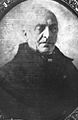
Benjamin Hart, businessman, militia officer, and justice of the peace, 1855
-
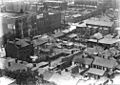
The Ward, Toronto, a predominantly Jewish neighbourhood, 1910
-
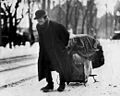
Jewish rag picker, Bloor Street West, Toronto, 1911
-
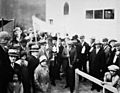
Dedication of the new Synagogue, Kirkland Lake, Ontario. Rabbi Joseph Rabin carrying the Torah, 1929
-
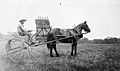
The Canadian Jewish Farm School in Georgetown, Ontario was established in 1927 and served as a training school for Polish war orphans brought to Canada after the First World War
-
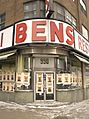
Ben's Deli was a Montreal icon during the 20th century
-

A sign at Siegel's Bagels, Granville Island, Vancouver
-
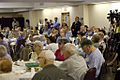
Association of Jewish Seniors/CJPAC hosting a Toronto Mayoral candidates' debate, 2010
-
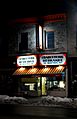
Schwartz's Hebrew Delicatessen, a popular deli in Montreal
-
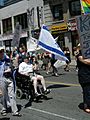
Jewish members of Toronto Pride 2009 Parade for LGBT pride


.jpg)
.jpg)


See also
 In Spanish: Historia de los judíos en Canadá para niños
- Middle Eastern Canadians
- Historic Jewish Quarter, Montreal
- Israeli Canadians
- List of Orthodox Jewish communities in Canada
- List of Canadian Jews
- Religion in Canada
- American Jews
- Canada Park
