
Santa María (volcano) facts for kids
Quick facts for kids Santa María, Santiaguito |
|
|---|---|
| Highest point | |
| Elevation | 3,772 m (12,375 ft) |
| Geography | |
| Location | Quetzaltenango Department, Guatemala |
| Parent range | Sierra Madre |
| Geology | |
| Mountain type | Stratovolcano |
| Volcanic arc | Central America Volcanic Arc |
| Last eruption | December 11, 2024 (ongoing) |
Santa María Volcano is a giant, active volcano in Central America. It stands in the western highlands of Guatemala. The mountain sits in the Quetzaltenango Department. It rises near the busy city of Quetzaltenango. Santa María is part of the Sierra Madre mountain range. Long ago, the local Maya people spoke the Kʼicheʼ language. They called this mighty peak Gagxanul. That special name means "Naked Volcano" or "Naked Mountain."
This towering natural wonder is famous among scientists around the world. In the year 1902, it created a colossal explosion. It was one of the three biggest eruptions of the entire 20th century. Today, Santa María is also famous for a younger volcano growing right beside it. That baby volcano is called Santiaguito. Together, they teach earth scientists how our planet shapes itself over time.
Contents
The Geography and Geology of Santa María Volcano

Santa María reaches an impressive height of 3,772 metres (12,375 ft) above sea level. It towers about 1,400 metres (4,600 ft) above the flat plains around it. The mountain is an enormous stratovolcano. Stratovolcanoes are steep cones built from many hardened layers of lava, pumice, and ash. Many people picture this classic cone shape when thinking of volcanoes. Santa María belongs to the great Central America Volcanic Arc. This chain of fiery peaks lines the western coast of Central America.
The fiery arc exists because of plate tectonics. The outer crust of the Earth is broken into giant moving slabs. These moving slabs are called tectonic plates. Under the Pacific Ocean, there is a dense ocean slab named the Cocos Plate. Near Guatemala, this slab bumps into another slab called the Caribbean Plate. The heavy oceanic rock slides under the lighter continental rock. Scientists call this movement subduction.
When rocks sink deep into the Earth, conditions become extremely hot. Intense heat and pressure melt the solid rock into liquid. This molten liquid rock deep underground is called magma. Magma is lighter than the solid rock around it. Because it is lighter, the fiery liquid slowly rises toward the surface. It gathers in large underground pools known as magma chambers. Eventually, the rising magma breaks through weak cracks in the ground. When it bursts out into the open air, it builds majestic volcanoes.
How Santa María Volcano Formed Over Millennia
Santa María is very old compared to human history. Geologists believe the volcano first started erupting about 103,000 years ago. Geologists study ancient rocks and ash layers to uncover this timeline. The volcano grew in four main building stages. The earliest building stage took place between 103,000 and 72,000 years ago. A second burst of growth happened around 72,000 years ago.
The third stage occurred between 60,000 and 46,000 years ago. Finally, the fourth major building stage happened between 35,000 and 25,000 years ago. Thick lava flows and piles of cinders stacked up. Over thousands of years, these sticky flows created a symmetric cone. After building this huge peak, the volcano grew much quieter. It went through long resting periods. Every once in a while, small flows of lava leaked out. Then the mountain fell asleep for hundreds of years.
The Colossal Santa María Volcano Eruption of 1902

Before the year 1902, Santa María had been sleeping peacefully. The volcano had not erupted for at least 500 years. Some scientists think it was quiet for several thousand years. The slopes were covered in lush green forests and productive coffee farms. People living nearby did not know the mountain was a dangerous volcano. They simply thought of it as a quiet, towering mountain peak.
In early 1902, the ground began to give subtle warnings. Starting in January 1902, several small earthquakes shook the region. Scientists call a cluster of tremors an earthquake swarm. In April 1902, a major earthquake struck the area and caused heavy damage. Magma was forcing its way up from deep beneath the crust. Because the volcano had been quiet for so long, nobody recognized these clues.
On October 24, 1902, the giant mountain awoke with violent force. The eruption became one of the largest eruptions in modern human history. It measured at a 6 on the Volcanic Explosivity Index. Volcanologists classify this level of explosion as "Colossal." Santa María blasted out an astonishing 8 cubic kilometres of molten rock. The force blew away the entire southwestern side of the mountain. It left behind a gaping crater 1 kilometre (0.62 mi) wide and 300 metres (980 ft) deep.
Timeline of the Dramatic 1902 Blast
- October 24, 5:00 pm: People in the town of San Felipe heard a loud roar. It sounded like a massive waterfall crashing down from the misty mountain.
- October 24, 6:00 pm: Dark cinders and gray ash began raining down on Quetzaltenango.
- October 24, 7:00 pm: Brilliant lightning flashed inside a dark cloud over the peak. Witnesses saw a fiery red glow and heard a roaring rumble.
- October 24, 8:00 pm: A gigantic plume of black ash rose high into the sky. Powerful explosions shook the ground 160 kilometres (99 mi) away.
- October 25, 1:00 am: Giant volcanic bombs and rocks flew through the air. Rocks landed up to 14 kilometres (8.7 mi) away from the vent.
- October 26, 12:00 am: The most violent explosions slowly began to calm down.
- October 26, 3:00 pm: A tall white plume of steam shot into the atmosphere.
What Happened After the 1902 Eruption?

The 1902 eruption had a huge impact on the surrounding environment. The blast shot powdery pumice and ash high into the stratosphere. Fine ash particles traveled on strong winds across Mexico. Some ash even traveled 4,000 kilometres (2,500 mi) away to San Francisco, California. A blanket of total darkness covered the local land for 53 hours. The heavy ash fall damaged fertile coffee plantations and crushed fragile roofs.
Tragically, about 6,000 people lost their lives during the natural disaster. The local indigenous communities suffered the greatest hardships from the damage. The thick ash choked rivers and ruined drinking water supplies. Agriculture was disrupted across large areas of western Guatemala. After the terrible event, the broken mountain settled back into silence. However, the giant scar on its side changed the landscape forever.
The Santiaguito Lava Dome Complex

Following the great 1902 blast, the volcano rested for twenty years. In 1922, fresh magma began pushing up inside the crater. Instead of exploding violently, this thick, sticky lava piled up slowly. This type of mound is called a lava dome. Local people named this growing lava dome complex Santiaguito. The name Santiaguito is a Spanish name that means "Little Saint James."
Santiaguito has been active almost continuously since 1922. Over the years, it has erupted more than one cubic kilometer of lava. The dome complex has four distinct volcanic mounds. These domes are named El Caliente, La Mitad, El Monje, and El Brujo. Today, the main volcanic vent that stays active is El Caliente.
How Lava Domes Grow and Change
Lava domes grow in two curious ways that geologists love to study. Sometimes they grow from the inside out, which is called endogenous growth. In this process, new magma pumps into the dome interior like a balloon. Other times, they grow from the outside, which is called exogenous growth. In that process, sticky lava spills out and piles onto the surface.
The type of magma under Santiaguito has shifted over time. In the beginning, the dome produced a silica-rich volcanic rock called dacite. By 1990, the rock changed into a slightly different type called andesite. Scientists think different layers of magma mix inside the underground chamber. The lava is thick and pasty because it contains a lot of silica. Instead of running like water, it creeps along very slowly. Sometimes it hardens into tall rock pillars called lava spines.
Activity and Hazards at Santiaguito
Even though Santiaguito often erupts gently, it can still produce dangerous events. In 1929, part of the hot dome collapsed under its own weight. This collapse created a terrifying avalanche called a pyroclastic flow. A pyroclastic flow is a fast-moving cloud of superheated gas, ash, and rocks. These deadly clouds can race down mountainsides at highway speeds. The 1929 event caused significant loss of life in nearby valleys.
Today, Santiaguito continues to rumble and produce small, gentle ash puffs. The volcano shoots gray plumes of steam and dust into the sky. Many adventurous hikers climb to the top of Santa María. From that high summit, they can safely look down onto Santiaguito. Watching the smaller dome puff smoke below is a thrilling sight for visitors.
Volcanic Hazards and Safety in the Region

Living near an active volcano requires constant care and attention. Today, the most frequent danger around Santa María is a mudflow called a lahar. Lahars are boiling or cold rivers of mud, ash, and water. Guatemala has a rainy season with intense tropical downpours. When heavy rain pours onto loose volcanic ash, it creates thick mudflows. These flows rush down mountain river valleys like wet liquid concrete.
Lahars can destroy everything in their paths, including trees, bridges, and roads. The nearby town of El Palmar sat about ten kilometers away. Lahars destroyed El Palmar twice in the late 20th century. The local people had to abandon the ruins and rebuild. They created a safer settlement named Nuevo El Palmar farther away. Lahar deposits have carried sediment all the way down to the Pacific Ocean.
Other Potential Risks on the Mountain
Slow-moving lava flows present another hazard around Santiaguito. These flows can travel up to four kilometers away from the vent. While people can easily walk away from them, lava crushes houses and roads. If a lava flow crumbles suddenly, it can spark dangerous ash clouds.
Scientists also keep a watchful eye on Santa María's steep crater wall. The 1902 explosion left behind a very steep, unstable cliff. A powerful earthquake could trigger a massive landslide. A giant rockslide could bury surrounding valleys in rock and debris. Fortunately, computer models show that a giant mountain collapse is very unlikely right now.
Studying Santa María as a Decade Volcano
Because Santa María is active and near large towns, scientists study it closely. The mountain was selected as a prestigious Decade Volcano. The United Nations chose sixteen Decade Volcanoes across the world for special study. These peaks are chosen because of their past history of huge eruptions. They also sit near large human populations.
Volcanologists monitor Santa María using modern scientific instruments. They set up seismometers to listen for tiny underground tremors. They track ground movement using GPS satellites to see if the mountain is swelling. They also measure sulfur dioxide gases escaping from the volcanic vents. By studying these signs, scientists hope to predict future eruptions early. Their dedicated work helps keep thousands of local families safe and sound.
Images for kids
-
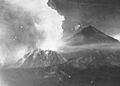
Ash plume rising during the 1902 eruption
-
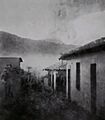
Ash falling over the city of Quetzaltenango in 1902


See also
 In Spanish: Volcán Santa María para niños
- List of volcanic eruptions by death toll
- List of volcanoes in Guatemala
- Timeline of volcanism on Earth
