
Fishlake National Forest facts for kids
Quick facts for kids Fishlake National Forest |
|
|---|---|
| Location | Beaver, Garfield, Iron, Juab, Millard, Piute, Sanpete, Sevier, and Wayne counties, Utah, USA |
| Nearest city | Richfield, UT |
| Area | 1,461,226 acres (5,913.37 km2) |
| Established | July 1, 1908 |
| Visitors | 500,000 (in 2006) |
| Governing body | U.S. Forest Service |
| Website | Fishlake National Forest |

Fishlake National Forest is a scenic public reserve located in the south-central region of Utah. It spans almost 1.5 million acres of mountains, high alpine plateaus, deep canyons, and clear mountain streams. The forest gets its name from Fish Lake, which is the largest natural freshwater mountain lake in Utah.
Fishlake National Forest is managed by the United States Forest Service. It is famous around the world for housing incredible natural wonders. One of its most famous features is Pando, a giant grove of quaking aspen trees that are all connected by one single root system. Pando is one of the heaviest and oldest living organisms on Earth. The forest provides homes for hundreds of animal and plant species. It also offers outdoor activities like hiking, fishing, camping, and off-road exploring.
Contents
- Discovering the Geography and Landscape of Fishlake
- History and How the Forest Was Established
- The Wonder of Pando: Earth's Largest Living Tree
- Wildlife: The Animals of Fishlake National Forest
- Plant Communities and Ecosystem Zones
- Outdoor Recreation and Exploring the Forest
- Conservation and Caring for Forest Resources
- Gallery
- See also
Discovering the Geography and Landscape of Fishlake
Fishlake National Forest covers roughly 1,461,226 acres of rugged land. This vast area stretches across nine different Utah counties. The counties with forest land include Sevier, Millard, Piute, Beaver, Wayne, Juab, Garfield, Iron, and Sanpete.
The landscape of Fishlake is known for its high elevation and varied terrain. The forest sits within a transition zone between the Colorado Plateau and the Great Basin. This unique location creates dramatic differences in elevation, temperature, and ecosystems.
Major Mountain Ranges and High Peaks
The forest contains several major mountain ranges and volcanic plateaus. These high peaks shape the local weather and create beautiful mountain backdrops.
- The Tushar Mountains: This range contains the highest peaks in the forest. Delano Peak is the highest point in the entire mountain range. It reaches an elevation of 12,173 feet (3,710 meters) above sea level.
- The Pavant Range: Located in the western part of the forest, these mountains rise steeply above the valleys below. They feature dense forests of pinyon pine and juniper trees.
- The Fish Lake Plateau: This high volcanic plateau sits at an elevation of nearly 9,000 feet. It cradles Fish Lake itself, along with open meadows and thick aspen stands.
- The Monroe Mountain Plateau: A broad elevated region known for scenic overlooks, autumn foliage, and deep mountain valleys.
Rivers, Lakes, and Water Resources
Water is a precious and vital resource in Utah. Fishlake National Forest plays an essential role as a natural water catchment.
Fish Lake and Surrounding Waters
Fish Lake sits at an elevation of 8,843 feet (2,695 meters) above sea level. It is roughly 5 miles long and nearly 1 mile wide. The lake was formed thousands of years ago by natural geological faulting. It is fed by mountain snowmelt and underground springs. Fish Lake is famous for its cold, clear waters and excellent sport fishing.
Nearby is Johnson Valley Reservoir, another popular water body used for recreation and water storage. Pelican Point and Doctor Creek are well-known shoreline areas where visitors gather to fish, boat, and watch wildlife.
Headwaters and Mountain Streams
The forest serves as the headwaters for several important streams and rivers. Otter Creek begins in these high mountains and flows into the East Fork Sevier River. Numerous mountain creeks, such as Sevenmile Creek, Chalk Creek, and Salina Creek, provide water for downstream communities, farms, and local wildlife.

History and How the Forest Was Established
The region that is now Fishlake National Forest has a rich human history spanning thousands of years. Early Indigenous peoples, pioneer settlers, and conservationists have all shaped its story.
Indigenous Peoples and Early Inhabitants
Long before modern explorers arrived, Native American tribes lived in and traveled through this region. The Paiute and Ute peoples spent warm seasons hunting game and gathering edible plants in the high plateaus.
In the lower canyons, visitors can find historical rock art and petroglyphs left behind by ancient cultures. The Chalk Creek Hieroglyphics and rock drawings in nearby canyons show carved animals, human figures, and geometric shapes. These markings give scientists clues about ancient migrations and hunting traditions.
Pioneer Settlements and Water Agreements
In the mid-nineteenth century, European-American pioneers and ranchers moved into central Utah. They recognized the fertile soil of the valleys and the rich grazing lands in the mountains.
Water was necessary to support farms in the arid valleys. On March 10, 1889, representatives of the Fremont Irrigation Company negotiated with local Native Americans for the water rights to Fish Lake. The recorded trade included nine horses, 500 pounds of flour, one steer, and a suit of clothes. The irrigation company built dams and channels to deliver mountain water to family farms in Wayne County.
Creation of the National Forest Reserve
Around the turn of the twentieth century, the United States government began protecting mountain watersheds from overgrazing and timber loss.
- 1899: President William McKinley created the Fish Lake Forest Reserve to safeguard the lake and surrounding watersheds.
- 1908: President Theodore Roosevelt reorganized the nation's forest system. The Glenwood National Forest and Fish Lake Forest Reserve were merged on July 1, 1908, officially establishing Fishlake National Forest.
- 1920s-1940s: Additional neighboring public lands and forest units were consolidated into the four main ranger districts seen today.
Ranger Districts and Administration
Today, Fishlake National Forest is managed from its main supervisor headquarters in Richfield. To keep the land healthy, the forest is divided into four distinct ranger districts:
- Beaver Ranger District: Located in the southwest, managed from Beaver.
- Fillmore Ranger District: Located in the northwest, managed from Fillmore.
- Fremont River Ranger District: Located in the east around Fish Lake, managed from Loa.
- Richfield Ranger District: Located in the central region, managed from Richfield.
The Wonder of Pando: Earth's Largest Living Tree
One of the most remarkable living wonders on the planet is located within Fishlake National Forest. Near the southwestern shore of Fish Lake along Utah State Route 25 sits Pando. The name Pando comes from the Latin word meaning "I spread out."
What is a Clonal Colony?
Pando is a massive clonal colony of quaking aspen trees (Populus tremuloides). To a casual observer, Pando looks like an enormous forest made up of thousands of separate trees. However, genetic testing has proven that every single stem is part of one single living organism.
- All the stems share an identical genetic code.
- The entire grove is linked together underground by a massive root network.
- When an older stem dies, the root system sprouts new stems, called ramets or suckers.
Size, Weight, and Incredible Age
Scientists have gathered staggering data about Pando's size and longevity:
- Area: Pando covers approximately 106 acres (43 hectares).
- Weight: The entire root and tree system weighs an estimated 13.2 million pounds (6,000 metric tons). That makes it one of the heaviest known living organisms on Earth.
- Number of Stems: Pando has more than 40,000 individual tree trunks sprouting from its shared root system.
- Estimated Age: Scientists estimate that Pando's root system is at least 80,000 years old. This means it started growing long before the end of the last Ice Age.
Reproduction and Growth of Trembling Aspen
Quaking aspens are fascinating trees. They are famous for their round leaves with flattened stems. Even the gentlest mountain breeze causes the leaves to tremble and flutter, creating a soft whispering sound.
Sexual Reproduction and Seed Production
Aspen trees can reproduce sexually by producing flowers called catkins in early spring. Male and female flowers grow on separate trees. Wind carries pollen from male trees to female trees, producing tiny seeds with cotton-like hairs. However, in the dry mountain conditions of the western United States, seeds rarely find the ideal soil and moisture needed to survive.
Asexual Reproduction and Root Sprouting
Because seed sprouting is rare, aspens rely mainly on vegetative reproduction. The root system grows horizontally under the forest floor. When sunlight warms the soil or when older stems die, the roots send up new genetic clones. This survival strategy allows an aspen grove to live and regenerate for tens of thousands of years.
Protecting and Preserving Pando
In recent decades, scientists noticed that Pando was struggling to produce new young stems. Overgrazing by native mule deer and livestock prevented young shoots from growing into mature trees.
The U.S. Forest Service, together with conservation groups and universities, has built protective fences around sections of Pando. These fences allow young aspen sprouts to grow tall without being eaten. Scientists continue to monitor soil moisture, disease resistance, and regrowth rates to ensure Pando survives for future generations.
Wildlife: The Animals of Fishlake National Forest
Because Fishlake National Forest spans many elevation zones, it provides habitats for dozens of mammal, bird, reptile, amphibian, and fish species.
Large Mammals and Hoofed Animals
The high meadows and thick forests support healthy populations of large native mammals.
- Elk (Rocky Mountain Elk): Large herds of elk spend their summers in high alpine meadows and move down to lower valleys during snowy winters.
- Mule Deer: These deer are recognized by their large, mule-like ears. They browse on mountain shrubs, twigs, and aspen leaves.
- Moose: Found near mountain streams, wetlands, and willow-lined lakes.
- Pronghorn: Living in the open sagebrush basins along the edges of the forest, pronghorns are the fastest land animals in North America.
- Bighorn Sheep: Nimble climbers that make their homes on rocky cliffs and steep mountain canyons.
- Mountain Goat: Known for their thick white coats, mountain goats thrive on the highest rocky crags of the Tushar Mountains.
Forest Predators and Carnivores
Fishlake has a balanced ecosystem that includes several important predator species.
- Black Bears: The largest omnivores in the forest. They eat berries, roots, insects, nuts, and occasionally small animals.
- Cougars (Mountain Lions): Secretive and powerful predators that hunt deer and elk in rocky canyons and forests.
- Bobcats: Medium-sized wild cats that hunt rabbits, rodents, and game birds.
- Coyotes and Foxes: Three species of foxes live in the area, including the red fox and gray fox. They keep rodent populations balanced.
- Badgers: Tough diggers that hunt ground squirrels and prairie dogs.
- Pine Martens and Minks: Sleek, agile members of the weasel family that live in dense evergreen forests and along streams.
Small Mammals and Rodents
Smaller creatures play a huge role in the forest food chain.
- Pika: Small, round-eared relatives of rabbits that live in high-elevation rock slides. They gather and dry grass during summer to eat during winter.
- Snowshoe Hares: Hares whose fur changes color from brown in summer to pure white in winter for camouflage in the snow.
- Porcupines: Heavy-bodied rodents covered in sharp defensive quills, often seen resting high in pine or aspen trees.
- Beavers: Known as "nature's engineers," beavers build dams on mountain creeks. Their ponds create wetlands that help many other species thrive.
- Shrews, Chipmunks, and Ground Squirrels: Active foragers that spread seeds and provide food for hawks, owls, and foxes.
- Bats: Several species of insect-eating bats roost in rocky caves, old trees, and mine shafts, eating thousands of flying insects every night.
Birds of Prey and Songbirds
Birdwatchers visit Fishlake National Forest to see both permanent resident birds and seasonal migrants.
Raptors and Owls
- Golden Eagle and Bald Eagle: Powerful raptors that hunt over open plateaus and nest on high cliff ledges.
- Kestrels and Hawks: Agile hunters that hover over fields searching for grasshoppers, mice, and lizards.
- Owls: Several species, including great horned owls and screech owls, hunt silently at night using their keen hearing.
- Turkey Vultures: Scavengers with incredible senses of smell that clean up natural forest remains.
Forest Songbirds and Game Birds
- Hummingbirds: Four distinct species migrate through the forest in summer, sipping nectar from colorful mountain wildflowers.
- Woodpeckers: Birds that drill into dead wood to find insects and carve nesting cavities for themselves and other animals.
- Wild Turkeys: Large ground birds that travel in flocks through oak brush and pinyon-juniper woodlands.
Fish and Aquatic Life
Fish Lake is renowned for its rich aquatic life. The lake's cold, oxygen-rich water creates an ideal home for several prized fish species:
- Lake Trout (Mackinaw): These huge fish live in the deep waters of Fish Lake and can weigh over 30 pounds.
- Rainbow Trout and Cutthroat Trout: Popular sport fish that thrive in both the lake and mountain streams.
- Splake: A hybrid fish bred from brook trout and lake trout, popular among anglers.
- Yellow Perch: A small schooling fish introduced to the lake that provides food for larger predatory trout.
Plant Communities and Ecosystem Zones
Elevation changes create distinct life zones within Fishlake National Forest. As you travel from the valley floor to the mountain peaks, the plant life changes completely.
Semi-Arid Foothills and Woodlands
At elevations between 5,000 and 7,000 feet, the climate is warm and dry. The dominant plants are sagebrush, pinyon pine, and Utah juniper trees. These hardy plants have small, waxy leaves and deep roots to survive dry conditions and hot summer days. Gambel oak shrubs also form thick brush fields along the lower mountain slopes.
Montane Forests and Aspen Groves
Between 7,000 and 9,500 feet, cooler temperatures and greater snowfall support dense forests. Here, quaking aspen trees mix with ponderosa pine, Douglas fir, and white fir. In the autumn, the aspen leaves turn bright shades of yellow, gold, and orange, creating brilliant mountain scenery.
Subalpine and Alpine Tundra Zones
Above 9,500 feet, winters are long, cold, and snowy. The trees that survive here include Engelmann spruce and subalpine fir. Near the timberline (around 11,000 feet), harsh winds force trees into twisted, stunted shapes called krummholz.
Above the tree line on peaks like Delano Peak, the landscape turns into alpine tundra. Only low-growing cushion plants, mosses, lichens, and hardy alpine grasses can survive the extreme cold and wind.
Outdoor Recreation and Exploring the Forest
Fishlake National Forest is a year-round destination for outdoor enthusiasts. More than 500,000 visitors come to the forest each year to enjoy nature.
Hiking and Backpacking
The forest contains hundreds of miles of designated trails. Hikers can choose from easy shoreline paths around Fish Lake to challenging climbs up 12,000-foot summits.
- Skyline National Recreation Trail: A high-altitude trail offering panoramic views across central Utah.
- Delano Peak Trail: A steep mountain climb leading to the highest summit in the Tushar Mountains.
- Fish Lake Lakeshore Trail: A scenic, family-friendly trail running along the edge of the lake with great views of waterbirds and aspen groves.
Camping and Picnicking
There are dozens of developed campgrounds managed by the Forest Service, featuring tent sites, picnic tables, fire rings, and drinking water. Popular spots around Fish Lake include Mackinaw Campground, Bowery Haven, and Doctor Creek Campground. Dispersed camping (primitive camping in wild areas outside developed campgrounds) is also allowed in many parts of the forest.
Fishing and Boating
Fish Lake is considered one of Utah's finest fishing destinations. During the summer, visitors use motorboats, canoes, kayaks, and paddleboards. In the winter, when a thick layer of ice covers the lake, ice fishing becomes a popular cold-weather sport.
Off-Highway Vehicle (OHV) Trails
Fishlake National Forest is home to parts of the famous Paiute ATV Trail. This massive trail system connects hundreds of miles of dirt roads and trails across multiple mountain ranges and small towns. It is designed specifically for off-highway vehicles, side-by-sides, and dirt bikes.
Winter Sports
When winter brings deep snow to the high plateaus, the forest turns into a snowy playground. Popular winter activities include:
- Snowmobiling on groomed mountain trails.
- Cross-country skiing and snowshoeing through quiet aspen groves.
- Winter wildlife watching and photography.
Conservation and Caring for Forest Resources
Managing a national forest requires balancing recreation, wildlife protection, and the sustainable use of natural resources like timber, water, and grazing.
Fire Ecology and Forest Health
Wildfire is a natural part of western forest ecosystems. Decades of putting out every small fire created thick brush that can fuel dangerous wildfires. Forest managers now use prescribed burns (carefully planned, controlled fires) to clear out dead wood and encourage new plant growth.
Aspen trees especially benefit from fire. When an older conifer forest burns, the fire clears the canopy, allowing sunlight to reach the ground and stimulating aspen roots to sprout thousands of new stems.
Invasive Species and Environmental Challenges
Forest managers also work to stop invasive plants and destructive insects. The bark beetle is a tiny native insect that can kill thousands of evergreen trees when winters are unusually warm and dry. Biologists work to manage beetle populations and remove diseased trees.
Educating visitors to "Leave No Trace" helps protect the forest. Simple actions like staying on marked trails, packing out trash, putting campfires out completely, and respecting wildlife help keep Fishlake National Forest healthy and beautiful for the future.
Gallery
-
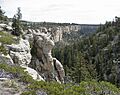
Quitchupah Canyon
-
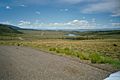
State Route 72 in Fishlake National Forest
-
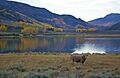
Fish Lake
-
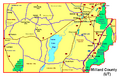
Map of Fishlake National Forest in Millard County


See also
- List of national forests of the United States
- Fish Lake
- Fishlake Scenic Byway
- Pando (tree)
- Quaking aspen
