
Poetry facts for kids
| Literature |
|---|
 |
| Major forms |
|
| Genres |
| Media |
|
| Techniques |
|
| History and lists |
|
| Discussion |
|
 Literature portal Literature portal |
Poetry is a special kind of writing that uses the sound and rhythm of language to create deep feelings and meanings. It's not just about what words literally mean. A single piece of poetry is called a poem, and the person who writes it is a poet.
Poets use many tools to make their poems unique. These tools are called poetic devices. They include things like rhyme schemes (patterns of rhyming words), rhythm (the musical flow of words), and alliteration (repeating sounds at the start of words). These devices help create a musical or artistic effect.
Poems often have a specific poetic structure. This structure can be strict or loose, traditional or new. It often depends on the language and culture. Many poems are written in verse, which means they are arranged in lines on a page. This is why "verse" is sometimes another word for poetry.
Poetry has a very long and interesting history all over the world. Some of the earliest poems were hunting songs in Africa. Ancient civilizations also had epic poems, like the Epic of Gilgamesh from Sumer, written thousands of years ago. Other early poems include folk songs, religious hymns, and famous stories like the Greek Iliad and Odyssey.
Ancient thinkers, like Aristotle, tried to understand what makes poetry special. They looked at how language was used in speeches, plays, and songs. Later, people focused on things like repetition, line patterns, and rhyme. They wanted to show how poetry is different from everyday writing, which is called prose.
Poets are like "makers" of language. They help languages grow and become more expressive. Today, poets often mix styles and ideas from different cultures. Many poets find inspiration from nature, feelings, or the works of other great poets.
Contents
- The History of Poetry: A Journey Through Time
- How Poems Are Built: Key Elements
- Common Poetic Forms
- Types of Poetry: Genres
- Narrative Poetry: Telling a Story
- Lyric Poetry: Expressing Feelings
- Epic Poetry: Tales of Heroes
- Satirical Poetry: Making a Point with Humor
- Elegy: Poems of Reflection
- Verse Fable: Lessons in Rhyme
- Dramatic Poetry: Poetry for the Stage
- Speculative Poetry: Beyond Reality
- Prose Poetry: Blending Forms
- Light Poetry: Fun and Clever
- Slam Poetry: Performance and Passion
- Performance Poetry: Art in Action
- Related Pages
- Images for kids
- See also
The History of Poetry: A Journey Through Time
Ancient Poems and Storytelling
Many experts believe that poetry existed even before people learned to write. It likely grew from folk songs and long stories passed down by word of mouth. These early poems helped people remember important tales and traditions.
The very first long poem we know of is the Epic of Gilgamesh. It was written about 4,500 years ago in Sumer, a land in what is now Iraq. This epic was carved onto clay tablets. Another ancient tablet from around 2000 BCE describes a special ceremony for good harvests. Some call it the world's oldest love poem.
Other famous ancient epics include the Greek Iliad and Odyssey, and the Roman Aeneid. India also has its own great epics, the Ramayana and the Mahabharata. These long poems helped ancient societies share their history and heroes.
Besides epics, people also wrote religious hymns, like the Rigveda from India and the Hebrew Psalms. China has the Classic of Poetry, a collection of folk songs and poems. The philosopher Confucius greatly valued this collection.
Poetry in Western Cultures
In ancient Western societies, thinkers like Aristotle tried to categorize poetry. He described three main types: epic, comic, and tragic. Later, people often saw poetry as different from prose, which is regular writing. They felt poetry focused more on beauty and emotion.
During the 18th and 19th centuries, poets from different cultures started to influence each other more. This was partly because of increased travel and trade. Many old poems were rediscovered and translated during this time.
Poetry Today: New Ideas and AI
In the 20th century, many poets began to explore new ways of writing. They questioned traditional rules about rhyme and rhythm. Some modern poets believe that poetry is simply what a poet creates with language. They don't always follow old structures.
Today, poetry continues to evolve. Poets often mix styles from different cultures and times. This makes it harder to put poetry into neat categories.
Interestingly, in the 2020s, artificial intelligence (AI) started creating poems. A study in 2024 found that some people even preferred AI-generated poems. They found them easier to understand and more rhythmic than poems by famous human poets. This shows how much poetry is still changing!
How Poems Are Built: Key Elements
The Music of Words: Rhythm and Meter
Poetry has a special musical quality, which comes from its prosody. Prosody is the study of how a poem's meter, rhythm, and sound patterns work. Rhythm is the actual sound and flow of a poem. Meter is the planned pattern of stressed and unstressed syllables in a line.
Understanding Poetic Rhythm
Poets create rhythm in different ways. Some languages rely on stressed syllables, like English. Others depend on the number of syllables, like Spanish. The way words are spoken, with rising and falling intonation, also affects rhythm.
In many poems, rhythm comes from arranging stresses or syllables into repeating patterns. These patterns are called feet. For example, in English, a common foot is the "iamb," which has an unstressed syllable followed by a stressed one (like "de-scribe").
Ancient Hebrew poetry, found in the Psalms, used a different kind of rhythm. It relied on parallelism, where lines or phrases mirrored each other in structure or meaning. This created a rhythm based on larger units of sound.
Exploring Poetic Meter
In Western poetry, meters are often named by the type of foot and how many feet are in a line. For example, "iambic pentameter" means five "iambs" per line. This system comes from ancient Greek poetry.
Here are some common types of poetic feet:
- Iamb: unstressed, then stressed (like "be-low")
- Trochee: stressed, then unstressed (like "hap-py")
- Dactyl: stressed, then two unstressed (like "mer-ri-ly")
- Anapaest: two unstressed, then stressed (like "un-der-stand")
- Spondee: two stressed syllables (like "day-dream")
Different poems use different meters. For example, William Shakespeare often wrote in iambic pentameter. Homer's epics used dactylic hexameter. Nursery rhymes often use anapestic tetrameter. Poets sometimes change the meter slightly to add emphasis or avoid boredom.
Sound Play: Rhyme, Alliteration, Assonance
Poets use sound patterns to make their poems more interesting and musical. These patterns can also add to the poem's meaning.
Rhyme is when words have the same or similar sounds, usually at the end of lines. For example, "cat" and "hat." Some languages, like Italian, have many rhyming words. English has fewer, which makes rhyming more challenging.
Alliteration is the repetition of the same sound at the beginning of words that are close together. For example, "slippery snakes slide silently." This was very important in old Germanic and Old English poems.
Assonance is the repetition of similar vowel sounds within words. For example, "The cat sat on the mat." It creates a subtle musical effect. Consonance is similar, but it's the repetition of consonant sounds.
Rhyming Schemes: Patterns of Sound
Many poems use rhyme schemes, which are set patterns of rhyme. These schemes help structure poems like ballads or sonnets. However, not all poetry uses rhyme. Ancient Greek and Latin poems, for instance, did not rhyme. Rhyme became popular in European poetry during the Middle Ages.
We describe rhyme schemes using letters. If the first and third lines rhyme (A) and the second and fourth lines rhyme (B), the scheme is ABAB. For example, a Petrarchan sonnet often uses an ABBA ABBA CDECDE pattern.
The Shape of a Poem: Form and Structure
Poetic form is how a poem is organized. Modern poetry often has more flexible forms than older poems. Many contemporary poets write in free verse, which doesn't follow strict rules. However, even free verse has its own subtle structures.
Lines and Stanzas: Building Blocks of Poems
Poems are usually divided into lines on a page. These lines can be based on meter, or they can highlight rhymes. Lines can also separate ideas or change the poem's mood.
Lines are often grouped into stanzas. Stanzas are named by how many lines they have:
- A couplet has two lines.
- A triplet has three lines.
- A quatrain has four lines.
These lines might rhyme or have a shared rhythm.
Some poems use verse paragraphs, which are like regular paragraphs but still have poetic rhythm and sound. In some poems, stanzas connect to each other, with patterns from one stanza repeating in the next.
Visual Presentation: How Poems Look
The way a poem looks on the page can also add meaning. Even before printing, beautiful handwriting was important in Arabic, Hebrew, and Chinese poetry.
With printing, poets gained more control over how their work appeared. Some modern poets carefully place lines or groups of lines on the page. This can create visual pauses, highlight contrasts, or simply make the poem look artistic. In extreme cases, this leads to concrete poetry, where the poem's shape itself forms an image.
Poetic Diction: The Language of Poetry
Poetic diction is about how language is used in a poem. It includes the sounds, meanings, and how they interact. Some poetic forms even have their own special grammar or vocabulary. The language can range from everyday speech to very formal and ornate words.
Poetic diction often uses rhetorical devices. Metaphor and simile are common examples. A simile compares two different things using "like" or "as" (e.g., "brave as a lion"). A metaphor says one thing is another (e.g., "He is a lion in battle"). Aristotle believed that mastering metaphor was very important for poets.
Poets also use vivid imagery to create strong pictures in the reader's mind. For example, haiku often uses striking images. Repeating phrases or lines, called refrains, can also add to a poem's mood or meaning.
Common Poetic Forms
Many cultures have developed specific poetic forms. These forms have rules for rhyme schemes, meter, and other elements. Here are some widely used forms:
Sonnet
The sonnet is a very popular form, especially since the Middle Ages. It has fourteen lines and follows a set rhyme scheme and logical structure. The Italian or Petrarchan sonnet often uses the rhyme scheme ABBA ABBA CDECDE. The English (or Shakespearean) sonnet uses ABAB CDCD EFEF GG.
Sonnets usually have a "turn" or shift in thought. This is where an idea might change, a question is answered, or the topic becomes more complex. In English sonnets, this turn often happens near the end.
Sonnets are often linked with deep feelings and relationships, thanks to poets like Petrarch and William Shakespeare. However, their flexible structure allows poets to write about many subjects, including politics, faith, and war.
Villanelle
A villanelle is a nineteen-line poem. It has five three-line stanzas (triplets) and ends with a four-line stanza (quatrain). This form is special because it uses two repeating lines, called refrains. The first and third lines of the first stanza become the alternating last lines of the following stanzas, and both appear at the end of the final quatrain. Poets like Dylan Thomas and W. H. Auden have used the villanelle.
Limerick
A limerick is a five-line poem that is usually funny. The first, second, and fifth lines rhyme and have a similar length (7-10 syllables). The third and fourth lines rhyme with each other and are shorter (5-7 syllables). Edward Lear is a famous writer of limericks.
Tanka
Tanka is an unrhymed Japanese poetic form. It has five lines with a total of 31 sounds (or morae), arranged in a 5-7-5-7-7 pattern. There's often a change in mood or topic between the first three lines and the last two. Tanka poems have been written since the 7th century and are still popular today.
Haiku
Haiku is another popular unrhymed Japanese form. It developed in the 17th century. A haiku has three lines with 17 sounds, usually in a 5-7-5 pattern. Traditionally, haiku include a "cutting word" (kireji) and a "season-word" (kigo). Matsuo Bashō is the most famous haiku poet. Here is an example:
| Japanese | Romanji | English |
|---|---|---|
|
|
|
Ode
Odes were first created by ancient Greek and Latin poets. An ode usually has three parts: a strophe, an antistrophe, and an epode. The strophe and antistrophe have similar structures, while the epode has a different one. Odes use formal language and often discuss serious topics. They explore a subject from different angles, sometimes resolving a conflict.
Ghazal
The ghazal is a poetic form common in Arabic, Persian, and Urdu poetry. In its classic form, it has 5 to 15 rhyming couplets (two-line stanzas). These couplets share a repeating phrase (refrain) at the end of the second line. Each line also has the same meter and length. Ghazals often explore themes of deep love or spirituality. Poets like Rumi and Hafez are famous for their ghazals.
Types of Poetry: Genres
Besides specific forms, poetry is also grouped into different genres based on its subject, style, or other features.
Narrative Poetry: Telling a Story
Narrative poetry tells a story. This genre includes epic poetry, but "narrative poetry" often refers to shorter stories that focus on human experiences. It might be the oldest type of poetry. Many ancient stories, like Scottish ballads, were told through narrative poems to help people remember them. Famous narrative poets include Geoffrey Chaucer and Edgar Allan Poe.
Lyric Poetry: Expressing Feelings
Lyric poetry is different from narrative poetry because it doesn't tell a story. Instead, it expresses the poet's own feelings, thoughts, and observations. These poems are usually shorter, musical, and thoughtful. Poets like Hafez and John Donne are known for their lyric poetry.
Epic Poetry: Tales of Heroes
Epic poetry is a major type of narrative literature. These are very long poems about heroic or important events for a culture. They tell the life and adventures of a hero or a group of heroes. Famous examples include Homer's Iliad and Odyssey, and Virgil's Aeneid. Even in the 20th century, poets like Derek Walcott continued to write great epics.
Satirical Poetry: Making a Point with Humor
Poetry can be a powerful way to use satire. Satirical poetry uses humor, irony, or exaggeration to criticize people, ideas, or society. The ancient Romans had a strong tradition of satirical poetry, often for political reasons. John Dryden is a well-known English satirical poet.
Elegy: Poems of Reflection
An elegy is a sad or thoughtful poem. It often expresses mourning for someone who has passed away, or reflects on a general sorrow or mystery. Elegies are a type of lyric poetry. Poets like Thomas Gray and Alfred Tennyson wrote famous elegies.
Verse Fable: Lessons in Rhyme
A fable is an old type of story, often told in verse. It features animals or objects that act like humans. These stories always teach a moral lesson. Aesop's Fables are a classic example, retold in verse many times. Jean de La Fontaine is another famous verse fabulist.
Dramatic Poetry: Poetry for the Stage
Dramatic poetry is drama written in verse to be spoken or sung. It appears in many cultures. Ancient Greek tragedies were written in verse. Japanese Noh plays are also a form of verse drama. In the 20th century, poets like T. S. Eliot revived dramatic poetry.
Speculative Poetry: Beyond Reality
Speculative poetry explores themes that go "beyond reality." This can include science fiction ideas or weird and horrific themes, like in horror fiction. Edgar Allan Poe is sometimes called the "father of speculative poetry." He even wrote a "prose poem" called Eureka: A Prose Poem that predicted the Big Bang theory!
Prose Poetry: Blending Forms
Prose poetry is a mix of prose and poetry. It looks like prose but has the rhythm, imagery, and emotional depth of poetry. It can sometimes be hard to tell apart from a very short story. This form became popular in 19th-century France with poets like Charles Baudelaire.
Light Poetry: Fun and Clever
Light poetry is poetry that aims to be funny. These poems are usually short and often use word play, puns, and clever rhymes. While they are humorous, light poems can also make serious points in a subtle way. Famous light poets include Lewis Carroll and Ogden Nash.
Slam Poetry: Performance and Passion
Slam poetry started in 1986 in Chicago. It involves poets performing their work aloud before an audience. Slam poetry focuses on the sound of words, voice changes, and emotional delivery. It's often competitive, with poets performing in "poetry slam" contests.
Performance Poetry: Art in Action
Performance poetry is similar to slam poetry, as it's meant to be performed for an audience. This genre can combine poetry with other art forms like dance or music.
Related Pages
- Acrostic
- Sonnet
- Poet
- Free verse
- William Shakespeare
- William Wordsworth
- John Donne
- Homer
- Dante
- John Keats
- Shelley
- William Blake
- William Butler Yeats
- Rabindranath Tagore
Images for kids
-

An early Chinese book about poetics, discussing the Shijing (Classic of Poetry)
-
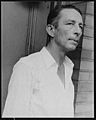
Robinson Jeffers
-
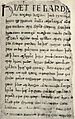
The Old English epic poem Beowulf is written in alliterative verse.
-
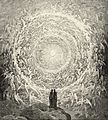
Divine Comedy: Dante and Beatrice see God as a point of light.
-
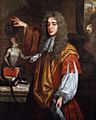
John Wilmot


.jpg)


.jpg)


See also
 In Spanish: Poesía para niños
