
American football facts for kids

Larry Fitzgerald (in blue) catches a pass while Cortland Finnegan (in red) plays defense at the 2009 Pro Bowl.
|
|
| Highest governing body | International Federation of American Football |
|---|---|
| Nicknames |
|
| First played | November 6, 1869 New Brunswick, New Jersey, U.S. (Princeton vs. Rutgers) |
| Characteristics | |
| Contact | Full |
| Team members | 11 (both teams may freely substitute players between downs) |
| Type |
|
| Equipment |
|
| Venue | Football field (rectangular: 120 yards long, 53+1⁄3 yards wide) |
| Glossary | Glossary of American football |
| Presence | |
| Country or region | Worldwide (most popular in North America) |
| Olympic | Demonstrated at the 1904 and 1932 Summer Olympics, flag football at the 2028 Summer Olympics |
| World Games | Invitational sport in 2005, 2017; official (flag football) in 2022, 2025 |
American football, often just called football in the United States and Canada, is an exciting team sport. Two teams of eleven players compete on a rectangular field with goalposts at each end. The team with the ball, called the offense, tries to move it down the field. They can do this by running with the oval-shaped ball or throwing it. The other team, the defense, tries to stop them and get the ball back.
The offense must gain at least ten yards in four tries, called downs. If they succeed, they get another four downs to keep going. If they fail, the other team gets the ball. Teams score points by getting the ball into the opponent's end zone for a touchdown or by kicking it through the goalposts for a field goal. The team with the most points at the end of the game wins. If the score is tied, the game goes into overtime.
American football started in the United States. It grew out of soccer and rugby. The very first game was played on November 6, 1869. Two college teams, Rutgers and Princeton, played with rules similar to soccer. Over time, rules changed to be more like rugby. A man named Walter Camp, known as the "Father of American Football," helped create many of the rules we know today. These included the snap, the line of scrimmage, and the idea of downs. American football is very similar to Canadian football. Both are types of gridiron football.
This sport is super popular in the United States. Professional and college football are the most watched. Many kids play high school and youth football too. The National Football League (NFL) has huge crowds at its games. Its championship game, the Super Bowl, is one of the most-watched sports events worldwide. While not as popular globally as soccer or basketball, American football is growing in places like Canada, Europe, Brazil, and Japan. A version of the game called flag football will be played at the 2028 Summer Olympics.
Contents
What's in a Name? Understanding "Football"
In the United States and Canada, people simply call American football "football." This name became official in 1876 when the rules changed from soccer-style to rugby-style. Even though it could have been called "rugby," the name "football" stuck. In other English-speaking countries, like the United Kingdom or Australia, where other types of football (like soccer) are popular, people use "gridiron" or "American football" to avoid confusion.
The Story of American Football
How the Game Began
American football grew from rugby and soccer. Rugby is a sport where two teams try to control a ball. They can kick it through goalposts or run it into the opponent's goal area to score.
The first American football game was on November 6, 1869. It was played between Rutgers and Princeton. Each team had 25 players. They used a round ball that could only be kicked or batted, not carried. Rutgers won that game 6–4. Over the next few years, different colleges played with their own rules.
In 1873, some colleges tried to create standard rules. But Harvard liked a rugby-style game where players could run with the ball. Harvard played against McGill University using both American and Canadian (rugby) rules. The Harvard players preferred the Canadian style. This included having only 11 players, running with the ball, tackling, and using an oval-shaped ball.
Walter Camp and Key Rule Changes

.jpg)
After seeing a rugby-style game, Princeton also adopted similar rules. Soon, Princeton, Harvard, Yale, and Columbia formed a group to play using rugby rules. Walter Camp, a Yale player, made big changes in 1880. He reduced teams from 15 to 11 players. He also introduced the snap, where the ball is passed from the ground to start a play. Before this, games started with a messy "scrum" like in rugby.
The snap led to a problem: teams could hold the ball forever to prevent opponents from scoring. To fix this, Camp proposed a new rule in 1882. Teams would get three downs (tries) to move the ball 5 yards. If they failed, the other team got the ball. This rule made American football very different from rugby. The field also got lines every 5 yards, making it look like a "gridiron." Other changes included reducing the field size and adjusting how points were scored.
Making the Game Safer
Early football was very rough. Dangerous plays, like the "flying wedge," caused many serious injuries and even deaths. In 1905, President Theodore Roosevelt threatened to ban the game if it wasn't made safer. In response, colleges met and formed the Intercollegiate Athletic Association of the United States. This group later became the National Collegiate Athletic Association (NCAA), which still governs college sports today.
To make the game safer and more exciting, new rules were added. The forward pass became legal in 1906, allowing players to throw the ball forward. The field was shortened, and the end zones were created. Teams were also given four downs instead of three to gain 10 yards. Penalties were introduced for dangerous plays, like roughing the passer.
Professional Football Begins
The first recorded instance of a player being paid to play American football was on November 12, 1892. Pudge Heffelfinger was paid $500 to play in a game. Over time, paying players became more common. In 1920, the National Football League (NFL) was formed. Its goal was to organize professional teams and create fair rules for players. By 1922, the NFL was the top professional football league in America.
Professional football grew in popularity, especially after the 1958 NFL Championship game. This game, known as the "Greatest Game Ever Played," was watched by millions on TV. By the mid-1960s, football was the most popular sport in the United States. The Super Bowl, the NFL's championship game, started in 1966. It became a huge event, bringing together the best teams from the NFL and the rival American Football League (AFL). The two leagues eventually merged in 1970.
College Football Today
College football has also changed over the years. The NCAA divided its top football teams into different levels. Today, the highest level is called the Football Bowl Subdivision (FBS). These teams often play in special postseason bowl games. Another level, the Football Championship Subdivision (FCS), has a playoff system to decide its champion.
In recent years, rules have changed to allow college players to earn money. They can now get paid for using their names, images, and likenesses (NIL). This was a big change for college sports.
Players and Their Roles

An American football game has two teams, each with 11 players on the field at a time. Teams can swap players between plays. This means teams often have special groups for offense, defense, and special teams. Players wear numbers from 0 to 99. While most football players are men, women can and do play in high school and college games.
Offensive Team Roles

The offense's job is to move the ball down the field and score a touchdown. Before each play, they line up in a specific way.
- Quarterback (QB): The leader of the offense. They take the snap from the center and then hand off the ball, throw it, or run with it.
- Running Back (RB): These players usually carry the ball on running plays. They can also catch passes.
- Fullback (FB): Often bigger than running backs, fullbacks mostly block for other players. They sometimes run the ball in short-yardage situations.
- Offensive Line (OL): These players block the defense to protect the ball carrier or the quarterback. The center snaps the ball to the quarterback. Guards and tackles line up on either side of the center.
- Wide Receiver (WR): These players line up near the sidelines. Their main job is to catch passes from the quarterback.
- Tight End (TE): Tight ends line up closer to the offensive line. They can block or catch passes.
Defensive Team Roles

The defense's job is to stop the offense from scoring. They do this by tackling the player with the ball or by causing turnovers. Turnovers happen when a defender catches a pass (an interception) or takes the ball from a ball-carrier (a forced fumble).
- Defensive Line (DL): These players try to stop running plays and pressure the quarterback. They include defensive ends and defensive tackles.
- Linebacker (LB): Linebackers line up behind the defensive line. They are often the leaders of the defense. They defend against runs and passes and can also pressure the quarterback.
- Defensive Backfield (Secondary): This group includes cornerbacks (CB) and safeties (S). Cornerbacks usually cover wide receivers. Safeties play farther back and help stop long passes and big running plays.
Special Teams Roles

Special teams handle all the kicking plays. One team tries to kick the ball, while the other tries to block or return it.
- Placekicker (K or PK): Kicks field goals and extra points.
- Punter (P): Kicks the ball far downfield to the other team on a punt play.
- Long Snapper (LS): Snaps the ball a long distance to the holder or punter.
- Holder (H): Catches the snap and holds the ball for the placekicker.
- Kickoff Returner (KR) and Punt Returner (PR): These players catch kickoffs and punts and try to run them back for a good gain.
How American Football Is Played
Scoring Points

The team with the most points wins the game. Here's how teams score:
- Touchdown (TD): Worth six points. A touchdown happens when a player carries the ball into the opponent's end zone, catches a pass in the end zone, or recovers a loose ball there.
- Extra Point (PAT): After a touchdown, the scoring team gets one more try. They can kick the ball through the goalposts for one extra point. This is usually successful.
- Two-Point Conversion: Instead of kicking, the team can try to get the ball into the end zone again from a short distance. If they succeed, it's worth two points. This is harder to do.
- Field Goal (FG): Worth three points. A player kicks the ball through the opponent's goalposts during regular play.
- Safety: Worth two points. A safety happens when an offensive player with the ball is tackled in their own end zone. The defense gets the points.
The Field and Equipment


Football games are played on a rectangular field. It is 120 yards long and about 53 yards wide. Lines called goal lines are 10 yards in from each end of the field. The areas behind the goal lines are called end zones.
The field has white markings to show distances. Yard lines are marked every 5 yards. Numbers showing the distance to the closest goal line are placed every ten yards. Goalposts stand at the center of each end line. They have a crossbar 10 feet high and two uprights.
The football itself is an oval-shaped leather ball. It's inflated with air and weighs about 14 to 15 ounces. Its exact size varies slightly depending on the level of play.
Game Length and Time
Professional and college football games last 60 minutes. They are divided into two halves of 30 minutes and four quarters of 15 minutes. High school games are 48 minutes long. There's a halftime break between the two halves.
Before the game, a coin toss decides which team starts with the ball. Games often last longer than 60 minutes because the clock stops for many reasons. There's a main game clock and a separate play clock. The play clock shows how much time the offense has to start a new play (usually 25 or 40 seconds).
Moving the Ball and Downs

The offense moves the ball by running or passing. A play starts with the snap, where the center passes the ball to the quarterback. The quarterback then hands it off, throws it, or runs. A play ends when the player with the ball is tackled, goes out of bounds, or a pass isn't caught. A forward pass can only be thrown once per play and from behind the line of scrimmage.
The offense gets four tries, called downs, to move the ball at least 10 yards. If they gain 10 yards, they get a "first down" and a new set of four tries. If they don't gain 10 yards, the other team gets the ball. On fourth down, teams often punt the ball away to make the other team start farther back. If they are close enough, they might try a field goal. A special group called the chain crew uses chains to measure if a team has gained enough yards for a first down.
Kicking Plays
There are different types of kicks. Kickoffs start the game and after scores. The ball is kicked from a tee. Punts are used on fourth down to give the ball to the other team far away. A fair catch is when a player catching a punt signals they won't run with the ball. This means they can't be tackled, but they also can't advance the ball.
Officials and Penalties


Officials make sure everyone follows the rules. They wear black-and-white striped shirts and carry a whistle. If a player breaks a rule, an official throws a yellow flag to signal a foul. There are usually seven officials on the field, each with different duties. For example, the referee oversees the game, and the umpire watches the players on the line.
The chain crew helps measure distances. They use two large sticks connected by a 10-yard chain to see if a team has earned a first down. A down marker shows what down it is. This system has been used for over 100 years and is very accurate.
Player Safety and Brain Health

Football is a full-contact sport, so injuries can happen. To help prevent injuries, players must wear special equipment. This includes a football helmet and shoulder pads. Many leagues also require thigh pads, knee pads, and mouthguards. Most injuries happen to legs and knees, but head injuries like concussions can also occur.
Repeated head impacts can lead to serious health issues later in life. Helmets help prevent more severe injuries like skull fractures. Many programs, like "Heads Up Football," teach coaches and players how to tackle safely. They also teach how to properly wear equipment to reduce the risk of head injuries. Studies show that limiting full-contact practices and teaching safe techniques are important for player safety.
Leagues and Tournaments

The National Football League (NFL) and the National Collegiate Athletic Association (NCAA) are the most popular football leagues in the United States. The NFL started in 1920 and is now the biggest and most popular sports league in the country. Its championship game, the Super Bowl, is a massive event watched by millions worldwide. The Super Bowl winner receives the Vince Lombardi Trophy.
College football is also very popular. The NCAA organizes college teams into different divisions. Division I is the highest level. College teams compete in postseason bowl games or playoff tournaments to determine champions. Many high school and youth football leagues also exist across the country.
Other Professional Leagues
While the NFL is the top league, other professional football leagues have been created. Some, like the American Football League (AFL), even merged with the NFL. Today, the United Football League (UFL) is another professional league that started after two other leagues merged in 2023.
Football Around the World

American football is played in many countries, but it's most popular in North America. Canada, Mexico, and Japan have strong football traditions. It's also growing in Europe, especially in Germany and the United Kingdom, and in Brazil.


The NFL even hosts games in London as part of its NFL International Series. This helps grow the sport's popularity outside the US. In Brazil, football has become one of the fastest-growing sports, with many people playing on beaches and watching NFL games on TV. Countries in the Arab world and China are also showing more interest in the sport.
Football in the Olympics
The International Federation of American Football (IFAF) helps govern American football worldwide. While the traditional game isn't an Olympic sport, a modified version called flag football will be played at the 2028 Summer Olympics. Flag football is a non-contact version, which makes it safer and more accessible for players around the globe.
How Popular Is American Football?
In the United States

American football is the most popular sport in the United States. Professional football has been ranked as the favorite sport by Americans since 1985. College football is also very popular. Many high school and college athletes play the sport.
The Super Bowl is the biggest single-day sporting event in the US. It's watched by over 100 million Americans and is one of the most-watched club sports events globally. The NFL is also the most valuable sports league in the world. Football is a big part of American culture. Super Bowl Sunday is almost like a national holiday, and Thanksgiving Day often features many football games.
In Other Countries
American football has a strong following in Canada. It's the third-most popular league there, after hockey and the Canadian Football League. In Mexico, football has a long history, starting in 1896. It's very popular in colleges and among many fans.
Japan was introduced to the sport in 1934. Today, there are hundreds of high school and college teams. The X-League is Japan's largest American football league. In Europe, especially in the United Kingdom and Germany, the sport has a growing number of fans and players. Brazil has also seen a huge increase in football's popularity, with many people playing and watching games.
Other Football Games
Canadian Football

Canadian football is very similar to American football. Both sports came from rugby. However, there are some key differences. In Canadian football, the field is longer and wider. Teams have 12 players instead of 11, and they only get three downs instead of four to gain 10 yards. Also, a unique scoring play called a "rouge" (worth one point) exists in Canadian football. The Canadian Football League (CFL) is the main professional league in Canada.
Different Ways to Play
There are many variations of American football:
- Indoor football: Played on smaller fields inside arenas. These leagues are often smaller than the NFL.
- Nine-man, eight-man, or six-man football: These versions are played by schools with fewer students. They have fewer players on the field and modified rules.
- Sprint football: Players must be under a certain weight limit.
- Flag football: A non-contact version where defenders pull a flag from the ball-carrier's waist instead of tackling them. It's popular because it's safer and open to more players, including women and girls.
- Touch football: Similar to flag football, but players are "downed" by being touched with one or two hands.
- Wheelchair football: An adapted version for people with physical disabilities. It uses touch rules but still involves physical blocks.
See Also
 In Spanish: Fútbol americano para niños
- American football strategy
- Comparison of American football and rugby union
- Comparison of American football and rugby league
- Fantasy football (gridiron)
- List of American football films
- Lists of American football players
- List of American football stadiums by capacity
- List of American and Canadian football leagues
- List of female gridiron football players
- Doping in American football
- Women's gridiron football
Images for kids
-
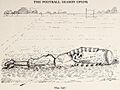
A 1908 cartoon showing the dangers of football.
-
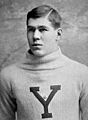
Pudge Heffelfinger, widely regarded as the first professional football player.

