
Artificial reef facts for kids

An artificial reef is a human-made underwater home built to help marine life flourish. People place these special structures on flat, sandy areas of the seafloor where there are few natural hiding places. These underwater projects do many amazing jobs. They help protect sandy beaches from coastal erosion, rebuild damaged ocean habitats, and stop illegal fishing nets from scraping the seabed. They also create exciting new spots for aquaculture, scuba diving, and even surfing.
People have built artificial reefs for thousands of years. Long ago, ancient sailors and soldiers built rocky barriers under the waves to block enemy ships or attract tasty fish. Today, people use many creative materials to build underwater neighborhoods. Some reefs are made by sinking retired oil rigs through the Rigs-to-Reefs program. Others are formed by scuttling ships or recycling clean concrete blocks, like giant hollow reef balls. Some modern scientists even make "green" reefs from natural materials like seashells and plant fibers to lower pollution and greenhouse gas emissions. When sunken objects rest safely on the ocean bottom, they turn into colorful underwater gardens teeming with life.
Contents
What Is an Artificial Reef and Why Do We Build Them?

An artificial reef is any solid object placed underwater by people to copy the role of a natural coral reef. In nature, rocky areas give sea creatures a place to anchor, hide, and hunt. A flat, sandy ocean floor can be quite empty because animals have nowhere to hide from hungry predators. When humans place large, heavy objects on the seabed, tiny floating creatures quickly move in. Tiny algae, sponges, and baby corals grab onto the hard surfaces and start to grow.
These artificial structures are important tools for fixing damaged marine environments. Natural habitats can suffer from severe storms, warming waters, or human accidents that cause habitat loss. By putting down clean, safe structures, marine biologists help restore damaged kelp forests and coral gardens. This teamwork brings back ocean biodiversity, which means having a wide variety of different living creatures sharing the same habitat.
Artificial reefs also help people who work on the water. Many fishing communities depend on healthy fish populations to earn a living and feed their families. Placing artificial reefs can boost fish stocks by giving baby fish safe nursery spaces. Reefs also act as physical fences on the seafloor. They stop heavy commercial fishing boats from dragging destructive nets across fragile benthic ecosystems on the sea bottom.
Protecting Coastlines and Sandy Beaches

Waves crashing against the shore can slowly wash away sand and soil. This washing away of land is called coastal erosion. To solve this problem, engineers design special underwater breakwaters. These submerged reefs make incoming waves break offshore. When the waves break early, they lose their rough energy before reaching the beach.
Some reefs are designed to trap moving sediment like drifting sand. Trapping sand helps keep beaches wide and protects coastal homes from flood damage. Engineers also build living shorelines using interlocking concrete shapes called oyster castles. Once placed in shallow water, wild oysters cover the castles and cement them together into strong natural barriers.
Storing Carbon to Help the Climate

Scientists are discovering that artificial reefs might help fight global climate change. The ocean absorbs huge amounts of carbon dioxide gas through natural systems called carbon sinks. Carbon that is captured and stored by coastal and marine life is called blue carbon. When marine plants, tiny plankton, and seaweed grow on artificial reefs, they take up dissolved carbon from the water.
In warm tropical waters, placing simple concrete breeze blocks near underwater seagrass meadows creates a wonderful natural partnership. The hollow blocks give shelter to schools of fish. In return, the waste produced by these fish fertilizes the surrounding seagrass beds. This extra plant food helps the seagrass grow faster and taller, trapping even more carbon in the seabed sediment.
Creating Waves for Surfing

Some artificial reefs are built especially for ocean sports like surfing. These are known as artificial surfing reefs or a multi-purpose reef. Surfers love ocean waves that break smoothly and evenly. To make these waves, builders place large mounds of rocks or giant fabric bags filled with sand beneath the water. When ocean swells hit these underwater mounds, they peel into rideable surfing waves.
Building a good surfing reef is a tricky engineering challenge. Early surfing projects did not always work as planned. At El Segundo, California, engineers built Chevron Reef using large synthetic bags filled with sand. Sadly, the rough ocean waves tore the bags apart, and workers had to remove the structure in 2008. Another famous project called the Boscombe Surf Reef was built in Dorset, England, but it struggled to produce ideal surfing waves. Scientists continue to study how ocean swells interact with different shapes to build better surfing reefs in the future.
Exciting Sites for Scuba Divers

Sunken structures create exciting playgrounds for scuba diving fans. Diving around sunken ships is an adventure sport known as wreck diving. When thousands of tourists visit delicate natural reefs, their swimming fins can accidentally bump into and break fragile corals. Setting up sunken dive sites draws people away from natural reefs, giving wild corals a chance to heal.
Artists have joined forces with scientists to make breathtaking underwater art galleries. In Mexico, artist Jason deCaires Taylor made hundreds of life-sized statues for the Museo Subacuático de Arte. He used a special pH-neutral marine cement that allows coral larvae to stick to the sculptures. Over time, the human statues grow fuzzy beards of coral and sea sponges, turning art into living marine neighborhoods.
How Ancient Peoples Built the First Reefs
Human-made reefs are not a modern invention. Ancient civilizations figured out long ago that dropping heavy objects into the water changed the sea. Historian Diodorus Siculus wrote that the Romans built an artificial reef during the First Punic War around 250 BC. They were fighting the soldiers of Carthage at the harbor of Lilybaeum. The Romans piled heavy stones and timbers in the shallow water channels to block enemy warships from sailing into the port.
Farther east, leaders of the ancient Persian Empire built underwater stone barriers across the mouth of the Tigris River. They built these rocky barriers to stop attacks from Arabian pirates. By making the water too shallow for pirate boats, they protected their river towns and trading posts from danger.
People also used human-made reefs to catch food. By the 1600s, coastal fishermen in Japan threw piles of rocks and rubble into coastal bays to grow edible kelp. In the 1830s, fishermen off the coast of South Carolina sank logs from old wooden cabins to attract sport fish. In the Philippines, native fishers built mounds of rocks and waterlogged wood inside shallow trenches called fish nests. These mounds attracted young fish like grouper fingerlings, which fishers could later catch for aquaculture fish farms.
How a Living Reef Community Grows

When a new structure lands on the seafloor, sea creatures transform it through predictable stages. First, ocean currents strike the tall walls of the object and bounce upward. This upward surge pushes nutrient-rich water toward the sunlight, creating a bloom of microscopic plankton. Small schooling fish like sardines and minnows swim in to gobble the plankton. Soon, speedy open-ocean predators like sharks and tuna arrive to hunt the smaller fish.
Next, creatures that need protection from the open sea find cracks and holes inside the structure. Bottom-dwelling fish like grouper, snapper, squirrelfish, triggerfish, and long eels claim different rooms inside the structure. Quick-striking hunters such as jacks and barracuda circle overhead, waiting for a meal.
Over several months, the hard surfaces become encrusted with life. Floating baby animals settle down and build hard skeletons on the walls. Tiny barnacles, soft tunicates, sea sponges, and hard corals spread across the surface. Within a few years, what began as plain concrete or steel becomes a thriving community of interacting sea creatures.
High-Tech Coral Nurseries

Scientists are using modern technology to speed up the growth of marine life on artificial reefs. One clever method is called an electrified reef. In this process, scientists run a very weak, safe electrical current through a metal frame on the seafloor. The electric charge causes natural minerals like limestone to pull out of the seawater and coat the steel bars. Floating baby corals, called coral planulae, love sticking to this fresh limestone layer and grow much faster than normal.
Engineers are also using 3D printing to manufacture custom-shaped reef blocks. Teams can print hollow clay tiles using non-toxic terracotta clay that matches the exact chemistry of the ocean. In places like Hong Kong, divers placed 3D-printed tiles on the seabed, resulting in high survival rates for transplanted coral fragments. Groups like the Coral Restoration Foundation grow endangered corals like elkhorn (Acropora palmata) and staghorn (Acropora cervicornis) on underwater tree frames before planting them onto reefs.
Environmental Challenges and Mistakes
Although artificial reefs can help nature, building them without careful planning can cause serious trouble. In past decades, people thought that dumping useless trash into the ocean was a cheap way to build fish habitats. We now know that dumping junk into the sea can damage fragile marine ecosystems.
The Mystery of Attraction Versus Production
One big question marine scientists study is called the attraction-production dilemma. When thousands of fish gather around a new artificial reef, did the reef really help the ocean grow more fish? Or did the reef simply lure fish away from nearby natural reefs?
Some biologists from the National Marine Fisheries Service point out that artificial reefs can act like a fish aggregating device. These devices pull fish, eggs, and larvae out of their natural homes and crowd them into one small spot. When millions of fish gather in one easy-to-find place, human fishing boats can scoop them up too quickly. This heavy pressure can lead to dangerous overfishing and reduce overall wild fish numbers.
The Disaster of Old Tire Reefs

One of the biggest mistakes in artificial reef history happened during the 1970s. In several places around the world, developers decided to dispose of millions of waste tires by bundling them together on the ocean floor. Off the coast of Fort Lauderdale, Florida, workers dumped about two million tires to create the Osborne Reef.
Sadly, the ocean is far stronger than human ropes and clips. Strong currents and powerful tropical storms snapped the nylon straps holding the tires together. Loose tires rolled across the ocean floor like giant rubber bowling balls. They smashed into delicate natural coral gardens, causing massive coral reef destruction. Countries like France and the United States have spent millions of dollars pulling old tires back out of the sea to stop further damage.
Ocean Pollution and Harmful Chemicals
Before sinking any ship or structure, workers must clean it thoroughly. Old industrial machines often contain hazardous chemicals like toxic PCBs, messy engine oil, peeling paint, lead, and asbestos. If these chemicals are left inside a sunken vessel, they can slowly leak into the water and poison the surrounding food chain.
Sunken iron ships can also change the local environment in unexpected ways. At Palmyra Atoll in the Pacific Ocean, iron leaking from an old shipwreck allowed a strange, aggressive anemone to spread rapidly. This pest smothered native corals, turning a colorful garden into a dark, dead zone known as a "black reef." Today, strict environmental rules require all oil, toxic chemicals, and loose plastics to be scrubbed away before anything is lowered into the sea.
Famous Artificial Reefs Around the World
Florida and the United States

The state of Florida is home to some of the world's most famous ship reefs. Near Key Largo, divers can visit the retired landing ship Spiegel Grove. This huge ship was scuttled in 2002 to create an offshore habitat for marine life and an underwater destination for recreational divers.
Another famous wreck is the aircraft carrier USS Oriskany, which was sunk off Pensacola in 2006. The ship was once the largest artificial reef ever constructed. In November 2026, the historic passenger ocean liner SS United States was scuttled off Destin and Fort Walton Beach, Florida. The huge liner became the new titleholder as the world's largest artificial reef, rising tall above the ocean floor.
In the state of Georgia, the local natural resources department built an underwater network called L Reef. Because the local seafloor is mostly flat sand, workers added retired subway cars and surplus M-60 tanks to give sea creatures a place to thrive. Off Delaware, transit workers sank 1,200 retired New York City subway cars known as the Redbirds to create Redbird Reef. The hollow train bodies quickly became encrusted with ocean life and filled with game fish.
Mexico's Sunken Art Museum
Off the coast of Cancun, Mexico, lies the famous Cancun Underwater Museum. Strong hurricanes had battered the local coral reefs, leaving them badly damaged. Artist Jason deCaires Taylor designed sculptures of everyday life, including a man sitting in an armchair and a replica of a classic car. These sculptures give baby corals a solid place to grow while steering curious tourists away from wild, recovering reefs.
Canada and Australia

In British Columbia, Canada, workers stripped and cleaned a retired passenger jetliner, a Boeing 737-200, and sank it to make a creative underwater home for cold-water marine animals. In Australia, the government has sunk several retired navy warships, such as HMAS Brisbane and HMAS Swan. Divers explore these massive sunken decks, which are now covered in bright sea anemones and swimming fishes.
Gibraltar
The European territory of Gibraltar built the Gibraltar Artificial Reef starting in the 1970s. The reef includes more than 30 scuttled vessels, including old wooden tugboats and metal barges. In 2013, workers placed more than 70 heavy concrete blocks with metal rods into the water. These heavy blocks stopped illegal fishing nets from scraping the seafloor, allowing crabs, conger eels, and fish to breed safely.
How Scientists Build Better Reefs Today
Scientists have learned valuable lessons from past mistakes. Today, builders use heavy, non-toxic materials that will stay firmly in place during powerful storms. Clean limestone rocks and marine-grade concrete are the top choices because their rough texture makes it easy for baby animals to grab on.
Modern artificial reefs are carefully designed to match the exact needs of local wildlife. Builders make sure the structures have tiny dark crevices for shrimp, medium hollows for schooling fish, and large cave-like rooms for giant groupers. When designed with care, artificial reefs give damaged ocean ecosystems a second chance to thrive.
See Also
- Artificial wave
- Cancún Underwater Museum
- Fish aggregating device
- Marine debris
- Marine habitat concrete
- Multi-purpose reef
- Scuttling
- Ship graveyard
- Sinking ships for wreck diving sites
Images for kids
-
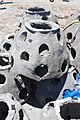
Reef balls designed for sea life to enter
-
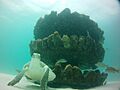
Snorkelers exploring a busy artificial reef
-
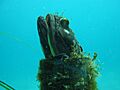
A fish peeking out of an underwater tube
-

An electrified reef frame growing new limestone
-
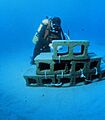
Concrete blocks ready to become an underwater home
-
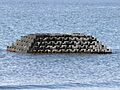
Oyster castles forming a living breakwater
-
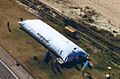
A giant sand container before placement
-
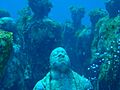
Statues resting on the sea floor
-
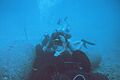
An experimental tire reef from the 1960s
-

Sailors loading recycled oyster shells to build new reefs
-

Old tires resting on the ocean floor
-
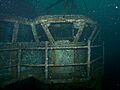
Corals and sponges growing on the sunken USS Oriskany
-
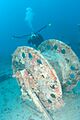
A diver exploring the deck of the USS Spiegel Grove
-

Retired subway cars waiting to be placed underwater


