
Evenki people facts for kids
| Эвэнкил | |
|---|---|

An Evenki family in the early 1900s
|
|
| Regions with significant populations | |
 Russia Russia |
39,226 |
 China China |
34,617 |
 Mongolia Mongolia |
537 |
| Languages | |
| Evenki, Yakut, Russian, Chinese | |
| Religion | |
| Shamanism, Eastern Orthodox Christianity, Tibetan Buddhism (in Buryatia) | |
| Related ethnic groups | |
| Evens, Oroqens, Oroch | |
| Evenki people | |||||||
|---|---|---|---|---|---|---|---|
| Chinese name | |||||||
| Simplified Chinese | 鄂温克族 | ||||||
| Traditional Chinese | 鄂溫克族 | ||||||
|
|||||||
| Alternative Chinese name | |||||||
| Chinese | 埃文基族 | ||||||
|
|||||||
| Mongolian name | |||||||
| Mongolian Cyrillic | Хамниган | ||||||
|
|||||||
| Russian name | |||||||
| Russian | Эвенки | ||||||
| Romanization | Evenki | ||||||
| Evenki name | |||||||
| Evenki | Эвэнкил / Evenkīl / ᠧᠸᠧᠩᠺᠢ | ||||||
The Evenki are a fascinating group of people from North Asia. They are also sometimes called Tungusy. The Evenki are known as one of the Indigenous peoples of the Russian North. In Russia, about 39,226 Evenki were counted in the 2021 census. In China, they are one of the 56 official ethnic groups, with about 34,617 people in the 2020 census. You can also find about 537 Evenki in Mongolia, where they are known as Khamnigan.
Contents
The Evenki People
Where Do the Evenki Come From?
The Evenki people have a long history in Siberia. Their original homeland is thought to be between Lake Baikal and the Amur River. Some historians believe they might be linked to the ancient Shiwei people. These people lived in the Greater Khingan Mountains between the 5th and 9th centuries.
The Evenki language is part of the Manchu-Tungusic language family. It is similar to the Even and Negidal languages. Around the year 1600, many Evenki in the Lena and Yenisey river areas were skilled reindeer herders. Other groups, like the Solons and Khamnigans, learned to breed horses from the Mongols. They also adopted the Mongolian deel, a traditional coat. The Solons were a nomadic group who moved along the Amur River.
How the Evenki Spread Out
The ancestors of the Evenki lived in the Baikal region of Southern Siberia for a very long time. This was even back in the Neolithic era, which was the Stone Age. Over time, different groups of people mixed together to form the Evenki we know today. Their culture shows ancient traditions, like living in cone-shaped tents and using birch-bark boats. From the Lake Baikal area, the Evenki spread across a huge part of Siberia. They moved towards the Amur River, the Sea of Okhotsk, the Lena River, and the Yenisei River.
Meeting the Russians
In the 1600s, the Russian Empire began to interact with the Evenki. Russian Cossacks, who were like guards for the government, started collecting a fur tax from Siberian tribes. To make sure the tax was paid, they sometimes held important Evenki leaders. The Evenki usually tried to have peaceful relationships with the Russians.
The demand for furs led many Evenki to move further east, even to Sakhalin island. Later, in the 1800s, some Evenki groups moved south into Mongolia and Manchuria. Today, Evenki communities still live in these areas. Over time, Russian influence, especially during the Soviet era, changed the Evenki way of life. Policies like collectivization (where people had to work together on large farms) and being made to live in settled communities instead of moving around, affected their traditions and language. The education system also focused on Russian culture.
Evenki in Different Countries
Evenki in Russia

The Evenki were once called tungus by the Russians. However, in 1931, the name Evenki became their official name. Some Evenki groups have their own names, like orochen, which means 'a rearer of reindeer'.
The Evenki live across a huge area of the Siberian taiga. This land stretches from the Ob River in the west to the Okhotsk Sea in the east. It also goes from the Arctic Ocean in the north to Manchuria and Sakhalin in the south. This vast territory covers about 2,500,000 square kilometers.
The Evenki live in many different regions of Russia. The largest number, over 24,000, live in the Sakha Republic. The Evenk Autonomous Okrug is a special area for the Evenki people.
The Evenki language is the biggest language in the northern group of Manchu-Tungus languages. This group also includes the Even and Negidal languages. Many Evenki in Russia still follow their traditional way of life. This includes raising reindeer, fishing, and hunting.
| Administrative unit | Evenki population (2021 census) |
|---|---|
| Sakha (Yakutia) Republic | 24,334 |
| Krasnoyarsk Krai (including Evenkia) | 3,612 |
| Khabarovsk Krai | 3,709 |
| Amur Oblast | 1,405 |
| Republic of Buryatia | 2,995 |
| Irkutsk Oblast | 1,144 |
| Zabaykalsky Krai | 957 |
Evenki in China


In China, there were 34,617 Evenki in the 2020 census. Most of them, about 88.8%, live in the Hulunbuir region. This area is in the north of the Inner Mongolia Province, near the city of Hailar. The Ewenki Autonomous Banner is also located here. About 3,000 Evenki also live in the nearby Heilongjiang Province.
The Manchu Emperor Hong Taiji took control of the Evenki in 1640. After this, the Evenki became part of the Eight Banners, which was a military and administrative system. In 1763, the Qing dynasty government moved some Evenki families to help protect the empire's western border. Today, the Evenki in China are often settled farmers and herders.
Evenki in Ukraine
According to the 2001 census, there were 48 Evenki living in Ukraine. Most of them speak Russian. A few speak Evenki or Ukrainian.
Traditional Evenki Life
Traditionally, the Evenki were a mix of herders and hunter-gatherers. They used their domesticated reindeer for milk and for carrying things. They also hunted other large animals for food. Today, some Evenki still raise reindeer and hunt, while others raise horses and cattle or farm.
The Evenki mostly lived in the taiga, which is a type of forest. They lived in cone-shaped tents made from birch bark or reindeer skin. These coverings were tied to birch poles. When they moved, they would leave the poles and only carry the coverings. In winter, when they hunted, camps usually had one or two tents. In spring, there could be up to 10 families together.
Reindeer Herding and Hunting
The Evenki were very skilled at riding their domesticated reindeer. This allowed them to travel across huge areas of the eastern taiga. They used a special saddle placed on the reindeer's shoulders. This helped to make it easier for the animal. Evenki used their reindeer as pack animals and often walked long distances. They used snowshoes or skis to move through the snow. They hunted wild reindeer for food, but they kept their domesticated reindeer for milk and transport.
Most Evenki families had around 25 reindeer. They bred them mainly for transportation. In early spring, winter camps would move to places where calves could be born safely. Several families would keep their animals together during the summer. They made sure to fence off special areas to protect the newborn calves.
Evenki Clothing

Evenki clothing was designed for the cold, dry climate of Central Siberia. It was also good for their mobile lifestyle. They wore short garments of soft reindeer or elk skin around their hips. They also wore leggings and moccasins, or long boots that reached their thighs. They had a deerskin coat that was open in the front. This was covered with an apron-like cloth. Some Evenki decorated their clothes with fringes or embroidery. Facial tattooing was also common.
Hunting Practices

The Evenki hunted animals like elk, wild reindeer, and birds. Those living near the Okhotsk Sea also hunted seals. Before they had guns, Evenki used steel bows and arrows. Hunters always carried a "pike," which was a large knife on a long handle. They used it like an axe or a spear for hunting bears.
The Evenki have deep respect for animals and nature. They believe it is wrong to hurt an animal. A wounded animal must be quickly put out of its suffering. They also believe it is wrong to spill an animal's blood or to harm animals that seek help from people.
Evenki Beliefs
Respect for Nature
Before they met the Russians, the Evenki believed that everything in nature had a spirit. This is called animism. Many Evenki have also adopted Tibetan Buddhism.
The Evenki spend much of their lives very close to nature. Because of this, they have a strong "ecological ethic." This means they feel a deep responsibility towards nature and its spirits. They believe that nature is a living being. Many Evenki who still live as reindeer herders in the taiga share this belief. This idea of nature being alive is a key part of their traditional worldview. Even if they change to new ways of living, this respect for nature often stays with them.
Shamanism and Spirituality
Although some Evenki became Christian in the 1700s, they still keep many of their old beliefs. Shamanism is especially important. Christian traditions were often just formal ceremonies when a priest visited.
Evenki religious beliefs are very old. They include ideas like all natural things having spirits. They also believe in an upper, middle, and lower world. They believe in a soul called omi and have some totemistic ideas. There were also magical rituals for hunting and protecting herds. Later, shamans led these rituals. Shamans helped develop the idea of spirit-masters.
There are stories about Evenki shamans, like Dula'r, who lived in Inner Mongolia, China. She described her training and the challenges she faced. Another shaman, Olga Kudrina, lived among the Reindeer Evenki in northern Inner Mongolia.
Notable Evenki
- Bombogor (died 1640), a leader of the Evenki people
- Olga Kudrina (c. 1890–1944), a shaman
- Semyon Nomokonov (1900–1973), a sniper during World War II
- Nikita Sakharov (1915–1945), a poet and writer
- Alitet Nemtushkin (1939–2006), a poet
- Maria Fedotova-Nulgynet (born 1946), a poet and children's writer
- Galina Varlamova (1951–2019), a writer, philologist, and folklorist
- Ureltu (born 1952), a writer
- D. O. Chaoke (born 1958), a linguist
Gallery
-
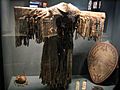
Shaman costume
-
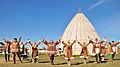
Folk ensemble Osiktakan
-
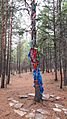
Spirit tree in Genhe, China
-

Evenki handiwork
-
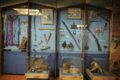
Evenki tools
-
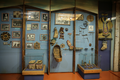
Evenki tools


See also
 In Spanish: Etnia evenki para niños
- Hamnigan (Hamnigan Mongols)
- Bokon / Yungyuele / Nyukzha
