
United Nations High Commissioner for Refugees facts for kids
Quick facts for kids  Office of the United Nations High Commissioner for Refugees |
|
|---|---|
 |
|
| Org type | United Nations Programme |
| Status | Nonprofit |
| Headquarters | Geneva, Switzerland |
The United Nations High Commissioner for Refugees (UNHCR) is a special agency of the United Nations. Its main job is to help and protect refugees, people forced to leave their homes, and those without a country. UNHCR also helps these people return home safely, settle in a new place, or move to another country. The agency's main office is in Geneva, Switzerland. As of December 2023, over 20,000 staff members work in 136 countries around the world.
Contents
How it Started
The idea to help refugees started a long time ago. In 1920, an organization called the League of Nations was created to help keep peace worldwide. The next year, it set up an office to help refugees. A Norwegian scientist named Fridtjof Nansen was the first person to lead this effort.
After Nansen passed away in 1930, his work continued through another office. Later, as many people fled from Nazi Germany, the League of Nations appointed James Grover McDonald to help them. He managed to help over 80,000 refugees find new homes. However, McDonald resigned in 1935 because the League did not do enough to stop the unfair treatment of Jewish people. His office eventually closed in 1946.
History of UNHCR's Work
Helping Europe After World War II

After World War II, many people in Europe had lost their homes and needed help. The United Nations was formed, and it created the United Nations Relief and Rehabilitation Administration (UNRRA) in 1944. This group helped millions of displaced people. Later, the International Refugee Organization (IRO) took over this important work in 1946.
By the late 1940s, the UN decided a new, dedicated group was needed for refugees. After many discussions, the Office of the United Nations High Commissioner for Refugees (UNHCR) was officially created in December 1949. At first, it was only meant to last for three years, starting in January 1951. Many countries weren't sure if a permanent refugee organization was needed.
UNHCR's main goal was to offer protection and find lasting solutions for refugees. This work was meant to be fair and focused only on helping people, not on politics. Over time, the UN General Assembly expanded UNHCR's responsibilities. In 1951, countries also agreed on the 1951 Convention relating to the Status of Refugees. This important agreement defined who a refugee is and how they should be treated. It became the main guide for UNHCR's work, which first focused on Europeans affected by the war.
Expanding Help Around the World
Soon, it became clear that refugee problems were happening everywhere, not just in Europe. In 1956, UNHCR helped people during the Hungarian Revolution of 1956. A year later, it helped Chinese refugees in Hong Kong and Algerian refugees in Morocco and Tunisia. These events showed that UNHCR needed to help people all over the world.
In the 1960s, many African countries became independent, leading to large movements of people. This was a big challenge for UNHCR. Unlike in Europe, it was harder to find lasting solutions in Africa. Many refugees found new problems in their new countries. By the end of the 1960s, most of UNHCR's budget was used for operations in Africa. This showed a big shift from its original focus on Europe.
In 1967, a new agreement called the Protocol Relating to the Status of Refugees was adopted. This removed the old limits that only allowed UNHCR to help Europeans displaced after World War II. This change allowed UNHCR to help people in new crises everywhere, especially in developing countries.
Throughout the 1970s, UNHCR's work spread even further. It helped people fleeing from East Pakistan to India before Bangladesh was formed. It also helped millions escaping the Vietnam War in Laos, Cambodia, and Vietnam.
The 1980s brought new difficulties. Many countries were less willing to accept refugees because so many people needed help. Often, these refugees were fleeing conflicts within their own countries, not wars between nations. Even small conflicts could force many people to leave their homes. Finding lasting solutions became very hard. UNHCR started to focus more on helping people inside refugee camps, often in difficult places.
After the Cold War ended, conflicts between different groups continued. The media also started to play a bigger role in showing these crises. For example, the 1994 Rwandan Genocide caused a huge refugee crisis, showing how difficult it was for UNHCR to help everyone. UNHCR also had to work against strict refugee rules in wealthier countries.
By 2015, UNHCR had assisted over 50 million refugees worldwide. As of June 2020, UNHCR was helping over 20 million refugees. Its yearly budget grew from $300,000 in 1951 to $8.6 billion in 2019. Most of this money comes from donations by countries, with the United States, the European Union, and Germany being the biggest donors. UNHCR's work includes providing safety, shelter, healthcare, and emergency relief. It also helps with resettlement and works to create policies that support refugees.
A study in 2021 found that UNHCR has always worked to help refugees fairly, no matter where they are. The organization has not shown favoritism towards countries that donate more money when deciding where to send help.
Funding Challenges in 2025
In June 2025, UNHCR announced that it had to reduce its staff and overall costs. This was because there was a big drop in donations to help people in need. The agency explained that it closed or made some offices smaller. It also cut nearly half of its senior positions at its main office in Geneva and other regional offices. These changes affected important programs like cash assistance, health, education, and water and sanitation for refugees.
Earlier, internal reports showed plans to cut overall costs by 30% and reduce senior jobs. According to news reports, UNHCR received over $2 billion from the United States in 2024. This was about 40% of all its donations. However, major reductions in donations in 2025 severely limited UNHCR's budget. In July 2025, UNHCR warned that up to 11.6 million people forced from their homes might lose direct help because of this funding shortage. By mid-year, only 23% of the $10.6 billion needed had been received.
What UNHCR Does

UNHCR was created on December 14, 1950. It took over from an earlier group called the United Nations Relief and Rehabilitation Administration. UNHCR's job is to lead and coordinate international efforts to protect refugees and solve their problems worldwide. (Note: Palestinian refugees are helped by a different agency called UNRWA.)
UNHCR's main goal is to keep refugees safe and protect their rights. It works to make sure everyone can ask for asylum and find a safe place in another country. People then have choices: they can return home voluntarily, settle in the new country, or move to a third country.
Over time, UNHCR's role has grown. It now also helps other people "of concern." This includes internally displaced persons (IDPs). These are people who have had to leave their homes but are still inside their own country. If they left their country, they would be considered refugees. UNHCR has major operations in places like Lebanon, South Sudan, Iraq, and Kenya. Here, it helps IDPs and refugees in camps and cities.
UNHCR keeps a special database called ProGres. It was started during the Kosovo War in the 1990s. Today, this database holds information on over 11 million refugees. This is about 11% of all displaced people globally. The database includes fingerprints and iris scans. This helps UNHCR make sure aid goes to the right people. For example, when this system was used in Kenyan refugee camps in 2013, the World Food Programme saved $1.4 million by preventing waste and fraud.
To do its work, UNHCR is active in countries where refugees need help and in countries that provide donations. It also organizes meetings to discuss important issues for the international refugee community.
Helping Palestinian Refugees

Palestinian refugees in areas like Jordan, Lebanon, Syria, the Gaza Strip, and the West Bank are helped by a different agency. This is the United Nations Relief and Works Agency for Palestine Refugees in the Near East (UNRWA). Unlike UNHCR, UNRWA does not have the job of helping Palestinian refugees resettle permanently.
Raising Awareness for Refugees
UNHCR has started new programs to support refugees and make more people aware of their challenges. These programs are part of bigger goals set by the United Nations.
UNHCR works in different parts of the world to teach people about the refugee crisis. It also highlights what refugees need.
For example, since 2009, UNHCR noticed many migrants and refugees in the Caribbean. This crisis was not widely known. Many refugees tried to seek asylum in the United States without going through the proper UN process. They often ended up stuck in the Caribbean. However, some countries there did not have laws to protect asylum seekers. In response, UNHCR held talks in Costa Rica in 2009. It aimed to improve protections for refugees and stop them from being treated as illegal migrants. A refugee applies through the UN, while an asylum seeker applies within the country they want to enter. This is why some countries consider people illegal if they enter without proper application.
In 2007, UNHCR offices in Canada launched a big media campaign. It aimed to show the difficult lives of refugees. The campaign used emotional stories to help people understand the crisis. It hoped to get more attention from educated professionals who might not know much about refugee issues.
In Ireland, UNHCR uses various ways to inform the public. It works with the media and holds public events. One example is the annual UNHCR/SARI Fair play Football Cup.
UNHCR also played a big role in helping Syrian refugees in Lebanon. When the Lebanese government struggled with the large number of refugees, UNHCR stepped in. It helped ease their displacement by offering food and healthcare. It also helped register refugees so they would not be seen as illegal by the Lebanese government. Many Syrian refugees also found help in Jordan.
Working with Other UN Groups
UNHCR is part of the United Nations General Assembly and the UN Economic and Social Council. It works closely with many other UN programs and agencies. This cooperation helps UNHCR protect refugee rights effectively.
On September 19, 2016, the UN General Assembly held a special summit for refugees and migrants. The goal was to find better, more coordinated ways to handle large movements of people. Leaders from other UN offices, like the Office of the United Nations High Commissioner for Human Rights and the World Bank, attended. The summit discussed why people migrate and why global cooperation is essential. From this summit, a set of principles was created. These principles encourage countries to focus on human rights, fairness, rescue, access to justice, and education for migrants and refugees. This led to the creation of the Global Compact for Migration.
On September 28, 2016, UNHCR teamed up with the UN Food and Agriculture Organization (FAO) in Tehran. They worked on a plan to help Afghan refugees. FAO offered support for farming, fishing, and nutrition projects in Iranian schools.
FAO and UNHCR are committed to helping refugees find ways to earn a living. This reduces their need for humanitarian aid. They launched a joint plan for South Sudan. This plan helps both refugees (70%) and local communities (30%) in areas hosting refugees.
UNHCR is also a member of the United Nations Development Group. This group works on projects for sustainable development around the world.
Being Open About Aid
UNHCR shares information about its aid work regularly. It uses a system called the International Aid Transparency Initiative (IATI). It started publishing data in 2018, with information going back to 2016. In 2024, an assessment found that UNHCR was "good" at being open about its aid.
Awards for Its Work
Since 1954, the Nansen Refugee Award has been given every year. It honors a person or group for outstanding service to refugees, displaced people, or stateless people.
UNHCR itself has received important awards for its work. It was given the Nobel Peace Prize twice, in 1954 and 1981. It also received a Prince of Asturias Award for International Cooperation in 1991 and the Indira Gandhi Prize in 2015.
People UNHCR Helps
UNHCR helps many different groups of people. These include refugees and asylum seekers, people living in refugee-like conditions, and those displaced within their own country (IDPs). It also helps people who do not have a nationality (stateless persons) and other groups needing special care.
In June 2015, UNHCR reported that an "unprecedented" 57.9 million people needed its help. This was more than double the number from 2007. This big increase was mainly due to the Syrian Civil War. Other conflicts in countries like Afghanistan, Burundi, Democratic Republic of the Congo, Mali, Somalia, South Sudan, and Ukraine also added to the problem.
At the end of 2024, UNHCR estimated that 123.2 million people worldwide were forced from their homes. This happened because of unfair treatment, conflicts, violence, human rights abuses, or other major problems. While the number of displaced people has almost doubled in the last ten years, the growth slowed down in the second half of 2024. In 2024, more refugees and internally displaced people found solutions, with 1.6 million refugees returning home. This was the highest number in over twenty years.
The 2023 Global Trends report stated that 43.4 million refugees were under UNHCR's care. Most of these refugees (73%) came from just five countries: Afghanistan, Syria, Sudan, Ukraine, and Venezuela.

In 2015, UNHCR also shared data on forced migration by region:
- Over 16.7 million people in the Middle East and North Africa.
- Over 9.6 million people in the Asia and Pacific region.
- Over 8.4 million people in East and the Horn of Africa.
- Over 7.7 million people in the Americas.
- Over 7.5 million people in Europe.
- Over 3.5 million people in Central Africa–Great Lakes.
- Over 2.7 million people in Western Africa.
- Over 1.3 million people in Southern Africa.
UNHCR Staff and Leaders
As of 2023, UNHCR had more than 18,879 staff members working in 138 countries.
| High Commissioner of the UNHCR | |
|---|---|
 |
|
_(cropped).jpg) |
|
| High Commissioner for Refugees | |
| Reports to | UN General Assembly |
| Appointer | UN General Assembly |
| Term length | 5 years |
| Formation | 1 January 1951 |
| First holder | Gerrit Jan van Heuven Goedhart |
Script error: No such module "Check for conflicting parameters".
High Commissioners
The UN General Assembly chooses High Commissioners every five years. These leaders are supported by an "Executive Committee." They must report yearly to the UN General Assembly and follow its directions. The current High Commissioner is Filippo Grandi, who started his role on January 1, 2016. Before UNHCR was created, Fridtjof Nansen was the League of Nations' High Commissioner for Refugees. Here are the people who have held the position:
| No. | Portrait | High Commissioner | Took office | Left office | Time in office | Nationality |
|---|---|---|---|---|---|---|
| 0 | Fridtjof Nansen (1861–1930) League of Nations High Commissioner |
1 September 1921 | 1927 | 4–5 years |  Norway Norway |
|
| 1 | Gerrit Jan van Heuven Goedhart (1901–1956) |
1 January 1951 | 8 July 1956 | 5 years, 189 days |  Netherlands Netherlands |
|
| 2 | August R. Lindt (1905–2000) |
8 July 1956 | 3 November 1960 | 4 years, 118 days |  Switzerland Switzerland |
|
| 3 | Félix Schnyder (1910–1992) |
3 November 1960 | 31 December 1965 | 5 years, 58 days | Switzerland |
|
| 4 | Sadruddin Aga Khan (1933–2003) |
1 January 1966 | 31 December 1977 | 11 years, 364 days |  Iran Iran |
|
| 5 | Poul Hartling (1914–2000) |
1 January 1978 | 31 December 1985 | 7 years, 364 days |  Denmark Denmark |
|
| 6 | Jean-Pierre Hocké (1938–2021) |
1 January 1986 | 31 December 1989 | 3 years, 364 days | Switzerland |
|
| 7 | Thorvald Stoltenberg (1931–2018) |
1 January 1990 | 3 November 1990 | 306 days | Norway |
|
| 8 | Sadako Ogata (1927–2019) |
3 November 1990 | 31 December 2000 | 10 years, 59 days |  Japan Japan |
|
| 9 | Ruud Lubbers (1939–2018) (Resigned) |
1 January 2001 | 20 February 2005 | 4 years, 50 days | Netherlands |
|
| – | Wendy Chamberlin (born 1948) Acting |
24 February 2005 | 2 June 2005 | 98 days |  United States United States |
|
| 10 | António Guterres (born 1949) |
2 June 2005 | 31 December 2015 | 10 years, 212 days |  Portugal Portugal |
|
| 11 | Filippo Grandi (born 1957) |
1 January 2016 | Incumbent | 10 years, 287 days |  Italy Italy |


.jpg)

_by_Erling_Mandelmann.jpg)

.jpg)


.jpg)


Special Envoy
After 10 years as a Goodwill Ambassador, Angelina Jolie became a Special Envoy to the High Commissioner in 2012. In this role, she represents UNHCR and High Commissioner Filippo Grandi. She works to find lasting solutions for people displaced by big crises, like those in Afghanistan and Somalia. A UNHCR spokesman said this was a special role for her important work. In December 2022, Jolie stepped down from her role as Special Envoy.
Goodwill Ambassadors
UNHCR also has many UNHCR Goodwill Ambassadors. These are famous public figures who use their influence to speak up for refugees. Some past and present ambassadors include Barbara Hendricks, Angelina Jolie, Khaled Hosseini, Adel Emam, and Yao Chen.
Images for kids
-
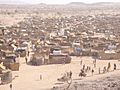
Refugee camp in Darfur (Chad)
-
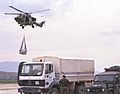
A helicopter arrives at a refugee facility in Macedonia with an underslung load of aid.
-
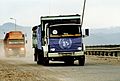
Trucks loaded with supplies drive across the border from Turkey into Iraq to take part in Operation Provide Comfort, a multinational effort to aid Kurdish refugees.
-
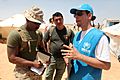
An UNHCR-officer talks with a Marine during Exercise Eager Lion 12.
-
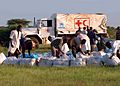
Workers from the UNHCR, and CARE International gather bundles of shelters and mosquito nets in Kenya.
-
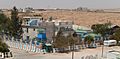
Heavily fortified UNHCR offices in Somaliland
-
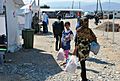
A UNHCR refugee camp at Baharka, Iraq
-
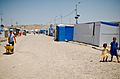
UNHCR Camp, Kurdistan (Northern Iraq) June 2014
-
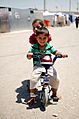
UNHCR Camp, Kurdistan (Northern Iraq) June 2014
-
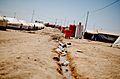
Inside the refugee camps of Northern Iraq


,_Hargeisa,_UNHCR-compound.JPG)

.jpg)
.jpg)
.jpg)
See also
 In Spanish: Alto Comisionado de las Naciones Unidas para los Refugiados para niños
- Against All Odds (video game)
- Albert Einstein German Academic Refugee Initiative Fund, a scholarship program for refugees administered by UNHCR
- Dadaab
- Nansen International Office for Refugees
- United Nations High Commissioner for Refugees Representation in Cyprus
- United Nations High Commissioner for Refugees Representation in India
- United Nations Relief and Works Agency for Palestine Refugees in the Near East
- UniRef
