
Egyptian faience facts for kids


Egyptian faience is a shiny, glass-like material made in Ancient Egypt. People in ancient times used it to create many colorful things. They made beads, bright jewelry, small statues, and decorative wall tiles. The ancient craftspeople did not use regular pottery clay to make it. Instead, they mixed crushed quartz sand with minerals and salts. When heated inside a hot oven called a kiln, it formed a shiny surface. This baking process is called sintering. During sintering, the surface melted into a shiny coating through vitreous change. The mineral coating turned into a smooth, glassy glaze. The glaze had an isotropic quality that shone brightly under the sun.
In the Ancient Egyptian language, the people called this special material tjehenet. This ancient word meant "the gleaming" or "the dazzling". Today, scientists and archaeologists call it sintered quartz, glazed frit, or glazed composition. It is very different from the blue paint powder known as Egyptian blue. Although both materials are bright blue, they were made differently.
True faience is actually a type of tin-glazed ceramic made in Europe. European pottery was made from wet clay and baked in ovens. Egyptian faience is very different from regular Ancient Egyptian pottery. Most Egyptian pots were shaped from river mud and clay. Egyptian faience is also related to Islamic stonepaste, which was invented later in the Middle East. Faience has many tiny holes, making it more porous than true glass. Artisans could press the wet paste into clay molds. They used it to make cups, bowls, and shiny pendants. Faience contains silica and lime, which are the main ingredients of glass. Yet, experts usually study it alongside pottery. Its shapes and artistic styles match ancient pots more closely than ancient Egyptian glass.
Faience was loved by kings, queens, and everyday people across Egypt. Ordinary workers wore bright blue beads to bring good luck. Pharaohs decorated their royal temples and stone palaces with shiny tiles. Priests placed magical charms called scarabs inside royal tombs. Many tombs contained small servant statues called ushabti figures. Faience jewelry felt cool and smooth against warm skin. Artists even sculpted cute blue hippopotamus figures to place in tombs. Most faience items were quite small, measuring under 20 cm (7.9 in) long. However, the Victoria and Albert Museum in London owns a huge faience sceptre measuring 215.9-centimetre (85.0 in) long.
Contents
What Does the Term Egyptian Faience Mean?

The name "faience" comes from the town of Faenza in northern Italy. During the late Middle Ages, Italian potters became famous for making maiolica pottery. Maiolica is a special type of tin-glazed pottery. When early European explorers visited Egypt, they saw ancient blue objects. The shiny glaze reminded them of the ceramics from Faenza. Therefore, they decided to call the Egyptian items faience as well.
This name can be quite confusing for modern students and scientists. Egyptian faience contains very little clay, unlike Italian pottery. Because of this, modern museums often prefer more accurate terms. The famous British Museum in London describes these objects as "glazed composition". Their experts explain that the core is made of crushed quartz grains. These grains melted slightly and fused together with lime and alkali. An alkali is a soluble salt that helps sand melt at lower temperatures. A melting helper like this is known in science as a flux.
Egyptian faience was very popular throughout the ancient world. Traders carried beads and amulets across the sea to Mesopotamia. Faience items reached islands throughout the sunny Mediterranean Sea. Archaeologists have even found Egyptian faience beads far away in ancient Scotland.
Magical Colors and Sacred Glazes

The shiny glaze on Egyptian faience was famous for its brilliant colors. Egyptian craftspeople loved using bright shades of turquoise, cyan, and deep sea-green. In ancient times, people loved genuine gemstones like blue turquoise and dark blue lapis lazuli. Turquoise came from desert mines located on the rocky Sinai Peninsula. Rich blue lapis lazuli traveled along trade routes from deep within Afghanistan.
Natural gemstones were very rare, difficult to mine, and extremely expensive. Faience allowed Egyptian artists to create glittering items that looked like precious stones. Ancient graves found at Naqada contain early beads made of carved steatite and shiny faience. These early treasures rested right beside real turquoise stones. During the glorious New Kingdom of Egypt, the word for lapis lazuli even meant faience.
These bright colors had deep spiritual meanings for the ancient Egyptians. The bright blue glaze reminded them of the life-giving Nile river. Blue also represented the vast sky, the waters of heaven, and the sacred gods. Bright green was the color of fresh green plants, good health, and joyful rebirth.
Connections to Early Metal Working

Scientists believe the invention of faience was closely connected to early metalworking. Ancient metalworkers heated raw rock in a hot furnace to extract pure copper. During this hot smelting process, the copper metal reacted with wood ash from the fire. Sometimes, hot bits of pure quartz sand fell into the ashes. The mixture melted into shiny blue glass drops.
Metal crafters also worked with sturdy bronze and tough leaded copper alloys. Scraps and powder from these metals created bright blue and green colors. Craftspeople soon learned to add metal powders as a colorful pigment in glaze recipes.
Connections to Ancient Glass Making
Egyptian glassmaking and faience production were closely connected ancient crafts. Real glass manufacturing expanded greatly during the famous Eighteenth Dynasty of Egypt. This exciting craft grew rapidly during the reign of Pharaoh Thutmose III. Glassmakers and faience artists used very similar recipes to create their shiny mixtures.
Both crafts required hot kilns, quartz sand, and rich mineral color powders. Archaeologists believe both materials were produced inside the same workshop complexes. Glass had to be worked while red-hot and completely melted into liquid. Faience paste, on the other hand, was shaped by hand while cool and wet.
How Ancient Craftsmen Made Faience

Egyptian faience is often called the world's very first high-tech ceramic material. Craftspeople had to invent a clever chemical recipe to create it. They collected quartz stones, white river sand, and soft calcite mineral rocks. They burned special plants to collect mineral ashes rich in natural alkali salts.
They also gathered natural white mineral salts called natron from dried desert lakebeds. These salty minerals acted like a magical glue when mixed with water. They helped the crushed quartz melt smoothly inside the hot kiln. The resulting glaze is known chemically as a bright soda-lime glass layer.
Working with Faience Paste
Working with wet faience paste was a tricky challenge for ancient sculptors. Wet faience paste is chemically thixotropic, meaning it changes how it flows. It feels thick when resting, but quickly turns runny when moved or shaped. The sharp edges of crushed silica sand do not stick together like smooth clay.
If an artist pushed the wet paste too hard, it suddenly cracked open. If they used too much water, the entire sculpture slumped into a puddle. To solve this problem, makers added sticky natural binders. They tested sticky Arabic gum, plant resins, lime, and even slick egg white. Sticky organic gums helped hold the damp sand together while artists shaped it.
Shaping Beads, Statues, and Tiles

Ancient artisans used three main methods to shape their beautiful faience objects:
- Hand modeling and scraping the damp paste into shape.
- Pressing the soft paste firmly into reusable clay molds.
- Carving and grinding the hard surface after it dried.
In early times, craftspeople rolled damp paste between their fingers to form beads. They pierced small holes through the wet beads using thin wooden sticks. During the peaceful Middle Kingdom of Egypt, artisans invented exciting new shaping methods. They pressed paste around soft sand cores to create hollow jars and vases. They also kneaded different colored pastes together to make pretty striped patterns.
By the New Kingdom of Egypt, artists used fired clay molds to make thousands of amulets. Archaeologists working at the ancient city of Amarna found thousands of these clay molds. Artists also added bright cobalt mineral powder to produce striking deep blue colors. During the late Greco-Roman period, potters even learned to spin faience paste on spinning wheels.

Under Greek rulers in the Ptolemaic period, faience art became even more detailed. Artists living in Roman Egypt created beautiful figures with raised, three-dimensional designs. The famous Metropolitan Museum of Art displays delicate faience falcons from this era. These wonderful pieces carried sacred royal names written in picture-like hieroglyph symbols.
To create colorful designs, artists carved shallow patterns using a technique like champlevé. They filled the carved spaces with different colored glass pastes. Then, they baked the piece in a kiln and polished it smooth.
Three Clever Ways to Glaze Faience

Ancient Egyptian craftspeople invented three clever methods to create their shiny glazes:
- Application glazing (painting or dipping the object).
- Efflorescence glazing (letting minerals dry on the outside).
- Cementation glazing (firing the object buried inside powder).
Application Glazing
Application glazing was the most direct way to glaze a faience object. The artist ground quartz sand, lime, and colorful minerals into a fine powder. They stirred this dry powder into clean water to make a creamy liquid. Next, they brushed the liquid onto the object or dipped the piece directly into it.
When fired inside the hot kiln, this creamy outer layer melted completely. The liquid glaze flowed into the tiny spaces between the sandy quartz core. This bound the quartz grains together into a sturdy, shiny ceramic piece.
Efflorescence Glazing
Efflorescence glazing was a clever and magical self-glazing technique. Craftspeople mixed water-soluble mineral salts directly into the damp quartz paste. As the sculpted object dried in the warm air, the water moved outward.
The evaporating water carried the dissolved mineral salts straight to the outer surface. When all the water vanished, a powdery white crust formed outside. When placed into the hot kiln, this salty crust melted into a shiny glaze.
Cementation Glazing

Cementation glazing was another amazing self-glazing invention discovered during the Middle Kingdom. Modern researchers sometimes call this the Qom technique. Scientists named it after the traditional craft city of Qom in modern Iran.
The dry, unglazed object was buried deep inside a large clay pot filled with powder. This special glazing powder contained ground quartz, plant ashes, lime, and copper. The pot was placed inside the hot kiln and heated to high temperatures. Inside the pot, the hot chemicals reacted directly with the surface of the object. When cooled, the artist pulled the object out and brushed away the loose powder. A smooth, shiny, and perfectly even blue glaze coated the entire piece.
Faience in Daily Life and Royal Tombs

Egyptian faience played an important role in daily life, religion, and burial customs. Everyday people loved wearing faience rings, bright beads, and protective amulets. These amulets depicted sacred animals and caring gods to keep children and families safe. Faience beads were woven into elaborate nets and placed over linen clothing.
Noble families and royal pharaohs decorated their palaces with shiny faience tiles. When mighty Pharaoh Ramesses II built grand palaces, his artists used colorful tiles. Artists made tiles showing blooming lotus flowers, buzzing bees, and graceful water birds.
Tombs also contained small servant statues called ushabtis. Ancient Egyptians believed these magical helper statues would come alive in the afterlife. The ushabtis were ready to farm, plant seeds, and work for the person. Because so many ushabtis were needed, artisans produced them in large batches using clay molds.
Statues of wild animals were also crafted from bright blue faience. Sculptors made figures of lions, hedgehogs, and plump hippopotamuses. The blue hippopotamus became one of the most famous symbols of ancient Egyptian art. Artists painted river plants and blooming flowers across the body of the hippopotamus. This showed the mighty animal standing among the calm waters of the Nile.
Modern Science and Ancient Faience

Modern archaeologists and museum scientists use high-tech tools to study ancient faience. By using powerful microscopes, scientists can inspect the tiny grains of sand inside. They can tell whether an object was glazed by dipping or through efflorescence.
Scientists also study chemical elements to discover where raw materials were mined. Modern pottery artists love experimenting with ancient faience recipes today. Some artists even use modern 3-d printing machines to shape wet faience paste. Scientists have even tested baking small pieces of faience paste inside microwave ovens. Over four thousand years later, this dazzling ancient invention continues to amaze people worldwide.
Images for kids
-
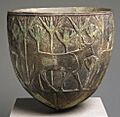
Faience vessel with procession of four bulls, c. 775–653 BCE Brooklyn Museum
-
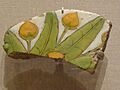
Floral inlay on tile fragment, Brooklyn Museum
-
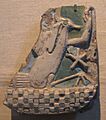
ca. 1539-1070 BC, 33.578. Inlaid faience tile with rebus, "All the people of the world adoring". Probably from a palace of Ramesses II or III. Height: 11.5 cm, Brooklyn Museum
-
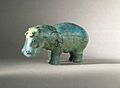
Hippo, ca. 1938-1539 BC. Length: 10.8 cm, Dynasty XII, Brooklyn Museum
-
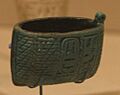
Shawabti Basket, ca. 1400-1390 BC, 59.33. Basket of deep blue faience for a shabti, inscribed with the name of the "Great Royal Wife Ti'a", Queen of Amenhotep II, Brooklyn Museum
-
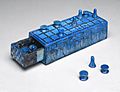
Senet gameboard, with counters and sliding drawer to contain them, ca. 1390-1353 BC. Blue faience with ornament and markings in black. Inscribed with Horus name of King Amenhotep III, Brooklyn Museum
-
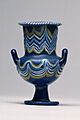
A faience vase fabricated in part from natron, dating to the New Kingdom of Egypt (c. 1450–1350 BC)
.jpg)


.jpg)
See also
