
British royal family facts for kids
_(cropped_2).jpg)
The British royal family includes King Charles III and his close relatives. While there isn't one strict rule about who is a member, the Royal Household often shares lists. These family members usually help the King with public duties. They also do a lot of charity work and take part in important ceremonies.
Each year, senior royals attend many official events. These happen across the United Kingdom, its overseas territories, and other countries. They include special visits, national celebrations, and supporting charities. The family also helps represent the UK around the world. They promote good relationships through diplomacy and cultural activities.
The royal family supports many good causes. They have charities like The King's Trust and The Royal Foundation. These groups help young people, support mental health, protect nature, and focus on early childhood development. The monarchy follows a set of rules and traditions. These rules decide who becomes the next King or Queen.
Contents
Who is in the Royal Family?
It can be a bit tricky to say exactly who is part of the British royal family. Generally, it includes the King's children, grandchildren, and great-grandchildren, along with their spouses. Sometimes, the monarch's first cousins are also included. The official royal website lists the main members. These include King Charles III and Queen Camilla. It also lists William, Prince of Wales and Catherine, Princess of Wales. Other important members are Anne, Princess Royal, and Prince Edward, Duke of Edinburgh with Sophie, Duchess of Edinburgh. Also included are Prince Richard, Duke of Gloucester and Birgitte, Duchess of Gloucester, Prince Edward, Duke of Kent, and Princess Alexandra, The Honourable Lady Ogilvy. Some members, like Prince Harry, Duke of Sussex and Meghan, Duchess of Sussex, do not carry out official royal duties. Those who do are often called "working royals." Younger members who hold royal titles but don't have official duties include Prince George, Prince Louis, and Princess Charlotte. Also, Prince Archie and Princess Lilibet of Sussex, Princess Beatrice, Princess Eugenie, and Prince Michael of Kent with Princess Michael of Kent.
-
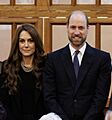
The Prince and Princess of Wales
-
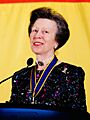
The Princess Royal
-
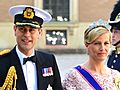
The Duke and Duchess of Edinburgh
-
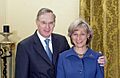
The Duke and Duchess of Gloucester
-

The Duke of Kent
.jpg)
_(William_and_Catherine).jpg)
.jpg)
.jpg)

.jpg)

-
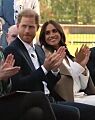
The Duke and Duchess of Sussex
.jpg)


| Current British royal family tree |
|---|
|
Notes
|
Royal Titles and Family Names

Children and grandchildren of the King often receive the title of Prince or Princess. They are also known as His or Her Royal Highness (HRH). Before marriage, many princes are given special titles called dukedoms. However, not all royal family members have these titles. For example, Peter Phillips and Zara Tindall are children of Princess Anne, the King's sister. They are not princes or princesses. Also, Lady Louise Mountbatten-Windsor and James Mountbatten-Windsor, Earl of Wessex could be called Prince and Princess. But their parents, the Duke and Duchess of Edinburgh, chose more modest titles for them. When a man in the royal family marries, his wife usually shares his title. For instance, the wife of Prince Michael of Kent is known as Princess Michael of Kent. The royal family uses different surnames. Many descendants of King George V use the surname Windsor. However, most descendants of Queen Elizabeth II use the surname Mountbatten-Windsor. This name honors her husband, Prince Philip, Duke of Edinburgh. Members with Prince or Princess titles usually don't need a surname for everyday use. But they do use it on official papers, like marriage certificates.
What the Royal Family Does
.jpg)
Royal family members help the King with important national duties. They also do a lot of charity work. If the King is unable to perform his duties, special helpers called counsellors of state can step in. These are usually the King's spouse and the next four people in line to the throne who are over 21. In 2022, Prince Edward, Duke of Edinburgh and Anne, Princess Royal were added to this list.
Royal Engagements and Appearances
Each year, the family attends over 2,000 official events. These happen across the UK and worldwide. They host many guests and answer thousands of letters. Events include state funerals, national parties, and visits to the Armed Forces. Many royals have served in the Armed Forces themselves. All their public appearances are listed in the Court Circular each day. Often, royals will do "walkabouts" at events. This is when they greet and talk with people in the crowd. This tradition became more common after Queen Elizabeth II's trip to Australia in 1970. Important yearly events include the State Opening of Parliament and Trooping the Colour. The family also represents the King on visits to other countries. They act as ambassadors to build good relationships. They also attend Commonwealth meetings. The royal family is seen as a symbol of British culture. They are expected to help promote British businesses. Most royals are members of the Church of England, which the monarch leads.
Charity Work and Patronages
Members of the royal family support about 3,000 charities. They have also started their own non-profit groups. The King founded The Prince's Trust, which helps young people in the UK. Princess Anne started The Princess Royal Trust for Carers, which supports unpaid caregivers. The Duke and Duchess of Edinburgh founded the Wessex Youth Trust in 1999. This is now called The Earl and Countess of Wessex Charitable Trust. The Prince and Princess of Wales started The Royal Foundation. This charity focuses on mental health, protecting nature, and helping young children. In recent years, some members have stepped back from their official duties. This has meant that other working royals have taken on more responsibilities.
How the Royal Family is Funded

Senior members who represent the King receive money from public funds. This is called the Sovereign Grant. It's an annual payment from the British government to the monarch. This money comes from the Crown Estate, which owns many commercial properties. Royals who receive this money must be open about how they spend it. They are not allowed to make money from their royal name. The King also gets income from the Duchy of Lancaster. The Prince of Wales receives income from the Duchy of Cornwall. The police usually cover the security costs for the royal family. The royal family, the Home Office, and the police decide which members get taxpayer-funded security. Some extended family members do not automatically receive police protection. For example, Princesses Beatrice and Eugenie stopped receiving police security in 2011.
Royal Homes
.jpg)
The King's main home in London is Buckingham Palace. Important announcements, like births and deaths, are traditionally displayed there. Both Buckingham Palace and Windsor Castle are used for hosting visits from leaders of other countries. The Palace of Holyroodhouse in Scotland and Hillsborough Castle in Northern Ireland are also official royal homes. Clarence House was King Charles III's home when he was Prince of Wales. He lived there from 2003 until he became King in 2022. He also shared St James's Palace with Princess Anne and Princess Alexandra. Princess Alexandra also lives at Thatched House Lodge. The King also owns two private homes: Sandringham House and Balmoral Castle. He inherited these from Queen Elizabeth II. The Prince and Princess of Wales live and work from apartments in Kensington Palace in London. They and their children moved to Adelaide Cottage in Windsor in September 2022. The Duke of Kent lives in Wren House at Kensington Palace. Andrew Mountbatten-Windsor lives at the Royal Lodge in Windsor. The Duke and Duchess of Edinburgh live at Bagshot Park in Surrey.
See also
 In Spanish: Familia real británica para niños
- Royal descent
- Military service by British royalty
- Education of the British royal family
- List of honours of the British royal family by country
- List of longest-living members of the British royal family
