
1st Forfarshire Artillery Volunteers facts for kids
Quick facts for kids 1st Forfarshire Artillery Volunteers2nd Highland Brigade, RFA 76th (Highland) Field Regiment, RA 276th (Highland) Regiment, RA The Highland Regiment, RA |
|
|---|---|
| Active | 1859–1975 |
| Country |  United Kingdom United Kingdom |
| Branch |  Territorial Army Territorial Army |
| Type | Artillery Regiment |
| Role | Garrison Artillery Field artillery |
| Part of | 51st (Highland) Division |
| Garrison/HQ | Dundee |
| Engagements | First World War: Western Front Second World War: Battle of France Dunkirk evacuation Alamein Tunisia Sicily D-Day North West Europe Rhine Crossing |
The 1st Forfarshire Artillery Volunteers was a special part-time army unit. It was formed in Forfarshire (now Angus) in Scotland in 1859. This unit was part of the British Army's Royal Artillery.
They fought in many big battles on the Western Front during the First World War. In the Second World War, their soldiers fought in France, North Africa, Sicily, and across North West Europe from D-Day until the war ended. The unit continued to serve in the Territorial Army until 1975.
Contents
Joining the Volunteer Force
In 1859, many people in Britain were worried about a possible invasion. This led to a big wave of excitement to join the "Volunteer movement." Many new groups of part-time soldiers, called Rifle and Artillery Volunteer Corps (AVCs), were created. These volunteers wanted to help the regular British Army if needed.
By April 1860, seven Artillery Volunteer Corps had started in Forfarshire:
- The 1st (Arbroath) AVC
- The 2nd (Montrose) AVC
- The 3rd (Broughty Ferry) AVC
- The 4th (Broughty Ferry) AVC
- The 5th (Dundee) AVC
- The 6th (Dundee) AVC
- The 7th (Dundee) AVC
These units joined together on 14 December 1860. They became the 1st Administrative Brigade, Forfarshire Artillery Volunteers. Their main office was in Dundee. Each original group had one battery (a group of guns). Over time, some of these groups combined and grew larger. For example, the Dundee groups eventually had seven batteries.
Artillery for Fixed Defences

At first, these volunteer artillery units were meant to guard fixed defences, like forts. But some units also used "position batteries." These were semi-mobile field guns pulled by farm horses. In 1889, the 1st Forfarshire AVC received modern 16-pounder Rifled Muzzle-Loading guns. These were used by two of their Dundee batteries.
Becoming Royal Garrison Artillery
In 1882, all the volunteer artillery units became part of the Royal Artillery (RA). The 1st Forfarshire AVC joined the Scottish Division. Later, in 1899, the RA split into two main parts: field artillery and garrison artillery. All volunteer artillery units, including the 1st Forfarshire, became part of the Royal Garrison Artillery (RGA). On 1 January 1902, their name changed to the 1st Forfarshire Royal Garrison Artillery (Volunteers).
In 1908, the unit's main office was in Dundee. They had a special area at Barry Links for gun practice.
Joining the Territorial Force
In 1908, the volunteer army was reorganized into the new Territorial Force (TF). The soldiers from the 1st Forfarshire RGA were split into two new units:
- The North Scottish Royal Garrison Artillery, which defended ports.
- The II (or 2nd) Highland Brigade, Royal Field Artillery (RFA).
The II Highland Brigade, RFA, was part of the TF's Highland Division. Its main office was in Dundee. The unit had batteries in Arbroath, Leven, and Dundee. Each battery was given four 15-pounder guns.
First World War
Getting Ready for War
On 29 July 1914, the Highland Division was told that war was coming soon. On 4 August 1914, they received the order to get ready. Soldiers started gathering at their drill halls the next day. By 17 August, the division was fully assembled at Bedford.
When the war started, TF units were asked to volunteer to serve overseas. Many men volunteered, so a second group of units, called "2nd Line" units, was created. These units had a "2/" in front of their names. This meant that for every unit sent overseas, there was a similar unit training at home.
1/II Highland Brigade in Action

During the winter of 1914–15, the 1st Line units trained for war. On 3 May 1915, the Highland Division, now officially called the 51st (Highland) Division, crossed to France.
Fighting on the Western Front
The division quickly saw action at the Battle of Festubert (18–25 May). They also fought at the Battle of Givenchy (15–16 June). After these battles, the division moved to a quieter area to gain more experience. On 28 August, 1/II Highland Brigade's old 15-pounder guns were replaced with modern 18-pounder guns.
In May 1916, the 1/II Highland Brigade was renamed CCLVI (256) Brigade. They also added a new battery with 4.5-inch howitzers.
The Somme Offensive

In July 1916, the 51st (Highland) Division joined the Somme Offensive. They tried to capture High Wood, a key area. The artillery fired heavily, guided by special observation aircraft. German soldiers reported that the shelling was very accurate. However, the attack was difficult, and the division suffered many casualties.
The division returned to the front in October for the Battle of the Ancre Heights. This was the final part of the Somme Offensive. Many guns were gathered to support the 51st (H) Division's attack on Beaumont-Hamel. This area had not been captured on the first day of the offensive.
The attack was planned for 13 November. The 18-pounder guns fired a "Creeping barrage" (a new tactic) that moved forward in front of the infantry. This helped protect the soldiers as they advanced through the mud. A thick fog also helped hide the infantry from enemy fire. Beaumont-Hamel was finally captured. This success helped the 51st (Highland) Division shake off its old nickname, "Harper's Duds."
Battle of Arras
For the Battle of Arras on 9 April 1917, a huge number of guns were brought together. The 18-pounders fired a creeping barrage to protect the infantry. The 4.5-inch howitzers fired a "standing barrage" on each target. The artillery fire was very successful, helping the British troops advance.
The 51st (H) Division attacked again at Gavrelle on 23 April. They aimed for the chemical works and village of Roeux. The divisional artillery also supported other attacks. The 51st (H) Division played a key role in finally capturing and defending Roeux.
Third Ypres Offensive
Even more guns were gathered for the Third Ypres Offensive in July 1917. However, the conditions were very difficult. The gun batteries were packed into the Ypres Salient, an area where they were easily seen and targeted by German guns. Many guns and gunners were lost. The 51st (H) Division made some gains, but heavy rain turned the ground into mud. This made it hard to move the guns forward.
The division returned to the line for the Battle of the Menin Road Ridge on 20 September. This was a smaller attack with massive artillery support. The 51st (H) Division attacked with many 18-pounders and 4.5-inch howitzers. They successfully captured their objectives. A strong German counter-attack was completely stopped by the British artillery.
Battle of Cambrai
The 51st (Highland) Division then moved south for a surprise attack at Cambrai on 20 November. This attack used tanks against the Hindenburg Line. There was no warning bombardment. Instead, the artillery fired smoke, high explosive, and shrapnel shells. The initial attack was very successful. However, on the 51st (H) Division's front, the advance slowed down. Many tanks were destroyed by hidden enemy guns. The Highlanders eventually took Flesquières and Cantaing.
When the German counter-attack came on 30 November, the 51st (H) Division's infantry had already left the line. But their artillery stayed and helped other divisions. Their guns easily broke up the German attacks in some areas.
German Spring Offensive
In March 1918, the Germans launched a huge attack on the Western Front. The 51st (H) Division's artillery found and destroyed many German ammunition dumps before the attack. They also set up their guns in layers, with some forward and some further back. They even used old 15-pounders as anti-tank guns.
The German spring offensive began on 21 March 1918 with a huge bombardment. This shelling destroyed communications and caused many casualties. The mist made it impossible to see. Some of the forward guns were destroyed, but the surviving gunners fought bravely. They fired at the German infantry, causing heavy losses. One officer, 2nd Lieutenant A.B. McQueen, destroyed his own gun to keep it from falling into enemy hands.

The next day, the Germans continued to attack. The 51st (H) Division's batteries pulled their guns out of their pits and fired directly at the enemy. They caused so many casualties that the German advance stopped for a while. They fired continuously for four hours, using a huge amount of ammunition. That night, the division received 17 new guns to replace those they had lost.
Over the next few days, the division slowly retreated. On 24 March, all the artillery in the IV Corps was combined. The 51st (H) Division continued to hold a strong defensive line. They were finally pulled out for rest on the evening of 25 March.
The 51st (H) Division was then sent north. On 9 April, they arrived just as the Germans launched another attack (the Battle of the Lys). The division's infantry were immediately sent to fill a gap in the line. The infantry and artillery worked together to hold the line. On 10 April, 2nd Lieutenant R. Scott of CCLVI Brigade called for a single gun to fire on a group of Germans. The gun fired 96 rounds in three hours, causing many casualties.
During the fighting on 11 April, two officers from CCLVI Brigade volunteered to lead infantry platoons. They kept their men under control during a series of fighting retreats. On 12 April, the enemy threatened the gun lines. The artillery fired at close range, then quickly moved their guns to new positions. The last battery to leave only pulled out when the enemy was very close. By 13 April, the 51st (H) Division had set up a new defence line, which they held for 10 days.
In July, the 51st (H) Division went south to help the French in the Second Battle of the Marne. The divisional artillery moved 80 miles in three days. They helped support attacks against the retreating Germans.
Hundred Days Offensive
In August, all the Allied armies began attacking in the Hundred Days Offensive. The 51st (H) Division returned from the French sector and joined the Canadian Corps. They fought in the Battle of the Scarpe on 26 August. The artillery supported the Canadian attack, then helped their own division's attack. They also helped capture Greenland Hill.
After the Battle of the Selle, the Allied armies chased the Germans. By 26 October, the 51st (H) Division was pushing forward. The artillery was reinforced and helped the attack go well. The Germans were very tired. The campaign became a chase, though the guns still broke up one serious counter-attack on 1 November. The 51st (H) Division's infantry began to leave the line, but the artillery stayed in action. They supported other divisions until the Armistice with Germany on 11 November.
After the war ended, the division rested. The soldiers were sent home by mid-March 1919.
2/II Highland Brigade (Home Service)
The 2nd Line unit, 2/II Highland Brigade, had good recruitment. It was fully formed by the end of 1914. This unit stayed in the Forfar area throughout 1915. In March 1916, it moved south to Norfolk. It continued to send soldiers to units fighting overseas. By May, the artillery brigades had received 18-pounder guns. This unit was renamed CCCXXI (321) Brigade. It remained in Norfolk until after the Armistice and was disbanded by April 1919.
Between the World Wars
When the Territorial Force was reformed in 1920, the brigade was re-established. It was renamed the 76th (Highland) Brigade, RFA. In 1921, it became part of the Territorial Army (TA). The brigade was again part of the 51st (Highland) Division.
In 1924, the RFA became part of the Royal Artillery (RA). The brigade's name changed to include "Field." In 1938, the RA changed its names again. A "brigade" became a "regiment." So, on 1 November 1938, it became the 76th (Highland) Field Regiment.
The TA units had 18-pounders and 4.5-inch howitzers from the First World War. These guns were still pulled by horses. From 1927, they started to get some motor vehicles. But the guns still had iron wheels until just before the Second World War.
Second World War
Getting Ready for War
After the Munich Crisis, the TA was made twice as big. Most regiments split into two. The 76th (Highland) Field Regiment split into two parts on 25 May 1939:
76th (Highland) Field Regiment
- Main office in Dundee
- 302 (Fife) Field Battery
- 303 (City of Dundee) Field Battery
127th (Highland) Field Regiment
- Main office in Leven
- 301 (Angus) Field Battery
- 304 (City of Dundee) Field Battery
76th (Highland) Field Regiment in WWII
When war broke out, the 76th (Highland) Field Regiment got ready with the 51st (H) Division. They still had their old 18-pounders and 4.5-inch howitzers. But now, they had pneumatic tires and were towed by gun tractors. In January 1940, they went to France to join the British Expeditionary Force (BEF).
Battle of France

The Battle of France started on 10 May 1940. The BEF moved into Belgium. The 76th Field Regiment arrived near Brussels on 12 May. They set up their guns to cover Louvain. On 14 May, their guns caused a lot of damage to German units. They fired 200 rounds per gun in 1.5 hours. The German attacks were stopped. But on 15 May, the regiment was attacked from the air.
However, German tanks broke through elsewhere. So, on 16 May, the BEF started to pull back. The 76th Field Regiment kept firing as they moved back. It was a difficult night move, with roads full of refugees and bombs falling. They finally reached the Escaut Canal line.
By 22 May, the BEF was trapped around Dunkirk. They were getting ready to leave (Operation Dynamo). On 28 May, the regiment was ordered to move to the Belgian coast. They fought near Coxyde, even using their rifles against the enemy. The regimental historian said these gunners "saved a potentially critical situation." On 31 May, they were ordered to destroy their equipment and go to the beaches. They marched along the beach to Bray-Dunes. Many soldiers were lost from shelling and bombing. Some got away on small boats, but their ferry was sunk on the way to England.
Defending the Home Front

The soldiers who survived Dunkirk gathered at Glastonbury. They got new 18/25-pounder guns. They then moved to Chichester for anti-invasion duties. Later, they were stationed in Sussex. By the end of 1940, they were in Dorchester.
All field regiments eventually received modern 25-pounders with new gun tractors. The army also learned that having two batteries was not enough. So, regiments were reorganized into three 8-gun batteries. The 76th (H) Field Regiment formed a third battery, 454 Fd Bty, on 25 February 1941.

In 1943, the 3rd Division, which the 76th Regiment was part of, started training for the invasion of Normandy (Operation Overlord). The 76th (H) Field Regiment became a self-propelled (SP) regiment. They used US-built M7 Priest SP guns, which had 105 mm howitzers. They also used M4 Sherman tanks as armoured observation posts.
D-Day Landings
The Normandy landings happened on D Day, 6 June 1944. The 76th (H) Field Regiment's Priest guns were on special landing craft. They fired to support the troops as they landed on Sword Beach. They landed shortly after the first assault troops. Many landing craft and guns were damaged by enemy fire and obstacles.
The 3rd Division's advance was slow due to crowded beaches and enemy strongpoints. The field guns helped fight off a tank attack by the 21st Panzer Division. In the following days, the Germans tried to push back the British. On 9 June, the 3rd Division's field guns fired "devastatingly accurate" defensive fire. This broke up the German attack.

For the rest of June, the 3rd Division slowly moved towards Caen. They captured the Chateau de la Londe after a two-day battle. They then took part in Operation Charnwood to capture Caen. This operation started with air and naval bombardments, followed by a huge artillery barrage. The infantry made good progress, and Caen was captured the next day. For Operation Goodwood, the division crossed the Orne River and attacked. In early August, the 3rd Division helped another armoured division advance towards Mont Pinçon.
Soon after, the Allied armies broke out of Normandy. They drove across Northern France and Belgium. The 3rd Division played a small role in Operation Market Garden. They then endured the difficult winter fighting of 1944–45.
Fighting in the Rhineland
The 3rd Division fought in Operation Veritable, a battle to clear the Reichswald forest. After a huge artillery barrage on 8 February, the fighting became very tough. The 3rd Division captured Kerverheim on 1 March and Winnekendonk two days later.
The 3rd Division then held the line along the Rhine River. On the evening of 23 March, all the guns in XXX Corps fired for four hours to support the 51st (H) Division's assault crossing of the Rhine.
The 3rd Division later crossed the Rhine. They advanced across North Germany, capturing Lingen and Bremen. The fighting ended on 5 May after the German surrender. The 76th (Highland) Field Regiment was officially put on hold on 31 December 1946.
127th (Highland) Field Regiment in WWII
The 127th (Highland) Field Regiment was part of the 9th (Highland) Division. This was the second group of the 51st (H) Division. In August 1940, the 9th (H) Division was renamed the 51st (H) Division. The 127th Field Regiment usually supported the division's 153 Brigade. They formed their third battery, 490 Fd Bty, on 1 March 1941. After two more years of training in Scotland, the division sailed for Egypt in June 1942.
North Africa Campaign

The division's first battle was the Second Battle of El Alamein. They moved into gun positions at night and stayed hidden during the day. The British Eighth Army had many 25-pounders. The bombardment began on 23 October and lasted for hours. The 51st (H) Division faced strong resistance but made good progress.
On the second night, the 51st (H) Division's guns fired to support another division's attack. The "break-out" phase began on 1 November with another powerful barrage. On 4 November, the 51st (H) Division broke through, and the Axis forces began to retreat.
The 51st (H) Division then chased the enemy to El Agheila and Tripoli in January 1943. The 127th Field Regiment claimed to be the first Eighth Army guns in Tripoli. By February, they were in Tunisia facing the Mareth Line. The Axis force attacked on 6 March, but the British were ready. The attack was easily stopped.

The Battle of the Mareth Line began on 16 March. The 51st (H) Division took the outpost line. The main attack followed on 20 March with another huge night barrage. The 127th Field Regiment's guns fired an average of 430 rounds each. But progress was slow until the line was outflanked. The Axis defence collapsed on 28 March.
The next Axis defence line was at Wadi Akarit. The barrage for the 51st (H) Division's attack began on 6 April. The division's attack "went like clockwork." The Highlanders fought hard to hold their gains. The chase continued through Sfax. By 22 April, the regiment was fighting near Enfidaville. This lasted until the fall of Tunis and the end of the campaign on 15 May.
Sicily Campaign
The 127th Field Regiment then rested in Algeria. They trained for the Allied landings in Sicily (Operation Husky). The regiment landed near Pachino on 10 July. The division moved forward towards Palazzolo Acreide and Vizzini. The 127th Field Regiment described a "fierce fight" at Vizzini.
On 17 July, the division tried to capture Paternò. They got across the Dittaino river, but further advance was stopped. On 20 July, the division attacked Gerbini Airfield, supported by the 127th Fd Rgt. The attack succeeded, but strong counter-attacks pushed the Highlanders out.
The 51st (H) Division's artillery helped prepare for operations against Adrano. This began on 31 July with 220 rounds per gun. Paternò fell on 4 August. By 12 August, the Axis forces were leaving Sicily. The island was fully captured on 17 August.
The 51st (H) Division did not fight in the Italian Campaign. However, their guns helped in the huge bombardment for the crossing of the Strait of Messina on 3 September. One gun from 127th Fd Rgt claimed to be the first British field gun to fire a round on mainland Italy during the war.
The regiment sailed back to the UK in November. They disembarked at Liverpool on 27 November. They then trained at Beaconsfield and Long Melford.
Normandy Campaign
The 51st (Highland) Division was in the first group of follow-up forces for Operation Overlord. They landed in Normandy on 7 June 1944 (D+1). The 127th Field Regiment landed the next day. They immediately went into action near Blainville-sur-Orne, supporting the Orne bridgehead. This area was heavily shelled. The regiment moved back to Bénouville on 11 June. They mainly fired defensive tasks, breaking up German counter-attacks. But the regiment also had steady casualties.
On 23 June, the division expanded the bridgehead with a night attack. The guns stayed silent before the attack to keep it a surprise. The division supported the 3rd Division's attack in Operation Goodwood. On 8 August, the 51st (H) Division led an attack towards Falaise (Operation Totalize). This was preceded by a huge barrage. The attack went well. The Canadians continued the advance to Falaise on 14 August. The 127th Fd Rgt's main office lost 15 vehicles to bombs from their own air force. By 21 August, the Falaise Pocket was closed. The division advanced east towards Lisieux.
The 51st (H) Division then moved to cross the Seine River. They attacked Le Havre (Operation Astonia). This was a big operation, with the regiment firing 500 rounds per gun. They also attacked Boulogne (Operation Wellhit). The regiment then moved to the Antwerp area.
Low Countries Campaign

The division's next attack was west of 's-Hertogenbosch on 23 October. Three hundred guns were used. The infantry took all their targets. They continued to advance over the next few days. On 14 November, the division crossed the Willems Canal near Weert with another heavy artillery barrage.
The 51st (H) Division then moved to hold "The Island," a wet, low-lying area between Nijmegen and Arnhem. In mid-December, the division rested. On 21 December, the 127th Fd Rgt was suddenly moved south. This was to respond to the German breakthrough in the Ardennes (the Battle of the Bulge). They supported counter-attacks. On 9 January, the 51st (H) Division fought its way into the side of the "Bulge" in winter conditions.
Rhineland Campaign
Like the 3rd Division, the 51st (H) Division fought in the Reichswald (Operation Veritable). It began on 8 February with a huge artillery preparation. The 153 Brigade attacked and reached their targets that night. Over the next two days, the regiment fired smoke and high explosive to help the brigade advance through the forest. The slow advance continued through Gennep. German counter-attacks were stopped by defensive fire. The final phase for the 51st (H) Division began on 18 February against Goch, which was successfully taken.
The division played a leading role in the Rhine crossing (Operation Plunder). Observation parties from the regiment were among the first troops to cross the river on the night of 23 March. The guns fired all night, very close to the river. The division fought its way into Rees. The 127th Fd Rgt's guns were brought across the river on 26 March.
After a rest, the regiment moved forward on 5 April. They reached the Dortmund–Ems Canal on 8 April. After a pause, the division advanced quickly towards Bremen. They reached Delmenhorst on 20 April. The regiment was still under fire on 3 May. But the German surrender on 4 May ended the fighting. The regiment began occupation duties. They handed in their guns at the end of July.
The 127th (Highland) Field Regiment was officially put on hold on 1 April 1946.
After the Wars
When the Territorial Army was reformed in 1947, the 127th (Highland) Fd Rgt was officially disbanded. The 76th reformed as 276th (Highland) Field Regiment.
In 1961, the regiment combined with other units to form 400th (Highland) (Aberdeen/Angus) Field Regiment. Its main office was in Dundee.
In 1967, the TA was reduced further. The 400th Regiment combined with another battery to form The Highland Regiment, RA. Its main office was still in Dundee. However, in 1969, the Highland Regiment was reduced to a very small group. It was then disbanded in 1975. In 1986, the 105th Regiment Royal Artillery was named as its successor unit.
Uniforms
The first uniform of the 1st Forfarshire AVC at Arbroath was a blue tunic and trousers. The trousers had a broad red stripe. The tunic had a scarlet collar and cuffs, with black braid. They wore white belts and a tall, fur hat called a Busby. Other units had slightly different uniforms, but all were blue with red or black details. From 1878 to 1908, the whole unit wore a standard Royal Artillery helmet.
Images for kids
-
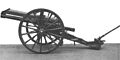
A 15-pounder gun, like those used by TF units.
-
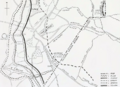
Map showing the 51st (Highland) Division's targets at Beaumont-Hamel in November 1916.

_Division_objectives_at_Beaumont_Hamel,_November_1916.png)
