
Priest facts for kids

Catholic priests in Rome, Italy, 2005
|
|
| Occupation | |
|---|---|
| Vocation | |
|
Activity sectors
|
Religion |
| Description | |
|
Related jobs
|
Diaconate |
A priest is a special religious leader who helps people connect with their gods or spiritual beliefs. They are allowed to perform important rituals and ceremonies for their religion. The job or role of a priest is called the "priesthood". Priests often guide their communities, teach about their faith, and offer support during important life events.
Contents
What is a Priest?
Priests have been part of many societies for a very long time. They exist in religions like Judaism, Christianity, Buddhism, Shinto, and Hinduism. Priests are often seen as having a special connection to the divine. They help explain religious meanings and lead important ceremonies.
Different Roles of Priests
The duties of priests can vary a lot between different faiths. Generally, they help people in their community connect with their gods. They also lead rituals like blessings for marriages or new births. Priests teach religious wisdom and offer comfort during times of sadness or death. Many priests also help manage their religious buildings and records. For some, being a priest is a full-time job. They dedicate their lives to their faith and community. For others, it might be a part-time role. In some religions, people choose who becomes a priest. In others, like Judaism, the role can be passed down through families.
Where Does the Word "Priest" Come From?
The English word "priest" comes from an old Greek word, presbyter. This word meant "elder" or an older, respected leader in early Jewish and Christian groups. The Latin word for a priest was sacerdos. Over time, the word "priest" became common in English to describe these religious leaders. The word "priestess" was created later, in the 1600s, to talk about female priests in ancient religions.
Priests in Ancient Times
In ancient times, priests and priestesses played a very important role in many religions. They often led ceremonies and offered sacrifices to their gods. In the Ancient Near East, priests also helped manage the property of the gods' temples. Some priestesses in Ancient Greece, like the Pythia at Delphi, were famous for giving prophecies.
Ancient Egypt's Priests
In ancient Egyptian religion, the pharaoh was the main link to the gods. He often asked priests to help him with this duty. Priests worked in temples across Egypt. They made offerings to the statues of the gods, where people believed the gods lived. In later times, the high priests of important gods, like Amun at Karnak, became very powerful political figures. While most high-ranking priests were men, some women held important positions, such as the God's Wife of Amun.
Roman Priests and Priestesses
In ancient Rome, the temples of Ceres and Proserpina were always led by female priests. These women came from important Roman families and were highly honored. Roman matrons (respected older women) could serve in these public roles.
Greek Priestesses
In Ancient Greece, the Pythia was a famous priestess at the temple of Delphi. She was known for her prophecies and was very important, even in a society mostly led by men. Another famous priestess was the Phrygian Sibyl, who gave prophecies at an oracle in Phrygia.
Priests in Major Religions Today
Jewish Priests (Kohanim)
In Judaism, priests are called kohenim (singular: kohen). In ancient Israel, during the time of the two Temples in Jerusalem, these priests had to be direct descendants of Aaron, the brother of Moses. They performed daily offerings and sacrifices in the Temples. Today, since the Temples no longer stand, the role of the kohanim is less central. However, in traditional Judaism, they still perform some special functions, like the Priestly Blessing. Many Jewish families with names like Cohen, Kahn, or Kohn are descendants of these ancient priests. The Beta Israel community (Ethiopian Jews) also has religious leaders called Kahen, who are not hereditary. The Samaritan community also has kohanim who serve as religious leaders.

Christian Priests
In Christianity, the term "priest" is used in the Catholic Church, Eastern Orthodoxy, and many branches of Lutheranism and Anglicanism. These priests are people who have been specially chosen and trained for their religious duties, a process called ordination. They are sometimes also called "presbyters." Other Christian groups, like Methodists and Baptists, often use terms like "minister" or "pastor."
Christian priests lead important church services, including the Eucharist (also known as Mass or Divine Liturgy). They also administer other Sacraments, like Confession and Anointing of the Sick. In some traditions, priests also perform Baptism and witness marriages. Only men can become priests in most of these traditions.
Eastern Orthodox Priests
In Eastern Orthodoxy, men can become priests if they are married before their ordination. However, they cannot marry after becoming a priest. Bishops, who are higher-ranking leaders, are chosen only from those who are not married. Orthodox priests often wear special robes and sometimes a clerical collar.


Catholic Priests
In the Catholic Church, priests in the Latin (Western) tradition usually promise not to marry (this is called celibacy). However, in the Eastern Catholic Churches, married men can become priests, similar to Eastern Orthodoxy. Catholic priests lead Mass and other sacraments. They must be at least twenty-five years old.

Lutheran Pastors and Priests
Many Lutheran churches have a structure with deacons, priests, and bishops, similar to Catholic traditions. In countries like Finland and Sweden, their leaders are often called priests. In the United States, terms like "reverend" and "pastor" are also common. Lutherans also believe in the "priesthood of all believers," meaning all Christians have a direct connection to God.

Anglican Priests
The role of a priest in the Anglican Communion is much like in the Roman Catholic and Eastern Christian churches. Anglican priests lead services and administer sacraments. Unlike Roman Catholic priests in the Latin tradition, Anglican priests are allowed to marry. Some Anglican churches also allow women to become priests.

Latter-day Saint Priesthood
In the Latter Day Saint movement, the priesthood is seen as God's power and authority given to people. This authority allows them to perform religious ceremonies and lead the church. They believe that Jesus and ancient prophets used this priesthood power to perform miracles. In the Church of Jesus Christ of Latter-day Saints, worthy males aged 12 and older can be ordained to the priesthood. Historically, there were some rules about who could hold the priesthood, but these changed in 1978. Women are not ordained to the priesthood in the LDS Church. Other Latter Day Saint groups, like the Community of Christ, do ordain women.

Islamic Leaders (Imams and Mullahs)
Islam does not have priests in the same way some other religions do. Instead, they have religious leaders like imams and mullahs. These leaders help guide Muslims in their prayers, teach about their faith, and manage religious affairs.
Mandaean Priests
In Mandaeism, a Mandaean priest is an ordained religious leader. They are called Naṣuraiia in their scriptures. Priests lead all important religious ceremonies, including baptisms and weddings. They also serve as teachers and community leaders. The position is not passed down through families; any Mandaean man who knows a lot about religious matters can become a priest.
Hindu Priests (Pujaris and Purohitas)
In Hinduism, priests traditionally come from the Brahmin community. They go through special training to learn sacred texts and rituals. There are two main types of Hindu priests: pujaris and purohitas. A pujari performs rituals inside a temple, such as bathing statues of gods (murtis) and offering prayers (puja). A purohita performs rituals and ceremonies outside the temple, like weddings or special sacrifices. While traditionally only men were priests, some women are now also being trained to become priests in India.

Zoroastrian Priests (Mobads)
Zoroastrianism has priests called Mobads. They lead important ceremonies, pouring offerings into a sacred fire and chanting prayers. In Indian Zoroastrianism, the priesthood is usually passed down through families and is for men. However, in Iran and North America, women have been ordained as mobedyar, who assist the mobeds.
Taoist Priests
Taoist priests help explain the ideas of Dao (the Way) and the balance of Yin-Yang. They guide people through important life events like marriages and festivals. Taoist priests lead public rituals and meditations. In ancient times, both men and women could be priests. Over time, it became mostly a role for men passed down through families, but this has changed in more recent times.

Priests in Indigenous Religions
Shinto Priests and Priestesses
In Shinto, the traditional religion of Japan, a priest is called a kannushi (神主, lit. "Master of the kami"). They are responsible for taking care of a Shinto shrine and leading worship for the kami (gods or spirits). Kannushi are often helped by miko (巫女, "shrine maidens"). These maidens might be family members, apprentices, or volunteers. In the past, some female relatives of the Japanese emperor, called Saiin, served as High Priestesses at important shrines like Kamo Shrine and Ise Grand Shrine.

African Traditional Priests
Many traditional African religions have priests and priestesses. For example, the Yoruba people of western Nigeria have a system of religious leaders. Male priests are called Babalawo and female priests are called Iyanifa. Priests and priestesses for different gods (called Orisha) are known as Babalorisa for men and Iyalorisa for women. In some African kingdoms, the traditional leader might also act as a royal priest, connecting the people with their ancestors.
Afro-Latin American Priests
In Brazil, priests in religions like Umbanda and Candomblé are called pai-de-santo (Father of saint) for men, and mãe-de-santo (Mother of saint) for women. In Cuban Santería, male priests are called Santero, and female priests are called Iyanifas.
Modern Pagan Priests (Wicca)
In some modern Pagan religions, like Wicca, every member is often seen as having a connection to the divine. However, as these religions grow, some groups have started to have ordained priestesses and priests who serve their communities.

What Priests Wear
The clothing of religious workers has varied throughout history and across cultures. In ancient times, their dress often reflected the local customs, with special symbols of their deity. Sometimes, specific colors, materials, or patterns were used to show their role.
In most Christian traditions, priests wear clerical clothing, which is a special type of everyday dress. In Western Christianity, a stiff white clerical collar is a common feature. Eastern Christian priests often wear two layers of robes called a rasson and an exorasson.
Today, priests might not always wear their special clothing when they are not performing religious duties, especially in countries that are mostly secular. However, many priests still choose to wear it often. During church services, Christian priests wear special vestments that are only used for those occasions.
In modern Pagan religions like Wicca, there isn't one specific type of dress for clergy. If there is, it depends on the particular group. However, worshipers often wear a traditional floor-length tunic with a knotted cord during religious rites.
Assistant Priests
Many religions have different levels of priests, including assistant priests. In ancient Judaism, the Priests (Kohanim) had a whole class of Levites who helped them with sacrifices and maintaining the Temple.
In the Catholic Church, an assistant priest helps the main priest during Mass or other services. In Anglican churches, an assistant priest is also a fully ordained priest but is not the senior leader of the parish. They might specialize in certain areas like youth work or hospital visits. The Catholic term for this role is "parochial vicar."
In Wicca, the leader of a coven or temple (a high priestess or high priest) often has an assistant. These assistants might be called a 'deputy', or more traditionally, a 'maiden' (for a female assisting a high priestess) or 'summoner' (for a male assisting a high priest).
Images for kids
-
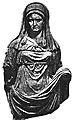
Vestal Virgin priestess of Ancient Rome
-
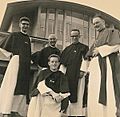
Some clergy and religious, such as these, who are Canons Regular of the Order of the Holy Cross and live in the Netherlands, wear distinctive clothing.


See also
 In Spanish: Sacerdote para niños
