
Coachella facts for kids
Quick facts for kids Coachella |
|
|---|---|
 |
|
.jpg)
Coachella in 2018
|
|
| Genre | Various |
| Dates | Two consecutive 3-day weekends in April (currently) |
| Location(s) | Empire Polo Club (Indio, California, U.S.) |
| Coordinates | 33°40′41″N 116°14′02″W / 33.678°N 116.234°W |
| Years active | 1999, 2001–2019, 2022–present |
| Founders | Paul Tollett and Rick Van Santen |
| Attendance | 245,000 estd. (2025, two-weekend total) |
| Capacity | 125,000 |
| Organized by | Goldenvoice |
 Coachella 2026 Coachella 2026 |
|
Coachella (officially known as the Coachella Valley Music and Arts Festival) is a very popular yearly music and arts event. It takes place at the Empire Polo Club in Indio, California, which is located in the sunny Coachella Valley within the Colorado Desert. The festival was started by Paul Tollett and Rick Van Santen in 1999. It is organized by Goldenvoice, a company that is part of AEG Presents.
Coachella features amazing musical artists from many different styles, including rock, pop, indie, hip-hop, and electronic dance music. You can also see incredible art installations and sculptures all around the festival grounds. Many stages continuously host live music, making sure there is always something exciting to see and hear! Coachella has grown a lot since it began, becoming one of the biggest and most famous music festivals in the United States and the world.
Contents
The History of Coachella Festival
How Coachella Began
The idea for Coachella started with a concert in 1993. The rock band Pearl Jam performed for nearly 25,000 fans at the Empire Polo Club in Indio, California. They chose this location because they had a disagreement with another company about ticket fees. This concert showed that the polo club was a great place for large events. Paul Tollett, whose company Goldenvoice organized the Pearl Jam show, realized this location could be perfect for a music festival.
Around 1997, Goldenvoice faced challenges booking concerts against bigger companies. Tollett then thought of creating a music festival with many different artists. He wanted to feature trendy artists who might not be super famous yet. He hoped that putting many of them together would attract a large crowd.
First Festivals and Growth
Goldenvoice announced the first Coachella Valley Music and Arts Festival on July 28, 1999. It took place on October 9–10, 1999. Headliners included Beck, Tool, and Rage Against the Machine. Organizers wanted to create a comfortable festival experience, offering free water and plenty of restrooms. Even though Goldenvoice lost money on the first festival, it was very popular with attendees and critics.
After not holding the festival in 2000, Coachella returned in April 2001 as a single-day event. This change was made to avoid the extreme heat of October. In 2002, it became a two-day festival again. Coachella grew to three days in 2007. In 2012, it expanded to two consecutive three-day weekends, with the same lineup each weekend. This allowed even more people to attend.
Key Moments and Changes Over the Years
- Camping Begins: In 2003, Coachella started allowing people to camp on the festival grounds. This added a new way for attendees to experience the event.
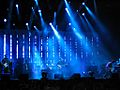
- Growing Popularity: The 2004 festival, featuring Radiohead and the Cure, was Coachella's first time selling out all tickets. This helped the festival become even more well-known.
- Memorable Performances: Daft Punk's show in 2006, with its pyramid-shaped stage, is often remembered as one of the most iconic performances in Coachella's history.
- New Festivals: In 2007, Goldenvoice started the Stagecoach Festival, a country music festival, at the same location. This helped secure the future of both events at the Empire Polo Club.
- Safety Efforts: In 2019, Coachella launched the "Every One" initiative. This program provides resources and policies to help ensure everyone at the festival feels safe and included. It aims to prevent any kind of inappropriate behavior and offers support to attendees.
- COVID-19 Impact: The festivals in 2020 and 2021 were cancelled because of the COVID-19 pandemic and related safety rules.
- Return to Live Music: Coachella returned in 2022 with headliners like Harry Styles, Billie Eilish, Swedish House Mafia, and The Weeknd.
- Diverse Headliners: The 2023 festival featured Bad Bunny and Blackpink as headliners, making them the first Latin and Asian acts to lead the festival. There were some last-minute changes to the lineup, but the festival still brought amazing performances.
- Recent Festivals: Coachella 2024 featured Lana Del Rey, Tyler, the Creator, and Doja Cat, along with a reunion of No Doubt. Coachella 2025 included Lady Gaga, Green Day, Post Malone, and Travis Scott. Coachella 2026 took place with headliners Sabrina Carpenter, Justin Bieber, Karol G (the first Latina artist to headline), and Anyma.
Festival Location and Stages
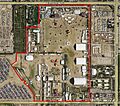
Coachella is held in Indio, California, which is in the Coachella Valley of the Colorado Desert. The festival takes place at the 78-acre Empire Polo Club. When you include areas for parking and camping, the event covers about 642 acres! The site is about 125 miles (200 km) east of Los Angeles.
During the festival, many stages continuously host live music. There are two main outdoor stages and several tents named after deserts:
- Coachella Stage – This is the main outdoor stage where the biggest headlining acts perform. It draws the largest crowds.
- Outdoor Theatre – A smaller outdoor stage located next to the Coachella Stage.
- Mojave – A mid-size tent that hosts artists from many different music styles.
- Gobi – Another mid-size tent, similar to the Mojave, featuring various artists.
- Sahara – This is a large, hangar-like tent, usually hosting the top electronic dance music acts. It has been expanded and moved over the years to improve space and traffic flow.
Over time, more performance areas have been added:
- Yuma – A smaller indoor tent introduced in 2013, mainly for new DJs. It offers a more relaxed atmosphere.
- Sonora – An indoor tent added in 2017 for punk rock and Latin acts.
- Heineken House – A venue introduced in 2014 for special musical performances and mash-ups.
- Despacio – A small indoor tent used in 2016, known for playing "slow-simmering disco and vintage club music" with a powerful sound system.
- Antarctic – An indoor dome introduced in 2017 that screens amazing 360-degree immersive videos. It's a cool, air-conditioned space for a unique visual experience.
Art at Coachella

Besides music, Coachella is also a fantastic showcase for visual arts, including installation art and sculpture. Many of these art pieces are interactive, meaning you can often walk through them or even become part of the art! The art at Coachella has grown bigger and more creative over the years.
In the early days, some art was borrowed from other festivals. But now, Goldenvoice often asks artists to create special pieces just for Coachella. Artists have a short time to build their amazing creations on the festival grounds. Art collectives like Poetic Kinetics have designed giant moving art installations, such as a snail, an astronaut, and a caterpillar that turned into a butterfly!
How Coachella is Organized
Working with the City
As the host city, Indio provides many important services for Coachella, like police and fire protection, medical help, and traffic control. These services are carefully planned to make sure everyone is safe. To avoid disturbing local residents, there are rules about when music performances must end. For example, music usually stops at 1 a.m. on Friday and Saturday nights, and midnight on Sunday nights.
Protecting the Environment

Coachella organizers work hard to be environmentally friendly. They partner with an organization called Global Inheritance to promote several green initiatives:
- TRASHed: Art of Recycling: Artists design and decorate recycling bins that are placed all over the festival grounds. This makes recycling fun and noticeable.
- Carpoolchella: This program rewards festivalgoers who carpool in groups of four or more. They can win special prizes, like VIP tickets for life!
- Recycling Programs: Coachella has programs where you can exchange ten empty water bottles for a free full one. They also offer reusable water bottles that you can refill at water stations.
- Green Energy: The festival uses things like solar powered DJ booths and seesaws that can charge mobile phones.
After the festival, about 600 staff members collect all the litter. They sort everything to be recycled or composted, aiming to divert 90 percent of waste from landfills.
Camping at the Festival

Since 2003, Coachella has offered tent camping right next to the festival grounds. The campground has its own entrance and offers many facilities. Campers can find recycling stations, a general store, showers, mobile phone charging stations, and even an internet cafe with free WiFi. This makes it easy and fun for attendees to stay close to the action.
Choosing the Artists
Paul Tollett starts booking artists for each festival almost a year in advance. He looks at popular artists and new talents, often using information from other shows Goldenvoice organizes. The process of choosing all the acts takes about six months.
Coachella is known for booking both very famous artists and exciting new groups. Top artists can earn a lot of money to perform. Goldenvoice also has rules that prevent artists from playing at other nearby festivals for a certain time before and after Coachella. This helps make Coachella a unique event. They also promote smaller "Localchella" shows in Southern California as warm-ups for the main festival.
The festival tries to announce its lineup around New Year's Day. This helps Coachella be one of the first big festivals to share its artists each year. The lineup poster lists artists with different font sizes, which shows how prominent they are.
Promoting Coachella
Organizers have become more open to working with sponsors over the years. For example, the brewing company Heineken N.V. has sponsored Coachella since 2002 and has a special "Heineken House" venue at the festival. Clothing brands like H&M and technology companies like HP also have sponsored areas. However, organizers still prefer not to have sponsors' logos on the main stages, so that the focus remains on the artists.
Since 2011, YouTube has live streamed performances from Coachella. This allows people all over the world to watch the festival from home. In recent years, YouTube has expanded its coverage to stream performances from all six stages across both weekends. In 2016, Coachella even offered virtual reality (VR) content, letting ticket holders experience the festival in a new, immersive way using VR viewers and a special app.
Coachella's Impact and Legacy
Coachella is seen as a trendsetter in both music and fashion. Many people look to the festival to see what new artists will become popular and what fashion styles will be in vogue. Some people have discussed how certain fashion choices, like wearing Native American-inspired headdresses by non-Native people, can be seen as disrespectful to different cultures.
The festival has a huge positive impact on the local area. In 2012, Coachella brought over $254 million to the desert region. It also helps local businesses in Indio and generates tax revenue for the city.
The success of Coachella has led Goldenvoice to create other popular music festivals at the Empire Polo Club. These include the Stagecoach Festival for country music and special events like Desert Trip, which featured legendary rock artists.
Festival Summary by Year
| Edition | Year | Dates | Headliners | Gross revenues |
Attendance or sales | Avg. daily attendance/sales |
|---|---|---|---|---|---|---|
| 1st | 1999 | October 9–10 | N/A | 37,000 (sales) | 18,500 | |
| 2nd | 2001 | April 28 | Jane's Addiction | N/A | 32,000 (attendance) | 32,000 |
| 3rd | 2002 | April 27–28 | N/A | 55,000 (attendance) | 27,500 | |
| 4th | 2003 | April 26–27 | N/A | 60,000 (attendance) | 30,000 | |
| 5th | 2004 | May 1–2 | N/A | 110,000 (attendance) | 55,000 | |
| 6th | 2005 | April 30 – May 1 | N/A | 100,000 (attendance) | 50,000 | |
| 7th | 2006 | April 29–30 |
|
$9 million | 120,000 (attendance) | 60,000 |
| 8th | 2007 | April 27–29 | $16.3 million | 187,000 (attendance) | 62,333 | |
| 9th | 2008 | April 25–27 |
|
$13.8 million | 152,000 (attendance) | 51,000 |
| 10th | 2009 | April 17–19 |
|
$15.3 million | 153,000 (attendance) | 51,000 |
| 11th | 2010 | April 16–18 | $21.7 million | 225,000 (attendance, agg.) | 75,000 | |
| 12th | 2011 | April 15–17 | $24.9 million | 225,000 (attendance, agg.) | 75,000 | |
| 13th | 2012 |
|
|
$47.3 million | 158,000 (sales) | 79,000 |
| 14th | 2013 |
|
|
$67.2 million | 180,000 (attendance) | 90,000 |
| 15th | 2014 |
|
|
$78.3 million | 579,000 (attendance, agg.) | 96,500 |
| 16th | 2015 |
|
$84.2 million | 198,000 (sales) | 99,000 | |
| 17th | 2016 |
|
|
$94.2 million | 198,000 (sales) | 99,000 |
| 18th | 2017 |
|
$114.6 million | 250,000 (attendance) | 125,000 | |
| 19th | 2018 |
|
N/A | N/A | N/A | |
| 20th | 2019 |
|
|
N/A | N/A | N/A |
| — | 2020 | Scheduled:
Rescheduled:
|
Scheduled: | Cancelled due to the COVID-19 pandemic. | ||
| — | 2021 | Scheduled:
|
N/A | Cancelled due to the COVID-19 pandemic. | ||
| 21st | 2022 |
|
|
N/A | N/A | N/A |
| 22nd | 2023 |
|
|
N/A | N/A | N/A |
| 23rd | 2024 |
|
N/A | N/A | N/A | |
| 24th | 2025 |
|
N/A | N/A | N/A | |
| 25th | 2026 |
|
N/A | N/A | N/A | |
Awards and Nominations
Billboard Touring Awards
| Year | Category | Work | Result | Ref. |
|---|---|---|---|---|
| 2011 | Top Festival | Coachella Valley Music and Arts Festival | Won | |
| 2012 | Won | |||
| Top Boxscore | Coachella Valley Music and Arts Festival, April 13–22 | Won | ||
| 2013 | Top Festival | Coachella Valley Music and Arts Festival | Won | |
| 2014 | Won | |||
| 2015 | Won | |||
| 2016 | Won | |||
| 2017 | Won |
International Dance Music Awards
| Year | Category | Work | Result | Ref. |
|---|---|---|---|---|
| 2008 | Best Music Event | Coachella – Indio, California | Nominated | |
| 2009 | Nominated | |||
| 2010 | Nominated | |||
| 2011 | Nominated | |||
| 2012 | Nominated | |||
| 2013 | Nominated | |||
| 2014 | Nominated | |||
| 2015 | Nominated | |||
| 2016 | Nominated | |||
| 2020 | Best Festival | Coachella | Nominated |
Pollstar Awards
| Year | Category | Result | Ref. |
|---|---|---|---|
| 1999 | Music Festival of the Year | Won | |
| 2002 | Nominated | ||
| 2003 | Won | ||
| 2004 | Won | ||
| 2005 | Music Festival of the Year (non-touring) | Nominated | |
| 2006 | Music Festival of the Year | Won | |
| 2007 | Won | ||
| 2008 | Music Festival of the Year (non-touring) | Won | |
| 2009 | Won | ||
| 2010 | Won | ||
| 2011 | Major Music Festival of the Year (non-touring) | Won | |
| 2012 | Major Music Festival of the Year | Won | |
| 2013 | Won | ||
| 2014 | Nominated | ||
| 2015 | Won | ||
| 2016 | Nominated | ||
| 2017 | Won | ||
| 2018 | Music Festival of the Year (over 30K attendance) | Won | |
| 2019 | Music Festival of the Year (US Only; over 30K attendance) | Nominated | |
| 2022 | Music Festival of the Year (Global; over 30K attendance) | Nominated | |
| 2024 | Music Festival of the Year (Global: over 30K attendance) | Nominated |
Images for kids
-
Layout and performance areas for 2016 festival
-
Radiohead performing at Coachella in 2004. Their appearance helped elevate the festival's status.
-

Daft Punk's performance at Coachella 2006 is often called one of the most memorable.
-
Björk, the festival's first female headliner, performing at Coachella on April 27, 2007.
-
The 2012 festival during sunset.
-
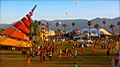
Coachella grounds in 2013.
-
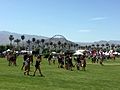
A view of the ferris wheel from the polo grounds during Coachella 2015.
-
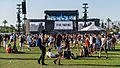
The main stage in 2018.
-

Blackpink became the first Asian act to headline Coachella in 2023.
-
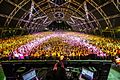
Fans attend a performance by Bassnectar at the Sahara tent in 2013.


.jpg)


See also
 In Spanish: Festival de Música y Artes de Coachella Valley para niños
