
List of bridges on the National Register of Historic Places in Iowa facts for kids
Iowa is home to many amazing bridges and tunnels that are so special, they've been listed on the National Register of Historic Places. This means they are important parts of history and are protected so people can enjoy them for many years to come. These structures show us how people built things long ago and how transportation has changed over time in the state of Iowa.
Contents
What is the National Register of Historic Places?
The National Register of Historic Places (often called NRHP) is like a special list kept by the United States government. It includes buildings, places, and structures that are important in American history, architecture, archaeology, engineering, or culture. When a bridge or tunnel is added to this list, it means it's recognized as a valuable historical site. This helps protect it and makes people more aware of its importance.
Iowa's Historic Bridges and Tunnels
Iowa has a rich history of building bridges and tunnels, and many of them are on the National Register. These structures come in all shapes and sizes, each built with different designs and materials depending on when they were made and what they were used for.
Covered Bridges: A Glimpse into the Past
Some of Iowa's most famous historic bridges are its covered bridges. These wooden bridges have roofs and sides, which were originally added to protect the wooden parts from rain and snow, making them last longer. They look like charming old barns stretching across rivers.
- The Cutler–Donahoe Bridge in Winterset was built in 1871. It's a great example of a covered bridge and was even moved to a park in 1970 to keep it safe.
- Also in Winterset, the Hogback Covered Bridge from 1884 is another beautiful example. It uses a special design called a "Town lattice" truss.
- The Holliwell Covered Bridge, built in 1880, is also near Winterset. It's another Town lattice design, showing how strong and well-built these old bridges were.
- The Imes Covered Bridge near St. Charles is the oldest covered bridge in Iowa, first built in 1870. It has been repaired and moved over the years to preserve it.
- The Roseman Covered Bridge (1883), also in Winterset, is another Town lattice design. These covered bridges are very popular and remind us of a simpler time.
Strong and Sturdy: Truss Bridges
Many historic bridges in Iowa are "truss bridges." These bridges use a framework of connected triangles (called a truss) to make them very strong and able to carry heavy loads. There are many different types of truss designs, each with its own name.
- The Adel Bridge in Adel, built in 1882, is a "Pratt Through Truss." This means the traffic goes through the middle of the truss structure.
- The Albright Bridge (1907) near Webster City is a "Pinned Pratt through truss." The "pinned" part means the pieces of the truss are connected with large pins, like giant bolts.
- The Bellefountain Bridge (1898) near Tracy is another pinned Pratt through truss.
- The Bertram Bridge (1891) in Bertram also uses the pinned Pratt through truss design.
- The Boone Bridge 2 (1910) in Boone is a "Pennsylvania through truss," which is a more complex type of truss.
- The Dunleith and Dubuque Bridge (1872) in Dubuque is a very old and important "Pinned Pratt through truss" bridge that crosses the Mississippi River.
- The Eldorado Bridge (1898-1899) in Eldorado is a "Pinned Camelback truss," named for its curved top chord that looks like a camel's hump.
- The Fort Madison Bridge (1925-1927) in Fort Madison is a "Swing-span through truss." This means a section of the bridge can swing open to let boats pass underneath.
- The Julien Dubuque Bridge (1943) in Dubuque is a "Cantilevered tied arch" bridge, a very impressive and strong design.
- The Oakland Mills Bridge (1876) near Mount Pleasant is a "pinned Pratt through truss."
- The Pine Mill Bridge (1878) near Muscatine is another pinned Pratt through truss.
- The Quarry Bridge (1885) in Quarry is a "pinned Whipple through truss," a design known for its efficiency.
- The Red Bridge (1892) near Monroe is a "pinned Warren through truss." The Warren truss uses equilateral triangles.
- The Savanna-Sabula Bridge (1931-1932) in Sabula is a "Cantilever through truss" bridge, another large structure crossing the Mississippi River.
- The South Omaha Bridge (1933-1935) near Council Bluffs is a "Warren through truss."
- The Sutliff Bridge (1897-1898) near Iowa City is a "pinned Parker through truss," which has a curved top chord like the Camelback, but less pronounced.
- The Tremaine Bridge (1902) near Webster City is a "Camelback through truss."
- The Upper Paris Bridge (1879) near Coggon is a pinned Whipple through truss.
- The Wabash Railroad Bridge (1882) near Pella is a pinned Pratt through truss.
Graceful Arches: Concrete and Stone Bridges
Arch bridges are known for their beautiful curved shapes, which help distribute weight and make them very strong. Many historic arch bridges in Iowa are made of concrete or stone.
- The Adair Viaduct (1923) in Adair is a "Concrete open spandrel arch." This means the space above the arch is open, making the bridge lighter.
- The Alden Bridge (1936) in Alden is a "concrete rigid frame" bridge.
- The Ames Creek Bridge (1912) near De Witt is a "Concrete through girder" bridge.
- The Beaver Creek Bridge (1916) near Perry and another Beaver Creek Bridge (1919) near Ogden are both "Concrete Marsh arch" bridges. The Marsh arch is a specific type of concrete arch design.
- The Big Creek Bridge (1916) and Big Creek Bridge 2 (1917) near Madrid are also Concrete Marsh arch bridges.
- The Big Slough Creek Bridge (1937) near Nichols is a "concrete rigid frame" bridge.
- The Calamus Creek Bridge (1905) near Maxwell is a "concrete Luten arch," another specific type of concrete arch.
- The Cherry Street Bridge (1929) in Shell Rock is a "Concrete open-spandrel arch."
- The Court Avenue Bridge (1918) in Des Moines is a "filled spandrel arch," where the space above the arch is filled in.
- The Dunkerton Bridge (1909) in Dunkerton is a "Concrete spandrel arch."
- The East Indian Creek Bridge (1912) near Nevada is a concrete Luten arch.
- The Elkader Keystone Bridge (1888-1889) in Elkader is a beautiful "stone arch bridge," showing older construction methods.
- The Ely's Stone Bridge (1893) near Monticello is another example of a stone bridge.
- The First Avenue Bridge (1920) in Cedar Rapids is an "open spandrel arch."
- The Garnavillo Township Bridge (1902) and Garnavillo Township Culvert (1899) near Garnavillo are examples of "Stone arch" structures.
- The IANR Railroad Underpass (1887) in Cedar Rapids is a "stone masonry arch."
- The Iowa Falls Bridge (1928) in Iowa Falls is an "open spandrel arch."
- The Keigley Branch Bridge (1913) near Gilbert is a "filled spandrel arch."
- The Main Street Bridge (1909-1910) in Charles City is a "Concrete spandrel arch."
- The Marsh Rainbow Arch Bridge (1914) in Lake City is a unique "Triple rainbow arch" bridge, known for its distinctive curved shape.
- The Mederville Bridge (1918) near Mederville is a "Concrete open spandrel arch."
- The Melan Bridge (1893-1894) in Rock Rapids is a "Melan design," a special type of concrete arch.
- The Minerva Creek Bridge (1910) near Clemons is a concrete Luten arch.
- The Monona Township Culvert (1899) near Luana is a "Stone arch culvert."
- The Read Township Culvert (1899) near Elkader is also a "Stone arch culvert."
- The River Street Bridge (1924) in Iowa Falls is an "open spandrel arch."
- The Rock Falls Bridge (1929) in Rock Falls is an "Open spandrel arch."
- The Rockwell City Bridge (1915) in Rockwell City is a "Concrete Marsh arch."
- The Shell Rock Bridge (1915) in Shell Rock is a "Concrete spandrel arch."
- The Shellsburg Bridge (1915) in Shellsburg is a "Concrete spandrel arch."
- The Squaw Creek Bridge (1917) and Squaw Creek Bridge 2 (1918) near Ridgeport are both Concrete Marsh arch bridges.
- The State Street Bridge (1903) and Stewart Avenue Bridge (1914) in Mason City are "Filled spandrel arch" bridges.
- The Twin Bridge (1910) near Fayette is a "Concrete Luten arch."
- The Vine Street Bridge (1910) near West Union is also a Concrete Luten arch.
- The Wapsipinicon River Bridge (1926-1927) near Independence is a "Concrete spandrel arch."
- The Washington Avenue Bridge (1934) in Iowa Falls is an "open spandrel arch."
Other Unique Bridges and Tunnels
Beyond covered and truss bridges, Iowa has other interesting designs and structures on the National Register.
- The Boone Viaduct (1899–1901) in Boone is a "Pratt deck truss," meaning the traffic goes on top of the truss structure. It's also known as the Kate Shelley High Bridge.
- The Burlington Railroad Overpass (1937) in Chariton is a "three-hinge deck archtruss."
- The Chicago, Rock Island and Pacific Railroad Stone Arch Viaduct (1868) near Shelby is a historic stone structure.
- The CM and StP Railroad Underpass (1903) near Washington is a "Riveted Warren deck truss."
- The Jefferson Street Viaduct (1935-1936) in Ottumwa is a "Riveted Warren deck truss."
- The Lincoln Highway Bridge (1915) in Tama is a "Single-span slab bridge," a simpler design.
- The Lincoln Highway-Little Beaver Creek Bridge (1915) near Grand Junction is a "Concrete slab bridge."
- The Plattsmouth Bridge (1929) near Pacific Junction is a "Cantilevered through truss."
- The Steyer Bridge (1875) near Decorah is another notable historic bridge.
Bridges and Tunnels No Longer on the Register
Sometimes, bridges or tunnels that were once on the National Register of Historic Places are removed from the list. This can happen if they are destroyed, moved, or changed so much that they no longer have their original historic importance. Even if they are removed, they still tell us a story about Iowa's past.
- The Cedar Covered Bridge near Winterset was sadly destroyed by fire in 2002, but it has since been rebuilt.
- The McDowell Bridge (1883) near Montezuma was a "bowstring through arch-truss" that was removed from the list in 2012.
- The Otranto Bridge (1899) near St. Ansgar was a "Camelback through truss" that was removed in 2020.
- The Suspension Bridge (1906) in Charles City was a "Suspension foot bridge" that was removed in 2009.
Images for kids
-
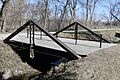
The 280th Street Bridge, built in 1898.
-
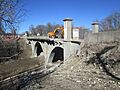
The Adair Viaduct, a concrete arch bridge from 1923.
-

The Adel Bridge, a Pratt Through Truss from 1882.
-
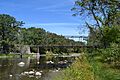
The Albright Bridge, a pinned Pratt through truss built in 1907.
-
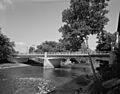
The Alden Bridge, a concrete rigid frame built in 1936.
-
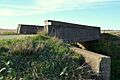
The Ames Creek Bridge, a concrete through girder from 1912.
-
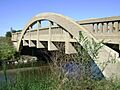
The Beaver Creek Bridge near Ogden, a concrete Marsh arch from 1919.
-
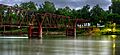
The Bellefountain Bridge, a pinned Pratt through truss from 1898.
-
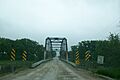
The Berkhimer Bridge, a Pennsylvania through truss built in 1899.
-
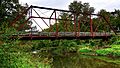
The Bertram Bridge, a pinned Pratt through truss from 1891.
-
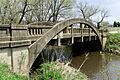
Big Creek Bridge 2, a concrete Marsh arch from 1917.
-
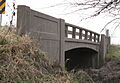
The Big Slough Creek Bridge, a concrete rigid frame from 1937.
-
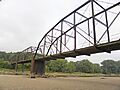
Boone Bridge 2, a Pennsylvania through truss from 1910.
-
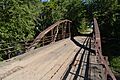
The Boone River Bridge, a riveted Warren pony truss from 1912.
-
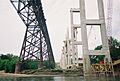
The Boone Viaduct, a Pratt deck truss built between 1899 and 1901.
-
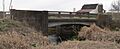
The Bridge near West Liberty, a welded steel rigid frame from 1937.
-
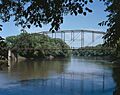
The Bridgeport Bridge, a Pennsylvania through truss from 1904.
-
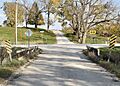
The Calamus Creek Bridge, a concrete Luten arch from 1905.
-
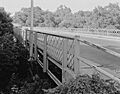
The Cascade Bridge, a Baltimore deck truss from 1896.
-
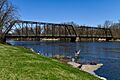
The Chain Lakes Bridge, a pinned Pratt through truss from 1884.
-
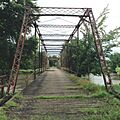
The Chambers Ford Bridge, a pinned Pratt through truss from 1890.
-
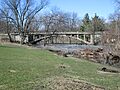
The Cherry Street Bridge, a concrete open-spandrel arch from 1929.
-
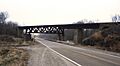
The CM and StP Railroad Underpass, a riveted Warren deck truss from 1903.
-
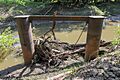
The Coal Creek Bridge, a pinned Pratt pony truss from 1889.
-
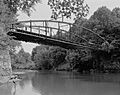
Corbett's/Eby's Mill Bridge, an arch beam truss from 1871.
-
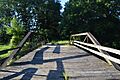
The County Line Bridge, a pinned Pratt through truss from 1893.
-
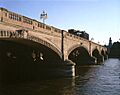
The Court Avenue Bridge, a filled spandrel arch from 1918.
-
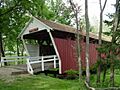
The Cutler–Donahoe Bridge, a covered bridge from 1871.
-
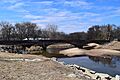
The Dunkerton Bridge, a concrete spandrel arch from 1909.
-

The Dunleith and Dubuque Bridge, a pinned Pratt through truss from 1872.
-
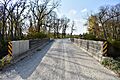
The East Indian Creek Bridge, a concrete Luten arch from 1912.
-
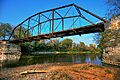
The Eldorado Bridge, a pinned Camelback truss from 1898-1899.
-
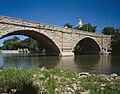
The Elkader Keystone Bridge, a stone arch bridge from 1888-1889.
-
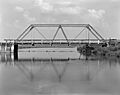
The Ellsworth Ranch Bridge, a Pratt/Warren through truss from 1895.
-
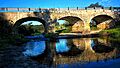
Ely's Stone Bridge, built in 1893.
-
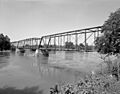
The Eveland Bridge, a pinned Whipple through truss from 1876-1877.
-
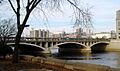
The First Avenue Bridge, an open spandrel arch from 1920.
-

The Fort Atkinson Bridge, a pinned Pratt through truss from 1892.
-
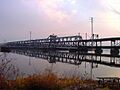
The Fort Madison Bridge, a swing-span through truss from 1925-1927.
-
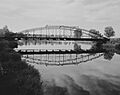
The Fremont Mill Bridge, a bowstring through arch truss from 1873.
-
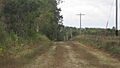
Gipple's Quarry Bridge, a pinned Pratt through truss from 1893.
-
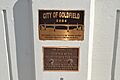
The Goldfield Bridge, a concrete deck girder from 1921.
-
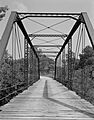
The Grand River Bridge near Leon, a pinned Pratt through truss from around 1890.
-
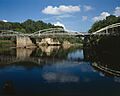
The Hale Bridge, a bowstring through arch truss from 1877-1879.
-
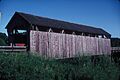
The Hammond Bridge, a Howe covered truss from 1894.
-
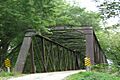
The Harvey Railroad Bridge, a pinned Pratt through truss from 1878.
-
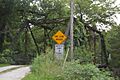
The Hawkeye Creek Bridge, a riveted Pratt through truss from 1909-1910.
-
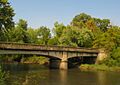
The Herrold Bridge, a concrete deck girder from 1921.
-
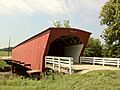
The Hogback Covered Bridge, a Town lattice design from 1884.
-
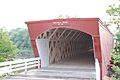
The Holliwell Covered Bridge, a Town lattice design from 1880.
-
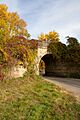
The IANR Railroad Underpass, a stone masonry arch from 1887.
-
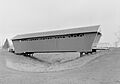
The Imes Covered Bridge, a covered bridge from 1870.
-
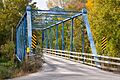
The Indian Creek Bridge, a pinned Pratt through truss from around 1880.
-
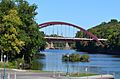
The Iowa Falls Bridge, an open spandrel arch from 1928.
-
The Jefferson Street Viaduct, a riveted Warren deck truss from 1935-1936.
-
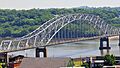
The Julien Dubuque Bridge, a cantilevered tied arch from 1943.
-
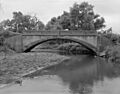
The Keigley Branch Bridge, a filled spandrel arch from 1913.
-
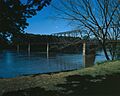
The Kilbourn Bridge, a pinned Pratt through truss from 1908-1909.
-
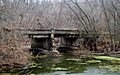
The Le Grand Bridge (1914), a concrete deck girder from 1914-1915.
-
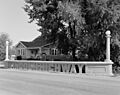
The Lincoln Highway Bridge, a single-span slab bridge from 1915.
-
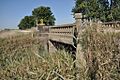
The Lincoln Highway-Little Beaver Creek Bridge, a concrete slab bridge from 1915.
-
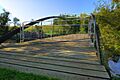
The Lower Road Bridge, a bowstring through arch truss from 1878.
-
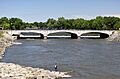
The Main Street Bridge, a concrete spandrel arch from 1909-1910.
-
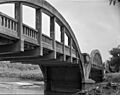
The Marsh Rainbow Arch Bridge, a triple rainbow arch from 1914.
-
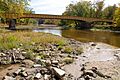
The Matsell Bridge, a continuous plate through girder from 1938-1939.
-
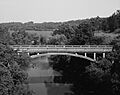
The Mederville Bridge, a concrete open spandrel arch from 1918.
-
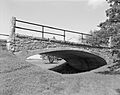
The Melan Bridge, a Melan design from 1893-1894.
-
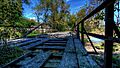
The Mill Creek Bridge near Clarence, a pinned Pratt pony truss from 1888-1889.
-
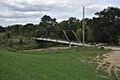
The Mill Creek Bridge near Cherokee, a pinned Pratt through truss from 1891.
-
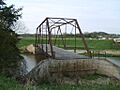
The Mill Race Bridge, a pinned Warren through truss from 1892.
-
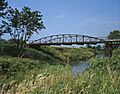
The Nishnabotna River Bridge, a bowstring pony arch-truss from before 1945.
-
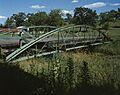
The Nodaway River Bridge, a bowstring pony arch-truss from 1876.
-
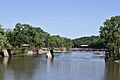
The Oakland Mills Bridge, a pinned Pratt through truss from 1876.
-
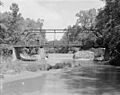
The Pine Mill Bridge, a pinned Pratt through truss from 1878.
-
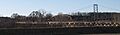
The Plattsmouth Bridge, a cantilevered through truss from 1929.
-
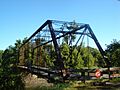
The Quarry Bridge, a pinned Whipple through truss from 1885.
-
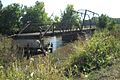
The Red Bridge near Monroe, a pinned Warren through truss from 1892.
-
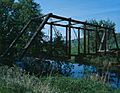
The Red Bridge near Postville, a timber/iron Pratt truss from 1920.
-
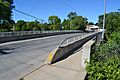
The River Street Bridge, an open spandrel arch from 1924.
-
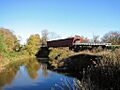
The Roseman Covered Bridge, a Town lattice design from 1883.
-
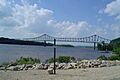
The Savanna-Sabula Bridge, a cantilever through truss from 1931-1932.
-
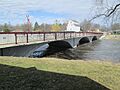
The Shell Rock Bridge, a concrete spandrel arch from 1915.
-
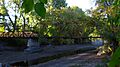
The Skunk River Bridge, a pinned Warren through truss from 1876 and 1916.
-
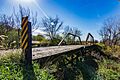
The Snider Bridge, a pinned Pratt pony truss from 1885.
-
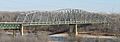
The South Omaha Bridge, a Warren through truss from 1933-1935.
-
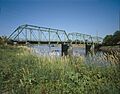
The Southwest Fifth St. Bridge, a pinned Pratt through truss from 1898.
-
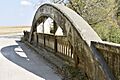
Squaw Creek Bridge 2, a concrete Marsh arch from 1918.
-
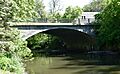
The State Street Bridge, a filled spandrel arch from 1903.
-
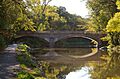
The Stewart Avenue Bridge, a filled spandrel arch from 1914.
-

The Steyer Bridge, built in 1875.
-
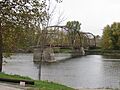
The Sutliff Bridge, a pinned Parker through truss from 1897-1898.
-
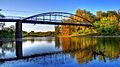
Taylor's Ford Bridge, a bowstring through arch-truss from 1872.
-
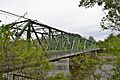
The Third Street Bridge, a riveted Pratt through truss from 1917.
-
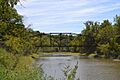
The Tremaine Bridge, a Camelback through truss from 1902.
-
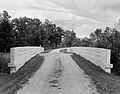
The Twin Bridge, a concrete Luten arch from 1910.
-
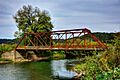
The Upper Iowa River Bridge, a riveted Pratt through truss from 1913-1914.
-
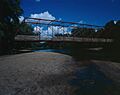
The Upper Paris Bridge, a pinned Whipple through truss from 1879.
-
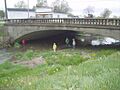
The Vine Street Bridge, a concrete Luten arch from 1910.
-
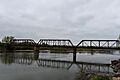
The Wabash Railroad Bridge, a pinned Pratt through truss from 1882.
-
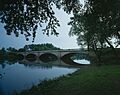
The Wapsipinicon River Bridge, a concrete spandrel arch from 1926-1927.
-
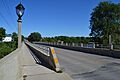
The Washington Avenue Bridge, an open spandrel arch from 1934.
-
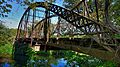
The Washington Mill Bridge, a bowstring through arch-truss from 1877-1878.
-
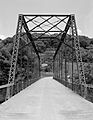
The West Auburn Bridge, a pinned Whipple through truss from 1880-1881.
-
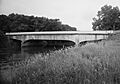
The Winnebago River Bridge, a concrete deck girder from 1926.
-
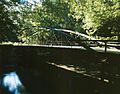
The McDowell Bridge, a bowstring through arch-truss from 1883.
-
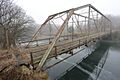
The Otranto Bridge, a Camelback through truss from 1899.
-
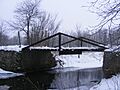
The Ten Mile Creek Bridge, a kingpost pony truss from around 1895.
-
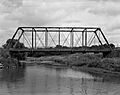
The White Water Creek Bridge, a pinned Pratt through truss from 1868.


.jpg)


.jpg)


.jpg)


.jpg)


