
Seminole facts for kids
| yat'siminoli | |
|---|---|
.jpg)
A Seminole mother and her children from the Brighton Reservation in Florida, 1949
|
|
| Total population | |
| est. 18,600 Seminole Nation of Oklahoma 15,572 enrolled Seminole Tribe of Florida 4,000 enrolled Miccosukee Tribe of Indians of Florida  400 enrolled |
|
| Regions with significant populations | |
| United States (  Oklahoma and Oklahoma and  Florida) Florida) |
|
| Languages | |
| Main: English Cultural: Mikasuki, Muscogee, Afro-Seminole Creole Historical: Spanish |
|
| Religion | |
| Protestant, Catholic, Green Corn Ceremony | |
| Related ethnic groups | |
| Ethnic origin: Choctaw, Muscogee, Yamasee, Yuchi, Gullah Subgroup: Black Seminole, Miccosukee, Mascogos |
The Seminole are a special group of Native American people. They first came together in Florida during the 1700s. Today, Seminole people live in both Oklahoma and Florida. They are organized into three main groups recognized by the government: the Seminole Nation of Oklahoma, the Seminole Tribe of Florida, and the Miccosukee Tribe of Indians of Florida. There are also other independent Seminole groups.
The Seminole people formed from different Native American groups. These groups moved into Spanish Florida in the early 1700s. Many were Muscogee Creeks from areas now known as Georgia and Alabama. They created a new culture and identity together.
In the mid-1900s, Seminole people in Florida and Oklahoma brought back old crafts and traditions. They started sharing their culture with tourists. Later, in the 1970s, Seminole tribes began running gaming businesses on their lands. This helped them earn money for their communities. These funds support things like education and healthcare.
The Seminole Tribe of Florida has been very successful with these businesses. They attract many visitors to Florida. In 2007, they even bought the famous Hard Rock Café company. They now own and operate many casinos and resorts under that name. These include large resorts on their Tampa and Hollywood lands.
Contents
What Does "Seminole" Mean?
The name "Seminole" probably comes from a Spanish word, cimarones. This word means "wild one," "untamed," or "runaway." It was used to describe people who lived freely in the woods. In the 1600s, the Spanish in Florida used it for Native people who left mission villages.
When British people heard this word from Hitchiti or Mikasuki speakers, they wrote it as "Semallone." Later, it became "Seminole." This name helped these groups show they were different from other Native American groups.
Another idea is that "Seminole" comes from the Muscogee word simanó-li. This word can mean "frontiersman" or "separatist." It shows how the Seminole people chose to live independently.
Seminole Culture and Traditions
The Seminole people call themselves yat'siminoli, which means "free people." This is because their ancestors bravely resisted attempts to control them for many years. They signed important agreements, called treaties, with the U.S. government.
Seminole culture shares many things with the Creek people. A very important tradition is the Green Corn Dance ceremony. Other customs include using a special "black drink" and ceremonial tobacco.
As the Seminoles settled in Florida, they created new ways of life. They built unique open-air homes with thatched roofs called chickees. Historically, the Seminoles spoke two main languages: Mikasuki and Creek. Both are part of the Muskogean languages family.
The Story of the Seminole People
How the Seminole Nation Began
Before Europeans arrived in the 1500s, many different Native American groups lived in Florida. Sadly, new diseases brought by Europeans caused a big drop in their population. By the early 1700s, much of Florida was empty, except for Spanish towns.
Around this time, many Muscogee Creek people started moving into Florida. They were trying to avoid conflicts with English settlers to the north. Other Native American groups, like the Yuchi and Yamasee, also moved to Florida. They were seeking safety after wars in other areas.
African Americans who had escaped slavery in the Southern Colonies also found refuge in Florida. These new arrivals settled in lands that were once home to groups like the Apalachee and Timucua. Over time, these different groups came together. They created a new, strong culture and identity, which became known as the Seminole.
Early Years: 1700s to Early 1800s
As these different groups settled in Florida, they mixed and formed a new culture. They called themselves "Seminole," meaning "wild" or "runaway" people. This name showed their independent spirit. By the early 1800s, about 4,000 Lower Creeks had joined the Seminole in Florida.
Hundreds of African Americans who had escaped slavery also settled near Seminole towns. They became known as Black Seminoles. They kept many parts of their own Gullah culture. The Seminole people spoke two main languages: Creek and Mikasuki. Creek became important for political talks.
The Seminole became more independent from other Creek groups. They built a strong trade network. They were generally on good terms with the Spanish and British during colonial times. After the American Revolutionary War, Florida became Spanish territory again.
The Seminole were led by a line of chiefs from the Alachua area. Chief Micanopy was a main leader until his death in 1849. He led the Seminole through a difficult time when the U.S. government forced many to move.
Conflicts with the United States

After the United States became independent, American settlers often attacked Seminole villages. The Seminoles fought back, especially in Georgia. They also continued to welcome African Americans who had escaped slavery. This made many Southern plantation owners very angry.
The U.S. Army often entered Spanish Florida to capture these freedom seekers. General Andrew Jackson led a campaign against the Seminoles in 1817–1818. This was called the First Seminole War. After this war, the U.S. gained control of much of Florida.
In 1819, the U.S. bought Florida from Spain. More American settlers moved in and wanted Native Americans removed from the land. They also wanted the Black Seminoles returned to slavery.

Many African Americans and Black Seminoles escaped from Florida to the British colony of the Bahamas. They found freedom there, especially on Andros Island.
The U.S. government made the 1823 Treaty of Camp Moultrie with the Seminoles. This treaty took away 24 million acres of land in northern Florida. The Seminoles were given a much smaller reservation in the Everglades.
In 1832, some Seminole chiefs signed the Treaty of Payne's Landing. They agreed to move west of the Mississippi River. However, many Seminoles refused to leave their homes.
The Seminole Wars
In 1835, the U.S. Army arrived to force the Seminoles to move. The Seminole leader Osceola led a brave resistance during the Second Seminole War. The Seminoles and their Black Seminole allies used guerrilla tactics. They knew the Everglades well and used it to their advantage against the larger U.S. forces.
Osceola was captured during a peace talk in 1837. He died in jail less than a year later. Other leaders, like Halleck Tustenuggee and John Horse, continued the fight. The war ended in 1842 after ten years of fighting.
The U.S. government spent a lot of money on this war. About 3,000 Seminoles and 800 Black Seminoles were forced to move to Indian Territory (now Oklahoma). Around 200 survivors retreated deep into the Everglades. They were finally left alone and never surrendered. The Florida Seminoles proudly say they are the only tribe in America never to have signed a peace treaty with the U.S. government.
The American Civil War and Beyond
During the American Civil War, the Florida government tried to get the Seminoles to fight for the Confederacy. However, the Seminoles remained neutral. They did not receive the promised help from the Confederacy.
After the war, the U.S. government changed its treaties with the Seminoles in Indian Country. This was because some had allied with the Confederacy. New treaties required freedom for Black Seminoles and reduced the power of tribal councils.
Life After the Wars: 20th Century Changes
_poses_with_a_group_of_Seminole_Indians.jpg)
In the early 1900s, the Florida Seminoles slowly started to connect with the U.S. government again. They traded alligator hides and bird feathers with white merchants.
In 1906, Governor Napoleon B. Broward began a plan to drain the Everglades. This project, along with new laws and World War I, hurt the demand for Seminole goods.
In 1930, the Seminoles received 5,000 acres (20 km²) of reservation land. Many did not move there until the 1940s. They reorganized their government and gained federal recognition in 1957 as the Seminole Tribe of Florida. More traditional groups near the Tamiami Trail formed their own tribe. They received federal recognition in 1962 as the Miccosukee Tribe of Indians of Florida.
During World War II, some Seminoles hid in the Everglades to avoid registering for the draft. Most were eventually convinced to register.
In the 1950s, Seminole tribes in Oklahoma and Florida filed land claims. They said they had not been paid fairly for their lands. In 1976, they were awarded $16 million. The tribes agreed on how to divide the money in 1990. This money now funds programs for education and health.
After being moved, the Seminoles in Oklahoma and Florida had little contact for many years. They both worked hard to keep their culture alive. Most Oklahoma Seminoles lived in what is now Seminole County.
Today, people living on the Oklahoma reservation are part of the Seminole Nation of Oklahoma. The Florida Seminoles re-established ties with the U.S. government in the early 1900s. They received 5,000 acres (20 km²) of reservation land in 1930.
How Seminole Society Works
The Seminoles organized their society around groups called itálwa. These were like towns or bands. They had a matrilineal kinship system. This means children belonged to their mother's family and clan. Property and important roles passed through the mother's side. Men held the main political and social positions. Each itálwa had civil, military, and religious leaders. They governed themselves but worked together for protection.
Seminole Languages
Historically, Seminole groups spoke two different Muskogean languages: Mikasuki and Muscogee. Today, Mikasuki is mainly spoken in Florida by about 1,600 people. The Seminole Nation of Oklahoma is working to bring back the use of Creek.
Muscogee is spoken by some Oklahoma Seminoles and about 200 older Florida Seminoles. Today, English is the main language for most Seminoles, especially younger generations. Many Mikasuki speakers also speak English.
Plants Used by Seminole People
The Seminole use the sharp spines of a plant called Cirsium horridulum (bristly thistle). They use these spines to make darts for blowguns.
Music
Seminole Life Today

During the Seminole Wars, the Seminole people began to divide. Some moved to Indian Territory (Oklahoma), while others stayed in Florida. They kept some common traditions, like powwows and ceremonies. However, their cultures grew apart due to their different lives.
Today, the Seminole Nation of Oklahoma, the Seminole Tribe of Florida, and the Miccosukee Tribe of Indians of Florida are all federally recognized. They are independent nations that manage their own affairs.
Seminole Beliefs and Religion
Seminole tribes often follow Christianity, including Protestantism and Catholicism. They also practice their traditional Native religion. This includes the stomp dance and the Green Corn Ceremony. These ceremonies have been practiced by Indigenous peoples for centuries.
Christian Seminoles have blended their traditions with their new faith. For example, Seminole hymns are sung in the Muscogee language. They include traditional Muscogee words.
In the 1950s, some Seminoles started adopting Christianity. This caused some tension with those who followed traditional ways. By the 1980s, many tribal members worked to revive traditional Green Corn Dance ceremonies. Today, many Seminole families participate in both religions. They have created a unique blend of Christian and tribal traditions.
Land Claims and Settlements
In 1946, the U.S. government created the Indian Claims Commission. This group looked at claims from tribes whose lands were taken. Both the Oklahoma and Florida Seminoles filed claims. In 1976, the Commission awarded the Seminole $16 million. This was for 24 million acres (97,000 km²) in Florida that they had given up in 1823.
The Black Seminoles were not recognized as legal members of the tribe at that time. They were not included in the treaty, even though they also owned land.
The Oklahoma and Florida tribes disagreed on how to divide the money. The Miccosukee and other traditional groups refused the money. They wanted their lands back, not payment.
The government held the money in trust. The Oklahoma and Florida tribes began talking to each other for the first time in over a century. In 1990, they agreed to divide the $40 million settlement. Three-quarters went to the Seminole Tribe of Oklahoma, and one-quarter to the Florida Seminoles, including the Miccosukee. This money now funds programs for their people, like education and health.
Seminole Nation of Oklahoma
As a result of the Second Seminole War, about 3,800 Seminoles and Black Seminoles were forced to move to Indian Territory (Oklahoma). During the American Civil War, some leaders, like John Chupco, supported the Union.
The Seminole Nation of Oklahoma now has about 16,000 members. They are divided into fourteen bands, similar to clans. The Seminole have a matrilineal system. Children belong to their mother's band and get their status from her family.
Two of the bands are "Freedmen Bands." These members are descendants of Black Seminoles who were freed after the Civil War. They have their own culture and traditions. The Nation is governed by an elected council with two members from each band. The capital is in Wewoka, Oklahoma.
Florida Seminoles

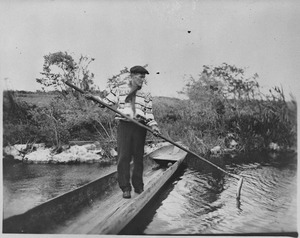
A few hundred Seminoles stayed in the Florida swamplands. They avoided being moved. They lived in the Everglades, keeping their unique way of life. They built "chickee" camps with thatched roofs. The Florida Seminoles are proud that their ancestors were never conquered.
In the 20th century, Florida Seminoles divided into two groups. Some were more traditional, and others were willing to adapt to reservations. Those who accepted reservation lands became the Seminole Tribe of Florida in 1957.
Many who kept traditional ways and spoke Mikasuki formed the Miccosukee Tribe of Indians of Florida. They gained federal recognition in 1962. Other Seminoles not part of these groups are known as Traditional or Independent Seminole.
Seminole Tribe of Florida

The Seminoles worked hard to adapt to changes in Florida. Natural disasters and government projects to drain the Everglades affected them. New homes, farms, and businesses changed their environment. In the 1930s, Seminoles slowly began moving to reservation lands.
Some Seminoles feared moving to reservations. They worried they would be forced to move to Oklahoma. Others moved for stability and jobs. Many Seminoles converted to Christianity, which encouraged them to move to reservations.
.jpg)
In 1957, the nation reorganized and formed the Seminole Tribe of Florida. Their headquarters are in Hollywood, Florida. They control several reservations, including Big Cypress, Brighton Reservation, and Tampa Reservation.
Miccosukee Tribe of Indians of Florida
A traditional group, known as the Trail Indians, moved their camps closer to the Tamiami Trail. They sold crafts to travelers there. They felt that the Seminoles on reservations were adopting too many European American ways.
In 1950, some reservation Seminoles filed a land claim suit. The Trail Indians did not support this. After the Seminole Tribe of Florida was recognized in 1957, the Trail Indians decided to form their own government. They sought recognition as the Miccosukee Tribe because they spoke the Mikasuki language.
The Miccosukee Tribe of Indians of Florida received federal recognition in 1962. The government gave them their own reservation lands. The Miccosukee Tribe set up a 333-acre (1.35 km²) reservation near Everglades National Park.
Seminole Business and Economy
In 2000, over 12,000 people identified as Seminole American. Another 15,000 identified as Seminole mixed with other backgrounds.
Florida Seminoles have raised cattle since the 1930s. This helped them become more self-sufficient. Today, the Seminole Tribe of Florida owns one of the largest cattle operations in Florida.
The two Florida tribes have built economies based on duty-free tobacco sales, tourism, and gaming. On December 7, 2006, the Seminole Tribe of Florida bought the Hard Rock Cafe chain. They had already licensed it for their casinos.
_(c112-02-26).jpg)
In the early 1900s, Florida became a popular tourist spot. Many Seminoles found jobs in cultural tourism. They sold traditional crafts, mostly made by women. Men performed traditional skills, like wrestling alligators. Crafts included woodcarving, basket weaving, and patchwork. These crafts are still practiced today.
Today, gaming is a big source of income for the tribes. Fewer Seminoles rely on crafts for money. The Miccosukee Tribe runs a casino, a resort, and an "Indian Village." At the village, they show traditional lifestyles to teach people about their culture.
In 1979, the Seminoles opened the first casino on Native American land. This started a huge industry for many tribes across the country. Gaming provides jobs and money for education, health insurance, and services for elders. It also funds other projects like farms and ecotourism.
Many places in Florida are named after the Seminole people:
- Seminole County
- Osceola County
- Seminole, a city in Pinellas County
- Seminole, a small community in Okaloosa County
- Historic Seminole Heights, a neighborhood in Tampa, Florida
There is also a Seminole County in Oklahoma and one in Georgia.
Seminole Population Over Time
The Seminole population seemed to grow in the early 1800s. It was estimated at 5,000 people in 1820 and up to 10,000 in 1836. This growth might have been due to more Native Americans moving to Florida.
During the Second Seminole War, many people were lost. About 4,000 Seminoles were moved to Indian Territory between 1832 and 1842. By 1884, the Seminole population in Oklahoma was around 3,000. The 1910 census reported only 1,729 Seminole.
See also
 In Spanish: Semínola para niños
- Seminole (clipper), an 1865 clipper ship
- Florida State Seminoles, athletic teams of Florida State University
