
Potato facts for kids
Quick facts for kids Potato |
|
|---|---|
 |
|
| Potato cultivars appear in many colors, shapes, and sizes. | |
Scientific classification  |
|
| Kingdom: | Plantae |
| Clade: | Tracheophytes |
| Clade: | Angiosperms |
| Clade: | Eudicots |
| Clade: | Asterids |
| Order: | Solanales |
| Family: | Solanaceae |
| Genus: | Solanum |
| Species: |
S. tuberosum
|
| Binomial name | |
| Solanum tuberosum |
|
| Script error: The function "autoWithCaption" does not exist. | |
Script error: No such module "Check for conflicting parameters".
The potato is a starchy tuberous vegetable that originally came from the Americas. Today, people eat it as a staple food all around the world. Potatoes are underground stem tubers of the plant Solanum tuberosum. This plant is a perennial in the nightshade family, called Solanaceae.
Wild potato species grow from the southern United States down to southern Chile. Scientists studied potato genes and found that all grown potatoes share a single home. Early farmers first grew them in southern Peru and northwestern Bolivia. People domesticated potatoes there between 7,000 and 10,000 years ago from the S. brevicaule group. Many varieties still grow in the Andes mountains, where the plant is an indigenous treasure.
Spanish explorers introduced potatoes to Europe during the late 1500s. Potatoes quickly became a crucial part of the global food supply. After many years of careful selective breeding, farmers created more than 5,000 different varieties of potatoes. Today, China and India grow the most potatoes on Earth.
Like the tomato, the potato plant belongs to the plant group Solanum. The green parts above the ground contain a natural poison called solanine. Normal underground tubers have tiny amounts of natural glycoalkaloids that do not hurt people. However, potato tubers that turn green in the sun can become toxic.
Contents
- What is in a name?
- What does the potato plant look like?
- Family tree and relatives
- History of the potato
- Breeding new varieties
- How farmers grow potatoes
- World production
- Potatoes and our changing climate
- Nutrition facts
- Natural plant poisons
- How people eat potatoes
- Art, history, and culture
- Images for kids
- See also
What is in a name?
The English word "potato" comes from the Spanish word patata. The Spanish took this word from the Taíno word batata. That word originally meant sweet potato, which is a different plant.
People also call potatoes "spuds." In the 1400s, a "spudde" was a short, sharp digging tool. Over time, people began using the word for things that looked short and thick. By the 1840s, people called the potato itself a spud.
What does the potato plant look like?

Potato plants are leafy, herbaceous plants that grow up to 1 meter tall. Their stems have soft hairs. Each leaf is split into several smaller pairs of leaflets. The flowers can be white, pink, blue, or purple, with bright yellow centers. Insects visit these pretty flowers to carry pollen between them.
The plant grows tubers underground to store food and water. These are actually thick underground stems, not true roots. They grow on the tips of underground runners called stolons. Tubers have small dips called "eyes." Tiny buds grow in these eyes to sprout into brand-new stems. Tubers also have tiny breathing holes called lenticels that take in air.
After the flowers fade, the plant grows small green fruits. These look just like tiny cherry tomatoes. Each little fruit holds about 300 tiny seeds. Humans cannot eat these fruits because they are poisonous.
Family tree and relatives
Potatoes belong to the nightshade family, called the Solanaceae. This large flowering plant family includes deadly nightshade (Atropa), mandrake (Mandragora), and tobacco (Nicotiana). It also includes delicious vegetables like peppers in the genus Capsicum.
| Solanaceae |
|
||||||||||||||||||||||||||||||||||||

The common farm potato is S. tuberosum. It is a tetraploid plant, which means it has 48 chromosomes. Other edible varieties are diploid with 24 chromosomes, such as S. phureja. Some varieties are triploid with 36 chromosomes, like S. chaucha, and one is a pentaploid with 60 chromosomes.
Scientists group farm potatoes into two main types. One type comes from the high Andes and likes short sunny days. The other type comes from the Chiloé Archipelago in Chile. This southern type grows very well during the long summer days of Europe and North America.
History of the potato
How farming began
Wild potatoes still grow naturally across North and South America. Ancient pre-Columbian farmers first tamed wild potatoes near Lake Titicaca high in the mountains. They learned to plant potatoes about 10,000 years ago from wild plants in the S. brevicaule family.
Archaeologists found preserved potato pieces at Ancon in Peru from 2500 BC. The local indigenous people in southern Chile farmed potatoes long before Europeans arrived. These early farmers learned how to grow hardy plants that survived cold mountain frost.
Spreading across the world
After Spanish explorers arrived in South America, they carried potatoes across the ocean. Sailors brought them along trade routes to many overseas ports. European farmers took a long time to trust this strange new underground food.
By 1750, people realized that potatoes produced lots of nutritious food on small plots. Potatoes helped feed growing cities across the Old World during the 1800s. However, European farmers planted only a few types, which caused low genetic diversity.
In 1845, a fungus-like organism called Phytophthora infestans attacked European potato fields. This plant disease, called late blight, destroyed crops across the Scottish Highlands. In Ireland, the disease caused a terrible disaster known as the Great Irish Famine.
Today, the International Potato Center in Lima, Peru, protects thousands of traditional germplasm samples. Scientists studied the potato genetic sequence, mapping all 12 chromosomes. They discovered that wild relatives like Solanum demissum and Solanum bulbocastanum have helpful genes. Plant scientists use these wild relatives to give cultivated crops natural resistance against pests. In 2024, the United Nations began celebrating the International Day of Potato every May 30th.
Breeding new varieties
How scientists improve potatoes
Potato plants are often self-incompatible, meaning a flower cannot easily pollinate itself to make seeds. Breeders must cross two different plants to create a hybrid. Researchers at Wageningen University and the company Solynta discovered special genes that make self-pollination possible.
Modern plant breeders use special gene tools like CRISPR-Cas9 to help potatoes grow better. They breed wild plants with farm crops to pass down helpful genes. This gives new varieties strong protection against bad weather and harmful fungi.
Amazing potato varieties


Farmers grow around 5,000 different potato varieties around the world. More than 3,000 of them grow only in the rugged Andes mountains. A single valley might have dozens of unique shapes and vibrant colors.
Cooking styles depend on the type of starch inside each tuber. Starch contains two main molecules called amylose and amylopectin. Floury baking potatoes have lots of starch, which makes them fluffy when mashed. Waxy boiling potatoes hold their shape in hot water, making them perfect for soups. Firm potatoes that fry well are selected to make crunchy potato chips.
Farmers harvest "new potatoes" early while the tubers are still young and tender. Famous types include the yellow Yukon Gold potato and the British Jersey Royal. Some potatoes are bred with red, yellow, or purple colors. Yellow potatoes contain healthy carotenoids, including alpha-carotene and beta-carotene, which turn into vitamin A. Blue and purple varieties get their bold shades from natural plant pigments called anthocyanins.
Genetically modified varieties

Scientists have created several genetically modified potatoes in laboratories. The company Monsanto Company created the 'New Leaf' potato using genes from Bacillus thuringiensis. This helped the plant fight off the destructive Colorado potato beetle without chemical sprays.
A company called BASF created a potato named 'Amflora'. This plant produced a special waxy potato starch made purely of amylopectin for paper factories. Later, a company called Simplot designed a potato that does not bruise easily. Their changes also lowered the creation of a chemical called acrylamide during high-heat cooking.
How farmers grow potatoes
Planting seed potatoes

Farmers do not usually plant true seeds from the green fruits. Instead, they plant special tubers called "seed potatoes." These tubers are certified healthy and free from dangerous diseases.
In the United Kingdom, farmers grow seed potatoes in Scotland. Cool ocean winds there keep away tiny aphid insects that carry viruses. In the United States, only 15 states have the right cold winters to grow seed potatoes safely.
The five phases of growth
A potato plant passes through five main growth steps:
- In phase one, green sprouts push up from the tuber, and tiny roots spread through the dirt.
- In phase two, green leaves capture sunlight for photosynthesis, and underground stolons begin to branch out.
- In phase three, the tips of these underground stems swell up into baby tubers, and flowers blossom.
- In phase four, the tubers rapidly swell and store starch, needing plenty of soil moisture.
- In phase five, the green vines turn yellow and die down, while the potato skins become thick and tough.
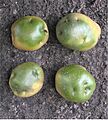
Tubers that poke out of the ground turn green from sunlight, making bitter solanine. Farmers pile dirt up against the plant stems to keep the tubers dark. Gardeners cover their soil with straw mulch to protect the crop. Potatoes prefer rich, well-drained loam soil with a balanced pH value. Farmers use a chisel plow and a disc harrow to prepare smooth fields. A large potato planter machine places the seed tubers in neat, long rows.
Pests and diseases

Potatoes face attacks from many microscopic enemies and insects. The mold-like killer Phytophthora infestans causes rapid late blight, which rots leaves and tubers. Other harmful problems include powdery scab, potato powdery mildew, and the tiny leafroll virus.
Insects love to munch on leafy potato plants. The striped Colorado potato beetle can strip every leaf off a plant in days. Other pests include the potato tuber moth, the green peach aphid (Myzus persicae), and tiny plant thrips. Below the soil, the potato cyst nematode feeds on roots, so farmers use smart crop rotation to keep soils clean.
Harvesting and storage
.jpg)
Small gardens can be harvested using a spade, but huge farms rely on a potato harvester. This large tractor machine lifts soil and tubers onto moving steel chains. Shakers drop the loose soil back onto the field. Soft air blowers help separate rocks, leaves, and rotten tubers from the good crop.
Farmers cure newly dug potatoes in warm rooms for several days. This resting time heals small cuts and makes the outer skin tough. Strong skins keep the potatoes from drying out or catching mold.
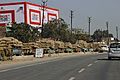
Potatoes rest best in cool, dark warehouses kept around 4 degrees Celsius. If a storage room gets too cold, starch turns into sweet sugar. Farmers make sure rooms have good mechanical ventilation so the sleeping tubers can breathe.
World production
 China China |
94.8 |
 India India |
57.1 |
 Ukraine Ukraine |
21.1 |
 United States United States |
19.1 |
 Russia Russia |
18.4 |
| World | 390 |
| Source: FAOSTAT | |
The world harvested 390 million tonnes of potatoes in 2024. China grew the most, producing nearly one-quarter of the world's supply. India took second place with huge harvests, followed by Ukraine, the United States, and Russia.
The total land used for farming potatoes covered over 17 million hectares worldwide. Because potatoes produce lots of food per acre, they remain essential for global nutrition.
Potatoes and our changing climate

Global Climate change brings new challenges for farmers everywhere. Potatoes grow best in cool, mild weather. Hot summer days above 30 degrees Celsius slow down tuber growth and damage starch. Scientists worry that hotter climates in places like Sub-Saharan Africa could lower potato yields.
Warmer air also helps destructive pests spread into new regions. Striped Colorado potato beetle bugs can survive farther north as winters get milder. Harmful plant bacteria like Ralstonia solanacearum grow faster in warm soils. However, cooler northern countries like Canada and Russia might find more land suitable for growing potatoes. Plant scientists work hard to breed new types that tolerate hot droughts and resist dangerous blights.
Nutrition facts
Potatoes are packed with energy-giving carbohydrates and provide useful dietary fiber. One boiled potato provides good amounts of vitamin C, vitamin B6, and pantothenic acid. It also delivers essential minerals like potassium.
Humans do not eat potatoes raw because uncooked starch is difficult to digest. Cooking turns the hard starch into soft, tasty fuel for our bodies. Because mashed potatoes digest quickly, they have a high glycemic index.
Natural plant poisons
Potato plants protect themselves from hungry bugs using natural poisons called glycoalkaloids. The main toxins are solanine and chaconine. These compounds are concentrated inside the leaves, stems, and little green fruits.
When tubers are exposed to bright light, their skins turn green and create solanine. Green potato skins taste extremely bitter and can cause stomachaches. You should always cut away green spots or peel green skins before cooking potatoes.
How people eat potatoes

People enjoy hundreds of different potato dishes worldwide. In South America, people freeze and dry potatoes in the cold mountain air to make chuño. This traditional Andean food can last for years without spoiling.
In the United Kingdom, potatoes are fried to make crispy chips for fish and chips. Families also bake mashed potatoes on top of meat to make warm shepherd's pie. In Eastern Europe, people grate potatoes to make baked puddings called kugelis or potato babka. Chefs in Lithuania make large stuffed potato dumplings called cepelinai. Italian cooks make soft potato pasta dumplings called gnocchi. In northern China, chefs stir-fry thin, crunchy potato strips with fresh green peppers.
Art, history, and culture

The potato has held a special place in human culture for thousands of years. In ancient Inca mythology, people prayed to Axomamma, the goddess of potatoes, for good crops. The ancient Moche people of northern Peru sculpted beautiful ceramic pots shaped like knobby potatoes.
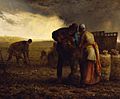
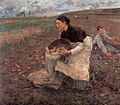
Famous European artists painted scenes of farm families digging potatoes from the soil. The Dutch painter Van Gogh created a famous painting called The Potato Eaters in 1885. The French painter Jean-François Millet showed hard-working farm life in his artwork The Potato Harvest. These paintings celebrated the simple, honest work of growing food for the world.
Images for kids
-
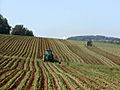
Field in Fort Fairfield, Maine
-
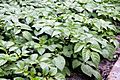
Immature potato plants
-
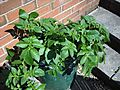
Potatoes grown in a tall bag
-
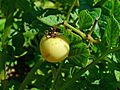
The inedible potato fruit
-
Tubers exposed to light turn green
-

Baked potato with sour cream and chives
-

German Bauernfrühstück ("farmer's breakfast")
-

Cepelinai dumplings
-
Transporting potatoes to cold storage in India
-

Potato ceramic from the Moche culture
-
The Potato Harvest by Jean-François Millet, 1855
-
The potato harvest by Jules Bastien-Lepage, 1877
-
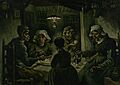
The Potato Eaters by Van Gogh, 1885
-

Girl peeling potatoes by Albert Anker, 1886


.jpg)

.jpg)


.jpg)


See also
 In Spanish: Solanum tuberosum para niños
- Great Famine (Ireland)
- Irish potato candy
- List of potato dishes
- List of potato museums
- Loy (spade)
- New World crops
- Potato battery
- International Year of the Potato
