
List of Oceanian species extinct in the Holocene facts for kids

This article is about animals and plants from Oceania that have disappeared forever during the Holocene period. The Holocene is our current geological time that started about 11,650 years ago and continues today.
Oceania is a large area in the Pacific Ocean. It includes places like Australasia, Melanesia, Micronesia, and Polynesia. Sadly, many species in Oceania became extinct as humans explored and settled these islands. Some areas, like Australia-New Guinea, New Zealand, and Hawaii, have so many extinct species that they have their own separate lists. This article focuses on the extinctions from the other Pacific Islands. This includes independent countries like Fiji and island territories like French Polynesia.
It's important to know that for many of these species, we don't know the exact date they disappeared. This is because there isn't enough information or records from the past.
Contents
- Mammals: Animals with Fur or Hair
- Birds: Feathered Friends
- Reptiles: Cold-Blooded Animals
- Amphibians: Frogs and Toads
- Insects: Tiny Creatures
- Snails and Slugs: Shells and Slime
- Plants: Green Life
- Images for kids
- See also
Mammals: Animals with Fur or Hair
Rodents: Gnawing Animals
Old World Rats and Mice
These are types of rats and mice that are now extinct.
| Common name | Scientific name | Where they lived | What happened |
|---|---|---|---|
| Buka Island mosaic-tailed rat | Melomys spechti | Buka Island, part of the Solomon Islands | The most recent remains of these rats are from about 3050 BCE. |
| Buka Island solomys | Solomys spriggsarum |
Possibly Extinct Rodents
These rodents might still be out there, but we haven't seen them for a very long time.
| Common name | Scientific name | Where they lived | What happened |
|---|---|---|---|
| Emperor rat | Uromys imperator | Aola, northern Guadalcanal, Solomon Islands | This rat hasn't been officially seen since 1886-1888. Some people say it survived until the 1960s, but we don't know for sure why it disappeared. |
| Guadalcanal rat | Uromys porculus | This rat also hasn't been seen since 1886-1888. We don't know why it went extinct. |
Bats: Flying Mammals
Megabats: Large Fruit Bats
These are large bats that mostly eat fruit.
| Common name | Scientific name | Where they lived | What happened |
|---|---|---|---|
| Nendo tube-nosed fruit bat | Nyctimene sanctacrucis | Nendö, Solomon Islands | Last seen in 1907. |
| Small Samoan flying fox | Pteropus allenorum | Upolu, Samoa | We only know about this bat from one specimen collected in 1856. |
| Large Samoan flying fox | Pteropus coxi | Samoa | Only two bats of this type were collected in 1839-1841. We don't know which island they came from, but some people reported seeing them until the 1980s. |
| Large Palau flying fox | Pteropus pilosus | Palau | Only two bats were collected before 1874. We don't know why they disappeared. |
| Guam flying fox | Pteropus tokudae | Guam | The last known bat was killed in 1968. There was an unconfirmed sighting in the late 1970s. It was likely hunted too much, and the introduced brown tree snake might have also played a part. |
Possibly Extinct Bats
These bats might still exist, but there's very little evidence.
| Common name | Scientific name | Where they lived | What happened |
|---|---|---|---|
| Montane monkey-faced bat | Pteralopex pulchra | Mount Makarakomburu, Guadalcanal, Solomon Islands | We only know about this bat from one specimen collected in 1991. We don't know why it disappeared. |
Vesper Bats: Common Bats
These are the most common type of bats.
| Common name | Scientific name | Where they lived | What happened |
|---|---|---|---|
| Insular myotis | Myotis insularum | Samoa | Last seen in the 1860s. |
Birds: Feathered Friends
Landfowl and Relatives: Chicken-like Birds
Sylviornithids
These were large, flightless birds.
| Scientific name | Where they lived | What happened |
|---|---|---|
| Megavitiornis altirostris | Fiji | The most recent remains of this bird are from 950 BCE. It couldn't fly and lived on the ground, so it was probably easily hunted by humans and new animals brought to the island. |
| Sylviornis neocaledoniae | Grande Terre and Isle of Pines, New Caledonia | The most recent remains are from 1120-840 BCE. This bird also couldn't fly and laid a single egg on the ground without incubating it. This made it an easy target for predators like cats and rats that humans brought with them. |
Megapodes: Mound-Builders
Megapodes are birds that often bury their eggs in mounds of dirt or sand.
| Common name | Scientific name | Where they lived | What happened |
|---|---|---|---|
| Consumed scrubfowl | Megapodius alimentum | Tonga and Fiji | This bird was found in Fiji around 850 BCE and in Tonga around 840-740 BCE. It could fly, but it disappeared a few centuries after humans arrived. This was likely due to hunting, egg collecting, and predators brought by humans. |
| Viti Levu scrubfowl | Megapodius amissus | Aiwa Levu, Fiji | This bird was likely flightless, making it very vulnerable to new predators. |
| Pile-builder megapode | Megapodius molistructor | New Caledonia | The most recent remains are from 86-428 CE. This was the largest megapode and was probably hunted to extinction by humans. |
| Megapodius sp. | Tonga | A large megapode, similar to the New Caledonian one, but likely a different species. It lived alongside the smaller M. alimentum but was rarer. | |
| Large Solomon Islands megapode | Megapodius sp. | Buka Island, part of the Solomon Islands | This bird is only known from prehistoric times. |
| Lini's megapode | Mwalau walterlinii | Efate, Vanuatu | This bird was found in areas where the ancient Lapita culture lived, dating back to 1050-850 BCE. It could fly, even though it was larger than any megapode alive today. |
Locally Extinct Megapodes
These birds still exist elsewhere but have disappeared from these specific islands.
| Common name | Scientific name | Where they lived | What happened | Pictures |
|---|---|---|---|---|
| Dusky megapode | Megapodius freycinet | From the Maluku Islands to Tonga | This bird is now only found from the Maluku Islands to New Guinea. It used to live in Tikopia, Solomon Islands, until the Lapita period. |

Pheasants and Allies
Locally Extinct Pheasants
| Common name | Scientific name | Where they lived | What happened | Pictures |
|---|---|---|---|---|
| Stubble quail | Coturnix pectoralis | Australia and New Caledonia | This quail disappeared from New Caledonia after humans settled there. |
_male_(14377891677),_crop.jpg)
Waterfowl: Ducks, Geese, and Swans
Ducks, Geese, and Swans
These are birds that live in or near water.
| Common name | Scientific name | Where they lived | What happened | Pictures |
|---|---|---|---|---|
| Rennell Island teal | Anas gibberifrons remissa | Rennell, Solomon Islands | This duck lived only in one lagoon on the island. It disappeared in 1959 after Tilapia fish were introduced, which probably ate all its food. | |
| Mariana mallard | Anas platyrhynchos oustaleti | Guam, Tinian, and Saipan, Mariana Islands | A program tried to save this duck by breeding it in captivity, but it failed. The last one died in 1981. | |
| Coues's gadwall | Mareca strepera couesi | Teraina, Line Islands, Kiribati | This duck was a subspecies that stayed in one place. It was discovered in 1874 but never seen alive again. | |
| Rota flightless duck | Anatidae incertae sedis | Rota, Mariana Islands | We only know about this duck from a small bone found. |


Pigeons and Doves
Pigeons and Doves
These are common birds known for their cooing sounds.
| Common name | Scientific name | Where they lived | What happened | Pictures |
|---|---|---|---|---|
| Henderson archaic pigeon | Bountyphaps obsoleta | Henderson Island, Pitcairn | The most recent remains of this pigeon are from 1000-1600 CE. It was the largest pigeon on the island and wasn't a strong flyer. It was likely hunted to extinction by early Polynesians. | |
| Kanaka pigeon | Caloenas canacorum | New Caledonia; possibly Vanuatu and Fiji | The most recent remains are from 86-428 CE. It was likely hunted to extinction. | |
| Caloenas sp. | Tonga | Known only from old bones. | ||
| Spotted green pigeon | Caloenas maculata | Unknown, possibly Tahiti, French Polynesia | We only know about this pigeon from two specimens collected in 1783 and 1823. Its colors suggest it lived in forests. It might have disappeared due to hunting or new predators before Europeans explored the Pacific widely. | |
| Tongan tooth-billed pigeon | Didunculus placopedetes | Tonga | The most recent remains are from 900-750 BCE. | |
| David's imperial pigeon | Ducula david | Ouvéa Island, New Caledonia | The most recent remains are from 550-50 BCE. | |
| Henderson imperial pigeon | Ducula harrisoni | Henderson Island, Pitcairn | The most recent remains are from 1000-1600 CE. | |
| Lakeba pigeon | Ducula lakeba | Lakeba and Aiwa Levu, Fiji | The most recent remains are from around 850 BCE. | |
| Ducula shutleri | Tonga | Known from old bones from 855-730 BCE. | ||
| Rota large ground dove | Gallicolumba sp. | Rota, Mariana Islands | Known from old bones. It lived alongside a smaller pigeon that is now gone from the Marianas. | |
| Huahine cuckoo-dove | Macropygia arevarevauupa | Huahine, Society Islands, French Polynesia | The most recent remains are from 700-1150 CE. | |
| Marquesas cuckoo-dove | Macropygia heana | Nuku Hiva and Ua Huka, Marquesa Islands | The most recent remains are from 300-1200 CE. | |
| Choiseul pigeon | Microgoura meeki | Choiseul, and possibly Bougainville and Malaita, Solomon Islands | Last officially seen in 1904. Later sightings are thought to be mistakes. It was probably wiped out by introduced dogs and cats. | |
| Viti Levu giant pigeon | Natunaornis gigoura | Viti Levu, Fiji | Known from old bones. It was the third largest pigeon ever, after the dodo. It couldn't fly and ate large fruits, seeds, and insects on the ground. Like the dodo, it was very easy to hunt and its eggs and chicks were eaten by new mammals. | |
| Mangaia ground dove | Pampusana erythroptera ssp. | Mangaia, Cook Islands | Known from old bones. | |
| Society Islands ground dove | Pampusana erythroptera ssps. | Moorea and Tahiti, French Polynesia | Known from a few specimens collected between 1768 and 1779. Differences in old paintings suggest there might have been two different subspecies. | |
| Tanna ground dove | Pampusana ferruginea | Tanna Island, Vanuatu | Only known from a painting made in 1774. | |
| Henderson ground dove | Pampusana leonpascoi | Henderson Island, Pitcairn | The most recent remains are from 1000-1600 CE. | |
| New Caledonian ground dove | Pampusana longitarsus | New Caledonia | The most recent remains are from 86-428 CE. | |
| Great ground dove | Pampusana nui | Marquesas, Cook, Society, and Tuamotu Islands | The most recent remains in Mangaia are from 1390-1470 CE. | |
| Thick-billed ground dove | Pampusana salamonis | Makira and Ramos, Solomon Islands | Known from one bird collected in 1882 and another in 1927. It likely disappeared due to hunting, predators like rats and cats, and loss of its home. | |
| Red-moustached fruit dove | Ptilinopus mercierii | Nuku Hiva and Hiva Oa, Marquesa Islands, French Polynesia | Last officially seen in Hiva Oa in 1922. It disappeared because of predators like great horned owls, cats, and rats that were brought to the islands. | |
| Mauke fruit dove | Ptilinopus rarotongensis byronensis | Mauke, Cook Islands | Only known from a description written in 1825. |


.JPG)


Possibly Extinct Pigeons and Doves
These might still be around, but it's uncertain.
| Common name | Scientific name | Where they lived | What happened | Pictures |
|---|---|---|---|---|
| White-headed Polynesian ground dove | Pampusana erythroptera albicollis | Hao, Hiti, and possibly Tahanea, French Polynesia | Last seen in the 1950s. It disappeared due to predators like cats and rats. |

Locally Extinct Pigeons and Doves
These birds still exist elsewhere but have disappeared from these specific islands.
| Common name | Scientific name | Where they lived | What happened | Pictures |
|---|---|---|---|---|
| Tongan ground dove | Pampusana stairi | From Wallis and Futuna to New Caledonia | This bird disappeared from New Caledonia after humans settled there. |

Rails and Cranes: Marsh Birds
Rails
Rails are often shy, ground-dwelling birds. Many island rails became flightless.
| Common name | Scientific name | Where they lived | What happened | Pictures |
|---|---|---|---|---|
| Nuku Hiva rail | Hypotaenidia epulare | Nuku Hiva, Marquesas Islands | The most recent remains are from around 950 CE. Its bones were found in ancient garbage piles, suggesting Polynesians hunted it. It probably disappeared due to hunting. | |
| Ua Huka rail | Hypotaenidia gracilitibia | Ua Huka, Marquesas Islands | The most recent remains are from around 600 CE. | |
| Niue rail | Hypotaenidia huiatua | Niue | Known from old bones from before humans arrived. It's believed to have been hunted to extinction or affected by human changes to its home. | |
| Tongatapu rail | Hypotaenidia hypoleucus | Tongatapu, Tonga | Known from a description in 1785. This bird was likely wiped out by feral dogs that Captain Cook brought to the island in 1773. | |
| Tahiti rail | Hypotaenidia pacifica | Tahiti and Mehetia, Society Islands, French Polynesia | Last reported in Tahiti in 1844 and Mehetia in the 1930s. It couldn't fly. Its disappearance was likely caused by introduced cats and rats. | |
| Tinian rail | Hypotaenidia pendiculentus | Tinian, Mariana Islands | Known from old bones. | |
| Aguiguan rail | Hypotaenidia pisonii | Aguiguan, Mariana Islands | Known from old bones, many of which show signs of being cooked. | |
| Bar-winged rail | Hypotaenidia poeciloptera | Viti Levu and Ovalau, Fiji | Last seen for sure before 1890. There were unconfirmed sightings later. It was possibly wiped out by introduced cats and mongooses. | |
| Mangaia rail | Hypotaenidia ripleyi | Mangaia, Cook Islands | Known from old bones. Likely disappeared due to hunting, changes to its home, and new mammal predators. | |
| Tahuata rail | Hypotaenidia roletti | Tahuata, Marquesas Islands | The most recent remains are from around 950 CE. This was one of only two rails known from eastern Polynesia. It was likely flightless and had strong legs for living on the ground. This made it very vulnerable to humans and new predators. | |
| Tabuai rail | Hypotaenidia steadmani | Tabuai, Austral Islands, French Polynesia | Known from old bones. It might have disappeared around 1300 CE, soon after Polynesians arrived. | |
| Huahine rail | Hypotaenidia storrsolsoni | Huahine, Society Islands, French Polynesia | The most recent remains are from 700-1150 CE. Its bones were found in Polynesian garbage piles, so it likely disappeared due to hunting or new mammals. | |
| Rota rail | Hypotaenidia temptatus | Rota, Mariana Islands | Known from old bones. | |
| Vava'u rail | Hypotaenidia vavauensis | Vava'u, Tonga | This bird was drawn alive in 1793. Its existence was confirmed by finding ancient Lapita culture remains. | |
| Eua rail | Hypotaenidia vekamatolu | ʻEua, Tonga | Known from old bones. It disappeared between the arrival of Polynesians around 1300 and Europeans in 1800. | |
| Wake Island rail | Hypotaenidia wakensis | Wake and Wilkes Island | This bird was likely hunted to extinction by Japanese soldiers during World War II when they were stuck on Wake Island. | |
| Hiva Oa rail | Hypotaenidia sp. | Hiva Oa, Marquesas Islands | One of only two rail species from eastern Polynesia. It couldn't fly. | |
| New Caledonian gallinule | Porphyrio kukwiedei | New Caledonia | The most recent remains are from 86-428 CE. | |
| Huahine swamphen | Porphyrio mcnabi | Huahine, Society Islands, French Polynesia | The most recent remains are from 700-1150 CE. | |
| Marquesas swamphen | Porphyrio paepae | Hiva Oa and Tahuata, Marquesas Islands, French Polynesia | Although known from old bones, it might have survived until the 20th century. A painting from 1902 shows a bird being hunted by a dog, and someone saw a similar bird in 1937. | |
| Rota swamphen | Porphyrio sp. | Rota, Mariana Islands | Known from old bones. | |
| Viti Levu rail | Vitirallus watlingi | Viti Levu, Fiji | Known from old bones. It seemed to live only in lowlands, which were more likely to have fires. It probably disappeared due to hunting, habitat loss, and predators like the Polynesian rat. | |
| Kosrae crake | Zapornia monasa | Kosrae, Micronesia | Known from two birds collected in 1827-1828. Locals considered it sacred and didn't hunt it. It likely disappeared due to rats, which were common when scientists looked for the bird again in 1880. | |
| Tahiti crake | Zapornia nigra | Tahiti, Society Islands, and possibly Mangaia, Cook Islands | This bird was drawn in the 1770s. It disappeared soon after from Tahiti. | |
| Mangaia crake | Zapornia rua | Mangaia, Cook Islands | Known from old bones. | |
| Easter Island crake | Zapornia sp. | Easter Island, Chile | Disappeared between 1000 and 1430 CE. | |
| Buka swamphen | Porphyrio sp. | Buka Island, part of the Solomon Islands | This bird is only known from prehistoric times. | |
| Easter Island rail | Rallidae incertae sedis | Easter Island, Chile | Disappeared between 1000 and 1430 CE. | |
| Rallidae incertae sedis | Tonga | A rail species known from 855-730 BCE. |


.jpg)


Possibly Extinct Rails
These rails might still be alive, but we don't have recent confirmed sightings.
| Common name | Scientific name | Where they lived | What happened | Pictures |
|---|---|---|---|---|
| New Caledonian rail | Gallirallus lafresnayanus | New Caledonia | Not seen for sure since 1890. It was likely wiped out by predators like rats, cats, and pigs. However, some unconfirmed sightings suggest it might still survive in mountain forests where predators can't reach. | |
| Samoan wood rail | Pareudiastes pacificus | Savai'i, Samoa | Last seen in 1873. It was likely wiped out by hunting and predators like rats, cats, dogs, and pigs. | |
| Makira woodhen | Pareudiastes silvestris | Makira, Solomon Islands | Known from one bird collected in 1929 and one sighting in 1953. It likely disappeared due to introduced predators like cats, dogs, and electric ants. |


Rails Extinct in the Wild
These rails only survive in captivity or have been reintroduced to small, protected areas.
| Common name | Scientific name | Where they lived | What happened | Pictures |
|---|---|---|---|---|
| Guam rail | Hypotaenidia owstoni | Guam | This bird disappeared from the wild in 1987 because of the introduced brown tree snake. After a breeding program, some were released onto smaller islands in 2010. |

Locally Extinct Rails
These birds still exist elsewhere but have disappeared from these specific islands.
| Common name | Scientific name | Where they lived | What happened | Pictures |
|---|---|---|---|---|
| Lewin's rail | Lewinia pectoralis | Australia, Wallacea, New Guinea, and New Caledonia | This bird disappeared from New Caledonia after humans settled there. |

Shorebirds: Birds of the Coast
Sandpipers
These birds are often found near water, probing for food.
| Common name | Scientific name | Where they lived | What happened | Pictures |
|---|---|---|---|---|
| Viti Levu snipe | Coenocorypha miratropica | Viti Levu, Fiji | Known from old bones. It probably disappeared due to predators like pigs, dogs, and Polynesian rats. | |
| New Caledonian snipe | Coenocorypha neocaledonica | New Caledonia | Known from two old arm bones. It was probably wiped out by introduced rats. | |
| Christmas sandpiper | Prosobonia cancellata | Kiritimati, Kiribati | Only known from one bird collected in 1778, which was later lost. It was probably wiped out by invasive cats. | |
| Moorea sandpiper | Prosobonia ellisi | Moorea, Society Islands, French Polynesia | Only known from two paintings based on birds collected in 1777. It was probably wiped out by invasive mammals, and habitat loss might have also played a part. | |
| Tahiti sandpiper | Prosobonia leucoptera | Tahiti, Society Islands, French Polynesia | Known from one bird collected in 1773. It might have been wiped out by habitat loss caused by invasive pigs and goats, or by predators like rats. |


Gulls, Terns, and Skimmers
These are seabirds often seen near coasts.
| Common name | Scientific name | Where they lived | What happened |
|---|---|---|---|
| Huahine gull | Chroicocephalus utunui | Huahine, Society Islands, French Polynesia | The most recent remains are from 700-1150 CE. It might have disappeared due to hunting, loss of its home, disease, or predators like introduced mammals. |
Buttonquails
These are small, quail-like birds.
| Common name | Scientific name | Where they lived | What happened |
|---|---|---|---|
| New Caledonian buttonquail | Turnix varius novaecaledoniae | New Caledonia | Only known from one specimen collected in 1889 and old bones. It likely disappeared due to deforestation (cutting down forests) by burning and introduced mammals. |
Pelicans, Herons, and Ibises
Herons
Herons are long-legged, long-necked birds that wade in water.
| Common name | Scientific name | Where they lived | What happened |
|---|---|---|---|
| Easter Island heron | cf. Egretta sp. | Easter Island, Chile | Disappeared around 1000-1430 CE. |
| Niue night heron | Nycticorax kalavikai | Niue | The most recent remains are from 2550-1550 BCE. It likely disappeared due to hunting and predators like introduced mammals. |
| Nycticorax sp. | Tonga | Known from old bones. |
Hawks and Relatives
Hawks, Eagles, Kites, Harriers and Old World Vultures
These are birds of prey.
| Common name | Scientific name | Where they lived | What happened |
|---|---|---|---|
| Powerful goshawk | Accipiter efficax | New Caledonia | These two species were last dated to 86-428 CE. We don't know why they disappeared, especially since New Caledonia still has two other hawk species. It's possible they lived in different places or that the current hawks arrived after these ones disappeared. |
| Gracile goshawk | Accipiter quartus | ||
| Vanuatu hawk | Accipiter sp. | Vanuatu | Known from old bones. It disappeared after the Lapita people arrived. |
Owls
True Owls
Locally Extinct Owls
These owls still exist elsewhere but have disappeared from these specific islands.
| Common name | Scientific name | Where they lived | What happened | Images |
|---|---|---|---|---|
| Morepork | Ninox novaeseelandiae | New Caledonia, Lord Howe Island, Norfolk Island, and New Zealand | This owl disappeared from New Caledonia after humans settled there. |

Barn-owls
| Common name | Scientific name | Where they lived | What happened |
|---|---|---|---|
| New Caledonian barn owl | Tyto letocarti | New Caledonia | This owl mostly ate reptiles. It disappeared when the number of reptiles dropped after humans and the Polynesian rat arrived in New Caledonia. Later, the common barn owl (T. alba), which eats rodents, moved to the island. |
Kingfishers and Relatives
Kingfishers
Kingfishers Extinct in the Wild
These kingfishers only survive in captivity.
| Common name | Scientific name | Where they lived | What happened | Pictures |
|---|---|---|---|---|
| Guam kingfisher | Todiramphus cinnamominus | Guam | After the introduced brown tree snake caused a huge drop in their numbers, the last 29 birds were caught in 1986 and taken to the United States. There are now over a hundred in captivity. |

Parrots
Old World Parrots
These are colorful, intelligent birds.
| Common name | Scientific name | Where they lived | What happened | Pictures |
|---|---|---|---|---|
| Raiatea parakeet | Cyanoramphus ulietanus | Raiatea, Society Islands, French Polynesia | Known from two birds believed to have been collected during Captain Cook's voyages in the 1770s. | |
| Black-fronted parakeet | Cyanoramphus zealandicus | Tahiti, Society Islands, French Polynesia | Last collected in 1844. It might have disappeared due to habitat loss, hunting, or new predators. | |
| Oceanic eclectus | Eclectus infectus | 'Eua, Lifuka, Uiha, and Vava'u in Tonga; possibly also Vanuatu and Fiji | Known from old bones. A live bird was likely drawn in 1793. It probably disappeared soon after due to hunting and new mammals. | |
| Sinoto's lorikeet | Vini sinotoi | Marquesas and Society Islands | The most recent remains are from 810-1025 CE. It might have disappeared due to Polynesian rats. | |
| Conquered lorikeet | Vini vidivici | Marquesas, Society, and Cook Islands | The most recent remains are from 1000-1200 CE. It might have disappeared due to Polynesian rats. | |
| Easter Island parrots | Psittaciformes incertae sedis | Easter Island, Chile | Two species disappeared between 1000 and 1430 CE. |


Possibly Extinct Parrots
These parrots might still be alive, but it's uncertain.
| Common name | Scientific name | Where they lived | What happened | Pictures |
|---|---|---|---|---|
| New Caledonian lorikeet | Charmosyna diadema | New Caledonia | Known from two birds collected before 1860. There was an unconfirmed sighting in 1976. |

Perching Birds: Songbirds
Pittas
Pittas are colorful, shy birds that live on the forest floor.
| Common name | Scientific name | Where they lived | What happened | Pictures |
|---|---|---|---|---|
| Bougainville black-faced pitta | Pitta anerythra pallida | Bougainville Island, part of the Solomon Islands | Last seen in 1938. |

Fantails and Silktails
Fantails are small, active birds that spread their tails like a fan.
| Common name | Scientific name | Where they lived | What happened | Pictures |
|---|---|---|---|---|
| Guam rufous fantail | Rhipidura rufifrons uraniae | Guam | Last seen in 1984 or 1985. It disappeared mainly because of the introduced brown tree snake, but rats, monitor lizards, and possibly pesticides also played a role. |

Reed Warblers
These are small, plain birds that live in reeds and bushes.
| Common name | Scientific name | Where they lived | What happened | Pictures |
|---|---|---|---|---|
| Mangareva reed warbler | Acrocephalus astrolabii | Unknown; possibly the Gambier Islands, French Polynesia | Only known from two birds collected in the 1820s or 1830s. It likely disappeared due to deforestation and introduced predators. | |
| Moorea reed warbler | Acrocephalus longirostris | Moorea, Society Islands, French Polynesia | Last seen in 1973. It probably disappeared due to severe deforestation, predators, or avian malaria (a bird disease) that arrived in the 1970s. | |
| Nightingale reed warbler | Acrocephalus luscinius | Guam | Last seen in 1969. It was wiped out by the introduced brown tree snake. Habitat loss, fires, pesticides, and other predators also contributed. | |
| Huahine warbler | Acrocephalus musae garretti | Huahine, Society Islands, French Polynesia | Only known from five birds collected around 1869. It likely disappeared due to introduced rats. | |
| Raiatea warbler | Acrocephalus musae musae | Raiatea, Society Islands, French Polynesia | Last collected between 1870 and 1873. | |
| Aguijan reed warbler | Acrocephalus nijoi | Aguiguan, Mariana Islands | Last seen in the mid-1990s. It disappeared due to habitat loss from deforestation and goats eating plants. | |
| Pagan reed warbler | Acrocephalus yamashinae | Pagan, Mariana Islands | Last seen in the 1970s. It was wiped out by draining its wetland home for farming, livestock eating plants, predators like cats and rats, and military land use. A volcanic eruption in 1981 might have finished it off. |


Grassbirds and Allies
Possibly Extinct Grassbirds
| Common name | Scientific name | Where they lived | What happened |
|---|---|---|---|
| Vanua Levu long-legged thicketbird | Cincloramphus rufus cluniei | Vanua Levu, Fiji | Only known from one specimen collected in 1974. There was an unconfirmed sighting in 1990. |
White-eyes
White-eyes are small, active birds, often with a ring of white feathers around their eyes.
| Common name | Scientific name | Where they lived | What happened | Pictures |
|---|---|---|---|---|
| Guam bridled white-eye | Zosterops conspicillatus conspicillatus | Guam | Last seen in 1983. It disappeared due to the introduced brown tree snake. |

Starlings
Starlings are medium-sized, often dark-colored birds.
| Common name | Scientific name | Where they lived | What happened | Pictures |
|---|---|---|---|---|
| Kosrae starling | Aplonis corvina | Kosrae, Micronesia | Last collected in 1828. It disappeared due to introduced rats. | |
| Huahine starling | Aplonis diluvialis | Huahine, Society Islands, French Polynesia | The most recent remains are from 700-1150 CE. | |
| Mysterious starling | Aplonis mavornata | Mauke, Cook Islands | Only known from one specimen collected in 1825. It disappeared due to introduced rats. | |
| Raiatea starling | Aplonis ulietensis | Raiatea, Society Islands, French Polynesia | Known from a painting and descriptions from 1774. It's thought to have been wiped out by introduced rats. | |
| Erromango starling | Aplonis sp. | Erromango, Vanuatu | Last dated after 950 BCE. |


Possibly Extinct Starlings
| Common name | Scientific name | Where they lived | What happened | Pictures |
|---|---|---|---|---|
| Pohnpei starling | Aplonis pelzelni | Pohnpei, Micronesia | Last collected in 1995, with unconfirmed sightings in 2008. The reasons for its decline are unknown, but habitat loss, hunting, and introduced rats have been suggested. |

Monarch Flycatchers
These are small, active birds that catch insects in flight.
| Common name | Scientific name | Where they lived | What happened | Pictures |
|---|---|---|---|---|
| Guam flycatcher | Myiagra freycineti | Guam | This bird's population crashed quickly after brown tree snakes were introduced. The last male died in captivity in 1984. Introduced diseases might have also played a part. | |
| Myiagra sp. | Ua Huka, Marquesas Islands, French Polynesia | Known from old bones. | ||
| Eiao monarch | Pomarea fluxa | Eiao, Marquesas Islands, French Polynesia | Last seen in 1977. It disappeared soon after a new bird was introduced, suggesting a bird disease might have spread. It also declined due to habitat loss from sheep grazing and predators like cats and rats. | |
| Nuku Hiva monarch | Pomarea nukuhivae | Nuku Hiva, Marquesas Islands, French Polynesia | Last seen in the 1930s. It declined due to habitat loss from grazing and fires, and predators like the black rat. | |
| Maupiti monarch | Pomarea pomarea | Maupiti, Society Islands, French Polynesia | Only known from one specimen collected in 1823. It was likely wiped out by introduced species. |


Possibly Extinct Monarch Flycatchers
| Common name | Scientific name | Where they lived | What happened |
|---|---|---|---|
| Ua Pou monarch | Pomarea mira | Ua Pou, Marquesas Islands, French Polynesia | Last confirmed record in 1985, with an unconfirmed sighting in 2010. It likely declined due to habitat loss from overgrazing and fires, along with predators. |
Reptiles: Cold-Blooded Animals
Crocodilians: Large Reptiles
Mekosuchines
These were ancient crocodiles.
| Scientific name | Where they lived | What happened | Pictures |
|---|---|---|---|
| Mekosuchus inexpectatus | Grande Terre and Isle of Pines, New Caledonia | Possibly survived until 140-280 CE. | |
| Mekosuchus kalpokasi | Efate, Vanuatu | Known from old bones from around 1050 BCE. | |
| Volia athollandersoni | Fiji | The most recent remains are from 950 BCE. |


Squamates: Lizards and Snakes
Australia-New Zealand Geckos
| Common name | Scientific name | Where they lived | What happened | Pictures |
|---|---|---|---|---|
| Delcourt's giant gecko | Gigarcanum delcourti | Unknown; probably New Caledonia | Only known from a stuffed specimen found in a museum in 1986. We don't know where or when it was collected, but it's thought to be from the 1830s. It was once thought to be from New Zealand, but recent studies show it's from New Caledonia. |

Skinks
Skinks are a type of lizard.
| Common name | Scientific name | Where they lived | What happened |
|---|---|---|---|
| Tonga ground skink | Tachygia microlepis | Tonga | Only known from specimens collected in the 1820s. |
Iguanas and Chuckwallas
These are types of lizards.
| Common name | Scientific name | Where they lived | What happened | Pictures |
|---|---|---|---|---|
| Tongan giant iguana | Brachylophus gibbonsi | Tonga and Aiwa Levu, Fiji | It might have been brought to Fiji by Tongan visitors. It was hunted to extinction, disappearing from Tonga around 900 BCE and from Fiji around 350 BCE. | |
| Fiji giant iguana | Lapitiguana impensa | Fiji | The most recent remains are from 950 BCE. |


Monitor Lizards
Monitor lizards are large lizards.
| Common name | Scientific name | Where they lived | What happened |
|---|---|---|---|
| New Caledonian goanna | Varanus sp. | New Caledonia | It was present before humans arrived and is thought to have disappeared because of human activity, though we don't have direct proof of humans interacting with it. |
Turtles and Tortoises
Horned Turtles
These were ancient turtles with horns on their heads.
| Common name | Scientific name | Where they lived | What happened | Pictures |
|---|---|---|---|---|
| Vanuatu horned turtle | Meiolania damelipi | Vanuatu and Viti Levu, Fiji | Hunted to extinction by about 810 BCE. | |
| New Caledonia horned turtle | Meiolania mackayi | New Caledonia | Disappeared around 531 CE. |

Amphibians: Frogs and Toads
Frogs
Wrinkled Ground Frogs
| Common name | Scientific name | Where they lived | What happened |
|---|---|---|---|
| Giant Fiji ground frog | Platymantis megabotoniviti | Viti Levu, Fiji | This frog disappeared after humans arrived in Fiji, bringing rats with them. Unlike other frogs that survived, this one lived only on the ground and not near water or in trees. It probably had large eggs and young, making it easy prey for new predators. |
Insects: Tiny Creatures
Beetles
Predaceous Diving Beetles
| Scientific name | Where they lived |
|---|---|
| Rhantus novacaledoniae | New Caledonia |
Moths and Butterflies
Smoky Moths
| Common name | Scientific name | Where they lived | What happened | Pictures |
|---|---|---|---|---|
| Levuana moth | Levuana iridescens | Viti Levu, Fiji | Last seen in 1956. It disappeared after a parasitic fly was introduced to control pests on coconut farms. However, some argue this moth wasn't native to Fiji and that its disappearance is due to less insect research after Fiji became independent. |

Snails and Slugs: Shells and Slime
Land Snails
Bothriembryontidae Family
These are types of land snails.
| Scientific name | Where they lived | What happened | Pictures |
|---|---|---|---|
| Leucocharis loyaltiensis | New Caledonia | Last seen in the 1900s. | |
| Leucocharis porphyrocheila | New Caledonia | Last seen in the 1900s. |
.jpeg)
Charopidae Family
These are types of land snails.
| Scientific name | Where they lived | What happened |
|---|---|---|
| Mautodontha acuticosta | French Polynesia | Last seen in the 1880s. |
| Mautodontha consimilis | French Polynesia | Last seen in the 1880s. |
| Mautodontha consobrina | French Polynesia | Last seen in the 1880s. |
| Mautodontha maupiensis | French Polynesia | Last seen in the 1880s. |
| Mautodontha parvidens | French Polynesia | Last seen in the 1880s. |
| Mautodontha punctiperforata | French Polynesia | Last seen in the 1880s. |
| Mautodontha saintjohni | French Polynesia | Last seen in the 1880s. |
| Mautodontha subtilis | French Polynesia | Last seen in the 1880s. |
| Mautodontha unilamellata | Cook Islands | Last seen in the 1880s. |
| Mautodontha zebrina | Cook Islands | Last seen in the 1880s. |
Helicarionidae Family
| Common name | Scientific name | Where they lived |
|---|---|---|
| Mount Matafao different snail | Diastole matafaoi | American Samoa |
Partulidae Family: Tree Snails
These snails are known for living on trees. Many disappeared due to an introduced predatory snail.
| Common name | Scientific name | Where they lived | What happened | Pictures |
|---|---|---|---|---|
| Huahine Tiny Tree Snail | Partula arguta | Huahine, Society Islands, French Polynesia | Wiped out by the introduced predatory snail Euglandina rosea. The last captive snail died in 1994. | |
| Raiatean Ground Partula | Partula atilis | Raiatea, Society Islands, French Polynesia | Last seen in 1992. Wiped out by E. rosea. | |
| Golden Partula | Partula aurantia | Moorea, Society Islands, French Polynesia | Not seen since E. rosea was introduced in 1977. | |
| Auriculate Tree Snail | Partula auriculata | Raiatea, Society Islands, French Polynesia | Last seen in 1992. Wiped out by E. rosea. | |
| Tahaa Banded Tree Snail | Partula bilineata | Taha'a, Society Islands, French Polynesia | Not seen since E. rosea was introduced in the 1980s. | |
| Thick-Lipped Tree Snail | Partula crassilabris | Raiatea, Society Islands, French Polynesia | Believed to have been wiped out by E. rosea around 1991-1992. | |
| Raiatean Banded Tree Snail | Partula cuneata | Raiatea, Society Islands, French Polynesia | Last seen in 1992. Wiped out by E. rosea. | |
| Aphrodite's Tree Snail | Partula cytherea | Papenoo valley, Tahiti, French Polynesia | Not seen since E. rosea was introduced in 1977. | |
| Raiatean Streaked Tree Snail | Partula dolichostoma | Raiatea, Society Islands, French Polynesia | Last seen in 1992. Wiped out by E. rosea. | |
| Slender Mountain Tree Snail | Partula dolorosa | Raiatea, Society Islands, French Polynesia | Last seen in 1992. Wiped out by E. rosea. | |
| Tahaa Hermit Tree Snail | Partula eremita | Taha'a, Society Islands, French Polynesia | Not seen since E. rosea was introduced in the late 1980s. | |
| Burch's Partula | Partula jackieburchi | Tahiti, Society Islands, French Polynesia | Not seen after E. rosea was introduced in 1977. | |
| Vinuous Tree Snail | Partula labrusca | Raiatea, Society Islands, French Polynesia | Not seen in the wild since 1992 due to E. rosea. The last captive snail died in 2002. | |
| Thin-Lipped Tree Snail | Partula leptochila | Raiatea, Society Islands, French Polynesia | Last seen in 1992. Wiped out by E. rosea. | |
| Raiatean Ground Partula | Partula levistriata | Raiatea, Society Islands, French Polynesia | Last seen in 1992. Wiped out by E. rosea. | |
| Bora Bora Tree Snail | Partula lutea | Bora Bora, Society Islands, French Polynesia | Not seen since E. rosea was introduced in 1986. | |
| Tahaa Large Tree Snail | Partula planilabrum | Tahaa, Society Islands, French Polynesia | Not seen since E. rosea was introduced in the late 1980s. | |
| Tahitian Banded Tree Snail | Partula producta | Faurahi Valley, Tahiti, French Polynesia | Not seen since E. rosea was introduced in 1977. | |
| Raiatean Banded Partula | Partula protracta | Raiatea, Society Islands, French Polynesia | Thought to have disappeared around 1991-1992 because of E. rosea. | |
| Remote Tree Snail | Partula remota | Raiatea, Society Islands, French Polynesia | Thought to have disappeared around 1991-1992 because of E. rosea. | |
| Mount Alifana partula | Partula salifana | Guam | ||
| Arrow-head tree snail | Partula sagitta | Tahaa, Society Islands, French Polynesia | Not seen since E. rosea was introduced in the late 1980s. | |
| Swollen Raiatea tree snail | Partula turgida | Raiatea, Society Islands, French Polynesia | Last seen in the wild in 1992 due to E. rosea. The last captive snail died in 1996. | |
| Tahaa Squat Tree Snail | Partula umbilicata | Tahaa, Society Islands, French Polynesia | Not seen since E. rosea was introduced in the late 1980s. |
.jpeg)

Possibly Extinct Tree Snails
These snails might still be alive, but it's uncertain.
| Common name | Scientific name | Where they lived | What happened |
|---|---|---|---|
| Pohnpei ground partula snail | Partula guamensis | Pohnpei, Micronesia | Last seen in 1936. It declined due to predators like flatworms, brown rats, black rats, Polynesian rats, and the snail E. rosea. |
Tree Snails Extinct in the Wild
These snails only survive in captivity or have been reintroduced to small, protected areas.
| Common name | Scientific name | Where they lived | What happened | Pictures |
|---|---|---|---|---|
| Toothed Partula | Partula dentifera | Raiatea, Society Islands, French Polynesia | Last seen in the wild in 1992 because of E. rosea. | |
| Captain Cook's bean snail | Partula faba | Raiatea and Taha'a, Society Islands, French Polynesia | Last seen in the wild in 1992 because of E. rosea. Only snails from Raiatea survive in captivity. | |
| Rose-tipped partula snail | Partula hebe | Raiatea, Society Islands, French Polynesia | Last seen in the wild in 1992 because of E. rosea. | |
| Miracle Tree Snail | Partula mirabilis | Moorea, Society Islands, French Polynesia | Not seen in the wild since E. rosea was introduced in 1977. | |
| Moorean Smooth Tree Snail | Partula mooreana | Moorea, Society Islands, French Polynesia | Not seen in the wild since E. rosea was introduced in 1977. A program to reintroduce them started in 2016. | |
| Raiatean ground partula snail | Partula navigatoria | Raiatea, Society Islands, French Polynesia | The last wild snails were taken for a breeding program in 1992. The species was reintroduced in 2016. | |
| Tahitian Nodular Partula | Partula nodosa | Tahiti, Society Islands, French Polynesia | Not seen in the wild since E. rosea was introduced in 1977. | |
| Pink Partula | Partula rosea | Huahine, Society Islands, French Polynesia | Not seen in the wild since E. rosea was introduced in the early 1990s. | |
| Sutural partula | Partula suturalis | Moorea, Society Islands, French Polynesia | Not seen in the wild since E. rosea was introduced in 1977. | |
| Mount Tohiea Tree Snail | Partula tohiveana | Fareahito valley, Moorea, French Polynesia | Not seen in the wild since E. rosea was introduced in 1977. | |
| Mourning Partula | Partula tristis | Raiatea, French Polynesia | Last seen in the wild in 1992 because of E. rosea. | |
| Variable Tree Snail | Partula varia | Huahine, Society Islands, French Polynesia | Not seen in the wild since E. rosea was introduced in the early 1990s. A reintroduction attempt began in 2018. |

_hebe_(Pfeiffer,_1846)_-_Partulidae_-_Mollusc_shell.jpeg)

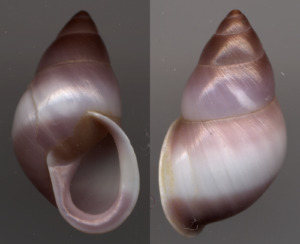


Plants: Green Life
Palm Trees
Palm Trees
| Common name | Scientific name | Where they lived | What happened | Pictures |
|---|---|---|---|---|
| Easter Island palm | Paschalococos disperta | Easter Island, Chile | Disappeared between 1250 and 1650 CE. This was possibly due to people clearing land for farming and rats eating the palm nuts. |

Legumes: Pea and Bean Family
Legumes
Legumes Extinct in the Wild
These plants only survive in cultivation or in botanical gardens.
| Common name | Scientific name | Where they lived | What happened | Pictures |
|---|---|---|---|---|
| Toromiro | Sophora toromiro | Easter Island, Chile | The last wild tree was cut down in 1960. It now only exists in gardens in Chile and other countries. Attempts to plant it back in the wild have not been successful yet. |

Images for kids
-
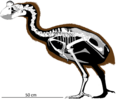
A drawing of Sylviornis neocaledoniae.
-
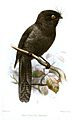
A drawing of the New Caledonian owlet-nightjar.
-
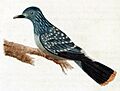
A drawing of the spotted green pigeon.
-
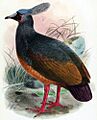
A drawing of the Choiseul pigeon.
-
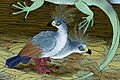
A drawing of the Viti Levu giant pigeon.
-
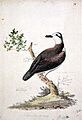
A drawing of the Society Islands ground dove.
-
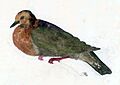
A drawing of the Tanna ground dove.
-
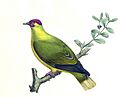
A drawing of the red-moustached fruit dove.
-
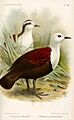
A drawing of the white-headed Polynesian ground dove.
-
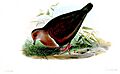
A drawing of the Tongan ground dove.
-
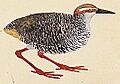
A drawing of the Tongatapu rail.
-
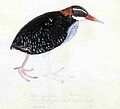
A drawing of the Tahiti rail.
-
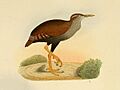
A drawing of the bar-winged rail.
-
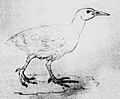
A drawing of the Vava'u rail.
-
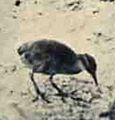
A drawing of the Wake Island rail.
-
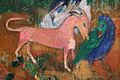
A painting by Paul Gauguin that might show the Marquesas swamphen.
-
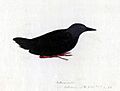
A drawing of the Tahiti crake.
-
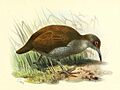
A drawing of the New Caledonian rail.
-
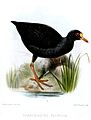
A drawing of the Samoan wood rail.
-
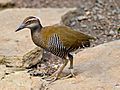
A Guam rail in captivity.
-
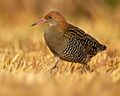
A Lewin's rail.
-
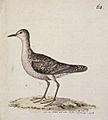
A drawing of the Christmas sandpiper.
-
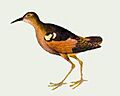
A drawing of the Moorea sandpiper.
-
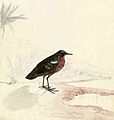
A drawing of the Tahiti sandpiper.
-
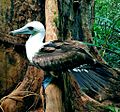
An Abbott's booby.
-
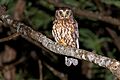
A morepork.
-
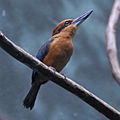
A Guam kingfisher in captivity.
-
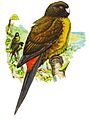
A drawing of the Raiatea parakeet.
-
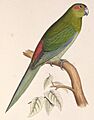
A drawing of the black-fronted parakeet.
-
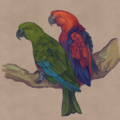
A drawing of the oceanic eclectus.
-
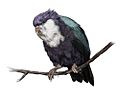
A drawing of the conquered lorikeet.
-
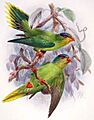
A drawing of the New Caledonian lorikeet.
-
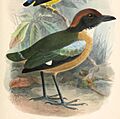
A drawing of the Bougainville black-faced pitta.
-
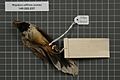
A specimen of the Guam rufous fantail.
-
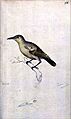
A drawing of the Moorea reed warbler.
-
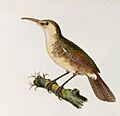
A drawing of the Nightingale reed warbler.
-
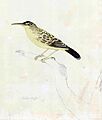
A drawing of the Raiatea warbler.
-
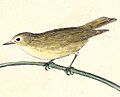
A drawing of the Guam bridled white-eye.
-
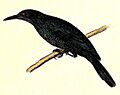
A drawing of the Kosrae starling.
-
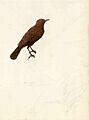
A drawing of the Raiatea starling.
-
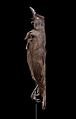
A specimen of the Pohnpei starling.
-
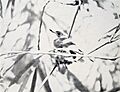
A drawing of the Guam flycatcher.
-
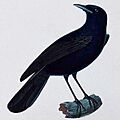
A drawing of the Maupiti monarch.
-
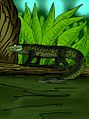
A drawing of Mekosuchus inexpectatus.
-
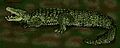
A drawing of Volia athollandersoni.
-
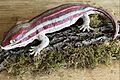
A specimen of Delcourt's giant gecko.
-
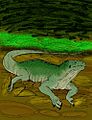
A drawing of the Tongan giant iguana.
-
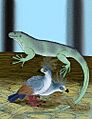
A drawing of the Fiji giant iguana.
-
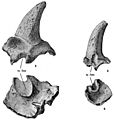
A drawing of the New Caledonia horned turtle.
-
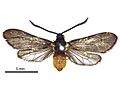
A drawing of the Levuana moth.
-
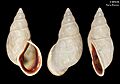
A specimen of Leucocharis porphyrocheila.
-
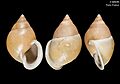
A specimen of the Bora Bora tree snail.
-
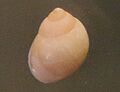
A specimen of the swollen Raiatea tree snail.
-
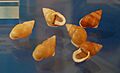
A specimen of Captain Cook's bean snail.
-
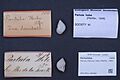
A specimen of the rose-tipped partula snail.
-
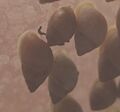
A Moorean smooth tree snail.
-
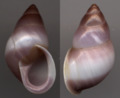
A pink partula snail.
-
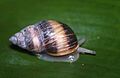
A sutural partula snail.
-
A Mount Tohiea tree snail.
-
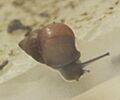
A variable tree snail.
-

Easter Island palm symbols in rongorongo script.
-
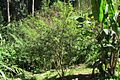
A Toromiro tree.


See also
- Lists of extinct species
- List of Australia-New Guinea species extinct in the Holocene
- List of Hawaiian animals extinct in the Holocene
- List of New Zealand species extinct in the Holocene
- List of extinct bird species since 1500
- Extinct in the wild
- Lazarus taxon
- United States Fish and Wildlife Service
- IUCN Red List
