
Wheat facts for kids
Quick facts for kids Wheat |
|
|---|---|
 |
|
Scientific classification  |
|
| Kingdom: | Plantae |
| Clade: | Tracheophytes |
| Clade: | Angiosperms |
| Clade: | Monocots |
| Clade: | Commelinids |
| Order: | Poales |
| Family: | Poaceae |
| Subfamily: | Pooideae |
| Tribe: | Triticeae |
| Genus: | Triticum L. |
| Type species | |
| Triticum aestivum |
|
| Species | |
|
List of Triticum species:
T. aestivum
T. aethiopicum T. araraticum T. boeoticum T. carthlicum T. compactum T. dicoccoides T. dicoccon T. durum T. ispahanicum T. karamyschevii T. monococcum T. polonicum T. spelta T. thaoudar T. timopheevii T. turanicum T. turgidum T. urartu T. vavilovii T. zhukovskyi |
|
Wheat is a type of grass that people grow for its nutritious seeds. These seeds are known as grains. Wheat belongs to a group of grasses called Triticum. It is one of the most important cereal plants in the world. People turn the seeds into a staple food that billions eat every single day. The most common type is common wheat, but farmers also grow durum, spelt, emmer, and einkorn. Long ago, people learned plant domestication in the Fertile Crescent around 9600 BC. Today, wheat fields cover huge areas of farmland across the globe. Only maize produces more total food among all the grains.
Contents
What Does the Wheat Plant Look Like?

Wheat is a tall, sturdy plant that looks like giant wild grass. Its jointed stem is usually hollow inside, forming dry straw. Long, slender leaves wrap around the stem at each joint. At the very top of each stem sits the flower head, which is called an ear. The ear holds tiny flowers arranged in clusters called spikelets. Inside each flower, there are leaflike covers called glumes that protect the delicate parts.
A wheat flower has both male and female parts inside. The male parts are stamens that make pollen, while the female part includes the stigma. Wheat uses wind pollination to spread pollen, but almost all seeds form through self-pollination. When pollen fertilises the flower carpel, a grain begins to grow. In botany, this grain is a special type of fruit called a caryopsis. The golden grains pack tightly together along the head.
Leaves grow out from growing points called the meristem. The very last leaf to open at the top is the flag leaf. This special leaf works extra hard during photosynthesis to make carbohydrate energy for the seeds. Wheat leaves have tiny breathing holes called stomata on their surfaces. Plants can also grow extra side stems called tillers. Down below, wheat roots can reach deep underground, sometimes digging as far as two metres to find water.
Some wheat varieties grow long, hair-like bristles on their heads called awns. Awns help the plant capture sunlight while saving water in warm, dry climates. This trait helps them survive climate change and severe droughts. Inside the stem, wheat stores sugar molecules called fructans to help it survive stressful weather.
How Wheat Was Discovered and Farmed

Ancient Domestication
Thousands of years ago, human hunter-gatherers in West Asia collected seeds from wild grasses. Around 9600 BC, people in the Fertile Crescent began planting seeds near their homes. Wild wheat grains break off and drop to the ground when ripe. This natural habit is called shattering. Shattering helps wild plants with seed dispersal, but it makes harvesting difficult for people.
Over time, early farmers chose mutant plants that had a stronger stem called a rachis. These non-shattering plants held their seeds tightly until harvest time. People also selected plants with larger seeds. Because these domesticated grains do not scatter naturally on the wind, they cannot easily survive without human care.
Different ancient varieties were tamed in Southwest Asia. Wild einkorn wheat grew in dry steppe grasslands and open parkland. People gathered wild grains at ancient places like Tell Abu Hureyra and Mureybet. Later, people in Southeast Anatolia domesticated einkorn at villages such as Çayönü, Cafer Höyük, and Nevalı Çori. Another variety, wild emmer wheat, grew near rocky basalt and limestone hills in the Hilly Flanks of the Levant. Early farmers planted emmer at places like Tell Aswad.
Early Farming Life

Einkorn and emmer became essential founder crops for early Neolithic farming towns. Communities also grew early barley and a rare plant named Zanduri wheat. Early farmers planted wheat in rich annual grasslands or near rivers that flooded each year. They used curved wooden or bone sickle tools set with sharp stone microblades to cut stems.
After harvesting, farmers began threshing to separate grains from dry plant parts called chaff. Then, they crushed the seeds between heavy ground stone rocks and mortars to create soft flour. People baked flat bread, boiled thick porridge, and cooked hot gruel. Sometimes they mixed grain flour with the wild tuber of the water plant Bolboschoenus glaucus. At the ancient city of Çatalhöyük, families stored lots of grain to feed themselves throughout winter. Dried stems were used as thatch for roofs, for weaving wicker, and for building wattle and daub homes.
Spreading Across the Globe


Farming spread rapidly outward from the Middle East. People carried emmer and einkorn seeds across the sea to Cyprus and into Greece. Ancient farmers in Egypt built large ovens and turned baking into a major industry. By 4000 BC, wheat farming reached the British Isles and cold lands in Scandinavia. People in India farmed wheat by 3500 BC, and farmers along China's Yellow River grew it by 2600 BC.
Later on, European travellers brought wheat to North America and South America during the Columbian exchange. During the 1800s, people started eating bread made from white flour instead of eating oats or rye. Huge farms in the central plains created massive wheat production in the United States, which made food cheaper for families everywhere.
Types and Evolution of Wheat

The family tree of wheat is very interesting because wild grasses naturally mixed together over thousands of years. Scientists study cells to see their chromosomes. Some basic plants are diploid, meaning they have two sets of genetic instructions. Einkorn is a diploid plant. Other wheats are polyploids, meaning they carry four or six sets of chromosomes.
Wild emmer formed when two diploid wild grasses, Triticum urartu and Aegilops speltoides, naturally combined. This made a four-set (tetraploid) plant. Later, emmer crossed with a wild grass called Aegilops tauschii. This natural mixture formed six-set (hexaploid) bread wheat. Scientists use molecular phylogeny to build a family cladogram that maps these changes.
| Group | Species | Features |
|---|---|---|
| Hexaploid (6 sets) | Common wheat (Triticum aestivum) | The most popular wheat in the world, used for fluffy breads. |
| Hexaploid (6 sets) | Spelt (Triticum spelta) | An older type of wheat often used in tasty specialty breads. |
| Tetraploid (4 sets) | Durum (Triticum durum) | A very hard grain perfect for making pasta and noodles. |
| Tetraploid (4 sets) | Emmer (Triticum dicoccon) | A grain grown since ancient times with tough outer husks. |
| Tetraploid (4 sets) | Khorasan wheat (Triticum turanicum) | A grain with large kernels and a rich, nutty taste. |
| Diploid (2 sets) | Einkorn (Triticum monococcum) | One of the earliest grains ever farmed by ancient humans. |
How We Use Wheat for Food

Wheat is one of the top foods on Earth. When workers grind wheat berries, they make fine wheat flour. Very hard grains like durum are ground into semolina, which makes chewy pasta. When whole wheat is cracked, it forms cracked wheat, and parboiled crushed wheat becomes bulgur. The tough outer skin of the grain is called bran, which contains lots of healthy fibre.
Flour is used to bake soft sandwich bread, crunchy biscuits, rolls, crackers, pancakes, sweet pie crusts, flaky pastries, tasty pizza, fluffy cakes, cookies, and muffins. Chefs use wheat batter for fried foods like crunchy doughnuts, morning breakfast cereal, and warm muesli. Manufacturers also use grain to produce drinks like boza.
Wheat gives dough a stretchy quality thanks to a protein called gluten. Gluten makes bread dough viscoelastic, meaning it stretches and bounces back. This traps gas bubbles from yeast so bread can rise high and stay light and soft.
Nutrition and Health
Wheat gives the human body lots of energy through carbohydrates. Whole grains also provide healthy dietary fibre, protein, and useful minerals like iron, magnesium, manganese, phosphorus, and zinc. It also has important vitamins such as thiamine, niacin, and vitamin B6.
Wheat has lower levels of one essential amino acid named lysine. Because of this, nutritionists encourage people to eat wheat alongside other foods like legumes to get balanced protein. Eating whole grain foods helps keep our hearts and digestive systems healthy.
Some individuals cannot eat wheat safely. In people who have coeliac disease, gluten causes their innate immune system to create inflammation inside the intestines. These people must follow a strict lifelong gluten-free diet. Other people experience non-coeliac gluten sensitivity, which can cause stomach pain or bloating. These reactions are different from a standard wheat allergy.
How Farmers Grow Wheat
Wheat is an annual plant, meaning it completes its life cycle in a single year. Farmers choose between two main seasonal types:
- Winter wheat: Planted in autumn, this wheat sprouts and then rests in dormancy through the freezing winter. When spring brings warmer temperatures, the plant wakes up and grows fast, finishing its harvest in early summer.
- Spring wheat: Planted in the spring after frosts end, this type grows through summer and is harvested in the autumn.
Wheat grows best in rich loam soil that drains water well. Wet, acidic peat soil is not good for wheat. Farmers prepare their fields using a plough and a flat harrow to clear weeds. Then, modern tractors use a mechanical seed drill to drop seeds into the ground in neat rows.
Farmers watch the crop grow using stages from the BBCH or Zadoks scale. Wheat needs about four months of sunshine and water to fully ripen. As flowers open during anthesis, the ears fill with milk-like fluid that hardens into seeds. When the field turns golden brown, giant machines called combine harvesters cut the stalks, shake out the grain, and blow the chaff away. The clean grain is stored in dry bins so fuzzy mould fungi cannot spoil it.
Pests and Plant Diseases
Farmers protect their fields from harmful pests and sicknesses. Microscopic fungi can spread quickly and cause damage:
- Fungi cause powdery mildew, leaf rust, and stem rust like Ug99.
- Head diseases such as Wheat blast and Fusarium head scab harm the ears.
- Soil issues like take-all can cause root rot on roots.
- Tiny insects like the wheat stem sawfly and the orange wheat blossom midge can eat stems and flowers.
- The larvae of moth species like the turnip moth eat wheat stems.
- After harvest, beetles like the wheat weevil (Sitophilus granarius) can eat stored kernels.
Scientists use disease-resistant genes and smart crop methods like crop rotation to protect the crops without using too many chemicals.
Wheat Around the World

Wheat is grown on more land across the planet than any other single food crop. Today, huge amounts of grain are harvested every year. The world's top producers of wheat are China, India, and Russia. Other major wheat-growing nations include the United States, Canada, Australia, and Pakistan. Huge ships transport wheat across oceans every day to feed growing cities.
Artists have long loved the beauty of wheat fields. The famous Dutch painter Vincent van Gogh painted dozens of pictures showing golden wheat fields under sunny skies, including his famous artwork Wheatfield with Crows. In the United States, artist Thomas Hart Benton painted scenes of American farms, and conceptual artist Agnes Denes planted a field of wheat right in downtown Manhattan to make people think about world hunger. Wheat remains one of humanity's greatest agricultural treasures.
Amazing Facts About Wheat
- Scientists believe that humans first started growing wheat about 10,000 years ago in a region known as the "Fertile Crescent," which is located in the Middle East.
- Wheat is grown on more land area than any other food crop in the world. It is truly a global plant!
- In recent years, global wheat production has reached over 750 million metric tons per year.
- Wheat is incredibly adaptable. It can grow in many different climates, from the cold plains of Canada to the sunny fields of Australia.
- Did you know that wheat is used for things other than eating? Wheat straw is used to make paper, cardboard, and even biodegradable packaging. Some types of plastics are even made from wheat starch!
- In the United States, there is a large region in the middle of the country often called the "Wheat Belt" because the soil and climate are perfect for growing massive amounts of wheat.
- A single wheat head can contain anywhere from 30 to 50 individual kernels. If you plant one seed, you might get a plant that produces dozens of new seeds!
Related Pages
Images for kids
-

Map showing where wheat is grown
-
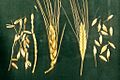
Comparing hulled wheat with loose grains
-

Wheat yield changes over time
-

The Wheat Field painted by John Constable
-

Wheat farm ready for harvest in Iran
-

Harvester unloading grain
-

Seedlings damaged by rust fungus
-
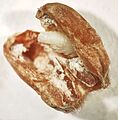
Wheat weevil pupa inside a seed
-
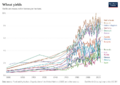
Long-term wheat yields in Europe
-
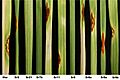
Wheat plants tested for stem rust resistance
-
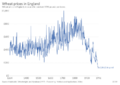
Historic wheat prices in England
-
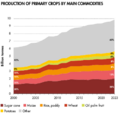
World production of primary crops
-
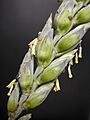
Wheat flower in bloom
-
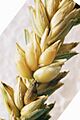
Wheat ear during the milk stage
-

Wheat field ready for harvest


See also
 In Spanish: Trigo para niños
