
French Revolution facts for kids
 |
|
| Date | 5 May 1789 – 9 November 1799 (10 years, 6 months, and 4 days) |
|---|---|
| Location | France |
| Outcome |
|
The French Revolution was a major event in world history. It took place in France between 1789 and 1799. During this time, the people of France changed how their country was run. They replaced an absolute monarchy with new ideas about democracy, freedom, and equal rights. The causes of the revolution came from big money troubles and unfair social rules.
Before 1789, France was ruled by King Louis XVI. Most citizens had very little say in the government. The nation fell into a deep money crisis. To solve these troubles, the king called a giant meeting known as the Estates General of 1789. Representatives of ordinary people, called the Third Estate, demanded fair voting. Soon, they broke away to form the National Assembly.
Crowds in Paris supported this change. On 14 July 1789, citizens carried out the Storming of the Bastille, an old royal fortress. The new Assembly passed the abolition of feudalism and wrote the famous Declaration of the Rights of Man and of the Citizen. They also took control over the Catholic Church in France.
Tensions grew over the next several years. King Louis XVI tried to escape in the flight to Varennes in 1791. France soon fought other nations in the French Revolutionary Wars. In August 1792, the insurrection of 10 August 1792 removed the king from power. The leaders set up the French First Republic in September 1792. Later, the execution of Louis XVI took place in January 1793.
A difficult time called the Reign of Terror followed under leaders like Maximilien Robespierre in the Committee of Public Safety. Many people were arrested by the Revolutionary Tribunal. Robespierre fell during the Thermidorian Reaction in July 1794. France was then led by the Directory. Finally, the famous general Napoleon Bonaparte took power in the Coup of 18 Brumaire in November 1799, setting up the Consulate.
Contents
- Causes of the French Revolution
- Crisis of the Old Kingdom
- The Fall of the Bastille and Big Changes
- Rebuilding the French Nation
- The Birth of the First Republic
- The Reign of Terror
- The Directory and the Rise of Napoleon
- Famous Symbols of the Revolution
- The Role of Women
- Slavery and the French Colonies
- The Global Impact
- Images for kids
- See also
- Related Pages
Causes of the French Revolution
The French Revolution did not happen overnight. It grew from deep social, financial, and political troubles over many decades. The rulers failed to solve these problems. This made life very hard for everyday workers and farmers.
Between 1715 and 1789, the population of France grew from 21 million to 28 million people. About 20 percent of them lived in towns and cities. Paris was the largest city, with over 600,000 residents. The middle class grew quickly during this century. However, wealth was not shared evenly across the kingdom.
Unfair Social Classes and Taxes

French society was divided into three groups called estates. The first estate was the clergy, who served the church. The second estate was the nobility, who were wealthy lords and landowners. The third estate was made up of everyone else, called the commoners.
Commoners paid almost all the taxes. The rich nobles and clergy enjoyed many special exemptions. To collect money, the government used private tax collectors. This system was unfair and confusing. Different regions paid completely different tax rates on goods like salt and grain.
The king wanted to raise new taxes, but regional courts called parlements blocked his plans. The Parlement of Paris insisted that only the people could approve big new taxes. This created a complete political deadlock between the king and the judges.
Bread Shortages and Bad Weather
Poor weather made life even harder for ordinary people. In the late 1780s, terrible storms, freezing winters, and droughts hit France. Crops failed across the countryside in 1787 and 1788.
Because there was little grain, the price of bread rose very high. Bread was the main food for working families. Many people spent most of their daily income just to buy a single loaf. Hungry citizens became angry and demanded help from the government.
New Ideas from the Enlightenment
Educated thinkers in the Age of Enlightenment began asking big questions about government and society. Writers like Voltaire and Jean-Jacques Rousseau argued that rulers must protect human rights. They said all laws should respect the laws of nature.
The success of the American Revolution also inspired French citizens. French soldiers who helped the Americans came home with exciting stories about liberty and republican government. Many people wondered why France could not have similar freedoms.
At the same time, royal scandals damaged the image of the court. Rumours like the Affair of the Diamond Necklace made people believe the royal palace was wasteful. Citizens lost trust in King Louis XVI and his ministers.
Crisis of the Old Kingdom

The old system of French government was known as the Ancien Régime. France was deep in debt because it had borrowed large sums of money. A big part of this debt came from funding the Anglo-French War during the American fight for independence.
Even after the peace treaty, royal borrowing continued. By 1788, half of the national budget went toward paying interest on loans. France needed urgent financial reforms to avoid bankruptcy.
Failed Plans for New Taxes
The royal finance minister, Calonne, proposed sweeping changes in 1786. He wanted a universal land tax that everyone would pay, including wealthy lords. He also wanted to remove internal trade barriers inside France.
To win support, the king gathered an Assembly of Notables. This group of nobles rejected the plan because they did not want to lose their tax privileges. Calonne was dismissed, and Brienne took his place.
Brienne also tried to pass reforms, but the courts refused to approve them. The courts declared that only an Estates-General could create new taxes. This representative assembly had not met since the year 1614.
Faced with riots and empty vaults, Brienne announced that the Estates-General would meet in May 1789. The king then recalled the popular banker Jacques Necker to serve as chief finance minister.
The Three Estates Prepare to Meet
A major argument began over how the Estates-General would vote. In the old system, each estate met separately and cast one single collective vote. This meant the clergy and nobility could easily team up to outvote the Third Estate by two to one.
Writers began publishing thousands of political booklets called pamphlets. The thinker Abbé Sieyès wrote a very famous pamphlet called What Is the Third Estate?. He argued that commoners made up the true nation and deserved equal power.
Leaders like Jean Joseph Mounier, Antoine Barnave, and Maximilien Robespierre organised local meetings. King Louis XVI agreed to double the number of commoner representatives. However, he left the voting rules undecided, creating huge tension.
Voters across France wrote lists of complaints called Cahiers de doléances. These notebooks asked for fairer taxes, freedom of speech, and an end to feudal payments owed to rich landlords.
The Tennis Court Oath

On 5 May 1789, the assembly gathered at the grand Versailles. The Third Estate insisted that all three orders should meet together in one big room. They wanted every representative to have one individual vote.
The nobles and bishops refused this plan and wanted to meet alone. Talks dragged on for weeks without any progress. Finally, on 17 June, the Third Estate boldly declared itself to be the true National Assembly of France.
Three days later, on 20 June, the delegates arrived at their hall and found the doors locked by royal guards. Refusing to give up, they walked to a nearby indoor tennis court. There, they swore the famous Tennis Court Oath, promising never to separate until France had a written constitution.
Many parish priests and some open-minded nobles soon joined them. Seeing that he was losing control, Louis XVI ordered all the representatives to sit together in the new assembly.
The Fall of the Bastille and Big Changes
Storming the Bastille

Tensions exploded in July 1789. Conservative nobles, including Queen Marie Antoinette and the king's brother, the Comte d'Artois, urged the king to act firmly. On 11 July, Louis dismissed Jacques Necker.
The king also moved royal soldiers, including the Swiss Guards, close to Paris. Angry crowds gathered in the streets because they feared an attack on the new Assembly. Soldiers from the elite Gardes Françaises joined the protestors instead of stopping them.
On 14 July 1789, a large crowd attacked the Bastille, a medieval stone prison used as an armoury. Its military governor, Bernard-René de Launay, tried to defend the fort. After intense fighting, the fortress surrendered to the citizens.
The crowd took gunpowder and freed the few prisoners inside. The fall of the Bastille showed that the king could no longer control Paris. Today, France celebrates this event every year on Bastille Day.
The Great Fear and Ending Feudalism
To keep order in Paris, citizens set up a local government called the Commune, led by Jean-Sylvain Bailly. The hero of the American War, the Marquis de Lafayette, became head of a citizen army called the National Guard.
Out in the countryside, scary rumours spread that armed bandits were coming to burn crops. This panic was called the Great Fear. Peasants attacked noble manors and destroyed old tax papers. Many wealthy nobles became frightened and left the country as émigrés.
To restore peace, the Assembly passed the August Decrees on 4 August 1789. These laws brought the abolition of feudalism. Special feudal rights, noble privileges, and church taxes were erased completely.
Soon after, on 26 August, the leaders adopted the Declaration of the Rights of Man and of the Citizen. Guided by thinkers like the Comte de Mirabeau, this text stated that all men are born free and equal in rights.
The Women's March on Versailles
Food shortages continued to trouble Paris through the autumn of 1789. On 5 October, thousands of market women gathered at the city hall, the Hôtel de Ville. They demanded bread at fair prices.
Armed with kitchen tools and pikes, around 7,000 women began the Women's March on Versailles. They walked through heavy rain for six hours to reach the royal palace. Lafayette followed behind them with 15,000 members of the National Guard.
The next morning, protestors entered the palace courtyards. Lafayette convinced the king and queen to return with the crowd to Paris. The royal family moved into the Tuileries Palace, where the people could watch them closely.
Rebuilding the French Nation
Changes to the Catholic Church

The new government needed money quickly to pay off old royal debts. In late 1789, the Assembly voted to take over all properties owned by the Catholic Church. The government printed new paper money called assignats, which were backed by the value of this land.
In early 1790, the Assembly closed down traditional monasteries and convents. Monks and nuns were allowed to leave their religious houses and live as ordinary citizens. The state took over the task of running schools and caring for poor people.
In July 1790, leaders passed the Civil Constitution of the Clergy. This law turned priests into state employees paid by tax funds. It also required local citizens to elect their own parish priests and bishops.
Pope Pius VI rejected these new rules. Many devout French Catholics, especially in rural regions like Normandy, Brittany, and the Vendée, stood by their traditional priests. Priests who refused to swear an oath to the state were called refractory clergy.
Designing a New Government

The Assembly worked hard to write France's first formal constitution. They decided to create a single lawmaking body rather than a bicameral parliament with an upper house. The king received a suspensive veto, which allowed him to delay new laws but not stop them forever.
The new voting system was not open to everyone. Only wealthy men over 25 who paid direct taxes were named active citizens with voting rights. Poorer men were classified as passive citizens and could not vote.
On 14 July 1790, a massive festival called the Fête de la Fédération celebrated national unity. Thousands of citizens and soldiers gathered in Paris to swear loyalty to the nation, the law, and the king. Even Queen Marie Antoinette and King Louis XVI attended.
Despite this public celebration, politicians disagreed on many topics. Moderate leaders like Adrien Duport, Barnave, and Alexandre Lameth wanted stability. Radical thinkers like Robespierre and newspaper writer Jean-Paul Marat wanted equal voting rights for all men.
The Royal Flight to Varennes

King Louis XVI felt like a prisoner in his own palace. On the dark night of 20 June 1791, the royal family disguised themselves as common travellers and slipped out of Paris. They planned to reach a loyal army base commanded by General Bouillé at Montmédy.
The escape did not succeed. A local postmaster recognised the king from a coin image as the carriage passed through Varennes. Soldiers stopped the carriage, and the family was escorted back to Paris under heavy guard.
The Flight to Varennes shocked the entire country. Many citizens felt betrayed by their monarch. People began to demand that France get rid of the crown and become a republic.
On 17 July 1791, thousands gathered at the Champ de Mars to sign a petition against the king. Lafayette and his guards tried to break up the gathering. Chaos followed, leading to the tragic Champ de Mars massacre.
Louis XVI formally accepted the French Constitution of 1791 in September. A new lawmaking group, the French Legislative Assembly, took power. However, deep divisions made peace impossible.
The Birth of the First Republic
War Begins in Europe

Foreign rulers grew nervous about the events in France. Emperor Leopold II of Austria and King Frederick William II of Prussia signed the Declaration of Pillnitz. This statement warned France not to harm the royal family.
Inside France, politician Jacques Pierre Brissot argued that war would protect the revolution and spread freedom across Europe. Supporters of the king also hoped a war might help restore royal power. On 20 April 1792, France declared war on Austria, starting the French Revolutionary Wars.
The war started poorly for the French armies. Troops suffered quick disastrous defeats on the borders. Panic swept through Paris as foreign troops advanced closer.
The Prussian commander issued the Brunswick Manifesto, threatening to destroy Paris if the king was harmed. This threat enraged Parisian workers, known as sans-culottes because they wore ordinary long trousers instead of noble knee-breeches.
On 10 August 1792, an angry crowd of citizens and volunteer soldiers attacked the palace. The insurrection of 10 August 1792 forced the royal family to flee to the Assembly. The deputies voted to suspend the king, ending the monarchy.
Declaring the Republic and the King's Trial
In September 1792, fear reached a fever pitch as Prussian forces approached. Crowds entered city prisons and killed over a thousand prisoners in the September Massacres.
Good news arrived soon after from the battlefield. On 20 September 1792, the French army stopped the Prussian invaders at the Battle of Valmy. This unexpected victory gave the nation huge confidence.
A new government called the National Convention met the next day. On 22 September 1792, it created the French First Republic. The leaders even launched the French Republican Calendar, declaring 1792 to be "Year One."
The Convention put the king on trial for treason. Letters found in a secret safe, the Armoire de fer, showed that the king had communicated with foreign enemies. The delegates found him guilty.
On 21 January 1793, the execution of Louis XVI took place by guillotine at the public square now called the Place de la Concorde. Soon after, Great Britain, Spain, and the Dutch Republic joined Austria and Prussia in the War of the First Coalition against France.
The Reign of Terror
Political Rivalries and Civil War

The Convention was split into two rival political clubs. The moderate members were called Girondins, led by Brissot. The radical members were called Montagnards, led by Robespierre, Georges Danton, and Marat.
France faced huge dangers in early 1793. To build a massive army, the government began a military draft called the levée en masse. This draft triggered a massive uprising in western France known as the War in the Vendée.
French General Charles François Dumouriez was defeated at the Battle of Neerwinden and switched sides to join the enemy. Revolts against the capital also broke out in major cities like Bordeaux, Lyon, Toulon, and Marseille.
On 2 June 1793, crowds surrounded the Convention and demanded the arrest of Girondin leaders. The Montagnards took complete charge of the government. In July, a young woman named Charlotte Corday assassinated the radical journalist Marat, making tensions even worse.
The Committee of Public Safety
To handle these crises, power was given to an executive group called the Committee of Public Safety. Robespierre and his ally Louis Antoine de Saint-Just became its most powerful leaders.
The government set strict price limits on food through the General maximum. They passed the harsh Law of Suspects in September 1793, allowing officials to arrest anyone suspected of opposing the revolution. This began the period known as the Reign of Terror.
Special courts called the Revolutionary Tribunal held swift trials. Around 16,600 people were sentenced to death across France during these months. Former Queen Marie Antoinette and many Girondin politicians were among those sent to the guillotine.
In the Vendée, government forces crushed the royalist uprising at the Second Battle of Cholet and the Battle of Le Mans. Government representative Jean-Baptiste Carrier carried out cruel mass punishments.
The Fall of Robespierre
Soon, the revolutionaries began turning against one another. Radicals called Hébertists wanted to close all churches. Robespierre opposed them and had their leaders arrested in March 1794.
Next, moderate leaders like Georges Danton and Camille Desmoulins argued that the Terror should wind down. Robespierre refused to stop. Danton and Desmoulins were put on trial and executed in April 1794.
In June 1794, the Convention passed the Law of 22 Prairial, which sped up trials even more. Executions in Paris rose dramatically to dozens every day. Robespierre also organised a new state religion called the Cult of the Supreme Being.
Lawmakers became terrified that Robespierre would target them next. On 27 July 1794 (the month of Thermidor in the new calendar), deputies shouted him down in the Assembly. Robespierre and Saint-Just were arrested and executed the next day. This event is known as the Thermidorian Reaction, and it brought the Reign of Terror to an end.
The Directory and the Rise of Napoleon
Restoring Order
After Robespierre fell, the government worked to undo the extreme laws. The radical Jacobin Club was shut down. In southern France, people who suffered during the Terror carried out revenge attacks known as the First White Terror.
The government wrote the Constitution of the Year III in 1795. It created a two-house legislature: the Council of 500, which proposed laws, and the Council of Ancients, which approved them.
Executive power was given to five leaders called the French Directory. Men like Paul Barras ran the new system. Voting was once again restricted to wealthy property owners to keep the government stable.
However, ordinary citizens were still hungry. The paper currency had lost its value, causing severe inflation. In April 1795, hungry crowds launched the Insurrection of 12 Germinal Year III, but soldiers quickly stopped the protest.
The Young General Bonaparte

In October 1795, royalists marched through Paris to overthrow the government. A young artillery officer from the island of Corsica named Napoleon Bonaparte helped defend the legislature. He dispersed the royalist crowd on 13 Vendémiaire.
Napoleon had previously shown great skill during the siege of Toulon. Because of his success in Paris, the Directory gave him command of the Army of Italy in 1796.
Napoleon won brilliant victories against the Austrians. He forced Austria to sign the Treaty of Campo Formio in 1797. This treaty gave France control over new lands and created the Cisalpine Republic in northern Italy.
Napoleon Takes Control

The Directory remained weak and unpopular. Both royalists and radical Jacobins won seats in national elections. In 1797, the directors used soldiers in the Coup of 18 Fructidor to remove royalist lawmakers from office.
In 1798, Napoleon led a military expedition during the invasion of Egypt. While he won battles on land, the British navy destroyed his fleet, and other European countries launched the War of the Second Coalition.
Director Emmanuel-Joseph Sieyès looked for a strong leader to restore order. He teamed up with Napoleon, foreign minister Talleyrand, and Napoleon's brother Lucien Bonaparte.
On 9 November 1799, Napoleon used soldiers to overthrow the Directory in the famous coup of 18 Brumaire. The leaders replaced the Directory with the French Consulate, naming Napoleon as the First Consul. This historic event marked the end of the French Revolution.
Famous Symbols of the Revolution
Revolutionary Songs and Hats

The revolutionaries created many new symbols to replace royal and religious images. One of the most famous is the French national anthem, "La Marseillaise". It was composed in 1792 by Claude Joseph Rouget de Lisle.
The song was originally called a war song for the army. It became known as "La Marseillaise" after volunteer soldiers from the city of Marseille sang it while marching into Paris. Its stirring melody inspired soldiers on the battlefield.
People also wore special badges called cockades pinned to their hats. They combined the red and blue colours of Paris with the royal white to create the famous French tricolour.
Citizens also wore a soft cone-shaped hat called the Phrygian cap or liberty cap. In ancient Rome, this hat was given to enslaved workers when they gained their freedom. To the French, it stood for liberty and independence.
The Guillotine

The guillotine became the most famous machine of the revolutionary era. It was introduced as a quick and equal method of carrying out sentences under the law. Before this machine, wealthy nobles received quick punishments while ordinary citizens faced painful deaths.
During the Terror, the machine was set up in major public squares. Crowds gathered to watch trials and executions. Some women, nicknamed tricoteuses, became famous for knitting quietly in the front row during the proceedings.
While supporters viewed the machine as a tool to protect the republic, opponents saw it as a symbol of cruelty. Today, it remains a well-known image of the political conflicts of that era.
The Role of Women
Fighting for Equality

Women played active roles throughout the French Revolution. They led the march to Versailles to demand food for their families, attended debates, and formed political clubs.
The writer Olympe de Gouges argued that women deserved the exact same legal rights as men. In 1791, she wrote the Declaration of the Rights of Woman and of the Female Citizen. She called for equal education, the right to vote, and fair property laws.
Activists like Pauline Léon helped run the Society of Revolutionary Republican Women. These groups campaigned for lower food prices and supported the republican cause.
Political Setbacks
Despite these efforts, the revolutionary leaders were reluctant to grant political rights to women. The constitutions written in 1791 and 1793 did not allow women to vote or run for office.
In the autumn of 1793, the male-led government cracked down on female political organisations. The Convention banned all women's political clubs.
Several prominent women were executed during the Terror. Olympe de Gouges was arrested and put to death in late 1793. The talented writer Madame Roland, who hosted meetings for Girondin leaders, was also executed.
In the countryside, many women led movements to protect their local churches. They hid priests who had refused to swear government oaths and helped preserve their traditional community faiths.
Slavery and the French Colonies

France owned wealthy island colonies in the Caribbean, including Saint-Domingue (known today as Haiti), Martinique, and Guadeloupe. These islands produced large amounts of sugar, coffee, and cotton using enslaved labour. About 500,000 enslaved people lived on Saint-Domingue alone.
In Paris, thinkers formed the Society of the Friends of the Blacks in 1788 to seek the end of slavery. However, plantation owners created their own club to protect their fortunes. When the Declaration of the Rights of Man was published, plantation owners insisted its words should not apply to the colonies.
Free mixed-race citizens, including Vincent Ogé and Julien Raimond, demanded equal political rights. When local officials refused, an armed conflict broke out. In August 1791, enslaved people in northern Saint-Domingue launched the Haitian Revolution.
French officials Léger-Félicité Sonthonax and Étienne Polverel were sent to restore order. Facing attacks from British and Spanish forces, the commissioners offered freedom to enslaved fighters who helped defend the republic.
On 4 February 1794, the National Convention made a historic choice. It voted to abolish slavery across all French colonies and made all residents equal French citizens. In Saint-Domingue, the brilliant general Toussaint Louverture joined the French republic and drove foreign invaders out of the colony.
The Global Impact
How France Changed Forever
The French Revolution transformed France permanently. It destroyed the old feudal system and broke up the massive land holdings of the nobility and church. France became a nation of independent small farms and equal citizens before the law.
Old rules like primogeniture, which gave all family property only to the oldest son, were abolished. Property was now shared equally among all children.
The old provincial courts were replaced with a single national legal system featuring jury trials. Monopolies and trade guilds were swept away, allowing ordinary citizens to open new businesses and shops.
Later French leaders kept many of these revolutionary gains. When the French Third Republic began in the 1870s, it adopted the tricolour flag, "La Marseillaise," and Bastille Day as official national symbols.
The Spread of Ideas in Europe
The ideas of the Revolution swept across the European continent. In Great Britain, a famous debate called the Revolution Controversy erupted. Thinker Edmund Burke wrote Reflections on the Revolution in France, warning that sudden change would cause violence.
In response, writer Thomas Paine wrote the bestselling book Rights of Man, and Mary Wollstonecraft wrote A Vindication of the Rights of Men. Both authors argued that all people have a natural right to choose their own government.
In Ireland, the ideas inspired the Society of United Irishmen to launch the Irish Rebellion of 1798. Across the German states and Italy, French reforms brought an end to old feudal obligations and stimulated movements for national unity.
Influence in North America
The revolution also affected North America. In the Province of Quebec, many Catholic priests who fled France settled in cities like Montreal and Quebec City, strengthening local churches.
In the United States, the events in France caused intense political debates between early leaders. Thomas Jefferson and the Democratic-Republican Party supported the French struggle for liberty.
Other leaders, like Alexander Hamilton, worried about the violence of the Terror. President George Washington decided that America should stay out of European wars and issued the famous Proclamation of Neutrality in 1793.
Images for kids
-

The storming of the Bastille in Paris, July 1789
-
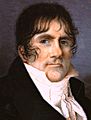
Paul Barras, leader of the French Directory
-
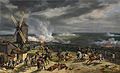
The Battle of Valmy in 1792
-
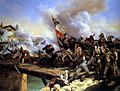
Napoleon crossing the bridge at Arcole during the Italian campaigns
-
A preserved copy of Marat's newspaper L'Ami du peuple
-
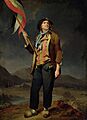
A Parisian sans-culotte holding a tricolour flag
-

Olympe de Gouges, writer of the Declaration of the Rights of Woman
-

Paper money known as an assignat, worth 500 livres
-
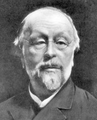
Hippolyte Taine, historian who studied the Revolution
-
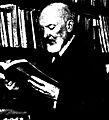
Georges Lefebvre, famous French historian


See also
 In Spanish: Revolución francesa para niños
Related Pages
- Age of Revolution
- Bourgeois revolution
- Cordeliers
- Democracy in Europe
- Glossary of the French Revolution
- History of France
- History of Savoy (1792–1815)
- Influence of the American Revolution on the French Revolution
- List of films set during the French Revolution and French Revolutionary Wars
- List of people associated with the French Revolution
- List of political groups in the French Revolution
- Musée de la Révolution française
- Paris in the 18th century
- Savoy's annexation to France (1792)
- Timeline of the French Revolution
