
Triassic facts for kids
Quick facts for kids Triassic |
|
|---|---|
| 251.902 ± 0.024 – 201.4 ± 0.2 Ma | |
.png)
A map of Earth as it looked during the Norian Age of the Late Triassic Epoch
|
|
| Chronology | |
|
Triassic graphical timeline
-255 —
–
-250 —
–
-245 —
–
-240 —
–
-235 —
–
-230 —
–
-225 —
–
-220 —
–
-215 —
–
-210 —
–
-205 —
–
-200 —
Subdivision of the Triassic according to the ICS, as of 2024.
Vertical axis scale: Millions of years ago |
|
| Etymology | |
| Name formality | Formal |
| Usage information | |
| Celestial body | Earth |
| Regional usage | Global (ICS) |
| Time scale(s) used | ICS Time Scale |
| Definition | |
| Chronological unit | Period |
| Stratigraphic unit | System |
| Time span formality | Formal |
| Lower boundary definition | First appearance of the conodont Hindeodus parvus |
| Lower boundary GSSP | Meishan, Zhejiang, China 31°04′47″N 119°42′21″E / 31.0798°N 119.7058°E |
| Lower GSSP ratified | 2001 |
| Upper boundary definition | First appearance of the ammonite Psiloceras spelae tirolicum |
| Upper boundary GSSP | Kuhjoch section, Karwendel mountains, Northern Calcareous Alps, Austria 47°29′02″N 11°31′50″E / 47.4839°N 11.5306°E |
| Upper GSSP ratified | 2010 |
The Triassic is a famous geologic period in Earth's history. It lasted about 50.5 million years. It started roughly 251.9 million years ago right after the Permian Period. It ended around 201.4 million years ago when the Jurassic Period began. The Triassic is the very first chapter of the great Mesozoic Era. Scientists also recognize it as part of the Phanerozoic Eon.
This exciting time period was a bridge between ancient life and the dawn of famous prehistoric monsters. It started after a gigantic mass extinction that nearly cleared out all life on Earth. The planet's whole living world, or biosphere, had to bounce back. Over millions of years, amazing new animals and plants appeared to fill the empty spaces.
During the Triassic, remarkable reptiles became the true rulers of land, sea, and air. A huge group of reptiles called archosaurs took over the continents. Among them were ancestors of modern crocodilians, known as pseudosuchians. The very first true dinosaurs also appeared during this period! Alongside them lived flying reptiles called pterosaurs and the very earliest mammal-like animals.
Earth itself looked completely different back then. All the world's land was squished together into one enormous supercontinent named Pangaea. Much of the land was a giant, sizzling desert. Towards the end of the period, another big extinction event shook the globe. This Triassic–Jurassic extinction event opened up new space for dinosaurs to dominate the world.
Contents
- What Does the Name Triassic Mean?
- How Scientists Divide the Triassic Time Scale
- The Supercontinent Pangaea and Ancient Earth Geography
- Climate and Weather on Ancient Earth
- Plant Life in the Triassic World
- Animals of the Triassic World
- Special Fossil Beds: Lagerstätten
- The End-Triassic Extinction Event
- Images for kids
- See also
What Does the Name Triassic Mean?
A German scientist named Friedrich Alberti named this period in 1834. He noticed three very distinct rock layers in southern Germany. Because there were three layers stacked together, he named the period after the Greek word for triad.
These three famous rock layers tell a story about ancient environments:
- The lowest layer is called Buntsandstein, which means colorful sandstone.
- The middle layer is called Muschelkalk, which is limestone packed full of ancient shells.
- The top layer is called Keuper, which is made of colored clay.
-
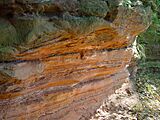
Early Triassic sandstone (Buntsandstein) near Stadtroda, Germany
-
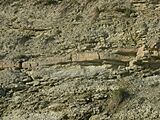
Middle Triassic Muschelkalk (shell-bearing limestone) near Dörzbach, Germany
-
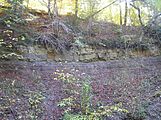
Late Triassic Steigerwald Formation and overlying Hassberge Formation in Schönbuch, Germany


How Scientists Divide the Triassic Time Scale
Geologists use the geologic time scale to organize Earth's deep history. They break the Triassic into three main epochs: the Early Triassic, the Middle Triassic, and the Late Triassic. Rocks from these times are called Lower, Middle, and Upper Triassic rocks.
Scientists break these epochs down into smaller slices of time called faunal stages. Each stage has a unique fossil record. The oldest stage of the Triassic is the Induan stage, followed quickly by the Olenekian stage. After that comes the Middle Triassic, divided into the Anisian and Ladinian stages. Finally, the Late Triassic includes the Carnian, Norian, and Rhaetian stages.
The Supercontinent Pangaea and Ancient Earth Geography

.png)
At the start of the Triassic, almost all the world's continents formed one giant landmass called Pangaea. This mega-continent was centered right over the equator. It curved in a giant C-shape from the North Pole all the way down to the South Pole.
The northern half of this land is called Laurasia, or Laurussia. The southern half is known as Gondwana. Giant ocean waters filled the space inside the curve, creating the ancient Tethys Ocean. An unimaginably vast global sea called Panthalassa covered the entire rest of the planet! Several smaller land blocks, like North China and South China, drifted across the waters before finally joining Pangaea.
Around the edges of Pangaea, tectonic plates dove under each other along subduction zones. Giant volcanic mountain chains arose along these active zones. Huge volcanic eruptions called the Siberian Traps had poured out lava right at the beginning of the period. Later on, cracks began to form across Pangaea as the giant land slowly pulled apart.
The Northern Continents
In northern Pangaea, rivers washed huge amounts of dirt and sand into the ancient oceans. They built massive river deltas, such as the Triassic Boreal Ocean Delta Plain. These ancient rivers flowed down from highlands like the Ural Mountains and Baltica.
Cracks in the Earth's crust opened up across Europe and Canada. Geologists call this process extensional tectonics. Deep rift valleys formed, creating basins that filled with lake water or shallow seas. These bodies of water, like the Zechstein Sea, left behind layers of carbonate rock, mudstone, and salty evaporites. Along western North America, plates collided, causing mountain-building events known as the Sonoma orogeny.
The Southern Continents and Shifting Oceans
Southern Pangaea was made of Africa, South America, India, Australia, and Antarctica. Much of Africa was high, dry land above sea level. Rifting began between Africa and Madagascar, creating deep pull-apart valleys. Shallow sea waters slowly poured into these new rifts.
In eastern Australia, tectonic plates squeezed together during the Hunter–Bowen orogeny. In South America, volcanic activity produced lots of felsic magma. Meanwhile, small mini-continents called Cimmerian terranes drifted across the eastern sea. They pushed into Asia, creating mountain belts like the Central Asian Orogenic Belt.
The Breaking of Pangaea and Atlantic Birth
Near the end of the Triassic, Pangaea began to split apart along the line of the modern Atlantic Ocean. Stretches of crust pulled thin, dropping down to form large rift basins. In eastern North America, these valleys formed the famous rocks of the Newark Supergroup. Similar rift valleys formed across North Africa and Spain.
Around 201 million years ago, immense volcanic eruptions tore open the central crust. This volcanic region is called the Central Atlantic magmatic province (CAMP). Lava flooded across millions of square kilometers. Huge underground sheets of magma formed dike swarms and horizontal sills. This tremendous volcanic activity released gases that disrupted the global climate and triggered a mass extinction.
Saunders_Quarry-1.jpg)
Ancient Sea Levels
Compared to other times in Earth's history, the sea level was fairly low during the Triassic. At first, sea levels were close to where they are today. Over millions of years, ocean waters slowly crept up by 10 to 20 metres (33 to 66 ft).
By the middle of the period, sea levels rose even higher, reaching up to 50 metres (160 ft) above modern levels. Toward the end of the period, sea levels dropped steeply again. Because there were no giant ice sheets at the poles, these sea level changes were likely caused by underwater volcanoes shifting the shapes of ocean basins.
Climate and Weather on Ancient Earth
The climate across Pangaea's vast interior was mostly scorching hot and bone-dry. Enormous deserts covered the heart of the supercontinent. These arid landscapes left behind thick layers of red desert rock called red beds and salty evaporites.
Because Pangaea was so enormous, ocean breezes could not easily reach the center of the continent. This produced an extreme continental climate. Summers were blisteringly hot, while winter nights could turn quite chilly. Huge seasonal winds formed powerful storms known as the Pangean megamonsoons.
Surprisingly, there was no polar ice at the North or South poles! Instead, polar areas were moist and temperate. Green forests grew near the poles, providing great homes for many land reptiles.
Every now and then, big climate shifts brought massive rainstorms to the dry planet. The most famous rainy period was the Carnian Pluvial Event. During this time, volcanic gases warmed the globe, creating humid weather and drenching rainfall across huge parts of the Earth.
Plant Life in the Triassic World

Plant life had to recover after the harsh extinction at the end of the Permian. At first, hardy spore-bearing plants took over the bare ground. Ancient relatives of quillworts, called lycophytes, spread quickly across muddy riverbanks. A famous example was Pleuromeia, a unbranched plant that grew up to 2 metres (6.6 ft) tall.
As the climate stabilized, seed-bearing plants spread across the lands:
- An extinct group of plants called Bennettitales became common and looked a bit like palm trees.
- In southern regions, a famous seed fern tree called Dicroidium formed large forests.
- Early relatives of the modern maidenhair tree, belonging to Ginkgoales, grew in many regions.
- Conifer trees spread far and wide, including ancient families like Cheirolepidiaceae and ancient Voltziales.
- Lush horsetails grew along the edges of ancient streams and swampy lakes.
Curiously, geologists find almost no coal deposits from the very beginning of the Triassic! This missing rock layer is called the "coal gap." It shows that peat swamps took several million years to re-grow after the end-Permian extinction. In the oceans, microscopic plant-like phytoplankton began to thrive, floating in ancient sunlit surface waters.
Animals of the Triassic World

Creatures of the Sea
Life in the oceans bounced back with lots of brand-new swimming animals. Early modern types of corals began to build small reefs in warm, shallow coastal waters. Shelled animals called brachiopods, snails, and two-shelled clams multiplied along ocean floors.
Spiral-shelled swimmers called ammonites made an incredible comeback. Almost completely wiped out earlier, a few surviving species rapidly evolved into hundreds of new varieties. Tiny, tooth-like fossils from eel-like creatures called conodonts drifted through ancient seas.
Ancient Insects
On land and near water, insects quickly evolved into many new forms. During the Middle Triassic, four-winged insects and water bugs grew much more diverse. Important groups like Holometabola, which includes beetles, flies, and wasps, began to spread out into modern ecosystems.
Fish of Rivers and Seas

Fish diversified rapidly across lakes, rivers, and oceans. Ray-finned fishes evolved into sleek predators. Giant hunters like Birgeria and slender Saurichthys chased prey in coastal waters.
Ancient coelacanths lived in both fresh and salt waters. Slow-moving freshwater lungfish, such as Ceratodus, used hard crushing tooth plates to eat shelled animals. Early shark-like hunters called hybodonts swam with sharp spines on their fins to defend against bigger predators.
Giant Amphibians

Amphibians in the Triassic were not just tiny creatures like modern garden frogs! Giant prehistoric amphibians called temnospondyls were top hunters in rivers and swamps. These massive beasts had wide, flat skulls packed with sharp teeth.
The biggest temnospondyl was Mastodonsaurus, which grew up to 6 metres (20 ft) long! That is longer than most modern crocodiles. Other amphibians included the armor-plated Plagiosaurus and long-snouted trematosaurs. Meanwhile, the very first tiny ancestors of modern frogs and salamanders were quietly beginning their own journey.
The Age of Reptiles Begins
Reptiles truly conquered the continents during the Triassic Period. After earlier extinctions cleared away older animals, reptiles quickly branched out into many shapes and sizes. Geologists call this fast burst of new species an adaptive radiation.
Strange Early Reptiles
Before dinosaurs took over, many odd reptiles roamed the countryside:
- Tanystropheids had absurdly long, stiff necks. The famous Tanystropheus had a neck that was longer than its whole body and tail combined!
- Tiny gliding reptiles like Sharovipterygidae used wing-like flaps of skin on their long hind legs to glide between trees.
- Beaked plant-eaters called rhynchosaurs had strong scissor-like jaws for chopping up tough desert vegetation.
- Armored plant-eaters called allokotosaurs, like Shringasaurus, had strange horns sprouting from their heads.
- Early ancestors of turtles, such as Proganochelys, grew protective bony shells over their bodies.
Archosaurs: The True Kings of Land
The most successful land reptiles belonged to the archosaurs. This group split into two giant branches: bird-line reptiles (Avemetatarsalia) and crocodile-line reptiles (Pseudosuchia).
Crocodile relatives ruled the Triassic landscape. These were not just swamp swimmers; many were ferocious land hunters! Massive carnivores called "rauisuchians," such as Postosuchus, walked tall on powerful legs and hunted large game. Heavily armored plant-eaters called aetosaurs dug for roots with shovel-like snouts.
-
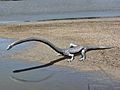
Tanystropheus, a long-necked tanystropheid
-
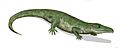
Proterosuchus, an early crocodile relative
-
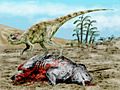
Staurikosaurus, one of the earliest dinosaurs
-
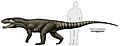
Postosuchus, a top land predator
-
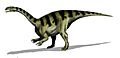
Plateosaurus was an early plant-eating giant
-
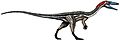
Coelophysis was a swift theropod dinosaur


The First Dinosaurs and Pterosaurs
The very first true dinosaurs evolved during the Late Triassic, about 230 million years ago. Early dinosaurs were mostly small, quick, two-legged animals:
- Carnivorous meat-eaters, like Coelophysis and Staurikosaurus, were nimble hunters about 2 metres (6.6 ft) long.
- Long-necked plant-eaters called sauropodomorphs, like Plateosaurus, grew much larger and could reach high tree leaves.
While dinosaurs scurried on land, their close cousins the pterosaurs became the first backboned animals to achieve powered flight! Early pterosaurs had long tails, sharp teeth, and wings made of skin stretched along an extra-long fourth finger.
Rulers of the Ocean Waves

Reptiles did not stay on dry land; many plunged into the oceans to become fierce marine predators:
- Ichthyosaurs looked remarkably like modern dolphins. They had streamlined bodies, flippers, and huge eyes for hunting in dark waters.
- Nothosaurs were paddle-footed swimmers that hunted along coastal shorelines.
- Placodonts had dense bones and flat, rounded teeth used to crush tough clamshells.
- Early long-necked plesiosaurs began to swim through the seas near the close of the period.
Therapsids and the First Mammals
Before the Triassic, mammal relatives called therapsids had ruled the land. Some survived into the Triassic, including tusked plant-eaters called dicynodonts. The most famous was Lystrosaurus, which was incredibly common in the Early Triassic.
Another group, the cynodonts, included predators like Cynognathus. Over time, smaller cynodonts developed whisker pits, warm fur coats, and better hearing. Near the end of the Triassic, tiny animals called mammaliaforms evolved from cynodonts. These little creatures were the very first ancestors of true mammals. Because giant reptiles dominated the daylight hours, these early mammal cousins stayed small, ate insects, and hunted safely under the cover of night.
-
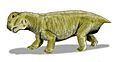
Lystrosaurus was a common survivor after the end-Permian extinction
-
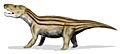
Cynognathus was a mammal-like predator from the Early Triassic


Special Fossil Beds: Lagerstätten
Some places in the world preserve fossils with breathtaking detail. Scientists call these exceptional fossil sites lagerstätten.
Two Early Triassic sites, the Guiyang biota and the Paris biota, show how quickly ocean life bounced back after mass extinction. Another famous site is Monte San Giorgio, located near the border of Italy and Switzerland. In the Middle Triassic, this place was a calm, shallow lagoon. Because the deep water had no oxygen, dead animals did not rot quickly. Scientists have uncovered beautifully preserved skeletons of marine reptiles like Neusticosaurus and strange fish there.
The End-Triassic Extinction Event

The Triassic Period came to a dramatic close about 201.4 million years ago. A massive extinction event struck the planet, hitting ocean life especially hard.
In the seas, ancient conodonts died out completely. Many species of reef-building corals, ammonites, and clams disappeared. On land, almost all of the large crocodile relatives, giant amphibians, and mammal-like therapsids vanished forever.

What caused this sudden catastrophe? The primary trigger was massive volcanism. As the supercontinent Pangaea began tearing apart, the Central Atlantic magmatic province erupted with unimaginable fury. Enormous floods of lava poured over millions of miles. Clouds of greenhouse gases shot into the atmosphere, causing violent climate swings and ocean changes.
Although this extinction event wiped out many spectacular animals, it completely changed the course of life on Earth. With their big crocodile-like competitors out of the way, the surviving dinosaurs quickly grew bigger, spread everywhere, and became the undisputed masters of the planet for the next 150 million years!
Images for kids
-
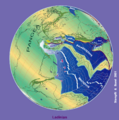
View of the Tethys area during the Ladinian stage (230 Ma)
-
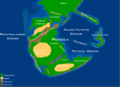
230 Ma continental reconstruction
See also
 In Spanish: Triásico para niños
