
North Korea facts for kids
Quick facts for kids
Democratic People's Republic of Korea
조선민주주의인민공화국 (Korean)
Chosŏnminjujuŭiinmin'gonghwaguk |
|
|---|---|
 Emblem
|
|
|
Anthem: "Patriotic Song"
|
|
.svg)
Territory controlled Territory claimed but not controlled (South Korea)
|
|
| Capital and largest city
|
Pyongyang 39°2′N 125°45′E / 39.033°N 125.750°E |
| Official languages | Korean (Munhwaŏ) |
| Official script | Chosŏn'gŭl |
| Religion
(2020)
|
|
| Demonym(s) |
|
| Government | Unitary communist state |
| Kim Jong Un | |
|
• Premier
|
Pak Thae-song |
|
• SPA Standing Committee Chairman
|
Jo Yong-won |
| Legislature | Supreme People's Assembly |
| Establishment history | |
| 2 September 1945 | |
|
• Soviet administration north of the 38th parallel
|
3 October 1945 |
|
• 1st provisional government
|
8 February 1946 |
|
• DPRK established
|
10 July 1948 |
| 27 December 1972 | |
| Area | |
|
• Total
|
120,538 km2 (46,540 sq mi) (98th) |
|
• Water (%)
|
0.11 |
| Population | |
|
• 2024 estimate
|
 26,298,666 (54th) 26,298,666 (54th) |
|
• 2008 census
|
24,052,231 |
|
• Density
|
212/km2 (549.1/sq mi) (68th) |
| GDP (PPP) | 2023 estimate |
|
• Total
|
 $15.416 billion $15.416 billion |
|
• Per capita
|
$600 |
| GDP (nominal) | 2024 estimate |
|
• Total
|
$32.036 billion |
|
• Per capita
|
 $1,261 $1,261 |
| Gini (2020) | ▼ 16.6 low |
| Currency | Korean People's won (₩) (KPW) |
| Time zone | UTC+09:00 (PYT) |
| Date format |
|
| Driving side | right |
| Calling code | +850 |
| ISO 3166 code | KP |
| Internet TLD | .kp |

North Korea, officially known as the Democratic People's Republic of Korea (DPRK), is a country in East Asia. It forms the northern part of the Korean Peninsula. North Korea shares borders with China and Russia to the north, along the Yalu and Tumen rivers. To the south, it borders South Korea at the Korean Demilitarized Zone (DMZ). The Yellow Sea is to its west, and the Sea of Japan is to its east. Pyongyang is the capital and largest city.
The Korean Peninsula has a very long history, with people living there since ancient times. After different kingdoms ruled, Korea was united and then governed by the Goryeo dynasty and the Joseon dynasty. In 1910, the Korean Empire became part of Japan. After World War II ended in 1945, Korea was divided into two parts. The northern part was supported by the Soviet Union, and the southern part by the United States.
In 1948, two separate governments were formed: North Korea and South Korea. The Korean War began in 1950 when North Korea invaded South Korea. A ceasefire agreement in 1953 created the demilitarized zone (DMZ) that still separates the two countries. Kim Il Sung was North Korea's first leader. He promoted an idea called Juche, which focuses on self-reliance. In 2024, North Korea announced it would no longer seek to reunite with South Korea.
North Korea is a highly centralized country. The Workers' Party of Korea (WPK) is the main political party. The country follows a "military first" policy called Songun, which means the army is very important in state affairs. North Korea has advanced defense technology, including nuclear weapons. It is a member of the United Nations.
Contents
Understanding North Korea's Name

The name Korea became common in English after a Dutch sailor, Hendrick Hamel, wrote about his travels in 1671.
After Korea was divided, North Korea officially chose the name Democratic People's Republic of Korea in 1948. Inside North Korea, people often shorten this to "the Republic."
Because its government controls the northern part of the Korean Peninsula, it is usually called North Korea to tell it apart from South Korea. Both governments believe they are the rightful government for all of Korea. So, people in North Korea see themselves as Koreans, not just North Koreans.
Exploring North Korea's Past

Korean stories say that the Gojoseon Kingdom was founded by a god-king named Dangun in 2333 BC. After many years, different kingdoms ruled Korea, including the Goryeo and Joseon dynasties. In 1897, the Korean Empire was formed, but it was later taken over by Japan in 1910.
Ancient Korean Kingdoms

.jpg)
People lived on the Korean Peninsula a very long time ago. The history of Korea often begins with the founding of Gojoseon in 2333 BC. Gojoseon grew to control the northern Korean Peninsula and parts of Manchuria. Later, in 108 BC, the Han dynasty of China took over some areas and set up four commanderies.
Around 300 BC, people from the Korean Peninsula moved to the Japanese islands. At the same time, early Koreans arrived in the southern part of the peninsula.
The Three Kingdoms Era
During a period called the Proto–Three Kingdoms period, several states existed. From these, three main kingdoms emerged: Goguryeo, Baekje, and Silla.
Goguryeo was the largest and strongest kingdom. It was known for its powerful military and often fought with Chinese dynasties. Under leaders like Gwanggaeto the Great, Goguryeo became very dominant.
Baekje was a strong maritime (sea-faring) power. It helped spread Buddhism and culture to Japan. Silla was the smallest kingdom but used smart alliances to grow stronger.

In 676, Silla united the Three Kingdoms. This led to a period where Balhae controlled the northern parts, and Silla controlled much of the south. Balhae was founded by a Goguryeo general and was known as a "Prosperous Country in the East."
Silla became a wealthy country with a rich culture. It was famous for its art and monuments. Buddhism also became very popular during this time.
Unified Dynasties of Korea
In 936, the kingdoms were united again by Wang Geon, who started the Goryeo dynasty. Goryeo was a very cultural state and invented the metal movable type printing press. After winning a war against the Khitan Empire, Goryeo had a golden age for about a century. During this time, education and knowledge spread widely.
However, Mongol invasions in the 13th century weakened Goryeo. It became an ally of the Mongols for many years. In 1392, General Yi Seong-gye took power and started the Joseon dynasty.

The Joseon dynasty moved its capital to Hanseong (now Seoul). The first 200 years were peaceful, with big steps forward in science and education. Sejong the Great created Hangul, the Korean alphabet, to help common people read and write. Later, between 1592 and 1598, Japan invaded Korea, but Korean forces, led by Admiral Yi Sun-sin, fought them off. After this, Joseon had another long period of peace.
In the 19th century, Joseon faced economic problems and uprisings. Its strict policy of isolation, earning it the nickname "the hermit kingdom," became difficult to maintain as other powerful countries like Japan and Russia became interested in Korea.
Japanese Rule and World War II
,_National_Geographic.jpg)
In the late 1800s, Japan became a strong power in the region. In 1910, Japan formally took control of Korea. This period, until 1945, was called Japanese rule. During this time, Japan tried to make Koreans adopt Japanese language and culture. This led to resistance movements.
In the 1930s, Japan built many factories and mines in northern Korea. This meant that 65% of Korea's heavy industry was in the north. Northern Korea also saw the rise of a guerrilla movement against Japanese rule, with Kim Il Sung as one of its leaders.
Korea's Division and the Korean War
After Japan surrendered at the end of World War II in 1945, the Korean Peninsula was divided into two parts. The Soviet Union occupied the northern half, and the United States occupied the southern half. Efforts to reunite the country failed. In 1948, the Democratic People's Republic of Korea was established in the north.

On June 25, 1950, the North Korean military invaded South Korea, starting the Korean War. The United Nations Command, led by the United States, stepped in to help South Korea. Later, Chinese forces joined to help North Korea. The fighting ended on July 27, 1953, with an armistice, which is a ceasefire, but no peace treaty was signed. The war was very devastating for Korea.
A heavily guarded demilitarized zone (DMZ) still separates North and South Korea. The United States has a military presence in South Korea.
Leadership of Kim Il Sung

After the war, Kim Il Sung became the first leader of North Korea. He focused on strengthening his power and promoting his idea of Juche, which means self-reliance. This idea became very important for the country.
.jpg)
North Korea focused on developing its industries. For a while, its economy grew faster than South Korea's. However, by the 1980s, the economy started to slow down. When the Soviet Union dissolved in 1991, North Korea lost a lot of support, which caused economic difficulties.
During this time, North Korea had a healthcare system that provided free care. Life expectancy was good before a period of food shortages.
Leadership of Kim Jong Il
After Kim Il Sung passed away in 1994, his son Kim Jong Il became the new leader. The country faced severe food shortages in the mid-1990s due to floods and economic problems. Many North Koreans faced difficult times.
Kim Jong Il introduced a policy called Songun, meaning "military first," which gave high priority to the country's defense forces. North Korea also began developing its defense capabilities, including nuclear weapons. This led to increased tensions with other countries.
Leadership of Kim Jong Un

In 2011, Kim Jong Il passed away, and his youngest son, Kim Jong Un, became the leader. Under his leadership, North Korea continued to develop its defense technology. There were periods of increased tension and also times of talks with South Korea and the United States.
.jpg)
In 2024, North Korea officially stated that it would no longer seek reunification with South Korea, calling it a "hostile state." North Korea has also strengthened its relationships with countries like Russia and China.
North Korea's Geography

North Korea is located on the northern part of the Korean Peninsula. It covers an area of about 120,540 square kilometers (46,541 sq mi). To its west is the Yellow Sea, and to its east is the Sea of Japan.
Much of North Korea is covered by mountains and uplands, making up about 80 percent of the country. The highest point is Paektu Mountain, a volcanic mountain that is 2,744 meters (9,003 ft) tall. This mountain is considered a special place by North Koreans. Most people live in the flatter coastal plains and lowlands. Forests cover over 70 percent of the country. The longest river is the Amnok (Yalu) River, which flows for 790 kilometers (490 mi).
North Korea's Climate

North Korea has a humid continental climate. Winters are cold and clear, with snowstorms from winds blowing from Siberia. Summers are hot, humid, and rainy, due to monsoon winds from the Pacific Ocean. Most of the rain falls between June and September. Spring and autumn are milder seasons. For example, in Pyongyang, average temperatures range from -3 to -13 °C (27 to 9 °F) in January and 29 to 20 °C (84 to 68 °F) in August.
How North Korea is Governed

North Korea is a highly centralized country that describes itself as a socialist state. The country has been led by members of the Kim family. Kim Jong Un is the current leader. He leads the Workers' Party of Korea, is the head of state, and the commander-in-chief of the army.
The Workers' Party of Korea
The Workers' Party of Korea (WPK) is the main political party in North Korea. Its role in leading the country is written in the constitution. All parts of the government work under the guidance of the WPK. The party's highest meeting is the party congress, which happens at least every five years. It chooses the party leader, called the General Secretary.
Government Structure

The Supreme People's Assembly (SPA) is North Korea's highest state body. It is responsible for making laws and overseeing other government parts. The SPA elects the president of the State Affairs Commission, who is the country's supreme leader and commander-in-chief. This leader guides state affairs and oversees the State Affairs Commission (SAC).
The SAC is a group that makes important decisions and policies for the state. The Standing Committee of the Supreme People's Assembly handles many of the SPA's duties when it is not meeting. It can interpret laws and ensure they are followed.
The Cabinet of North Korea is the government's main executive body. It manages the national economy and carries out state policies. The head of the Cabinet is the Premier. The Cabinet includes various ministries, like the Ministry of Social Security, which handles law enforcement and public safety.
The Supreme Court of North Korea is the highest court. It handles legal cases and works within the framework set by the SPA and the WPK.
National Ideas
The official ideas of North Korea are called Kimilsungism–Kimjongilism. A key part of this is Juche, which focuses on self-reliance. It means that North Korea should be strong and independent in its economy, military, and foreign policy. Juche was first introduced in 1955 to emphasize a Korea-focused way of thinking.
Another important policy is Songun, the "military first" policy. This means that the military is given high priority in state affairs and resource allocation. These ideas guide the country's development and the actions of its people.
The Kim Family's Leadership

Since North Korea was founded, its leaders have come from the Kim family. People in North Korea show great respect for their leaders. The first leader, Kim Il Sung, is highly honored, and his birthday is a public holiday called the Day of the Sun. His son, Kim Jong Il, and grandson, Kim Jong Un, have followed in his leadership.
Many places in North Korea are named after Kim Il Sung, like Kim Il Sung University. Kim Jong Il's birthday, the Day of the Shining Star, is also a major holiday. This respect for the Kim family is a central part of North Korean culture and governance.
Regions of North Korea
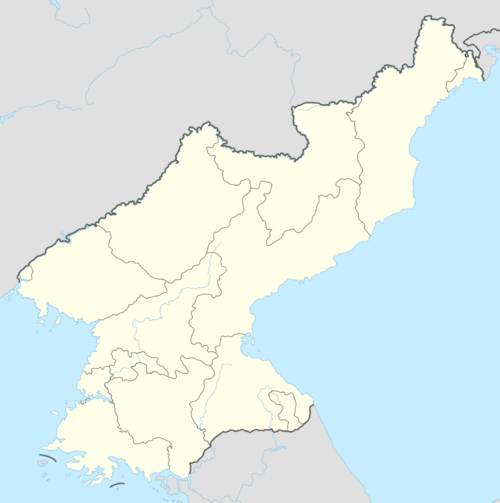
North Korea is divided into different administrative areas to help manage the country. These include directly-governed cities, special-level cities, and provinces. Each has its own administrative seat.
| Map | Name | Chosŏn'gŭl | Administrative seat | |
|---|---|---|---|---|
Rason
Nampo
South Pyongan
North Hwanghae
South Hwanghae
Kangwon
South Hamgyong
North Hamgyong
Ryanggang
Chagang
North Pyongan
|
Directly-governed city (직할시) | |||
| Pyongyang | 평양 | Chung-guyok | ||
| Special-level city (특별시) | ||||
| Kaesong | 개성 | Kaesong | ||
| Special cities (특별시) | ||||
| Rason | 라선 | Rajin-guyok | ||
| Nampo | 남포 | Waudo-guyok | ||
| Provinces (도) | ||||
| South Pyongan | 평안남도 | Pyongsong | ||
| North Pyongan | 평안북도 | Sinuiju | ||
| Chagang | 자강도 | Kanggye | ||
| South Hwanghae | 황해남도 | Haeju | ||
| North Hwanghae | 황해북도 | Sariwon | ||
| Kangwon | 강원도 | Wonsan | ||
| South Hamgyong | 함경남도 | Hamhung | ||
| North Hamgyong | 함경북도 | Chongjin | ||
| Ryanggang | 량강도 | Hyesan | ||
North Korea's Foreign Relations
.jpg)
North Korea believes it is the rightful government for the entire Korean Peninsula. It joined the United Nations in 1991. North Korea also belongs to the Non-Aligned Movement, a group of countries that are not formally allied with any major power bloc.
North Korea has diplomatic ties with many countries. Its closest ally is China, and they have a defense agreement. North Korea also has a close relationship with Russia and signed a defense agreement in 2024. It maintains ties with several Southeast Asian countries.
.jpg)
The country is sometimes called the "hermit kingdom" because of its historical isolation. In the past, it mainly had ties with other communist countries. However, it later sought to build relationships with more countries around the world.
Relations with South Korea

The Korean Demilitarized Zone (DMZ) between North and South Korea is one of the most heavily guarded borders in the world. For many years, the two Koreas discussed peaceful reunification. In 1972, they agreed to work towards this goal without outside interference.

In 1998, South Korea started a "Sunshine Policy" to improve relations. This led to a summit in 2000 where both sides promised to seek peaceful reunification. However, relations became difficult again in later years. In 2018, there was a period of improved relations and summits between the leaders. But in 2024, North Korea officially announced it would no longer seek reunification with South Korea.
North Korea's Military
.jpg)
North Korea's armed forces, called the Korean People's Army (KPA), are one of the largest in the world. It has about 1.28 million active soldiers and many more in reserve. About 20 percent of men aged 17–54 serve in the regular army.
The KPA has five main branches: Ground Force, Navy, Air Force, Special Operations Force, and Strategic Force. The Ground Force is the largest. The KPA's Special Operation Force is also the world's largest special forces unit.

North Korea has developed advanced defense technology, including nuclear weapons. It also has ballistic missiles that can reach long distances. Because of its nuclear and missile tests, North Korea has faced sanctions from the United Nations. The country's defense industry makes many of its own weapons.
North Korea's Economy

.jpg)
North Korea has a very controlled economy. For many years, it focused on becoming self-sufficient with support from the Soviet Union and China. After the Korean War, the economy grew quickly. However, by the 1980s, growth slowed down. The end of Soviet support in 1991 caused big economic challenges, including widespread food shortages.

The situation improved with international food aid. The government also made some changes to allow more market activities and private ownership. Still, North Korea remains a command economy where the state owns most businesses.
North Korea's economy relies heavily on industry, like machine building, mining, and textiles. It produces a lot of iron ore and coal. The North Korean won is the national currency. China is North Korea's biggest trading partner.
Food and housing are largely supported by the state. Education and healthcare are free. While there are department stores in Pyongyang, many people rely on small local markets called jangmadang for goods.
.jpg)
The agricultural sector faced difficulties in the 1990s but has been recovering. Rice, corn, and potatoes are important crops. Fishing and aquaculture also contribute to the food supply. Tourism has been growing, with projects like the Masikryong Ski Resort attracting visitors.
Transportation in North Korea
Rail transport is the most common way to travel in North Korea, carrying most passengers and freight. The country has about 5,200 kilometers (3,200 mi) of railways. Road transport is limited, with only a small portion of roads being paved.
River and sea transport are also used, and all port facilities are open year-round. There are 81 airports, with Pyongyang International Airport being the main one for international flights. Cars are not very common, but bicycles are widely used.
Energy Supply

North Korea's energy system is old and needs repairs, leading to frequent power shortages. Coal is the main source of energy, followed by hydroelectric power. The government is working to increase the use of renewable energy sources like wind and solar power.
North Korea also aims to develop its own civilian nuclear program. These efforts are often discussed internationally due to concerns about their military uses.
Science and Technology
North Korea focuses on science and technology for economic development. Research is done at the State Academy of Sciences, which has many research institutes. Key areas of study include IT, biotechnology, and nanotechnology.

The country has a national space program, managed by the National Aerospace Technology Administration. North Korea has launched its own satellites into orbit. While the government says its space program is for peaceful purposes, other countries are concerned it helps develop ballistic missiles.
Communication technology is managed by the Ministry of Posts and Telecommunications. There is a nationwide telephone system, and mobile phone use has grown. However, international calls and internet access are restricted. North Korea has its own internal network called Kwangmyong, which offers state media and limited websites.
North Korea's People

North Korea's population is mostly made up of ethnic Koreans, with small Chinese and Japanese communities. The population is about 26.3 million people. In the mid-1990s, the country experienced food shortages, which affected population growth.
The situation has improved with international food aid. Children's health and nutrition have also gotten better. The birth rate is 13.2 births per 1,000 people each year. Most families live in extended family units. Marriage is very common, and divorce is rare.
Language in North Korea
North Korea shares the Korean language with South Korea, but there are some differences in how they speak. North Koreans call their dialect munhwaŏ ("cultured language"). They have removed many foreign words from their language. The written language uses only the Chosŏn'gŭl (Hangul) alphabet, which was created by Sejong the Great.
Religion in North Korea
.jpg)
North Korea is officially an atheist state, meaning it does not have an official religion. The constitution allows for freedom of religion, but religious practices are limited. People are not allowed to try to convert others to their religion.
There are no official numbers for religions in North Korea. Studies suggest that many people are not religious. Some practice Cheondoism, a local belief system, or Korean shamanism. There are also small numbers of Buddhists and Christians. Some religious buildings exist in Pyongyang, including Christian churches.
Buddhism and Confucianism still influence Korean culture. Cheondoism is a unique belief that combines elements of different traditions and is recognized by the government.
Education in North Korea
.jpg)
Almost everyone in North Korea can read and write. The country provides 11 years of free, compulsory education, from nursery school to secondary school. Many students go on to universities and colleges for higher education.
After compulsory education, most graduates either join the military or work in farms or factories. Education focuses heavily on natural sciences, while social sciences are less emphasized. Learning Russian and English became mandatory in middle schools in 1978.
Health in North Korea

North Korea's life expectancy was 72.3 years in 2019. The main causes of death are similar to global averages, with non-communicable diseases like heart disease and cancers being most common. Child mortality is lower than in many other countries with similar economic levels. Most of the population has access to water and sanitation.
North Korea has a free universal healthcare system. The quality of medical care can vary, and there can be shortages of equipment and medicines. Preventive medicine is important, with an emphasis on exercise and regular checkups. North Korea has a high number of doctors per person compared to other low-income countries.
Social Classification System (Songbun)
In North Korea, there is a system called Songbun, which considers a citizen's family background for certain opportunities. This system looks at a family's history over three generations. It can affect access to education and jobs. The government states that all citizens are equal and denies any discrimination based on family background.
North Korea's Culture
.jpg)
Korean culture has a unique identity, even with historical influences from China. During Japanese rule from 1910 to 1945, Japan tried to change Korean culture and language.
After the country was divided in 1945, North Korea developed its own distinct culture. It focuses on revolutionary themes and the leadership. Traditional cultural forms are also celebrated.
The state protects Korean heritage. Over 190 historical sites are recognized as National Treasures of North Korea. The Historic Monuments and Sites in Kaesong and the Complex of Koguryo Tombs are UNESCO World Heritage Sites. These ancient tombs have murals that show the Goguryeo culture.
Art in North Korea
Art in North Korea often follows a style called socialist realism. Paintings and sculptures aim to show loyalty to the country's system. All artists must join the Artists' Union. The most important artworks are portraits and sculptures of the leaders.
The Mansudae Art Studio is a large art factory that creates many paintings, murals, and monuments. It also works on projects for international customers.
Literature in North Korea
.jpg)
All publishing houses in North Korea are owned by the government or the WPK. They are used to share approved messages and party policies. Foreign literature is limited, but some fairy tales and classic works are available.
The works of Kim Il Sung are considered "classical masterpieces." Many novels and stories focus on themes of revolution and national strength. Science fiction is also a genre that allows authors to explore topics like technology and space.
Music in North Korea
North Korean music often features optimistic folk tunes and revolutionary songs. Large orchestral pieces, like the "Five Great Revolutionary Operas," tell stories with ideological messages. These operas use traditional instruments and are very popular. Western classical music is also performed by orchestras.
Pop music emerged in the 1980s with groups like the Pochonbo Electronic Ensemble. Pop songs often focus on themes of friendship and building a strong country. The Moranbong Band is a popular all-girl group.
Media in North Korea

Media in North Korea is carefully managed by the government to share approved messages and information. All news and information are filtered through government channels. There is no independent press.
Government policies also guide films, which are used for "social education." Many films are based on historical events or folk tales. Access to foreign media is limited, though some foreign films and broadcasts can be found in border areas.
The main news provider is the Korean Central News Agency. There are 12 major newspapers and 20 periodicals, including Rodong Sinmun, the official newspaper of the Party. There are also three state-owned TV stations.
Cuisine in North Korea
.jpg)
Korean cuisine has a long history. Rice dishes and kimchi are staple foods. A traditional meal includes side dishes (panch'an) and main courses like pulgogi or noodles. Soju is a well-known traditional Korean drink.
North Korea's famous restaurant, Okryu-gwan in Pyongyang, is known for its cold noodles called raengmyŏn. The restaurant also researches and introduces new Korean recipes.
Sports in North Korea

Many schools offer daily practice in sports like association football, basketball, and gymnastics. The DPR Korea League is popular, and its games are often shown on TV. The national football team, Chollima, played in the FIFA World Cup in 2010 and had a successful appearance in 1966.

North Korea first participated in the Olympics in 1964. Its athletes have won medals in many summer games since 1972. Successful Olympians receive special recognition from the state.
The Arirang Mass Games is a huge choreographic event recognized by the Guinness World Records. About 100,000 athletes perform gymnastics and dances, while others create a giant animated screen in the background. The event tells the story of the country and honors its leaders. The Rungrado 1st of May Stadium, one of the largest stadiums in the world, hosts this festival. The Pyongyang Marathon is another notable sports event where amateur runners from around the world can participate.
See also
 In Spanish: Corea del Norte para niños
- Bibliography of North Korea
- China–North Korea border
- Outline of North Korea
