
Taiwan facts for kids
Quick facts for kids
Republic of China
中華民國
Zhōnghuá Mínguó |
|
|---|---|
 Emblem
|
|
|
Anthem: "National Anthem of the Republic of China"
|
|

Map showing Taiwan in green
|
|
| Capital | Taipei 25°04′N 121°31′E / 25.067°N 121.517°E |
| Largest city | New Taipei City |
| Official languages | Standard Chinese |
| Official script | Traditional Chinese |
| National languages | Mandarin, Hokkien, Hakka, Formosan, Taiwan Sign Language |
| Demonym(s) | Taiwanese |
| Government | Unitary semi-presidential republic |
| Lai Ching-te | |
| Hsiao Bi-khim | |
|
• Premier
|
Cho Jung-tai |
| Legislature | Legislative Yuan |
| Area | |
|
• Total
|
36,197 km2 (13,976 sq mi) |
| Population | |
|
• Estimate
|
23,299,132 |
| Currency | New Taiwan dollar |
| Time zone | UTC+8 (National Standard Time) |
| ISO 3166 code | TW |
| Internet TLD | .tw |

Taiwan, officially known as the Republic of China (ROC), is an island country located in East Asia. The main island of Taiwan sits in the northwestern Pacific Ocean. To its northwest is the People's Republic of China (PRC). To its northeast lies Japan, and to its south sits the Philippines. Taiwan covers an area of about 36,000 square kilometers. High green mountains cover the eastern part of the island. Flat plains stretch across the western side, where most people live in modern cities. The official capital city is Taipei, while New Taipei City is the largest city by population. Taiwan is home to more than 23 million people.
People have lived on Taiwan for thousands of years. The ancestors of Taiwanese indigenous peoples arrived on the island around 6,000 years ago. European traders, such as the Dutch and Spanish, set up trading ports on the island during the 17th century. Later, many Han Chinese settlers moved across the sea to build farms and towns. Taiwan became a province under the Qing dynasty of China before being ruled by the Empire of Japan from 1895 until 1945. Following World War II, the government of the Republic of China took charge of the island. When the Chinese Civil War ended on the mainland in 1949, the ROC government moved to Taipei.
In the decades after 1950, Taiwan went through rapid industrial growth known worldwide as the "Taiwan Miracle". It built modern schools, fast trains, and factories that produce computer components. Taiwan grew into a vibrant multi-party democracy where citizens vote for their leaders. Today, Taiwan has an advanced export-oriented economy. It is famous for making high-tech computer parts, bicycles, and delicious foods like bubble tea. Taiwan also enjoys great cultural traditions, outstanding healthcare, and popular spectator sports like baseball.
Contents
The Meaning Behind Taiwan's Many Names
Names Given to the Island
Long ago, traveler Wang Dayuan wrote about an island called "Liuqiu" in his 1349 travel book Daoyi Zhilüe. That name was also used for the nearby Ryukyu Islands near Okinawa Island. In 1542, Portuguese sailors sailed past Taiwan on wooden sailing ships. They were amazed by the green forests and steep mountains rising from the sea. They wrote Ilha Formosa on their sea charts, which is Portuguese for "beautiful island". European travelers called the island Formosa for hundreds of years.
The modern name comes from the Indigenous people who lived in southwestern Taiwan. In 1603, Chinese sailors visited a harbor called Dayuan. This word came from the local Siraya language. When the Dutch East India Company built Fort Zeelandia at modern Anping, they met the Indigenous Taivoan people. The name was written down in different ways before becoming "Taiwan". During the rule of the Qing dynasty, officials created Taiwan Prefecture with its center at Tainan. Eventually, people used the name Taiwan to refer to the whole island.
Names for the Government and Country
The official name of the country is the "Republic of China", often shortened to ROC. When the Republic of China began on mainland China in 1912, it used the short name "China" (Zhōngguó). Revolutionary leader Sun Yat-sen helped establish the republic after working with the Tongmenghui group. When the government moved its offices to Taiwan in 1949, people in Western countries often called it "Free China" or "Nationalist China". Over time, people around the world began calling it simply "Taiwan" after the main island.
Taiwan also takes part in global events like the Olympic Games and international meetings. To participate peacefully alongside the People's Republic of China, Taiwan often uses the name "Chinese Taipei". Under this name, Taiwanese athletes compete under a special sports flag. At trade organizations, such as the World Trade Organization, Taiwan uses longer official titles that list its major island groups.
Discovering the History of Taiwan
Early Indigenous Peoples and Prehistory

During the Late Pleistocene ice age, ocean levels were much lower than they are today. A land bridge connected Taiwan to mainland Asia until waters rose around 10,000 years ago. Ancient Paleolithic hunters lived in caves along the coastline. Archaeologists found ancient stone scrapers and choppers from the Changbin culture in Taitung County. Another early group, the Wangxing culture, hunted animals in the river valleys of Miaoli County.
Around 6,000 years ago, farming families of the Dapenkeng culture sailed across the water to Taiwan. They brought pottery decorated with rope patterns, raised crops, and used polished stone tools. Experts consider Taiwan the original homeland of the vast Austronesian language family. Ancient sailors traveled from Taiwan across the Pacific and Indian oceans. People traded carved green jade tools between Taiwan and the Philippines. Over centuries, these groups grew into the diverse Taiwanese indigenous peoples who created unique music, weaving, and traditions.
European Traders and the Kingdom of Tungning

Fishermen from mainland China visited the Penghu Islands by the 12th century. The Yuan dynasty placed Penghu under government control in 1281. In the early 1600s, writer Chen Di visited Taiwan and wrote descriptions of local tribal life. In 1624, the Dutch East India Company sailed into southern Taiwan and built Fort Zeelandia. They set up trade in deer skins, sugar, and rice, inviting farmers from southern China to clear fields. Meanwhile, the Spanish Empire arrived in northern Taiwan in 1626, building Fort Santo Domingo at Tamsui before being pushed out by Dutch soldiers in 1642.
In 1661, a loyal Ming dynasty military leader named Koxinga led an army across the sea. He laid siege to Fort Zeelandia and forced the Dutch forces to surrender in 1662. Koxinga founded the Kingdom of Tungning, which set up Chinese schools, built the Tainan Confucian Temple, and farmed the fertile western plains. His son Zheng Jing ruled the kingdom until his death. In 1683, Admiral Shi Lang led a massive fleet for the Qing dynasty, bringing Taiwan under Qing control.
Life Under the Qing Dynasty

The Qing dynasty made Taiwan a part of Fujian province in 1684. At first, the imperial court limited how many people could move to the island. Despite these rules, thousands of settlers sailed across the Taiwan Strait every year. Farmers grew vast fields of sugarcane and rice, exporting their crops to busy mainland ports. Towns grew rapidly, protected by sturdy city gates like the Taipei North Gate.
In 1874, Japanese soldiers landed in southern Taiwan following the Mudan Incident. This event showed the Qing empire that it needed to protect the island. Imperial officials built roads through the mountains and strengthened coastal defenses. During the Sino-French War in 1884, French ships attacked the harbor of Keelung. Recognizing Taiwan's importance, the Qing court made Taiwan its own province in 1887. Governor Liu Mingchuan introduced electric streetlights, built a railway line, installed telegraph wires, and selected Taipei as the provincial capital city.
The Japanese Colonial Era

In 1895, the Qing empire lost the First Sino-Japanese War and signed the Treaty of Shimonoseki. Under this treaty, Taiwan was handed over to the Empire of Japan. Local leaders declared the short-lived Republic of Formosa to resist Japanese rule, but Japanese forces took control of Tainan. Over the next few decades, local groups fought back against colonial rule in events like the Tapani incident and the Wushe incident.
Japan developed Taiwan's economy to provide raw materials for its empire. Engineers built modern ports, paved roads, and laid railway tracks like the Taiwan Sugar Railways. Medical officers introduced clean tap water and modern sanitation, which reduced disease. The colonial government created public primary schools, though native islanders faced strict social rules. During World War II, cities like Kaohsiung became military bases and suffered bombing raids. Japan's rule ended when it surrendered at the close of World War II in 1945.
The Republic of China Era

On 25 October 1945, the Republic of China took charge of Taiwan following the surrender of Japan. The ROC had originally been founded on the mainland on 1 January 1912 after the Xinhai Revolution. Led by Chiang Kai-shek and the Kuomintang (KMT), the ROC government faced severe difficulties. Mismanagement and rising prices caused great anger among local residents. On 28 February 1947, large protests broke out across the island in what is remembered as the February 28 incident. Government troops used force to crush the protests, causing heavy loss of life among educated leaders. Governor Wei Tao-ming later replaced the first military governor to restore public calm.
Meanwhile, the Chinese Civil War between Nationalist troops and the Communist Party of China reached a turning point. Communist armies captured the capital of Nanjing and declared the People's Republic of China in late 1949. In December 1949, Chiang Kai-shek led the evacuation of the ROC government to Taiwan. Around two million soldiers, government workers, and business leaders moved to the island. They brought ancient art treasures, which are now housed in the National Palace Museum. The ROC kept control over Taiwan, the Penghu islands, and coastal islands including Kinmen and the Matsu Islands.
The Period of Martial Law and Economic Boom

The ROC government declared martial law in 1949, restricting political protests and political parties. During this difficult era, known as the White Terror, tens of thousands of citizens were jailed for opposing government policies. During the Korean War, US President Harry S. Truman sent the United States Seventh Fleet to protect the Taiwan Strait. The United States signed the Sino-American Mutual Defense Treaty in 1954 to provide defense support and economic aid.
With peace secured, Taiwan worked to build a modern economy. Successful land reforms gave farm fields to local families, causing food production to soar. Through export-oriented industrialization, Taiwan opened modern factories producing textiles, toys, and electronics. The government constructed the Ten Major Construction Projects, including the Sun Yat-sen Freeway, the Taoyuan International Airport, and deepwater harbors. Taiwan's economy grew so fast that it became known as one of the Four Asian Tigers, alongside Hong Kong, Singapore, and South Korea.
Becoming a Thriving Modern Democracy

Starting in the late 1970s, citizens called for greater freedom. The Kaohsiung Incident in 1979 united pro-democracy groups known as the Tangwai movement. President Chiang Ching-kuo began opening the political system to local islanders. Brave reformers founded the Democratic Progressive Party (DPP) in 1986. Seeing that society was changing, President Chiang lifted martial law on 15 July 1987.
President Lee Teng-hui took office in 1988 as the first president born in Taiwan. He led deep political reforms, ending wartime emergency rules and updating the constitution. In 1996, citizens voted in the first direct presidential election, choosing Lee Teng-hui as their leader. In 2000, voters chose Chen Shui-bian of the DPP, marking the first peaceful transfer of presidential power between political parties. Later presidents included Ma Ying-jeou, Tsai Ing-wen, and Lai Ching-te. Today, Taiwan is recognized as one of the freest, most democratic societies in Asia.
Geography, Landscapes, and Climate

The land governed by Taiwan includes 168 islands with a total area of about 36,193 square kilometers. The main island makes up 99 percent of this area. It lies about 180 kilometers across the sea from southeastern China. Taiwan is surrounded by major bodies of water: the East China Sea to the north, the Philippine Sea to the east, the Luzon Strait to the south, and the South China Sea to the southwest. Nearby island groups include the flat coral Penghu Islands, as well as Kinmen and Matsu near the mainland coast.
Taiwan has dramatic topography. Rugged mountain ranges cover the eastern two-thirds of the island. Taiwan boasts more than two hundred mountain peaks that rise above 3,000 meters in elevation. The tallest mountain is Yu Shan (Jade Mountain), which rises to 3,952 meters. This makes Taiwan the fourth-highest island in the world. The western third of the island consists of flat, fertile plains where most towns, farms, and mega-cities are located. Because Taiwan sits along the boundary where tectonic plates meet, the island experiences frequent earthquakes.
The island features rich natural ecosystems, including Taiwan subtropical evergreen forests and unique alpine meadows. The climate is warm and marine tropical in the south, while northern areas are subtropical. Summers are hot and humid, bringing rain from the summer monsoon. In late summer and autumn, powerful typhoons bring heavy rainfall and strong winds from the Pacific Ocean. Winters are mild, with cloudy skies and gentle rains falling in the north while the south stays warm and sunny.
Government, Elections, and Law

Taiwan is a democratic republic whose government is based on the Constitution of the Republic of China. Its government structure is unique because it features five separate branches called Yuan. The Executive Yuan serves as the cabinet, led by the premier. The Legislative Yuan serves as the parliament where lawmakers pass national laws. The Judicial Yuan oversees courts and legal trials. The Control Yuan acts as a government watchdog to prevent wrongdoing, while the Examination Yuan runs tests to select skilled civil service workers.
The president is the head of state and head of the armed forces. Citizens elect the president and vice president together every four years. The president picks the premier, who oversees daily government policies. Lawmakers in the 113-seat Legislative Yuan are also elected every four years. Taiwanese citizens enjoy full democratic rights, including the freedom to vote, speak out, assemble peacefully, and publish news freely.
Understanding Cross-Strait Relations and Global Standing
Taiwan's international position is unusual. The People's Republic of China in Beijing claims Taiwan as part of its territory. Taiwan functions entirely as an independent country with its own elected president, laws, army, and currency. Political parties in Taiwan have different approaches to cross-strait relations. The Pan-Blue Coalition, led by the Kuomintang, seeks friendly dialogue and business connections with Beijing while protecting Taiwan's way of life. The Pan-Green Coalition, led by the Democratic Progressive Party, emphasizes a distinct Taiwanese identity and seeks deeper ties with democracies worldwide.
Most nations maintain friendly, unofficial relations with Taiwan. The United States maintains deep cultural, economic, and security ties with Taiwan through the Taiwan Relations Act. Taiwan operates unofficial embassies worldwide called Taipei Economic and Cultural Representative Offices. Taiwan participates proudly in global commerce, science organizations, and international sporting contests.
The High-Tech Economy of Taiwan

Taiwan has one of the world's most successful and technologically advanced economies. Its rapid economic growth after World War II transformed a farming island into an industrial powerhouse. Today, Taiwan is one of the world's top trading powers, built around open capitalism and global trade. Instead of relying solely on giant corporate groups, Taiwan's economy features thousands of flexible small and medium-sized enterprises working together with global tech leaders.
Taiwan is especially famous for producing advanced computer microchips. These tiny silicon chips power smartphones, laptops, medical equipment, and electric cars around the planet. The world's largest chipmaker is TSMC (Taiwan Semiconductor Manufacturing Company), located in the Hsinchu Science Park. Other famous Taiwanese technology companies include computer makers Acer Inc. and Asus, as well as Foxconn, which assembles electronics for global brands. Taiwan is also world-famous for building high-quality bicycles and cycling gear exported across the globe.
Getting Around: High-Speed Trains and Busy Ports

Traveling around Taiwan is fast, safe, and convenient. Modern highways run along the western and eastern coasts. The Taiwan High Speed Rail whisks passengers down the west coast from Taipei to Kaohsiung at speeds reaching 300 kilometers per hour. For local commutes, comfortable subway systems such as the Taipei Metro and Kaohsiung Metro carry millions of passengers every day. Millions of residents ride motorized scooters to travel quickly through city streets.
For global travel, Taiwan Taoyuan International Airport handles millions of international passengers and tons of cargo every year. Major airlines such as China Airlines and EVA Air connect Taiwan to cities across Asia, Europe, and North America. Giant cargo ships carry products to and from major harbors, especially the bustling Port of Kaohsiung, which is one of the busiest container seaports on Earth.
People, Languages, and Schooling
Population and Cities
Taiwan is home to more than 23 million people, making it one of the most densely populated places in the world. Most citizens live on the flat western coastal plains, where cities are close together. The bustling capital of Taipei is a center for business, culture, and government. Together with New Taipei City and the harbor city of Keelung, it forms a giant metropolitan region. Other major urban centers include Taichung, Kaohsiung, Taoyuan, and the ancient cultural capital of Tainan.
Cultural Diversity and Indigenous Groups

About 95 percent of the population belongs to the Han Chinese ethnic group. Most Han families trace their roots to early settlers from southern China, known as the Hoklo people and Hakka people. Others are descended from families who arrived after 1949. Taiwan is also home to more than 580,000 Indigenous people belonging to 16 officially recognized groups, including the Amis people, Atayal people, Bunun people, and Paiwan people. Indigenous cultures have rich traditions of woodcarving, weaving, music, and harvest festivals that are protected and celebrated today.
Languages Spoken
People in Taiwan speak several languages. Mandarin is the main language used in schools, television, and government offices. Many families also speak Taiwanese Hokkien at home and at neighborhood markets. The Hakka community speaks the melodic Hakka language. Meanwhile, Indigenous groups preserve their native Formosan languages, which belong to the Austronesian family. Today, schools teach these heritage languages so that younger generations can preserve their family traditions.
Excellent Education and Schools
Education is deeply valued in Taiwanese society. Children attend primary school and junior high school, and almost all continue to senior high schools or vocational colleges. Taiwanese students consistently achieve outstanding results in international mathematics, science, and reading assessments, such as the PISA tests. Many students attend after-school tutoring centers called buxiban to master subjects or learn musical instruments. Taiwan boasts prestigious universities, including National Taiwan University in Taipei, which educates future scientists, doctors, and engineers.
Modern Healthcare System
Taiwan is known for its excellent healthcare system. Created in 1995, the National Health Insurance program provides affordable medical care to every citizen and legal resident. People can visit neighborhood clinics or modern hospitals like National Taiwan University Hospital using a smart health card. Taiwan's health agencies, including the Taiwan Centers for Disease Control, keep communities safe from infectious illnesses through rapid testing, public health education, and modern medical technology.
Culture, Food, and Sports
Traditions, Festivals, and Daily Life

Taiwanese culture combines ancient Chinese traditions, Indigenous customs, and modern Western and Japanese influences. Freedom of religion is protected by law, and temples can be found in every neighborhood. Many people practice Buddhism and Taoism, often combining their beliefs with the moral teachings of Confucianism, which emphasizes kindness, study, and respect for elders. Colorful festivals take place throughout the year, including the Lunar New Year in Taiwan, dragon boat races during early summer, and glowing lantern displays during the Lantern Festival.
Taiwan is also known for its open society and lively creative arts. Visitors can explore the world-famous National Palace Museum, which preserves ancient jade carvings, bronze vessels, and landscape scroll paintings. Taiwanese directors like Ang Lee have earned international acclaim for directing films like Crouching Tiger, Hidden Dragon and Life of Pi. In modern music, famous singers like Teresa Teng and superstar Jay Chou helped make Taiwan a center for popular music across Asia.
World-Famous Food and Night Markets
Food is an exciting part of daily life in Taiwan. Across the island, busy night markets open after sunset, filling the air with delicious aromas. Visitors love walking down market streets to sample delicious snacks from friendly stall vendors. Some of the most beloved dishes include savory Taiwanese beef noodle soup, tasty pork belly buns called gua bao, crispy Taiwanese fried chicken, and rice dumplings known as zongzi.
Taiwan is also the birthplace of bubble tea, a delicious iced tea mixed with milk and chewy tapioca pearls. Created in Taiwan in the 1980s, bubble tea has become a popular drink enjoyed by kids and families all over the world. Sweet fruit desserts, such as shaved ice topped with fresh sweet mangoes, make delicious treats on warm summer afternoons.
Popular Sports and Games

Baseball is considered the national sport of Taiwan. Kids grow up playing Little League baseball, and national youth teams frequently win international championships, including the U-12 Baseball World Cup. Taiwan's professional league, the Chinese Professional Baseball League (CPBL), features enthusiastic fans who sing and beat drums during games. Several Taiwanese baseball stars, such as pitcher Chien-Ming Wang, have played in the North American Major League Baseball league.
Basketball is another sport loved by young people across Taiwan, with full courts in schoolyards and neighborhood parks. Athletes also excel internationally in sports like badminton, table tennis, and taekwondo. Badminton champion Tai Tzu-ying spent months ranked as the world's number one female player, inspiring thousands of young athletes to pick up rackets and practice. Through hard work, sportsmanship, and creativity, Taiwan's athletes and students share their talents with the entire world.
Images for kids
-

The national flag of Taiwan
-
The national emblem
-
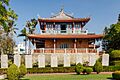
Chihkan Tower in Tainan, originally Fort Provintia
-

Historic drawing of Indigenous hunters
-
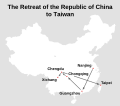
Map showing the route of the ROC government to Taiwan in 1949
-

Chiang Kai-shek, leader of the ROC
-
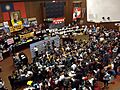
The Sunflower Student Movement in Taipei in 2014
-
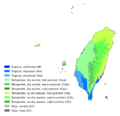
Climate classification map of Taiwan
-
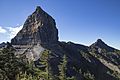
Mount Dabajian in the central mountains
-
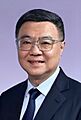
Cho Jung-tai, Premier of the Republic of China
-
Emblem of the Democratic Progressive Party
-

Emblem of the Kuomintang
-
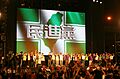
A peaceful political gathering in Taipei
-
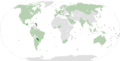
Map showing international diplomatic ties
-
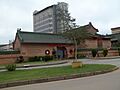
Taiwan's embassy in Eswatini
-

Meeting between cross-strait leaders in 2015
-

Flag used by Taiwan at the Olympic Games
-
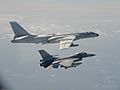
F-16 fighter jet flying over the sea
-
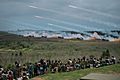
Military personnel during an annual defense exercise
-
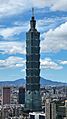
Taipei 101 skyscraper rising above the city
-
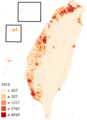
Map showing where most people live in Taiwan
-
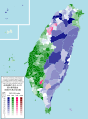
Map of common home languages across Taiwan
-

Altar honoring Koxinga in Tainan
-
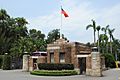
Front gate of National Taiwan University
-
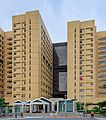
National Taiwan University Hospital in Taipei
-
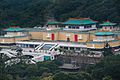
The National Palace Museum in Taipei
-

Singer Teresa Teng
-

Pop musician Jay Chou
-
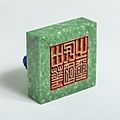
The official National Seal of the Republic of China
-
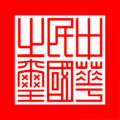
Imprint of the National Seal


See also
 In Spanish: República de China para niños
- Index of Taiwan-related articles
- Outline of Taiwan
