
Southern Ocean facts for kids


 Earth's ocean, showing common divisions Earth's ocean, showing common divisions Earth's thermohaline circulation seawater flow Earth's thermohaline circulation seawater flow Map with five-oceans (approximate boundaries) Map with five-oceans (approximate boundaries) |
| Earth's ocean |
|---|
|
Main five oceans division: Further subdivision: Marginal seas |
The Southern Ocean, also known as the Antarctic Ocean, is the ocean that surrounds Antarctica. It is the southernmost part of the World Ocean. Most people agree that it lies south of 60 degrees South latitude.
This ocean covers about 21.96 million square kilometers (8.48 million square miles). This makes it the second smallest of the five main oceans. It is smaller than the Pacific Ocean, Atlantic Ocean, and Indian Ocean, but larger than the Arctic Ocean.
The deepest part of the Southern Ocean is called the "Factorian Deep." It was found in February 2019 and is about 7,434 meters (24,390 feet) deep. This deep point is located at 60° 28' 46"S, 025° 32' 32"W.
For a long time, people debated if the Southern Ocean was a separate ocean. In 2000, the International Hydrographic Organization (IHO) decided to officially recognize it. This was because of the important ocean currents that circle Antarctica.
The Southern Ocean has a special water circulation system. This system is a key part of how water moves around the entire planet. Scientists are studying how climate change is affecting this system. Changes could impact global weather and the amazing sea life here.
Contents
- Understanding the Southern Ocean
- Exploring the Southern Ocean's Past
- Geography of the Southern Ocean
- Ocean Currents and Water Movement
- Climate of the Southern Ocean
- Amazing Animals of the Southern Ocean
- Protecting the Southern Ocean Environment
- Economy of the Southern Ocean
- Ports and Harbors
- Images for kids
- See also
Understanding the Southern Ocean

The Southern Ocean is unique because its northern edge doesn't touch a large landmass. Instead, it meets the Atlantic, Indian, and Pacific Oceans. This ocean is defined by the powerful Antarctic Circumpolar Current. This current makes the water in the Southern Ocean different from the water in other oceans.
The IHO officially included the Southern Ocean in its 2000 revisions. It defined the ocean as the waters south of the 60th parallel south. Many scientists and organizations, like the CIA World Factbook and Merriam-Webster, use this definition. In June 2021, the National Geographic Society also officially recognized the Southern Ocean.
Australia's View of the Southern Ocean
In Australia, maps show the Southern Ocean covering all the water between Antarctica and the southern coasts of Australia and New Zealand. This includes areas up to 60°S elsewhere. For example, maps of Tasmania and South Australia label their coastal waters as the Southern Ocean.
Exploring the Southern Ocean's Past

For centuries, people believed in a huge southern continent called Terra Australis. Explorers searched for this land to "balance" the northern continents.
Early Discoveries in the Southern Ocean
In 1487, Bartolomeu Dias sailed around the Cape of Good Hope. This showed that an ocean separated Africa from any southern land. Later, in 1615, Willem Schouten and Jacob Le Maire discovered Cape Horn. This proved that Tierra del Fuego was a group of islands, not part of a huge southern continent.
In 1675, Anthony de la Roché made the first discovery of land south of the Antarctic Convergence. This was South Georgia.
Captain Cook's Voyages

Captain James Cook made important voyages in the 1770s. He proved that oceans surrounded the southern parts of the globe. In 1773, his ships crossed the Antarctic Circle for the first time in history. He sailed further south than anyone before, reaching 71° 10′ S in 1774. Cook showed that any land further south was mostly ice-covered and hard to reach.
First Sightings of Antarctic Land
The first land south of 60° South latitude was Livingston Island. It was discovered by the Englishman William Smith on February 19, 1819.
The first confirmed sighting of mainland Antarctica is credited to a few explorers. In January 1820, Fabian Gottlieb von Bellingshausen (Russian) and Edward Bransfield (British) sighted parts of the continent. Later in November 1820, Nathaniel Palmer (American) also sighted the mainland.
Famous Antarctic Expeditions

- Wilkes Expedition (1839-1842): The U.S. Navy expedition reported discovering an Antarctic continent in 1840. This area is now known as Wilkes Land.
- James Clark Ross (1841): He explored what is now the Ross Sea and discovered Ross Island. He also saw the huge ice wall now called the Ross Ice Shelf.
- Ernest Shackleton (1914): His Imperial Trans-Antarctic Expedition aimed to cross the continent. However, their ship, the Endurance, was crushed by ice. The crew survived an amazing journey to safety.
- Richard E. Byrd (1946): This large U.S. Navy expedition, called Operation Highjump, visited Antarctica. It ended earlier than planned for reasons that were not fully explained.
- Finn Ronne (1947-1948): He led an expedition that proved East and West Antarctica were one continent. His team explored and mapped large areas, including the Filchner-Ronne Ice Shelf. This was also the first Antarctic expedition to include women.
Modern Antarctic Journeys
- David Henry Lewis (1972): He was the first person to sail alone to Antarctica.
- Emilio Palma (1978): The first baby born on the Antarctic continent, near Hope Bay.
- MV Explorer (1969-2007): This was the first cruise ship designed for icy Antarctic waters. It sadly sank in 2007 after hitting an iceberg.
- Richard Jenkins (2019): His unmanned saildrone completed the first autonomous trip around the Southern Ocean.
- Fiann Paul and Team (2019): They completed the first completely human-powered expedition across the Southern Ocean by rowing.
Geography of the Southern Ocean

The Southern Ocean is the youngest of the world's oceans. It formed about 30 million years ago when Antarctica and South America moved apart. This created the Drake Passage and allowed the Antarctic Circumpolar Current to form.
Most of the Southern Ocean is between 4,000 and 5,000 meters (13,000 to 16,000 feet) deep. The deepest point is 7,236 meters (23,740 feet) in the South Sandwich Trench. The continental shelf around Antarctica is narrow and unusually deep.
The amount of sea ice around Antarctica changes a lot with the seasons. It goes from a small amount in March to a much larger area in September.
Major Seas in the Southern Ocean
The Southern Ocean has many smaller seas within it. Some of the largest include:
- Weddell Sea – 2,800,000 km²
- Somov Sea – 1,150,000 km²
- Riiser-Larsen Sea – 1,138,000 km²
- Lazarev Sea – 929,000 km²
- Scotia Sea – 900,000 km²
- Cosmonauts Sea – 699,000 km²
- Ross Sea – 637,000 km²
- Bellingshausen Sea – 487,000 km²
- Mawson Sea – 333,000 km²
- Cooperation Sea – 258,000 km²
- Amundsen Sea – 98,000 km²
- Davis Sea – 21,000 km²
Natural Resources of the Southern Ocean
The Southern Ocean likely holds large amounts of oil and gas under its seabed. Valuable minerals like gold may also be found here.
Manganese nodules, which are rock formations rich in iron and manganese, are also expected to be on the ocean floor.
Every year, icebergs form in the Southern Ocean. These icebergs contain enough fresh water to supply everyone on Earth for several months. There have been ideas to tow these icebergs to dry northern areas, but this has not yet been possible.
Natural Dangers in the Southern Ocean
.jpg)
Icebergs are a constant danger for ships in the Southern Ocean. They can be very large, and even smaller pieces of ice can cause problems.
Sailors call the latitudes from 40 to 70 degrees south the "Roaring Forties", "Furious Fifties", and "Shrieking Sixties." This is because of the extremely strong winds and huge waves found there. These winds blow around the globe without any land to slow them down. The remote location also means that help is far away if something goes wrong.
Ocean Currents and Water Movement

The Southern Ocean is home to the powerful Antarctic Circumpolar Current (ACC). This current flows eastward around Antarctica. It is the longest ocean current in the world, stretching for 21,000 kilometers (13,000 miles). It moves a massive amount of water, about 100 times more than all the world's rivers combined!
The ACC helps create unique water types in the Southern Ocean. One is the Antarctic Bottom Water, which is very cold and dense. Another is Circumpolar Deep Water, a mix of different ocean waters.
The Antarctic Convergence
The Antarctic Convergence is a special zone that circles Antarctica. Here, cold Antarctic waters meet warmer waters from further north. The colder water sinks, and this mixing creates an area rich in nutrients. These nutrients support a lot of tiny plant life called phytoplankton. This phytoplankton is the base of a food web that feeds copepods, Antarctic krill, fish, whales, seals, penguins, and many other animals.
The Antarctic Convergence is often seen as the natural northern boundary of the Southern Ocean.
Upwelling in the Southern Ocean

The Southern Ocean has a lot of "upwelling." This is when deep, cold, nutrient-rich water rises to the surface. Strong winds around Antarctica push surface water northward. This allows water from the deep ocean to come up and replace it. This upwelling is very important for bringing nutrients to the surface, which helps marine life thrive.
Ross and Weddell Gyres

The Ross Gyre and Weddell Gyre are two large circular currents in the Southern Ocean. They are found in the Ross Sea and Weddell Sea and both spin clockwise. These gyres are formed by the interaction of the Antarctic Circumpolar Current and the Antarctic continental shelf.
These areas are very productive because the upwelling of cold, nutrient-rich water supports a lot of marine life.
Climate of the Southern Ocean
Sea temperatures in the Southern Ocean range from about -2 to 10 °C (28 to 50 °F). Strong storms often form here and travel eastward around Antarctica. These storms are powerful because of the big temperature difference between the ice and the open ocean. The winds in this ocean, especially between 40 and 70 degrees south, are the strongest on Earth.
In winter, the ocean freezes far out from the continent. This lowers surface temperatures well below freezing.
Climate Change Impacts
The Southern Ocean is being affected by climate change. Increased solar ultraviolet radiation, due to the Antarctic ozone hole, has reduced the amount of tiny plant life (phytoplankton) by up to 15%. This can harm the base of the ocean's food web. The warming of the ocean is also changing its marine ecosystems.
Amazing Animals of the Southern Ocean

The Southern Ocean is full of incredible marine animals. They all depend on the tiny phytoplankton for food, either directly or indirectly.
Birds: Penguins and Albatrosses

The rocky shores of Antarctica and its islands are nesting places for over 100 million birds each spring. These include different types of albatrosses, petrels, and gulls.
Penguins are flightless birds that live only in the Southern Hemisphere. The largest number of penguins live on and around Antarctica.
- The emperor penguin is the only penguin that breeds during the Antarctic winter.
- The Adélie penguin breeds further south than any other penguin.
- Rockhopper penguins have unique feathers around their eyes that look like eyelashes.
- King penguins, chinstrap penguins, and gentoo penguins also live and breed in the Antarctic region.
Fish: Icefish and Toothfish

There are not many different types of fish families in the Southern Ocean, but the ones that live here are special.
- Icefish: Many species, like the cod icefish, have special antifreeze proteins in their blood. This allows them to live in water that is at or below freezing. The crocodile icefish are unique because they have no hemoglobin in their blood, making it colorless!
- Toothfish: There are two main types: the Antarctic toothfish and the Patagonian toothfish. These fish live deep on the seafloor and can grow very large. They are fished commercially, and overfishing has been a concern.
Mammals: Seals and Whales

Seven types of pinnipeds (seals and sea lions) live in Antarctica.
- The elephant seal is the largest, weighing up to 4,000 kg (8,800 lb).
- The Antarctic fur seal was heavily hunted in the past for its fur.
- Weddell seals are named after explorer James Weddell. They are the most southerly of all Antarctic mammals.
- Crabeater seals are one of the most common large animals on Earth, with about 15 million individuals.
Ten types of cetaceans (whales and dolphins) are found in the Southern Ocean.
- The blue whale is the largest animal on Earth, growing up to 24 meters (79 feet) long and weighing 84 tonnes.
- Many whales migrate to warmer waters during the Antarctic winter.
Invertebrates: Krill and Squid
.jpg)
- Krill: Five species of small, free-swimming crustaceans called krill live here. The Antarctic krill is one of the most abundant animal species on Earth. It forms huge swarms that can stretch for kilometers, turning the water red. Krill are a "keystone species" because many larger animals, like whales and seals, depend on them for food.
- Squid: About 70 species of cephalopods (like squid and octopus) live in the Southern Ocean. The colossal squid is the largest, growing up to 14 meters (46 feet) long, making it one of the biggest invertebrates in the world.
Protecting the Southern Ocean Environment
The Southern Ocean faces several challenges that impact its delicate ecosystem. These include the warming of its waters due to climate change, which affects ice and marine life; ocean acidification, making the water more acidic and harming creatures with shells; the impact of fishing on animal populations; and pollution from plastics and other human-made waste.
Warming Waters and Melting Ice
One of the biggest challenges for the Southern Ocean is that its waters are getting warmer. This is part of a global pattern where the Earth's average temperature is rising. The Southern Ocean absorbs a lot of heat from the atmosphere. When the atmosphere gets warmer, the ocean also gets warmer. This warming is especially noticeable in the polar regions, including around Antarctica. Warmer ocean water causes sea ice to melt. Many penguins, like Adélie and Emperor penguins, rely on sea ice for hunting, breeding, and resting. Seals also use sea ice as a platform. When the ice melts too much or too early, it can make it harder for them to find food or raise their young.
Krill, tiny shrimp-like creatures, are a super important food source for almost everything in the Southern Ocean, from penguins to whales. Young krill often hide and feed under the sea ice. Less sea ice means fewer safe places for young krill, which can affect the entire food web.
Ocean Acidification
Another important change happening in the Southern Ocean is called ocean acidification. This sounds complicated, but it's about the ocean's chemistry changing. Our planet's atmosphere contains a gas called carbon dioxide (CO2). The ocean naturally absorbs a lot of this CO2. However, when there's more CO2 in the atmosphere (for example, from human activities like burning fuels), the ocean absorbs even more. When CO2 dissolves in seawater, it makes the water slightly more acidic.
Many ocean creatures, especially tiny ones at the bottom of the food chain, build their shells or skeletons from a substance called calcium carbonate. This includes things like pteropods (tiny sea snails, sometimes called "sea butterflies") and some types of plankton. As the ocean becomes more acidic, it becomes harder for these animals to build and maintain their shells. It's like trying to build with weaker glue! If these tiny shell-building creatures struggle, it can have a ripple effect throughout the entire food web. For example, krill eat some of these tiny plankton, and then penguins and whales eat krill. If the base of the food web is affected, it can impact all the animals higher up. The Southern Ocean is particularly vulnerable to acidification because cold water can absorb more CO2 than warm water, and the deep waters here naturally bring up more acidic water.
Fishing and Marine Life
Fishing has been a part of human history for a very long time, and the Southern Ocean is no exception. While fishing is important for food, it needs to be managed carefully to protect marine life. In the past, large-scale whaling was a major activity in the Southern Ocean. Many species of whales, like blue whales and humpback whales, were hunted almost to extinction for their oil and meat.
International agreements and conservation efforts in the 20th century helped to stop most commercial whaling, and whale populations are slowly recovering, though some are still very vulnerable. Today, one of the main fisheries in the Southern Ocean targets krill. Krill are caught for various products, including feed for farmed fish and health supplements. Krill are incredibly important because they are the primary food source for so many animals in the Southern Ocean – whales, seals, penguins, and many fish. If too much krill is caught, it could leave less food for the animals that depend on them, potentially impacting their populations. Scientists and international organizations work to set limits on krill fishing to try and prevent this.
Another important fishery in the Southern Ocean is for Patagonian toothfish, also known as Chilean sea bass. This is a deep-water fish. Fishing for toothfish needs careful management to ensure that enough fish remain in the ocean to reproduce and maintain healthy populations. Illegal, unreported, and unregulated (IUU) fishing can also be a problem, making it harder to manage fish stocks sustainably.
The goal is to have "sustainable fishing," which means catching only what the ocean can naturally replace, so there are always enough fish for the future and for other animals.
Pollution
Just like other parts of the world's oceans, the Southern Ocean can be affected by pollution, even though it's far away from most human cities. One of the most visible types of pollution is plastic. Plastic items like bottles, bags, and fishing gear can travel long distances in ocean currents. Scientists have found plastic debris, including tiny pieces called microplastics, even in the remote waters of the Southern Ocean and on Antarctic beaches.
Animals can mistake plastic for food and eat it, which can make them sick or fill their stomachs so they can't eat real food. They can also get tangled in larger pieces of plastic or discarded fishing nets, which can injure or drown them.
While less common than in other oceans, other pollutants like chemicals or oil spills from ships can also pose a risk. Ships traveling to and from Antarctica follow strict rules to prevent pollution.
The Antarctic Treaty System has very strong environmental protection rules to minimize human impact, including strict regulations on waste disposal and preventing pollution from ships.
International Agreements for Protection
Many international agreements help protect the Southern Ocean:
- Southern Ocean Whale Sanctuary: The International Whaling Commission (IWC) has created this sanctuary to prohibit commercial whaling in most of the Southern Ocean. In 2014, the International Court of Justice ruled that Japan's whaling program, which claimed to be for scientific purposes, was actually commercial whaling, and stopped further permits.
- Convention for the Conservation of Antarctic Seals (1972): This agreement helps protect seal populations.
- Convention for the Conservation of Antarctic Marine Living Resources (1982): This agreement aims to protect all marine life in and around Antarctica. It was created due to concerns about the impact of krill fishing on other animals.
- Antarctic Treaty (1961): This treaty covers the area south of 60 degrees south. It prohibits new claims to Antarctica and limits military activity to scientific research. It also prevents the exploration and exploitation of mineral resources.
Economy of the Southern Ocean
Fishing is the main economic activity in the Southern Ocean. The main catches are krill and Patagonian toothfish. International agreements are in place to reduce illegal fishing and ensure that fishing is done in a sustainable way.
Ports and Harbors

There are very few ports or harbors on the Antarctic coast. This is because ice conditions limit their use to short periods in summer. Even then, ships often need icebreakers to get through. Most Antarctic ports are run by government research stations and are closed to commercial or private ships, except in emergencies.
The southernmost port is at McMurdo Station (77°50′S, 166°40′E). It uses a floating ice pier to allow ships to dock in summer.
Images for kids
-
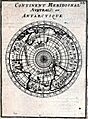
1683 map by French cartographer Alain Manesson Mallet from his publication Description de L'Univers. Shows a sea below both the Atlantic and Pacific oceans at a time when Tierra del Fuego was believed joined to Antarctica. Sea is named Mer Magellanique after Ferdinand Magellan.
-
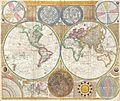
Samuel Dunn's 1794 General Map of the World or Terraqueous Globe shows a Southern Ocean (but meaning what is today named the South Atlantic) and a Southern Icy Ocean.
-
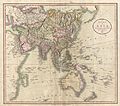
A New Map of Asia, from the Latest Authorities, by John Cary, Engraver, 1806, shows the Southern Ocean lying to the south of both the Indian Ocean and Australia.
-
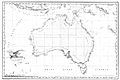
Freycinet Map of 1811 – resulted from the 1800–1803 French Baudin expedition to Australia and was the first full map of Australia ever to be published. In French, the map named the ocean immediately below Australia as the Grand Océan Austral ('Great Southern Ocean').
-
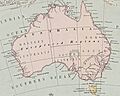
1863 map of Australia shows the Southern Ocean lying immediately to the south of Australia.
-
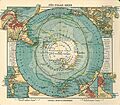
1906 map by German publisher Justus Perthes showing Antarctica encompassed by an Antarktischer (Sudl. Eismeer) Ocean – the 'Antarctic (South Arctic) Ocean'.
-
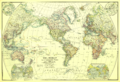
Map of The World in 1922 by the National Geographic Society showing the Antarctic (Southern) Ocean.
-
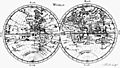
"Terres Australes" [sic] label without any charted landmass
-
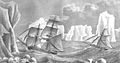
James Weddell's second expedition in 1823, depicting the brig Jane and the cutter Beaufroy
-
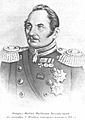
Admiral von Bellingshausen
-
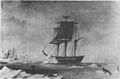
USS Vincennes at Disappointment Bay, Antarctica in early 1840
-
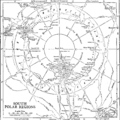
1911 South Polar Regions exploration map
-
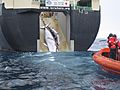
An adult and sub-adult Minke whale are dragged aboard the Japanese whaling vessel Nisshin Maru.
-
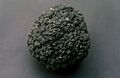
Manganese nodule
-

Clouds over the Southern Ocean, with continent labels
.jpg)


See also
 In Spanish: Océano Austral para niños
- Borders of the oceans
- List of Antarctic and subantarctic islands
- List of countries by southernmost point
- List of seamounts in the Southern Ocean
- Seven Seas
- International Bathymetric Chart of the Southern Ocean
