
University of Pittsburgh facts for kids
 |
|
|
Former names
|
Pittsburgh Academy (1787–1819) Western University of Pennsylvania (1819–1908) |
|---|---|
| Motto | Veritas et Virtus (Latin) |
|
Motto in English
|
"Truth and Virtue" |
| Type | State-related research university |
| Established | February 28, 1787 |
| Accreditation | MSCHE |
|
Academic affiliations
|
|
| Endowment | $6.15 billion (2025) |
| Chancellor | Joan Gabel |
| Provost | Joseph J. McCarthy |
|
Academic staff
|
6,074 • 5,702 (Pittsburgh Campus) |
| Students | 35,528 (Fall 2025) • 31,237 (Pittsburgh Campus) |
| Undergraduates | 25,679 (Fall 2025) • 21,388 (Pittsburgh Campus) |
| Postgraduates | 9,849 (Fall 2025) |
| Location |
,
Pennsylvania
,
United States
40°26′41″N 79°57′12″W / 40.4446°N 79.9533°W |
| Campus | Large city, 132 acres (53 ha) |
| Other campuses |
|
| Newspaper | The Pitt News |
| Colors | Blue and Gold |
| Nickname | Panthers |
|
Sporting affiliations
|
|
| Mascot | Roc the Panther |
 |
|
|
Pennsylvania Historical Marker
|
|
| Designated: | November 2, 1979 |
The University of Pittsburgh (often called Pitt) is a big research university in Pittsburgh, Pennsylvania, United States. It's connected to the state government, which helps support it. Pitt has seventeen schools and colleges for students who are just starting college and those studying for advanced degrees. Its main campus in Pittsburgh is home to over 31,000 students. The campus covers 132 acres and has many old, beautiful buildings. The most famous is the 42-story Cathedral of Learning, which looks like an old Gothic castle. Pitt is known for its high-level research activities.
Pitt began as the Pittsburgh Academy in 1787, founded by Hugh Henry Brackenridge. Pittsburgh was a frontier town back then, but it grew quickly. So, in 1819, the school became a university called the Western University of Pennsylvania. After surviving two big fires and moving a few times, the university settled in Pittsburgh's Oakland neighborhood. In 1908, it was renamed the University of Pittsburgh. Until 1966, Pitt was a private school. Then, it became part of the state's higher education system.
The campus is right next to the University of Pittsburgh Medical Center (UPMC), which includes its main hospital, UPMC Presbyterian. It's also near the Carnegie Museums of Pittsburgh, Schenley Park, and Carnegie Mellon University. Pitt also has four smaller campuses in Western Pennsylvania: in Bradford, Greensburg, Johnstown, and Titusville. For sports, Pitt's teams are called the Pittsburgh Panthers and they compete in Division I of the NCAA, mostly in the Atlantic Coast Conference.
Contents
Pitt's Rich History

How Pitt Began
Founded by Hugh Henry Brackenridge in 1787, the University of Pittsburgh is one of the oldest universities in the United States. It's the oldest learning institution west of the Allegheny Mountains that has continuously operated. The school started as a preparatory school, possibly in a log cabin, in what was then the frontier of Western Pennsylvania. Brackenridge received a special paper, called a charter, from the state government on February 28, 1787. A brick building was built for the Pittsburgh Academy in 1790 on Third Street. It was a small, two-story building with three rooms.
Becoming a University

Soon, people in the area needed more advanced education. In 1819, the state changed the school's charter to make it a university. It was named the Western University of Pennsylvania, or WUP. It was meant to be a sister school to the University of Pennsylvania in Philadelphia. By 1830, WUP moved into a new, fancy three-story building downtown. In the 1830s, the university almost closed because the state wanted it to teach more job skills instead of traditional subjects. But the university stuck to its plan for a broad education and survived.
The university's buildings and most of its records were destroyed in the Great Fire of 1845. This fire wiped out 20 city blocks. Classes were held in a church until a new building was ready. Just four years later, in 1849, this new building also burned down! Because of these terrible fires, the university stopped operations for a few years to rebuild. By 1854, WUP had a new building and classes started again in 1855. During this time, in 1867, Samuel Pierpont Langley, a famous astronomer and inventor, became the director of the Allegheny Observatory. The observatory had been given to WUP in 1865.
The university grew quickly and moved its campus to Allegheny City (now called the North Side). There, it built two new buildings, Science Hall and Main Hall, which were ready by 1889 and 1890. In 1889, Pitt formed its first college football team. In 1892, the Western Pennsylvania Medical College joined the university, becoming what is now the University of Pittsburgh School of Medicine. By 1893, the university had its first African-American graduate, William Hunter Dammond. In 1895, WUP started its School of Law. Important people like Andrew Carnegie and George Westinghouse joined the board of trustees. The Pittsburgh College of Pharmacy and Pittsburgh Dental School also joined in 1896. In 1898, the first women, sisters Margaret and Stella Stein, graduated. During this period, engineering professor Reginald Fessenden did important work in radio broadcasting. By 1904, the university had its first undefeated football team.
A New Name and Home for Pitt

To avoid confusion with the University of Pennsylvania and to connect more with the city, the Western University of Pennsylvania was renamed the University of Pittsburgh in 1908. The university had also outgrown its North Side campus. To bring all its parts together, WUP bought 43 acres of land in the Oakland neighborhood in 1907. Departments started moving there by 1909. The first plan for the new campus included 30 buildings designed in a Greek Acropolis style. However, only four of these were built. In the fall of 1909, the university became the first college to choose the panther as its mascot. During this time, Chancellor Samuel McCormick also helped the university gain national recognition and grow.
In the 1920s, a new chancellor, John Gabbert Bowman, dreamed of a tall, central building for the university. Land was bought in Oakland, and plans for the campus changed to a Gothic Revival style. This led to the Cathedral of Learning, Heinz Memorial Chapel, Stephen Foster Memorial, and Clapp Hall buildings. By 1925, Bowman chose a design for the "tall building": a striking 535-foot tower. He wanted its height and open spaces to show the "character that ought to be in an educated man." The building was paid for by donors and by a campaign that collected dimes from local school children. Even with the Great Depression, construction on the Cathedral of Learning began in 1926. Classes started there in 1931, and it was officially opened in 1937. Today, it's the second tallest university building in the world. It has an amazing inside, including a 22,000 square foot Gothic hall called the Commons Room, with 52-foot tall arches. This room is surrounded by 31 special Nationality Rooms.
Developing the Polio Vaccine

In the early 1900s, polio epidemics caused great fear in many countries. Hospitals filled with patients in iron lungs, and many people became disabled. Meanwhile, Jonas Salk started the University of Pittsburgh's Virus Research Lab. By 1951, Salk and his team began testing immunizations using a dead polio virus in monkeys. Soon, Salk started testing the vaccine in people. By 1953, human trials began among the general public. The next year, the largest medical field trials in history were underway. By 1955, the vaccine developed by Salk and his researchers was declared effective. By 1962, Salk's vaccine had reduced polio cases in the United States by 95 percent. This discovery at Pitt is considered one of the most important scientific and medical achievements ever.
Pitt's Growth and Modern Era
In 1966, Pennsylvania named Pitt a state-related university. This means Pitt gets public money (about 7% of its budget) and offers lower tuition to Pennsylvania residents. Pitt still manages itself independently. After joining the state system, many new students came, and Pitt grew rapidly. In the 1970s, Pitt's football team became great again, winning a national championship in 1976 with Hall of Fame running back Tony Dorsett. Success continued in the 1980s with players like Hall of Fame quarterback Dan Marino. In the 1980s, Thomas Starzl did important medical research in organ transplantation, making Pitt a world leader in this field. In 1991, Chancellor Wesley Posvar retired after 24 years. He was known for paying off the university's debt and increasing its reputation and funds.
Mark Nordenberg was chancellor from 1995 to 2014. He led Pitt through a time of great progress, including a $2-billion fundraising campaign and a $1-billion plan for new buildings. Important projects during his time included building the Petersen Events Center and expanding student housing. The relationship between the university and the University of Pittsburgh Medical Center was also updated.
Patrick D. Gallagher became the 18th chancellor of the university on August 1, 2014.
Exploring Pitt's Campus

The University of Pittsburgh's main campus covers about 132 acres in Pittsburgh's historic Oakland neighborhood. Many parts of the campus, including the 42-story Cathedral of Learning, are in a special historic district. The campus has many different styles of buildings, including Greek revival, Gothic, Italian Renaissance, and modern designs.
Pitt's main campus has four connected areas:
- Upper campus: This area has sports complexes and student dorms.
- Mid campus: Here you'll find buildings like Benedum, Chevron, Allen, and Thaw Hall.
- Lower campus: This area includes the Cathedral of Learning, Union, and Posvar Hall.
- West end: This is where the medical center complex is located.
The campus is easy to walk around. The university also has a bus and shuttle service to help students get around campus and to nearby neighborhoods.
The main campus is close to many fun places in Oakland. You can walk to Schenley Plaza, the main Carnegie Public Library, the Carnegie Museums of Natural History and Art, and the Carnegie Music Hall. Carnegie Mellon University is also nearby.
Historic Buildings at Pitt

Four Pitt buildings are listed on the National Register of Historic Places: the Allegheny Observatory, the Cathedral of Learning, the Pittsburgh Athletic Association building, and the Ford Motor building. Many other Pitt buildings are part of the Schenley Farms-Oakland Civic Center Historic District, which is also a historic district.
The state of Pennsylvania has placed historical markers outside several Pitt buildings. These include the Allegheny Observatory, Posvar Hall, Salk Hall, Stephen Foster Memorial, and the William Pitt Union. There's also a marker near the Cathedral of Learning to highlight the importance of the University of Pittsburgh itself.
The Pittsburgh History and Landmarks Foundation has also named many Pitt buildings as Pittsburgh Historic Landmarks. These include the Allegheny Observatory, Allen Hall, Alumni Hall, Bellefield Hall, Chancellor's Residence, Cathedral of Learning, its Commons Room, Gardner Steel Conference Center, Heinz Memorial Chapel, Thaw Hall, Salk Hall, the Schenley Quadrangle residence halls, Stephen Foster Memorial, the University Child Development Center, and the William Pitt Union.
Other important Pitt buildings that are part of the historic district include Clapp Hall, O'Hara Student Center, Ruskin Hall, Thackeray Hall, Frick Fine Arts Building, Music Building, and the University Club.

Many historic buildings near Pitt's campus, though not owned by the university, are also important. These include the Carnegie Museum buildings, Forbes Field wall remnant, Mellon Institute, Phipps Conservatory & Botanical Gardens, the Pittsburgh Athletic Association, St. Paul's Cathedral, and the Soldiers and Sailors Memorial Hall. Many of these buildings are used for university events and activities.
Other Important Pitt Buildings

Most of Pitt's buildings are in the Oakland neighborhood of Pittsburgh. However, some important facilities are in other parts of the city, like Shadyside. Pitt also has regional campuses in Bradford, Greensburg, Johnstown, and Titusville.
Pitt's athletic facilities in Oakland include the Charles L Cost Sports Center, Fitzgerald Field House, the Petersen Events Center, Trees Hall, and Trees Field. There was a $30 million upgrade to sports facilities, including new soccer, baseball, and softball fields. Other athletic facilities outside Oakland include Acrisure Stadium and the UPMC Sports Performance Complex.
Major student dorms include the Litchfield Towers, Schenley Quadrangle, Forbes Hall, Bouquet Gardens, and Ruskin Hall on the lower campus. Lothrop Hall is on the medical campus. Panther, Nordenberg Hall, and Sutherland halls are on the upper campus.

Many older students also choose to live in apartments off campus in the nearby South Oakland neighborhood.
University of Pittsburgh Medical Center (UPMC)

The University of Pittsburgh Medical Center (UPMC) is often ranked among America's top hospitals. It includes several hospitals and facilities in Pittsburgh's Oakland neighborhood. Many of these are shared with university departments. These include UPMC Presbyterian Hospital, UPMC Montefiore Hospital, Magee-Women's Hospital of UPMC, and the Eye and Ear Institute. UPMC also has academic hospitals in other Pittsburgh neighborhoods, like the UPMC Children's Hospital of Pittsburgh in Lawrenceville and UPMC Shadyside in Shadyside.
Pitt's Regional Campuses
Pitt's regional campuses let students take introductory courses. Students can then move to other regional campuses or the main Oakland campus to finish their degrees. All regional campuses, except Titusville, have their own sports programs. They offer different degrees and certificates:
- University of Pittsburgh at Bradford – master's, bachelor's, associate's, and certificates.
- University of Pittsburgh at Greensburg – master's, bachelor's, and certificates.
- University of Pittsburgh at Johnstown – bachelor's and certificates.
- University of Pittsburgh at Titusville – associate's and certificates.
Pitt's Impact on the Community
_from_the_air.jpg)
The University of Pittsburgh is known for helping its community and boosting the economy of Pittsburgh and Western Pennsylvania. In 2009, Pitt was ranked as a "Best Neighbor" for its positive impact on the city. This includes helping with city improvements, cultural events, and community service. Pitt spends over $1.7 billion in the community each year and supports almost 33,800 jobs in Allegheny County. The university is the second-largest non-government employer in the Pittsburgh area.
Pitt's research program brings in over $822 million to the region each year. This supports about 23,100 local jobs. Pitt students also spend over $213 million on goods, services, and rent in the local economy. Pitt has also created many new companies based on technologies developed by its researchers.

Pitt and its medical school work closely with the University of Pittsburgh Medical Center (UPMC). UPMC is the largest non-government employer in Pennsylvania, with over 1450 employees and $1 billion in yearly income.
Through the Pitt Volunteer Pool, faculty and staff volunteer over 10,000 hours each year. They help organizations like the Salvation Army and the Greater Pittsburgh Community Food Bank.
Pitt is also a top producer of Peace Corps volunteers. In 2008, only 14 schools in the nation had more Peace Corps volunteers than Pitt.
Pitt's Commitment to Sustainability
The University of Pittsburgh works to improve its sustainability efforts. Pitt started programs in ecology and set up biological field stations in 1926. In 1990, Pitt was one of the first schools to sign the Talloires Declaration, a promise to protect the environment. In 2003, Pitt started its Mascaro Center for Sustainable Innovation. In 2013, Pitt released its first report on sustainability. In 2014, it celebrated a "Year of Sustainability" and opened a Student Office of Sustainability. In 2018, Pitt published its first full "Pitt Sustainability Plan" and hired its first director of sustainability. In 2020, Pitt promised to become carbon neutral by 2037 (its 250th anniversary). Its first climate action plan was released in 2022.
Pitt received a AASHE STARS Gold rating in 2021. It has been on The Princeton Review's "Green Colleges" list for a long time. It has also been on the Environmental Protection Agency's Green Powered Universities list since 2018.
In 2018, the university announced it would buy all its electricity from a new hydro power facility. This facility, built by Rye Development, started operating in 2023 on the Allegheny River. In 2020, the university announced another agreement to buy solar power from a facility built near Pittsburgh International Airport.
A 2020 report showed that Pitt's investments in the fossil fuel industry had decreased by 42% between 2015 and 2020. The university aims to have zero private investments in fossil fuels by the end of 2035.
How Pitt is Organized
| College/school founding | |
|---|---|
| College/school |
|
|
|
|
| Arts and Sciences |
|
| Business (graduate) |
|
| Business (undergraduate) |
|
| Dental Medicine |
|
| Education |
|
| Engineering |
|
| General Studies |
|
| Health & Rehabilitation Sciences |
|
| Honors |
|
| Computing and Information |
|
| Law |
|
| Medicine |
|
| Nursing |
|
| Pharmacy |
|
| Public & International Affairs |
|
| Public Health |
|
| Social Work |
|
The state of Pennsylvania gave the university its charter in 1787. Pitt was a private school until 1966, when it became part of the Commonwealth System of Higher Education. This means the state gives Pitt money each year (about 7.7% of its budget). In return, Pitt offers lower tuition prices to students who live in Pennsylvania. However, Pitt is still a private organization. It has its own Board of Trustees and controls its own property. This allows Pitt to make its own decisions about admissions, degrees, and hiring staff.
The university's Board of Trustees has the final say on how the university is run. They choose the university's chancellor and approve major policies. The board has 36 voting members, including the chancellor, elected trustees, and trustees appointed by the state government. The governor of Pennsylvania and other important state and local leaders are also non-voting members. The Board of Trustees meets several times a year.
The Board of Trustees chooses the university's chancellor. The chancellor is the main leader for academics and management at the university. Under the chancellor are the provost, deans of the different schools, and presidents of the regional campuses. The university is approved by the Middle States Association of Colleges and Schools.
Academics at Pitt
Pitt has always focused on a broad education in arts, sciences, and humanities. Pitt also encourages students to get research experience and offers internships. Students can earn Bachelor of Arts, Bachelor of Science, and Bachelor of Philosophy degrees. The university also offers master's and doctoral degrees. Pitt has a program called "Outside the Classroom Curriculum" (OCC). This program offers activities and experiences outside of classes to help students develop skills. Students who complete the OCC get a special "transcript" and a green cord to wear at graduation. Pitt also offers free workshops and programs for students. The David C. Frederick Honors College offers special programs for talented undergraduate students.
The schools that freshmen can enter directly include the Dietrich School of Arts and Sciences, the College of Business Administration, the Swanson School of Engineering, and the School of Nursing.
Applying to Pitt
| Admissions statistics | |
|---|---|
|
2022 entering
class |
|
| Admit rate | 49.1 |
| Yield rate | 16.8 |
| Test scores middle 50% | |
| SAT Total | 1280–1470 (among 47% of FTFs) |
| ACT Composite | 28–33 (among 16% of FTFs) |
U.S. News & World Report ranked the University of Pittsburgh as "more selective" in its 2022 rankings. For the class that started in Fall 2022, Pitt received 53,062 applications and accepted 26,077 students (49.1%). Of those accepted, 4,399 chose to enroll, which is a 16.8% yield rate. Pitt's freshman retention rate is 93.4%, meaning most students return for their second year. About 84.3% of students graduate within six years.
The university started offering test-optional admissions for the Fall 2021 class due to the COVID-19 pandemic. This option has been extended through Fall 2025. For enrolled freshmen in 2021 who submitted SAT scores, the middle 50 percent of scores were between 1250 and 1470. For those who submitted ACT scores, the middle 50 percent of scores were between 28 and 33.
Pitt helps sponsor the National Merit Scholarship Program. In 2020, Pitt sponsored 3 Merit Scholarship awards. In the 2020–2021 school year, 10 freshmen were National Merit Scholars.
| 2024 | 2023 | 2022 | 2021 | 2020 | 2019 | 2018 | 2017 | |
|---|---|---|---|---|---|---|---|---|
| Applicants | 60,898 | 58,416 | 53,072 | 34,656 | 32,549 | 32,091 | 29,857 | 27,679 |
| Admits | 35,372 | 29,034 | 26,079 | 23,109 | 20,791 | 18,180 | 17,696 | 16,528 |
| Admit rate | 58.1 | 49.7 | 49.1 | 66.7 | 63.9 | 56.7 | 59.3 | 59.7 |
| Enrolled | 4,590 | 4,549 | 4,390 | 4,875 | 4,230 | 4,026 | 4,126 | 4,019 |
| Yield rate | 13.0 | 15.7 | 16.8 | 21.1 | 20.3 | 22.1 | 23.3 | 24.3 |
| ACT composite* (out of 36) |
29-33
(10%†) |
29-33
(10%†) |
29–33
(16%†) |
28–33 (16%†) |
28–32 (33%†) |
28–33 (34%†) |
28–33 (41%†) |
27–32 (50%†) |
| SAT composite* (out of 1600) |
1280-1460
(40%†) |
1270-1450
(40%†) |
1280–1470
(49%†) |
1250–1470 (49%†) |
1243–1420 (81%†) |
1260–1440 (83%†) |
1270–1430 (81%†) |
1240–1420 (78%†) |
| * middle 50% range † percentage of first-time freshmen who chose to submit |
||||||||
International Studies at Pitt

Pitt has always focused on international studies. You can see this in its collection of 31 Nationality Rooms in the Cathedral of Learning. Pitt is also a top producer of both Fulbright scholars and Peace Corps volunteers. It's one of fewer than 20 American universities with five or more area studies programs recognized by the U.S. Department of Education.
Pitt's National Resource Centers focus on Asian, European, Latin American, Russian and East European, and Global studies. Pitt's Asian Studies Center is also a Confucius Institute recognized by the Chinese Ministry of Education. Pitt is also home to one of only ten European Union Centers of Excellence in the U.S.
The University Center for International Studies (UCIS) helps organize international education. It offers certificates in African Studies and Global Studies. UCIS also runs the Study Abroad Office and the Nationality Rooms.
Pitt's study abroad program helps students study in over a hundred different countries. It offers various programs, including those led by Pitt faculty. The university also offers scholarships for studying abroad. Pitt has also created a Multi-region Academic Program (PittMAP). This program involves international travel to three different continents to study global themes. Pitt's Swanson School of Engineering has a joint engineering program with Sichuan University in Chengdu. Pitt's School of Medicine has an exchange program for biomedical research students with Tsinghua University in Beijing, China.
Pitt's Rankings and Reputation
| ARWU World | 90 |
|---|---|
| THES World | 141 (tie) |
| USNWR National University | 69 |
| Washington Monthly National University | 116 |
| Forbes | 143 |
In its 2025 rankings, U.S. News & World Report ranked Pitt tied for 69th among 436 national universities.
The 2025 Wall Street Journal/Times Higher Education college rankings of World Universities ranked Pitt 141st overall. Pitt ranked 75th worldwide in the 2024 Center for World University Rankings. Pitt also ranked 90th worldwide in the 2024 Academic Ranking of World Universities. Pitt ranked 275th globally in the 2025 QS World University Rankings.
Pitt ranks 25th of all universities in the world for the impact of its scientific publications in 2016. This is according to the Performance Ranking of Scientific Papers for World Universities. Pitt ranks as the 42nd best higher education research institution worldwide according to SCImago Institutions Rankings' 2016 World Report.

Pitt's law school was ranked tied for 91st in the U.S. in 2025 by U.S. News & World Report.
The University of Pittsburgh School of Social Work's MSW program was ranked tied for 12th in the U.S. by U.S. News & World Report in 2024.
Notable Scholars at Pitt
Pitt students and faculty have won many national and international awards. These include eight Rhodes Scholarships and ten Marshall Scholarships. In 2007, Pitt was one of only nine universities to have both Rhodes and Marshall Scholars. Since 1995, Pitt undergraduates have also won five Truman Scholarships, seven Udall Scholarships, a Churchill Scholarship, a Gates Cambridge Scholarship, 43 Goldwater Scholarships, 23 Boren Scholarships, and three Mellon Humanities Fellowships.
Pitt is also a leading producer of Fulbright scholars. It ranks in the top 20 among all universities for the total number of student Fulbright scholars.
Pitt alumni have won awards such as the Nobel Peace Prize, the Nobel Prize in medicine, the Pulitzer Prize for fiction, and the Shaw Prize in medicine.
Research and Discoveries at Pitt

Pitt is a member of the Association of American Universities. The National Science Foundation ranked Pitt 18th among American universities for research spending in 2021, with $1.13 billion. Pitt ranked in the top 25 of all universities worldwide for the impact of its scientific publications. This includes being in the top ten for clinical medicine. Pitt also ranks 29th in the world based on Essential Science Indicators. Pitt strongly encourages undergraduate research. This experience is a key part of its undergraduate programs.
Pitt is a major center for biomedical research. In 2013, it ranked sixth in the nation for competitive NIH funding. The University of Pittsburgh Medical Center ranked tenth among hospitals nationwide in 2013.
Pitt is next to the campus of Carnegie Mellon University (CMU). Buildings of the two universities are sometimes mixed together. This helps them work together on many academic and research projects. These include the Pittsburgh Supercomputing Center, the Pittsburgh Life Sciences Greenhouse, and the University of Pittsburgh Cancer Institute. The universities also offer joint degree programs. Some professors teach at both schools. Students at each university can take classes at the other. Pitt students and faculty can also use the CMU library system and the Carnegie Library of Pittsburgh.
Student Life at Pitt
| Race and ethnicity | Total | ||
|---|---|---|---|
| White | 67% |
|
|
| Asian | 12% |
|
|
| Hispanic | 6% |
|
|
| Other | 6% |
|
|
| Black | 5% |
|
|
| Foreign national | 4% |
|
|
| Economic diversity | |||
| Low-income | 14% |
|
|
| Affluent | 86% |
|
|
Student Housing

Students live in traditional dorms and apartment-style housing. On the lower campus, the three round towers of the Litchfield Towers complex house the most students. This complex also has the main dining hall. The Schenley Quadrangle has five separate dorms: Amos, Brackenridge, Bruce, Holland, and McCormick. Bruce Hall houses many Honors College students. Amos Hall is mainly home to the university's sororities. Ruskin Hall is near the biological complex. Nordenberg Hall, completed in 2013, is the newest dorm for freshmen. Forbes Hall also houses many freshmen. Lothrop Hall houses students on the medical campus. Bouquet Gardens offers garden-style apartments, mostly for older students. The Forbes Craig Apartments are the main home for Honors College students.
The upper campus has Sutherland Hall, Panther, and Irvis Hall, which mostly house older students. Some fraternity houses are also on the upper campus. The Darragh Street Apartments house medical students.
Many students, especially older ones, also choose to live off campus in apartments in the nearby South Oakland neighborhood.
Pitt Traditions

Pitt has many traditions. One of the oldest is "Lantern Night," a ceremony for new freshman women. Students often slide or step on the former home plate of Forbes Field, which is in the floor of Posvar Hall, for good luck. Another good luck tradition is rubbing the nose of the Millennium Panther statue outside the William Pitt Union before exams. This tradition is also used before football games. A romantic tradition says that if couples kiss on the steps of Heinz Memorial Chapel, they will get married there. The Omicron Delta Kappa Walk is a stone path between the Cathedral of Learning and Heinz Chapel. It has the names of Pitt's top senior award winners engraved on it.
Annual events include "Fall Fest" and "Bigelow Bash" in the spring. These festivals are held between the William Pitt Union and the Cathedral of Learning. They feature activities, games, and bands. For graduation, there is Honors Convocation, where students, faculty, and alumni receive awards. The "Panther Sendoff" is a free party to congratulate graduating students. The Nationality Rooms Open House happens every December. The rooms are decorated for the holidays, and there are performances and food from different cultures.

Sports traditions include the "Victory Lights." Golden lights shine on top of the Cathedral of Learning after every football win and other athletic achievements. The Annual Bonfire and Pep Rally is held before a big football game on the lawn of the Cathedral of Learning. It includes the band, cheerleaders, and football team. Homecoming, centered around a football game, includes fireworks and a laser-light show. The Varsity Walk, a path between the Cathedral of Learning and Heinz Memorial Chapel, has the names of former Pitt athletes carved into it each year.
"Greek Week" is a year-long effort by Greek organizations to raise money for charities through events like the Pitt Dance Marathon and Greek Sing. "E-Week" is a spring celebration for engineering students. It includes activities and competitions to show off engineering skills and build teamwork.
Pitt Arts Programs

Pitt Arts is a program started in 1997 to help students explore Pittsburgh's art and culture. "Art Encounters" offers trips to art events for undergraduate students. These trips include free tickets, transportation, food, and chances to meet artists. "Free Visits" gives undergraduate and graduate students free entry to places like the Carnegie Museum of Art, Carnegie Museum of Natural History, Senator John Heinz History Center, Phipps Conservatory, and the Andy Warhol Museum by showing their Pitt ID.
Student Theater
Various student theater groups perform at Pitt. University of Pittsburgh Stages is the production company for the Department of Theatre Arts. It puts on public performances of classic and modern plays. It also has a "Shakespeare-in-the-Schools" program for K-12 students. Friday Nite Improvs, Pittsburgh's longest-running theater show, started in 1989. It happens weekly in the Cathedral of Learning's studio theater. The Redeye Theatre Project is a festival of plays written and rehearsed in just 24 hours. The Pitt Musical Theater Club lets undergraduate students perform in student-directed shows and musicals.
Student Music

The University of Pittsburgh has three official choirs:
- The Pitt Men's Glee Club, founded in 1890, is the oldest extracurricular club on campus.
- The University of Pittsburgh Women's Choral Ensemble, founded in 1927, is open to all women at the university.
- Heinz Chapel Choir is a well-known a cappella choir made up entirely of Pitt students. It has been performing for over 70 years.
Other a cappella groups include Pitt Pendulums, C Flat Run, Pittch Please, Pitches and Tones, The Songburghs, and Sounds Like Treble. These groups perform on and off campus and compete in the ICCA's (International Championship of Collegiate A Cappella). The Songburghs won first place at the ICCA Central Quarterfinal in 2019.
The Carpathian Ensemble, founded in 1786, performs Gypsy, Klezmer, and other Eastern European music. The University Gamelan, started in 1995, is the largest Sundanese gamelan program in the U.S.
The University of Pittsburgh Orchestra performs several concerts each year. It includes music students, other university students, faculty, staff, and community members. The Pitt Jazz Ensemble, founded in 1969, has performed internationally. The Pitt African Music and Dance Ensemble specializes in music and dances from Africa. The Pitt Band, founded in 1911, is the university's marching band.
Student Media
- WPTS-FM is a student-run radio station owned by the University of Pittsburgh. It broadcasts at 92.1 MHz.
- Jurist is a legal news and research service run by law students and volunteers. It is led by law professor Bernard Hibbitts.
- The Pitt News is an independent newspaper written and managed by students for the main campus. It started in 1908.
.jpg)
- The Pittiful News is a student-run satirical and humor newspaper.
- UPTV (University of Pittsburgh Television) is a student-managed TV station. Students in dorms can watch its programs on Channel 21.
- Three Rivers Review and Collision are undergraduate literary journals that publish poetry and prose.
- The Pittsburgh Undergraduate Review is a journal that showcases undergraduate research from different subjects.
- Pitt Political Review is a student-written publication of the David C. Frederick Honors College. It discusses politics and policy in a nonpartisan way.
- Blackline is a student-written publication of the Black Action Society. It features news and creative pieces about issues affecting Black students at Pitt.
- The Original Magazine is a nonprofit arts and culture publication that shares accessible art and writing in Pittsburgh.
- The Pitt Maverick is an independent paper founded by conservative students.

- Pitt Tonight is a college late-night talk show produced entirely by students. It premiered in 2015 and has been nominated for two Mid-Atlantic Emmy Awards.
Student Organizations
There are over 350 student clubs and organizations at the University of Pittsburgh. Some of them are:
- Black Action Society: This group promotes the cultural, educational, political, and social needs of Black students. It publishes BlackLine and hosts lectures by famous figures.
- Blue and Gold Society: Founded in 1991, this group of student leaders connects students with the Pitt Alumni Association.
- Catholic Newman Club: Founded in 1915, it is the third oldest student organization on campus.
- Graduate and Professional Student Government (GPSG): This student government represents the interests of all graduate and professional students. It provides services like travel grants and social events.
- Hillel: This is a Jewish community for all Pitt undergraduates. It hosts holiday events, social action programs, and weekly Shabbat dinners.

- Oakland Zoo: This is the official student cheering section for Pitt athletics. With over 2,000 members, it's the largest group of its kind at the university.
- The Pitt Pathfinders: These student recruiters work for the Office of Admissions. They give campus tours and talk to future students.
- Pitt Program Council: This organization plans and sponsors many campus events and festivities. These include Fall Fest, Bigelow Bash, and trips to other cities.
- Student Government Board (SGB): This governing body represents undergraduate students to the university administration. It also helps allocate money to over 500 student organizations.
- Quo Vadis: This student group gives guided tours of the Cathedral of Learning's 31 Nationality Rooms.
- Rainbow Alliance: This student group supports gay, lesbian, bisexual, transgender, queer, and allied students.
- William Pitt Debating Union: This program offers various debating activities, including intercollegiate policy debate. It is one of the oldest organizations of its kind, starting in 1912.
.jpg)
Greek Life at Pitt
There are over 40 social fraternities and sororities on campus. The oldest men's fraternity, Phi Gamma Delta, started in 1863. The oldest women's group, Kappa Alpha Theta, was established in 1915. There are also many professional, service, and honor societies. The historically Black fraternities Alpha Phi Alpha (1913) and Alpha Kappa Alpha (1918) are also present.
Pitt Athletics: Go Panthers!

The University of Pittsburgh's athletic teams are called the "Pittsburgh Panthers" or "Pitt Panthers." They have 19 university-sponsored teams that compete at the highest level of college sports in the United States. This is the National Collegiate Athletic Association (NCAA) Division I (NCAA Division 1 Football Bowl Subdivision (FBS)).
Pitt has men's teams in baseball, basketball, cross country, football, soccer, swimming and diving, track and field, and wrestling. Women's teams include basketball, cross country, gymnastics, lacrosse, soccer, softball, swimming and diving, track and field, and volleyball. All teams compete in the Atlantic Coast Conference (ACC) since the 2013–14 season, except for gymnastics, which joined the ACC in 2023. Pitt athletes have won a total of five Olympic medals.
In 2012, out of about 450 Pitt student athletes, 350 had grade point averages above 3.0. Many were named Academic All-Stars.
There are also about 28 other athletic teams that compete at the club sports level.
Pitt's most famous sports programs are football and men's basketball. These teams are often very competitive. Pitt is regularly ranked as having one of the best combinations of football and basketball programs.
In 1909, the University of Pittsburgh was the first college to choose the panther (Puma concolor) as its mascot. There are ten panther statues around Pitt's campus. Ten more painted fiberglass panthers are placed around campus by the Student Government. These are painted by student groups to show their interests. The oldest panther statues guard the Panther Hollow bridge. Other panther statues are at the William Pitt Union, the Petersen Events Center, and Acrisure Stadium.
Pitt Football

Football has been the most popular sport at the University of Pittsburgh since 1890. Over more than 100 years, Pitt has helped shape the sport. For example, it was one of the first to use numbers on jerseys. Pitt also helped break down barriers by desegregating the Sugar Bowl with Bobby Grier. Many great coaches and players have been at Pitt, including Pop Warner, Jock Sutherland, Tony Dorsett, and Dan Marino. Pitt teams have won nine National Championships and have had 88 players chosen as first-team All-Americans. Since 2015, the head coach of the football team has been Pat Narduzzi.
Pitt Basketball

Pitt first had a men's basketball team in 1905. It became a national power early on, winning two national championships in 1927–28 and 1929–30. These teams were coached by the famous Naismith Hall of Fame inductee "Doc" Carlson. After reaching the Final Four in 1941, Pitt played in several NCAA tournaments in later decades. Pitt joined the Big East Conference in 1982. In the 2000s, under coach Jamie Dixon, Pitt's team was consistently competitive. It reached the number one ranking in national polls. Before joining the Atlantic Coast Conference in 2013, Pitt won three Big East regular season championships.
The Pittsburgh Panthers women's basketball program started in 1914–1915. It paused for a while and then restarted in 1970. Pitt's women's team has played in several NCAA tournaments. Under head coach Agnus Berenato, Pitt reached the Sweet Sixteen in the NCAA Tournament in 2008 and 2009. The head coach of the men's basketball team is Jeff Capel.
Other Pitt Sports

Pitt has a long history of success in other college sports. In Track and Field, Pitt has produced Olympic and NCAA champions. These include 800m Olympic gold medalist John Woodruff and two-time 110m hurdle Olympic gold medalist Roger Kingdom. The wrestling program has a rich history and has produced 16 individual national champions. Pitt's women's volleyball team has won many conference championships and played in 20 NCAA tournaments. Pitt's swimming and diving teams have produced Olympians and won many Big East Championships. Pitt women's gymnastics regularly qualifies for regional championships. Baseball, Pitt's oldest sport, has produced several major league players.
Pitt Sports Support Groups
The University of Pittsburgh Varsity Marching Band was founded in 1911 and performs at sports and other events. The Pitt Cheerleading squad has won multiple national championships. The Pitt dance team has also been competitive in national competitions.
People of Pitt
Amazing Faculty at Pitt
,_Oakland,_Pittsburgh,_2019-09-10.jpg)
University faculty have been pioneers in many fields. These include virology (Jonas Salk), astronomy (John Brashear), aviation (Samuel Pierpont Langley), and psychology (Benjamin Spock). The university has been home to faculty members considered the "fathers" of various fields. These include the "father of radio broadcasting" (Reginald Fessenden), the "father of project management" (David I. Cleland), the "father of CPR" (Peter Safar), and the "father of organ transplantation" (Thomas Starzl).
The university is also known for its faculty in philosophy. The university is the namesake of the Pittsburgh School, founded by Wilfrid Sellars. Current notable philosophy faculty include John McDowell, Robert Brandom, and Nicholas Rescher.
The University of Pittsburgh has had 31 university heads. In the early days, the head of the school was called the Principal. This changed to Chancellor in 1872.
Notable Pitt Alumni
As of 2019, the University of Pittsburgh has over 330,000 living alumni. They are supported by the Pitt Alumni Association, founded in 1866, and over 50 Pitt Clubs around the world.
Three Pitt alumni have won the Nobel Prize: Paul Lauterbur '62 for his work in magnetic resonance imaging, Philip Hench '20 for discovering the hormone cortisone, and Wangari Maathai '66 for starting the Green Belt Movement. Other alumni have also been pioneers in their fields. These include John Wistar Simpson '41, a pioneer in nuclear energy, and Vladimir Zworykin '26, known as the "father of television." National Medal of Science winners include Bert W. O'Malley '59 & '63, a pioneer in steroid hormones, and Herbert Boyer '63, a biotech pioneer. Leonard Baker '52, Michael Chabon '84, and Brandon Som '02 have won the Pulitzer Prize.
Pitt alumni who have done well in professional sports include Pro Football Hall of Fame members Dan Marino '83, Mike Ditka '61, and Tony Dorsett '77. Basketball Hall of Fame inductees include coach Clifford Carlson '18 & '20. Others, like John Woodruff '39 and Roger Kingdom '02, have won Olympic gold medals.
-
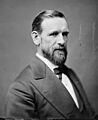
Samuel J. R. McMillan (1846), U.S. senator from Minnesota
-
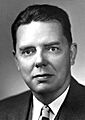
Philip Hench (M.D. 1920), recipient of the 1950 Nobel Prize in Medicine
-
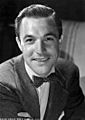
Academy Award-winning dancer and actor, Gene Kelly (1933)
-
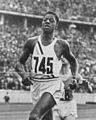
Olympic Gold-winning runner, John Woodruff (1939)
-
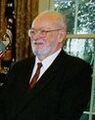
Paul Lauterbur (Ph.D. 1962), recipient of the 2003 Nobel Prize in Medicine
-
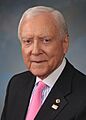
Orrin Hatch (J.D. 1962), U.S. senator from Utah
-
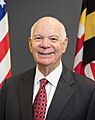
Ben Cardin (B.A. 1964), U.S. senator from Maryland
-
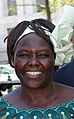
Wangari Maathai (M.Sc. 1965), recipient of the Nobel Peace Prize
-

Dan Marino (1983), Pro Football Hall of Fame football player
-

Michael Chabon (B.A. 1984), Pulitzer Prize–winning author
-

Vjosa Osmani (M.L. 2004, S.J.D. 2015), fifth President of Kosovo

.jpg)


.jpg)

.jpg)


See also
 In Spanish: Universidad de Pittsburgh para niños
