
North Carolina Constitutional Convention of 1835 facts for kids
Quick facts for kids Constitution of North Carolina Convention of 1835 |
|||||
|---|---|---|---|---|---|
|
|||||

Journal of the Convention
|
|||||
| Overview | |||||
| Legislative body | State Convention | ||||
| Jurisdiction | North Carolina, United States | ||||
| Meeting place | Raleigh, North Carolina | ||||
| Term | 1835 | ||||
| Members | 130 Delegates (65 counties) | ||||
| President | Nathaniel Macon | ||||
| Chairman pro tempore | David Lowry Swain | ||||
| Secretary | Edmund B. Freeman | ||||
| Assistant Secretary | Joseph D. Ward | ||||
| Sessions | |||||
|
|||||
The North Carolina Constitutional Convention of 1835 was an important meeting in North Carolina's history. People from across the state elected representatives, called delegates, to attend. Their main goal was to make changes to the state's first constitution, which was written way back in 1776.
These delegates met in Raleigh, North Carolina from June 4 to July 11, 1835. They decided on several big changes. These changes made sure that areas with more people had a fairer say in the government. For the first time, the people of North Carolina would get to vote directly for their governor, instead of the state lawmakers choosing. The voters approved these changes on November 9, 1835.
Contents
Why North Carolina Needed a New Constitution

North Carolina had changed a lot since its first constitution was written in 1776. The number of counties had grown from 38 to 68 by 1835. Many new counties were created in the central and western parts of the state.
More people lived in the central (Piedmont) and western regions than in the eastern region by 1830. These growing areas needed more roads, schools, and other public services. However, the old constitution gave each county the same number of senators, no matter how many people lived there. This meant that counties with fewer people had just as much power as counties with many more people.
Also, the governor was chosen by the state's General Assembly (lawmakers), not by the people. Many citizens felt it was time for a change to make the government more fair and representative.
The 1776 Constitution also had rules about who could vote. It said that "all freemen" aged 21 or older who had lived in a county for 12 months and paid taxes could vote. This meant that even former slaves who were free could vote in North Carolina from 1777 until 1835.
Big Changes to the Constitution
The Convention of 1835 made several important changes to the state's constitution. These changes aimed to make the government more balanced and fair.
- Fairer Representation: The number of state senators was set at 50, and representatives in the House at 120. Each county would get at least one representative. The remaining representatives were given out based on how many people lived in each county. Senators were elected from districts based on the amount of taxes paid. This gave the faster-growing western counties more power in the government.
- Electing the Governor: A major change was that the governor would now be elected directly by the people. Before, the state lawmakers chose the governor. This gave citizens more direct control over their leader.
- Voting Rights: The convention also decided that free African Americans could no longer vote. This was a significant change from the earlier constitution.
- Other Improvements: The delegates also added rules to stop private laws for things like divorces or name changes. They created ways to remove state officials or judges who weren't doing their jobs. They also decided that the state legislature would meet every two years, and they set up clear ways to make future changes to the constitution.
The delegates approved these changes on July 11, 1835. Then, the people of North Carolina voted on them. On November 9, 1835, the changes were officially adopted, with 26,771 votes in favor and 21,606 against. These new rules stayed in place until 1868.
Leaders of the Convention


The delegates chose several people to lead the convention:
- President: Nathaniel Macon
- Chairman pro tempore (temporary chairman): David Lowry Swain
- Secretary: Edmund B. Freeman
- Assistant Secretary: Joseph D. Ward
Delegates to the Convention


In April 1835, voters in each county elected two delegates to represent them at the convention. There were 65 counties in North Carolina at the time, so 130 delegates attended. These delegates came from all parts of the state, both the older eastern counties and the newer, growing western counties. They worked together to shape the future of North Carolina's government.
Images for kids
-
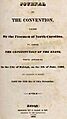
Journal of the Convention
